
Warm Up Fast, Even on Framingham's Coldest Nights.
Instant, reliable heat for MetroWest Boston homes—whether you're converting an old masonry fireplace or building new. Find the right unit and get matched with a trusted local dealer.
Every Project Starts From One of These Five Situations
Instant heat built for MetroWest winters.
Framingham sits in climate zone 5A with average winter lows around 18°F and a heating season similar in length and intensity to Burlington, Vermont. Many of Framingham's neighborhoods date back to the 19th and early 20th centuries, full of colonial and cape-style homes with existing masonry fireplaces that were built for wood but rarely get used that way today. Gas has become the practical upgrade for a lot of these homes, delivering real heat without the wood handling, ash cleanup, or chimney maintenance.
Natural gas service reaches most of Framingham, with Eversource as the primary utility for the area. For homes just outside the gas main footprint—some pockets near the Sudbury River and the town's outer edges—propane fills the gap. Either way, a direct-vent gas fireplace or insert gives you zone heating that pairs well with central heat, instant on-off operation on the coldest MetroWest mornings, and—with the right ignition system—the ability to keep running when a winter nor'easter knocks out power.
Three steps. No salesperson until you're ready.
Tell us about your project
Your zip code, your situation, and the fuel you're leaning toward—or let the answers point you to one.
See what's actually available
The brands dealers within 100 miles genuinely carry—real options, never a catalog mirage.
Get your dealer & Project Guide
A trusted local dealer, plus the free Project Guide & Parts List that names every component of the job.
Frequently Asked Questions
How much does a gas fireplace installation cost in Framingham?
Most Framingham gas fireplace projects run $4,500 to $12,000. A gas insert dropped into an existing masonry fireplace with a gas line already nearby sits on the lower end, typically $4,500 to $8,000. A new direct-vent gas fireplace for a renovation or addition—with framing, venting, and a new gas line run from the meter—lands in the middle to upper range. Homes needing a longer gas line extension or a propane tank installed because they're outside the Eversource service footprint tend to land at the higher end. A local retailer will give you a firm number after seeing your home.
Can I convert my existing wood fireplace to gas?
Yes, and it's one of the more common calls local hearth dealers get in Framingham, given how many older colonials and capes in town still have their original masonry fireplace. A gas insert typically installs into that existing firebox with a stainless steel liner run up the chimney for venting. Cost usually falls between $4,500 and $9,500 depending on the insert model and whether new gas line work is required. Homes already on natural gas for the furnace or water heater are usually the cheaper conversions since the gas infrastructure is already in the house.
Do I need natural gas, or can I use propane?
Either works. Eversource serves natural gas to the large majority of Framingham, so if your home already has gas heat, a range, or a gas water heater, adding a fireplace usually just means running a new branch line. For the smaller number of homes on the edges of town without a gas main nearby, propane is the standard alternative, supplied by tank from a regional propane company. Nearly every gas fireplace on the market can be set up for either fuel—your installer configures the correct orifice and regulator for whichever you have.
Will my gas fireplace work during a power outage?
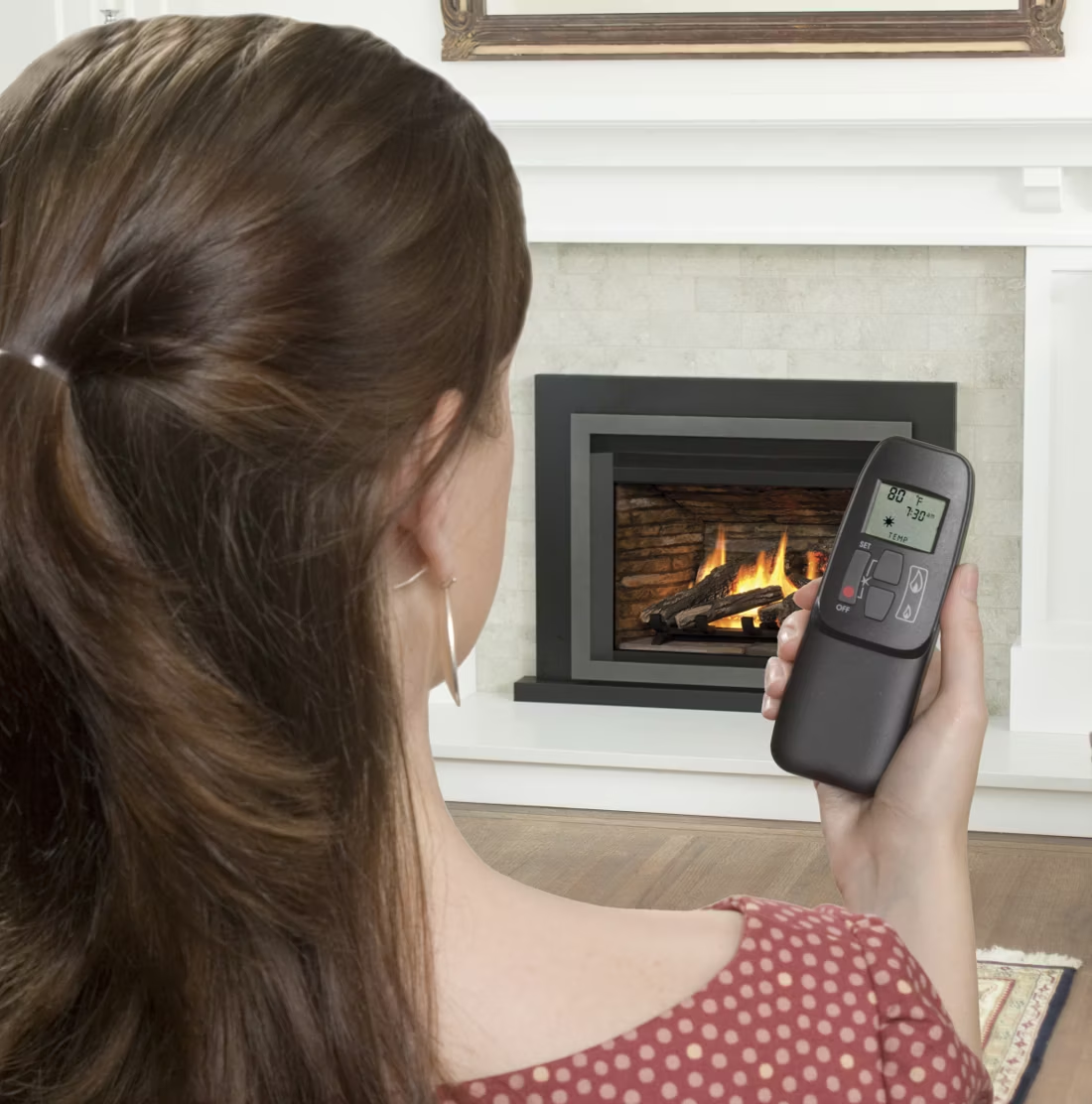
Most modern gas fireplaces will, as long as they use IPI (intermittent pilot ignition). These units include a battery backup—usually a few AA batteries built into the control panel—that takes over automatically if the power drops, so the fireplace still lights on demand. Valor's gas fireplaces go a step further: their pilot assembly generates its own electricity through the thermocouple, so there are no batteries to maintain at all. For Framingham winters, where a nor'easter can knock out power for a day or more, that reliability matters. Ask your local dealer which ignition system is in any unit you're considering.
What's the difference between a gas fireplace, gas insert, and gas stove?
A gas fireplace is a fully built-in unit framed into a wall, typically used in new construction or a larger remodel. A gas insert is sized to slide into an existing masonry firebox, sealing it up and venting through the existing chimney with a liner—the common choice for Framingham's older housing stock. A gas stove is a freestanding cast-iron or steel unit that sits on a hearth pad like a wood stove but runs on gas, and works well in a room without an existing fireplace. For most homeowners here with a fireplace they want to modernize, an insert is the straightforward answer.
Do I need a permit to install a gas fireplace in Framingham?
Yes. The Town of Framingham Building Division requires a building permit for the installation, and a separate gas permit is required for any new gas line work, which must be performed by a licensed Massachusetts gas fitter. Most established hearth dealers handle both permits as part of the job and coordinate the inspection, so you're not left managing separate trades yourself. Skipping the permit is a real risk in Massachusetts—it can complicate insurance claims and home sales down the road.
Are vent-free gas fireplaces legal in Massachusetts?
No—Massachusetts is one of the few states that prohibits vent-free (unvented) gas fireplaces and log sets in dwelling units under the state fuel gas code. So for a Framingham home, the choice is really between direct-vent and B-vent units, both of which draw combustion air from outside and exhaust exhaust gases through a sealed vent system. This isn't much of a drawback in practice—direct-vent units are the most popular category nationally anyway, and they deliver strong heat output with a clean glass front and no indoor air quality tradeoffs.
How often should my gas fireplace be serviced?
Plan on an annual inspection, ideally in early fall before you're relying on it for heat. A certified technician checks the burner, pilot assembly, venting, and gas connections, and cleans the glass and interior components. It's a much quicker visit than a wood chimney sweep, usually $150 to $250, but it's the main thing standing between you and a fireplace that won't light on the first cold night of the season.
Gas vs. wood—which is right for my Framingham home?
Framingham has no local air quality restrictions on wood burning, and oak, maple, birch, and ash are all common regionally if you want a real wood fire—so wood is a legitimate option here, especially for backup heat during outages. But gas wins on convenience: no splitting or stacking wood, no ash, no chimney sweeping, and instant heat at the flip of a switch or wall switch. For Framingham's mix of older colonials with existing masonry fireplaces and newer construction without one, gas inserts and direct-vent fireplaces have become the default choice for anyone who wants real heat without the upkeep. Some households keep both—a gas insert for daily use, a wood stove elsewhere as a backup.
What's the difference between an insert and a zero-clearance fireplace?
An insert is a fireplace that slides into a pre-existing wood-burning fireplace—if you don't have one, there's nothing to insert it into. A zero-clearance fireplace is built into a framed wall, which makes it the answer for remodels and new construction. Simple test: existing masonry fireplace means insert; blank or framed wall means zero-clearance.
Is my gas fireplace wasting gas?
If it was installed more than 15 years ago, probably. Older gas fireplaces keep a standing pilot light burning all the time, and that little flame can cost a couple hundred dollars a year. Newer models use pilot-on-demand ignition—the pilot lights only when you use the fireplace and goes out when you turn it off.
Does a fireplace add value to my home?
On average, a fireplace adds back to the home about the same amount you spent installing it. Add the monthly savings from heating the rooms you actually use instead of the whole house—often hundreds of dollars a year—and the value case is strong before you even count what a fire does for how your family uses the room.
What is an in-home preview and do I need one?
It's a visit where a hearth professional measures your space, confirms the model you picked actually works in your home, and walks the specs—framing, gas line, venting, finish work—before anything is ordered. Some details you just can't know until you see the house. Never make a down payment without one; it's the single most-skipped step that burns buyers.
Nearby Dealers
Hearth shops serving Framingham and the surrounding area. Every listing shows whether it is a WhyFire partner, a dealer we have verified as authorized for the brands we recommend, or a local business carrying hearth products. No manufacturer pays for placement. How we verify dealers →
West Sport Gas
Natick Fireplace
Hearthside Fireplace & Patio
Boston Fine Home Details
Euroline Tile
Norwood Fireplace
Architectural Fireplaces Of New England
On Duty Chimney Masonry Stove
M & M Chimney
Sweepnman Fireplace Center
Eurosweep
Find your gas fireplace in Framingham.
Tell us a bit about your home and we'll match you with a trusted local Framingham dealer and send over your free Project Guide & Parts List—the exact parts, including the vent kit, for your gas fireplace project.
Find Your Fireplace →