
Built for triple-deckers, not tree lots.
Everett packs nearly 49,000 people into one of the smallest, densest footprints in Middlesex County, and with a heating season that runs five or six months and winter lows around 23°F, a fireplace here needs to work in a condo unit or a shared-wall triple-decker, not a detached house with a woodpile out back. I'll match you with a trusted local dealer who knows the gas line work and tight-clearance venting Everett installs actually require.
Every Project Starts From One of These Five Situations
The fuel that matches Everett's housing stock.
Everett is built up, not spread out—rows of triple-deckers along Broadway and Ferry Street, converted condos near the Encore Boston Harbor waterfront, and a housing stock where lot lines sit inches apart. At 32 feet of elevation and climate zone 5A, the winters aren't the brutal, off-the-charts cold of somewhere like Duluth or Fargo, but a heating season that stretches five or six months with lows regularly in the low-to-mid 20s still means supplemental heat gets real use, not occasional use.
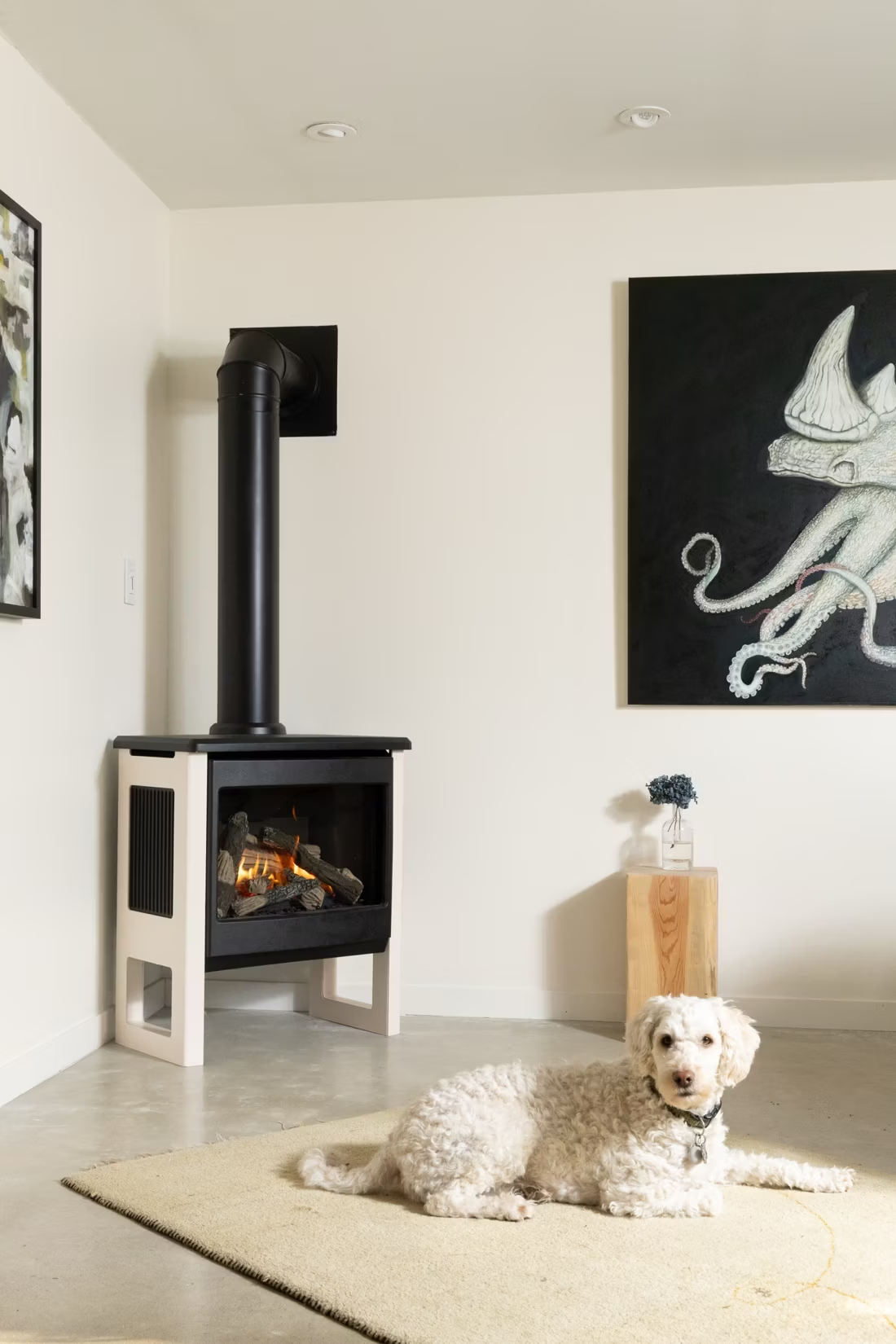
That density is also why wood and pellet stoves are essentially off the table here—most Everett homes don't have a yard for stacked cordwood or pellet bags, and shared walls in triple-deckers and condo buildings make solid-fuel venting impractical or against association rules. Gas fills that gap well: natural gas service through National Grid reaches most of the city, and a direct-vent fireplace or insert can go through an exterior wall in a condo or a compact single-family without the chimney work wood requires. Electric service runs through NSTAR (Eversource), Massachusetts Electric, or Fitchburg Gas & Electric depending on the address, with residential rates as high as 23-24 cents per kWh—one more reason gas tends to win out over electric for anything beyond a supplemental unit.
Three steps. No salesperson until you're ready.
Tell us about your project
Your zip code, your situation, and the fuel you're leaning toward—or let the answers point you to one.
See what's actually available
The brands dealers within 100 miles genuinely carry—real options, never a catalog mirage.
Get your dealer & Project Guide
A trusted local dealer, plus the free Project Guide & Parts List that names every component of the job.
Frequently Asked Questions
How much does a gas fireplace installation cost in Everett?
Most Everett installs run roughly $4,000 to $9,000. A direct-vent insert going into an existing masonry firebox in one of the city's older triple-deckers—common along Broadway and in the Glendale neighborhood—tends to land toward the lower end, especially if a gas line already serves the building. A new built-in unit in a condo renovation near the waterfront, requiring fresh gas line work and through-wall venting coordinated with a condo association, runs closer to the top. Get quotes from a dealer who's worked in Everett's building types specifically, since triple-decker venting runs differ a lot from a single-family colonial.
Can I convert an old fireplace in my triple-decker to gas?
In many cases, yes. A lot of Everett's triple-deckers were built with masonry fireboxes that haven't burned wood in decades, and a gas insert with a stainless liner run through the existing chimney chase is usually the least disruptive way to bring one back into use. Since these buildings are frequently multi-unit or condo-converted, check with the building's other owners or the condo association before work starts—shared chimney chases sometimes need sign-off from more than one unit.
Do I need a permit to install a gas fireplace in Everett?
Yes. You'll need a building permit through the City of Everett Inspectional Services Department, plus a separate gas permit pulled by a licensed gas fitter for the line work connecting to National Grid service. Most hearth dealers who regularly install in Everett handle both permits and coordinate the final inspection, which matters in a city where a lot of gas work runs through older buildings with non-standard piping.
Will a gas fireplace still work during a power outage?
Most will, with the right ignition system. Units with intermittent pilot ignition (IPI) run their electronic ignition off AA battery backup, so they'll fire up even if NSTAR service to your triple-decker goes out during a Nor'easter. Valor units go a step further and skip batteries entirely, generating their own current off the pilot's thermocouple. Given how often coastal storms knock out power in the Boston metro area, ask your dealer which ignition type is on any unit you're considering.
Vented vs. vent-free—does it matter for a condo in Everett?
It often does, more than in a standalone house. Direct-vent units pull air from outside and exhaust it back outside through sealed piping, which is the safer, code-compliant standard almost everywhere and generally the only option condo associations will approve for a shared-wall building. Vent-free units are legal in Massachusetts under specific room-size rules, but in a smaller Everett condo or a tight triple-decker unit, the square footage often doesn't clear the minimum, and a building's fire safety rules may rule them out regardless.
Are there rebates available for a gas fireplace in Everett?
Mass Save, the statewide efficiency program funded by Massachusetts utilities including National Grid and Eversource, periodically offers incentives tied to high-efficiency gas heating equipment, though fireplace-specific rebates are less common than furnace or boiler rebates. It's worth checking current Mass Save offerings before you buy, and worth mentioning to your dealer—some manufacturers also run seasonal rebates on high-efficiency direct-vent units that a local installer will know about.
Why isn't wood heat really an option in Everett?
It's mostly about space and shared structures. Everett is one of the most densely built cities in Middlesex County, and the housing stock—triple-deckers, converted condos, rowhouses—doesn't leave room for stacked cordwood, and shared walls make chimney venting for a wood stove complicated or off-limits under condo rules. Species like oak, maple, birch, and ash are common regionally in New England, but locally sourced cutting isn't practical from a city lot, so the few residents who do want a wood-burning appliance are typically working with rare exceptions rather than a common local setup.
What size gas fireplace do I need for an Everett condo or triple-decker?
Most Everett living rooms and open-concept condo layouts are on the smaller side, so a fireplace in the 20,000 to 30,000 BTU range covers the space without overheating a compact unit—oversizing is a more common complaint here than undersizing, especially in well-insulated newer condo construction near the waterfront. Older triple-decker units with higher ceilings and less insulation sometimes need to size up. A local dealer will look at your specific unit's square footage and insulation rather than defaulting to a standard chart.
How often does a gas fireplace need servicing in Everett?
Plan on an annual check, ideally in late summer or early fall before the first cold snap rather than during the December rush when techs across the Boston metro area are booked out. A service visit covers the burner, pilot assembly, gas connections, and glass cleaning, and typically runs $150 to $250. For a fireplace running daily through Everett's five-to-six-month heating season, skipping the annual check is how a pilot or ignition issue turns up on the coldest night in January.
Is my gas fireplace wasting gas?
If it was installed more than 15 years ago, probably. Older gas fireplaces keep a standing pilot light burning all the time, and that little flame can cost a couple hundred dollars a year. Newer models use pilot-on-demand ignition—the pilot lights only when you use the fireplace and goes out when you turn it off.
What's the difference between an insert and a zero-clearance fireplace?
An insert is a fireplace that slides into a pre-existing wood-burning fireplace—if you don't have one, there's nothing to insert it into. A zero-clearance fireplace is built into a framed wall, which makes it the answer for remodels and new construction. Simple test: existing masonry fireplace means insert; blank or framed wall means zero-clearance.
Does a fireplace add value to my home?
On average, a fireplace adds back to the home about the same amount you spent installing it. Add the monthly savings from heating the rooms you actually use instead of the whole house—often hundreds of dollars a year—and the value case is strong before you even count what a fire does for how your family uses the room.
What is an in-home preview and do I need one?
It's a visit where a hearth professional measures your space, confirms the model you picked actually works in your home, and walks the specs—framing, gas line, venting, finish work—before anything is ordered. Some details you just can't know until you see the house. Never make a down payment without one; it's the single most-skipped step that burns buyers.
Nearby Dealers
Hearth shops serving Everett and the surrounding area. Every listing shows whether it is a WhyFire partner, a dealer we have verified as authorized for the brands we recommend, or a local business carrying hearth products. No manufacturer pays for placement. How we verify dealers →
Boston Fine Home Details
Euroline Tile
Sunline Patio & Fireside
American Chimney Sweeps Inc. Stove Shop
M & M Chimney
Eurosweep
Norwood Fireplace
Natick Fireplace
West Sport Gas
Backyard Living
Sweepnman Fireplace Center
Get your free Project Guide & Parts List for an Everett gas fireplace.
Tell me about your home—condo, triple-decker, or single-family—and whether gas service already runs to it, and I'll match you with a trusted local dealer and send a free Project Guide & Parts List with the exact vent kit and parts your project needs.
Find Your Fireplace →