
Find a Gas Fireplace Built for Chelsea's Harbor Winters.
Instant, clean heat for Chelsea's triple-deckers, condos, and row homes near Boston Harbor. Find the right unit and connect with a trusted local dealer.
Every Project Starts From One of These Five Situations
Clean heat that fits the city's tight urban footprint.
Chelsea sits just across the Mystic River and Chelsea Creek from downtown Boston, at only 24 feet of elevation, where winters bring an average low of 23°F and a moderate but real winter heating season—noticeably milder than inland New England cities like Burlington, VT, but still cold enough to demand a real heat source for months at a time. Wood and pellet stoves are essentially not part of the picture here: Chelsea's triple-deckers, rowhouses, and multi-unit buildings simply don't have the yard space, chimney clearances, or cordwood storage that wood heat requires, and the city's dense residential blocks make solid-fuel appliances impractical for most households.
Gas fills that gap. Chelsea's older housing stock—much of it built with masonry fireplaces from an era of coal and wood heat—is well suited to gas insert conversions that reuse the existing chimney chase, while newer condo conversions and renovated units often add direct-vent gas fireplaces as a zone-heat feature. Whatever the fuel source, Massachusetts law requires a state-licensed gas fitter for any gas line work, and a trusted local dealer coordinates that licensing, the venting, and the City of Chelsea permit process so you're not managing multiple trades yourself.
Three steps. No salesperson until you're ready.
Tell us about your project
Your zip code, your situation, and the fuel you're leaning toward—or let the answers point you to one.
See what's actually available
The brands dealers within 100 miles genuinely carry—real options, never a catalog mirage.
Get your dealer & Project Guide
A trusted local dealer, plus the free Project Guide & Parts List that names every component of the job.
Frequently Asked Questions
How much does a gas fireplace installation cost in Chelsea?
In Chelsea's older triple-decker and rowhouse stock, converting an existing masonry fireplace to a direct-vent gas insert typically runs $4,500 to $9,500, depending on whether a gas line already reaches the room and whether the existing chimney needs a new stainless liner. A new built-in gas fireplace in a condo renovation or gut remodel—where framing, venting through a party wall, and a fresh gas line all have to be run—tends to land higher, often $7,000 to $12,000, reflecting Boston-metro labor rates. A local dealer will give you a firm number after seeing the space in person.
Can I convert my old fireplace to gas in a Chelsea triple-decker?
Often, yes. Many of Chelsea's triple-deckers and older two- and three-family homes have brick fireplaces original to the building that haven't been used in decades—some are structurally fine, others need a liner assessment first. A direct-vent gas insert typically reuses that existing chimney chase with a stainless steel liner run down to the firebox, which keeps the exterior look of the building intact while adding real heat output. If your building has been converted to condos, check your association's rules on venting through shared walls or the roofline before ordering anything—this is one of the first questions a local installer will ask.
Is natural gas available throughout Chelsea, or is propane more common?
Chelsea's dense urban core is well served by natural gas mains, a legacy of the city's industrial and tenement-era infrastructure, so most triple-deckers and rowhouses already have gas service for cooking or heat. Propane is uncommon here and mostly shows up in isolated cases where a building genuinely lacks a gas connection. If you already have a gas range or gas-fired boiler, adding a fireplace on the same line is usually straightforward for a licensed gas fitter.
Will my gas fireplace still work if a nor'easter knocks out power?
Chelsea's location on Boston Harbor means winter nor'easters and coastal flooding events are a real concern for power reliability. Most modern gas fireplaces with IPI (intermittent pilot ignition) run on a small battery backup that keeps the unit lighting on demand even when NSTAR Electric service is out. Valor's gas fireplaces go a step further—their pilot assembly generates its own electricity through the thermocouple, so there's no battery to remember or replace. For a household that wants a genuine backup heat source during a multi-day outage, that distinction matters. Ask about the ignition system on any unit you're considering.
What's the difference between a gas fireplace, gas insert, and gas stove for a Chelsea home?
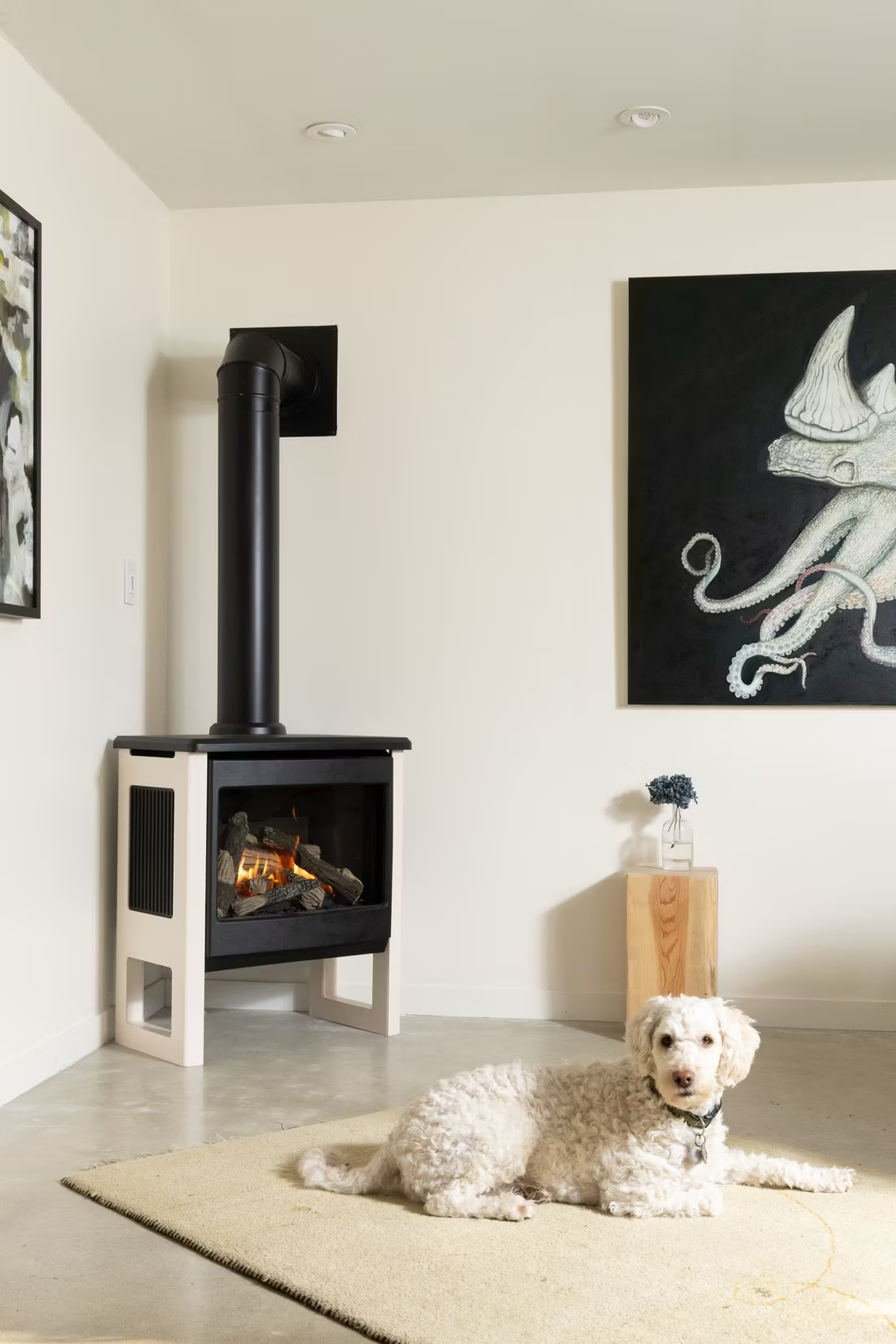
A gas fireplace is a fully built-in unit framed into a wall—the typical choice for a condo renovation or new construction where there's no existing fireplace. A gas insert slides into an existing masonry firebox, which describes a large share of Chelsea's triple-decker housing stock, and uses the existing chimney chase as its vent path once a liner is installed. A gas stove is a freestanding, floor-mounted unit that can work well in a smaller row-home living room where a built-in isn't practical. Most Chelsea projects we see are insert conversions, simply because so much of the housing stock already has a fireplace opening to work with.
Do I need a permit to install a gas fireplace in Chelsea?
Yes. Under Massachusetts building code (780 CMR), any new gas fireplace or insert requires a building permit through the City of Chelsea Inspectional Services Department, plus a separate gas permit pulled by a state-licensed gas fitter—Massachusetts law does not allow a homeowner or general contractor to do this work themselves. If your building is a condo, you'll also want to confirm venting and roof-penetration rules with the association before applying. A local hearth dealer typically manages the permitting and gas-fitter coordination as part of the installation.
Can I install a vent-free gas fireplace in Chelsea?
No—Massachusetts fire code (527 CMR) does not allow unvented, vent-free gas fireplaces in residential occupancies statewide, so this isn't an option in Chelsea regardless of unit size or room. Direct-vent sealed-combustion units are the standard and required approach here, and they're also the better fit for Chelsea's tightly built multi-family housing, since they draw combustion air from outside rather than pulling it from an already close interior space.
How often should my gas fireplace be serviced?
Plan on an annual inspection, ideally in early fall before regular heating season use begins. A certified technician checks the burner, pilot assembly, venting termination, and gas connections, and cleans the glass and interior—this matters in Chelsea's coastal, salt-air environment, where exterior vent caps and terminations can corrode faster than they would further inland. Most gas appliance service providers in the area charge $150 to $250 for a standard annual visit.
Gas vs. electric fireplace—which makes more sense for a Chelsea condo or apartment?
For units with an existing fireplace opening and gas service already in the building, a direct-vent gas insert delivers real heat output—often 20,000 to 40,000 BTUs—and can meaningfully offset heating costs on the coldest days. Electric fireplaces need no venting or gas line at all, which makes them the practical choice for top-floor units, rentals, or condo boards that won't approve new roof penetrations; the tradeoff is that they supplement rather than replace your heating system, and at NSTAR's residential rate of roughly $0.20/kWh, running one for real heat rather than ambiance adds up faster than gas would. If your building can support the venting, gas is generally the better long-term investment; if it can't, electric is often the only realistic option.
Is my gas fireplace wasting gas?
If it was installed more than 15 years ago, probably. Older gas fireplaces keep a standing pilot light burning all the time, and that little flame can cost a couple hundred dollars a year. Newer models use pilot-on-demand ignition—the pilot lights only when you use the fireplace and goes out when you turn it off.
Why is a fireplace insert so efficient?
An insert does two things: it seals the chimney completely, so you stop losing air you already paid to heat, and it radiates warmth into the room through the firebox and glass. Most add a heat-exchange fan that pulls cool room air underneath, wraps it around the hot firebox, and pushes it back out warm. Your home is more efficient before you've even lit the first fire.
What is an in-home preview and do I need one?
It's a visit where a hearth professional measures your space, confirms the model you picked actually works in your home, and walks the specs—framing, gas line, venting, finish work—before anything is ordered. Some details you just can't know until you see the house. Never make a down payment without one; it's the single most-skipped step that burns buyers.
Should the dealer who sells my fireplace also install it?
Ideally, yes. A fireplace project involves vent pipe, gas line, electrical, and often tile or stone. Hire three or four separate trades and you own the liability and the game of telephone between them. One company selling and installing means one accountable party, start to finish—ask about factory training, on-time completion records, and what happens if an inspection fails.
Nearby Dealers
Hearth shops serving Chelsea and the surrounding area. Every listing shows whether it is a WhyFire partner, a dealer we have verified as authorized for the brands we recommend, or a local business carrying hearth products. No manufacturer pays for placement. How we verify dealers →
August West Chimney Co. & Fireplace Conc
Euroline Tile
Boston Fine Home Details
American Chimney Sweeps Inc. Stove Shop
Sunline Patio & Fireside
M & M Chimney
Eurosweep
Norwood Fireplace
Natick Fireplace
West Sport Gas
Backyard Living
Find your gas fireplace in Chelsea.
Tell us about your home and we'll match you with a trusted local dealer and a free Project Guide & Parts List—the exact parts, vent kit, and installer recommendation for your Chelsea gas fireplace project.
Find Your Fireplace →