
A Realistic Look at Pellet Heat in Boston.
Pellet stoves aren't the default choice in a city built on triple-deckers and brick rowhouses—but for the right Boston home, one can still make sense. Let's find out if yours qualifies, and connect you with a trusted local dealer.
Every Project Starts From One of These Five Situations
Boston's housing stock makes pellet stoves the exception, not the rule.
Boston sits in climate zone 5A with a winter heating season on par with cities like Buffalo or Madison, and average winter lows around 19°F—cold enough that supplemental heat genuinely matters here, on par with what you'd see in Buffalo or Madison. But the limiting factor for pellet stoves in Boston isn't climate, it's the housing itself. Most of Suffolk County's residential building stock is dense: brick rowhouses in Back Bay and the South End, triple-deckers across Dorchester and Roxbury, and condo conversions throughout the North End and Beacon Hill. Shared walls, limited exterior wall access for direct venting, and Boston Landmarks Commission review in historic districts make pellet installations impractical for a large share of city addresses.
That said, pellet stoves and inserts do show up in Boston's outlying neighborhoods—West Roxbury, Roslindale, Hyde Park, Mattapan—where single-family homes with basements, attached garages, or side yards give installers room to run a vent and homeowners somewhere to store a season's worth of bags or pallets. Boston also has no listed air quality burn restrictions, unlike wood-burning regions out west, so a properly permitted pellet appliance faces no emissions-based curtailment once it's installed. Regional suppliers like Lignetics, New England Wood Pellet, and Maine Woods Pellet Co. keep the Northeast well stocked, milling pellets from the same hardwood mix—oak, maple, birch, ash—that fills New England's forests. If your home can physically accommodate a unit, fuel supply won't be the obstacle.
Three steps. No salesperson until you're ready.
Tell us about your project
Your zip code, your situation, and the fuel you're leaning toward—or let the answers point you to one.
See what's actually available
The brands dealers within 100 miles genuinely carry—real options, never a catalog mirage.
Get your dealer & Project Guide
A trusted local dealer, plus the free Project Guide & Parts List that names every component of the job.
Frequently Asked Questions
Are pellet stoves actually common in Boston?
Not really, and it's worth saying plainly: within the dense core of Boston proper—Back Bay, the South End, Beacon Hill, the North End—pellet stoves are uncommon because most housing there is attached, multi-unit, or under historic district review, which makes exterior venting difficult or restricted. In single-family neighborhoods like West Roxbury, Roslindale, and Hyde Park, they show up more often as supplemental heat for a basement, family room, or garage workshop. If you live in a triple-decker or condo, a pellet stove is possible in theory but the building's construction and any condo association rules will decide the question before the appliance does.
What does a pellet stove installation cost in Boston?
For a single-family home in a neighborhood like West Roxbury or Hyde Park, a freestanding pellet stove with a new through-wall vent typically runs in the $3,500 to $7,000 range once you include the unit, electrical work for the auger and blower, and a City of Boston Inspectional Services Department permit. Converting an existing masonry fireplace to a pellet insert can land at the lower end of that range if the flue is already usable. Rowhouse and condo installations often cost more, if they're feasible at all, because of the additional engineering needed to route venting through a party wall or shared exterior.
Can I install a pellet stove in a Boston condo or rowhouse?
It depends heavily on the building. Pellet stoves vent horizontally through an exterior wall, which is straightforward on a detached single-family home but often a real obstacle in a rowhouse or condo building where the exterior wall is shared, load-bearing, or subject to Boston Landmarks Commission approval—a common hurdle in Back Bay, the South End, and Beacon Hill. Condo associations frequently have their own restrictions on exterior penetrations and combustion appliances regardless of what the city allows. Before you get attached to the idea, talk to your condo board or building management, and have a local installer assess whether your unit has a usable exterior wall at all.
Do I need a permit to install a pellet stove in Boston?
Yes. Any new pellet stove or insert installation requires a permit through the City of Boston Inspectional Services Department, covering both the appliance installation and the electrical circuit for the auger and combustion blower. If your property sits within one of Boston's historic districts, you'll also need sign-off from the Boston Landmarks Commission before cutting a new vent penetration through an exterior wall. A local installer familiar with Boston's permitting process can usually handle both applications for you.
What pellet brands are available near Boston?
Regional suppliers serving the Boston area include Lignetics, New England Wood Pellet (milled in Jaffrey, New Hampshire), and Maine Woods Pellet Co.—all three are widely stocked at hearth retailers and hardware stores throughout eastern Massachusetts. Expect to pay somewhere in the $300 to $375 per ton range, generally sold by the pallet (roughly 50 forty-pound bags) since most Boston homes don't have space for bulk hopper storage. Because city lots rarely include a garage or shed, plan to buy your season's supply early and store it somewhere dry—basement space is at a premium in most of Boston's older housing stock.
Will a pellet stove keep my home warm during a Nor'easter power outage?
Not on its own. Pellet stoves rely on an electric auger to feed fuel and a blower to circulate heat, so a standard unit shuts down the moment the power goes out—a real consideration in a city that regularly sees Nor'easters knock out power for hours or days, the same storms that buried Boston in over two feet of snow during the 2015 blizzard. Some pellet stove models offer battery backup options, and pairing the stove with a small generator or battery inverter is common among Boston homeowners who install one specifically for backup heat. If uninterrupted heat during outages is your priority, a wood-burning appliance or a battery-backed gas fireplace will outperform pellet here.
What's the difference between a pellet stove and a pellet insert?
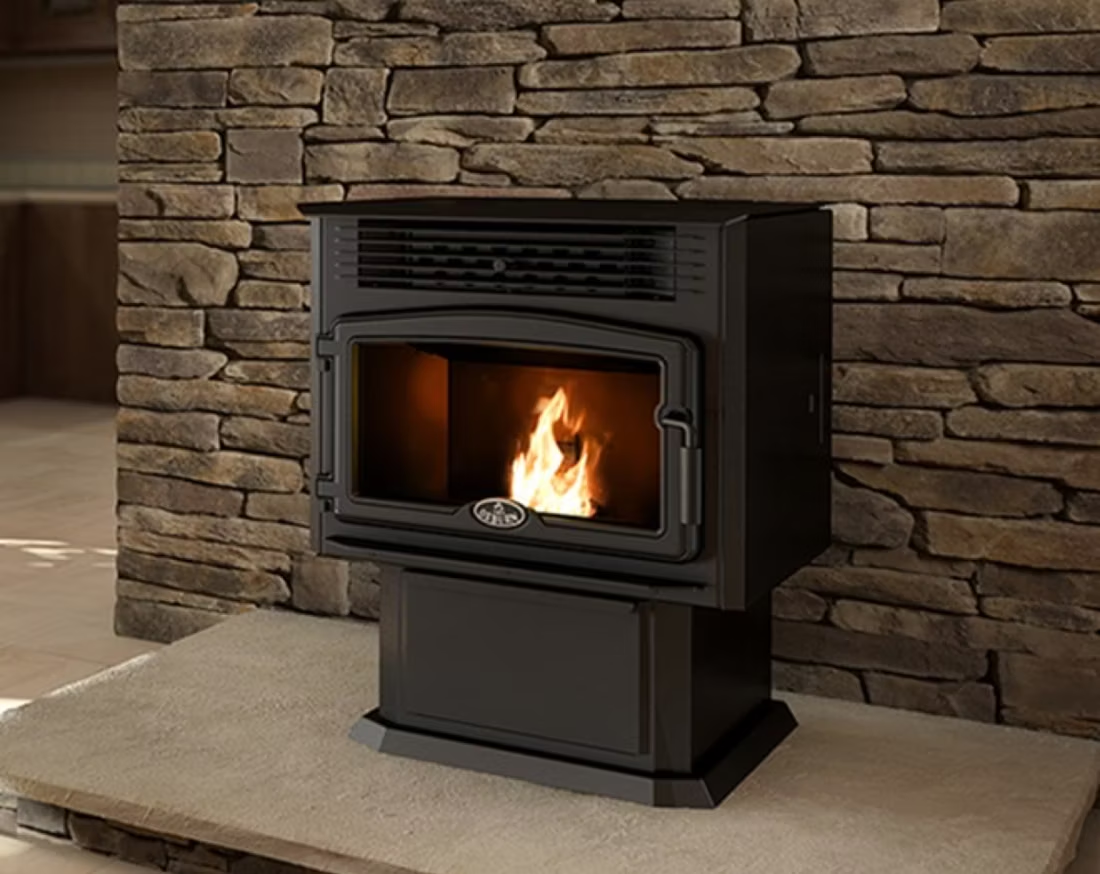
A pellet stove is a freestanding unit that sits on the floor and vents through a wall or existing chimney chase—it can go almost anywhere with the right clearances. A pellet insert is built to slide into an existing masonry fireplace opening, which is common in Boston's older brownstones and triple-deckers that still have a working chimney from decades of wood-burning use. For a home in the South End or Jamaica Plain with an existing fireplace, an insert is usually the simpler and less invasive option since it reuses the chimney chase instead of requiring a new through-wall vent.
Is there a better heating fuel option for a Boston home than pellet?
For most Boston addresses, yes. Natural gas service reaches the vast majority of the city, and a direct-vent gas fireplace or insert avoids the exterior wall, storage, and historic-district complications that make pellet installations tricky here. Electric options are also straightforward given NSTAR's citywide service, though at Boston's residential rate of roughly 19.9 cents per kWh, electric heat runs at a premium compared to gas for anything beyond occasional supplemental use. Pellet remains a legitimate choice for single-family homes in Boston's outer neighborhoods with the right layout, but it's rarely the first fuel we'd steer a downtown or Back Bay homeowner toward.
Where can I get pellet fuel delivered in Boston?
Most pellet supply for the Boston area comes through hearth retailers and hardware stores in the surrounding suburbs, several of which deliver into the city by the pallet. Because on-street parking and limited storage make it impractical to keep more than a few bags on hand in most Boston neighborhoods, homeowners who heat primarily with pellet typically order their season's supply in a single fall delivery rather than restocking bag by bag through the winter. A local dealer can tell you which brands they stock and whether delivery reaches your specific zip code.
Why is my open fireplace making my house colder?
Open fireplaces suck—literally. As the fire burns, it consumes air your furnace already paid to heat and pulls it out through the chimney, so the house is actually colder after the fire goes out than before you lit it. An insert fixes this: it seals the chimney, puts fixed glass across the front, and turns that hole in your house into a real heat source.
Why is a fireplace insert so efficient?
An insert does two things: it seals the chimney completely, so you stop losing air you already paid to heat, and it radiates warmth into the room through the firebox and glass. Most add a heat-exchange fan that pulls cool room air underneath, wraps it around the hot firebox, and pushes it back out warm. Your home is more efficient before you've even lit the first fire.
How much should I budget for a fireplace?
For an average home—covering the fireplace, the vent pipe, and basic installation—a budget between $3,900 and $5,500 gives you a lot of options across wood, gas, and pellet. By the time you add finish work, gas line, and electrical, the average complete installation lands between $5,000 and $12,000 all-in. In a remodel or new build, a good rule is to put about 2.5% of the total project cost toward the fireplace.
Should the dealer who sells my fireplace also install it?
Ideally, yes. A fireplace project involves vent pipe, gas line, electrical, and often tile or stone. Hire three or four separate trades and you own the liability and the game of telephone between them. One company selling and installing means one accountable party, start to finish—ask about factory training, on-time completion records, and what happens if an inspection fails.
Nearby Dealers
Hearth shops serving Boston and the surrounding area. Every listing shows whether it is a WhyFire partner, a dealer we have verified as authorized for the brands we recommend, or a local business carrying hearth products. No manufacturer pays for placement. How we verify dealers →
August West Chimney Co. & Fireplace Conc
Euroline Tile
Boston Fine Home Details
Norwood Fireplace
Eurosweep
Natick Fireplace
Backyard Living
M & M Chimney
Sunline Patio & Fireside
West Sport Gas
American Chimney Sweeps Inc. Stove Shop
Hearthside Fireplace & Patio
South Shore Fireplace Inc
The Fireplace Store @ Aspinwall Plumbing - Marshfield
Pellet Brands Stocked Around Boston
Manufacturers will point you to the nearest stocking dealer.
Find your pellet setup in Boston.
Tell us about your home—rowhouse, triple-decker, or single-family—and we'll help you figure out whether a pellet stove or insert is realistic for your space. If it is, we'll send a free Project Guide & Parts List with the exact parts, including the vent kit, and match you with a trusted local dealer near Boston.
Find Your Fireplace →