
Ambiance and Heat, Without the Venting Headache.
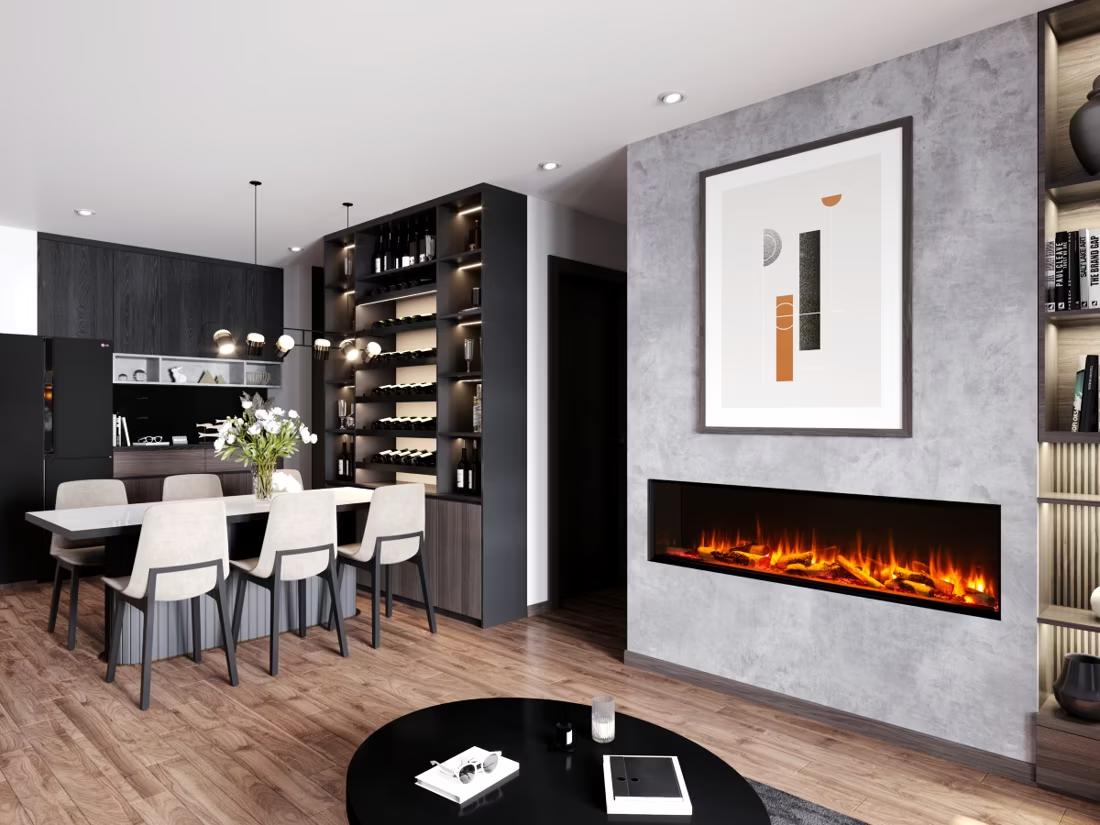
No chimney, no gas line, no condo-board fight—just a clean electric fireplace built for Back Bay brownstones, South End rowhouses, and downtown high-rises. Find the right unit and connect with a trusted local dealer.
Every Project Starts From One of These Five Situations
Boston's housing stock favors electric heat.
Boston sits at just 72 feet of elevation but still logs 5,811 heating degree days a year, with winter lows averaging 19°F—cold enough that heat matters, but the city's housing stock rarely cooperates with solid-fuel options. Triple-deckers, Back Bay brownstones, and pre-war South End rowhouses were mostly built without masonry chimneys sized for a modern wood stove, and condo and co-op boards across neighborhoods like Beacon Hill and the Fenway routinely prohibit open-flame appliances entirely. That's why wood and pellet stoves are essentially off the table here, while electric fireplaces have become the default way to add real ambiance and zone heat to a Boston home.
An electric fireplace needs no chimney, no gas line, and no wood storage—a plug-in unit can go into a rental or condo in an afternoon, and a built-in insert simply needs a dedicated circuit run by a licensed electrician. NSTAR (Eversource) serves most of the city at a residential rate of roughly $0.1992 per kWh, which is above the national average but rarely a concern for a fireplace, since most units draw around 1,500 watts and run as supplemental warmth rather than whole-home heat. For older brownstones with a bricked-up or purely decorative fireplace opening, an electric insert is often the simplest way to bring that mantel back to life.
Three steps. No salesperson until you're ready.
Tell us about your project
Your zip code, your situation, and the fuel you're leaning toward—or let the answers point you to one.
See what's actually available
The brands dealers within 100 miles genuinely carry—real options, never a catalog mirage.
Get your dealer & Project Guide
A trusted local dealer, plus the free Project Guide & Parts List that names every component of the job.
Frequently Asked Questions
How much does it cost to install an electric fireplace in Boston?
A plug-in electric fireplace or freestanding stove needs no permit or electrical work and typically runs a few hundred to around $1,500 installed, since it uses a standard outlet. A built-in electric insert or wall-mounted linear unit that requires a dedicated 20- or 30-amp circuit usually costs more once you factor in a licensed electrician and, in older Boston triple-deckers and brownstones with knob-and-tube or undersized panels, sometimes a panel upgrade. Local dealers who install regularly in Boston's older building stock can tell you quickly whether your unit's wiring is a simple tie-in or a bigger job.
Do electric fireplaces work in Boston condos and apartments?
Yes—this is where electric fireplaces make the most sense in Boston. Many condo and co-op associations in buildings around Beacon Hill, the North End, and the Seaport prohibit gas lines and open-flame appliances outright, but electric units are almost always allowed since they don't involve venting, combustion, or a chimney. A plug-in model can go into a rental unit with zero building approval needed; a built-in insert usually just requires notifying the building about the electrical work, not a full board review.
How much does it cost to run an electric fireplace in Boston?
With NSTAR's residential rate around $0.1992 per kWh, a typical 1,500-watt electric fireplace costs roughly 30 cents an hour to run on heat mode, or less if you're using it for the flame effect alone, which draws only a few watts. Running one for four hours a night through a cold month adds up to something like $35–$40—far less than heating an entire Boston apartment with electric resistance heat, which is why these units work best as supplemental zone heat rather than a home's primary heat source given the city's 5,811 annual heating degree days.
Do I need a permit to install an electric fireplace in Boston?
A plug-in unit needs no permit at all. A built-in electric fireplace or insert that requires new wiring or a dedicated circuit needs an electrical permit through the City of Boston Inspectional Services Department, pulled by your licensed electrician. Most hearth dealers who install electric fireplaces regularly in Boston coordinate this permit as part of the job, so it typically isn't something you have to manage yourself.
Electric vs. gas fireplace—which is right for my Boston home?
Gas fireplaces are common in Boston where natural gas service already runs to the home, and they deliver more real heat output—but they require venting work, a gas line, and are often restricted or banned outright in condo buildings without existing gas fireplaces. Electric fireplaces skip all of that: no venting, no gas line, no combustion byproducts, and no building-code hurdles in most co-ops and condo associations. For a South End brownstone with an existing gas line and chimney, gas may make sense. For a downtown high-rise condo or a rental where any gas work is a non-starter, electric is usually the practical answer.
Why don't more Boston homes use wood or pellet stoves?
New England has plenty of good burning wood nearby—oak, maple, birch, and ash are all common regional species—but wood and pellet stoves are genuinely uncommon inside the city itself. Most of Boston's housing stock, from triple-deckers to brownstones to high-rise condos, either lacks a chimney rated for a modern stove or falls under a condo or co-op association that bans solid-fuel appliances entirely. You'll occasionally see a wood stove in a single-family home out in West Roxbury or Hyde Park with a proper chimney, but for the vast majority of Boston addresses, electric is the realistic path to fireplace ambiance.
What size electric fireplace do I need for a Boston apartment or condo?
Most electric fireplaces are rated to comfortably supplement heat in 400 to 1,000 square feet, which covers a typical Boston condo living room or a bedroom in a triple-decker. Since these units are zone heaters rather than whole-home furnaces, sizing is less about square footage math and more about which room you want warmer and how prominent you want the flame display on the wall or mantel. A local dealer can walk you through wattage and mounting options—recessed wall unit, mantel package, or freestanding stove—based on your specific room.
Can I put an electric insert into my brownstone's old fireplace opening?
Often, yes. Many Back Bay and South End brownstones have a decorative or long-bricked-up fireplace opening that hasn't held a real fire in decades. An electric insert sized to that opening restores the look of a working fireplace—flame effect, glowing logs, mantel presence—without any chimney work, since electric inserts don't vent at all. A local dealer will measure your specific opening, since older Boston fireplace openings vary widely in size and aren't always standard.
Will my electric fireplace work if the power goes out?
No—electric fireplaces require power to run, so they won't provide heat during an outage, which is worth knowing given how Boston winters bring the occasional nor'easter that knocks out electricity for hours or longer. If backup heat during outages matters to your household, that's a real limitation of electric versus a wood stove, and it's worth discussing with a local dealer alongside a battery backup or portable generator plan for your specific home.
Does an electric fireplace need a vent or chimney?
No—that's its superpower. An electric fireplace needs a wall and an outlet, period. No vent pipe, no gas line, no clearances to design around, which is why it works in bedrooms, offices, apartments, and walls where venting a gas or wood unit would be impractical or impossible. Installation is typically the simplest and least expensive of any fireplace type.
What fireplace styles should I know before shopping?
Four cover most of the market: screen-front traditional (mesh front, open feel, fits craftsman homes), traditional door set (the classic look you grew up with), modern linear (wide, low, the statement piece for entertaining), and clean face contemporary (no trim—your tile or stone runs right to the fire's edge). Walk in knowing those four terms and you're ahead of most buyers.
What is an in-home preview and do I need one?
It's a visit where a hearth professional measures your space, confirms the model you picked actually works in your home, and walks the specs—framing, gas line, venting, finish work—before anything is ordered. Some details you just can't know until you see the house. Never make a down payment without one; it's the single most-skipped step that burns buyers.
Can I install a fireplace myself?
If you're putting a fire in your house on purpose, it's best to work with an expert. Unless you're genuinely experienced in framing, gas line, vent pipe, and the national code on clearances to combustibles, have a professional do it—and ideally the same company that sells you the fireplace, so warranty, service, and liability all live under one roof.
Nearby Dealers
Hearth shops serving Boston and the surrounding area. Every listing shows whether it is a WhyFire partner, a dealer we have verified as authorized for the brands we recommend, or a local business carrying hearth products. No manufacturer pays for placement. How we verify dealers →
August West Chimney Co. & Fireplace Conc
Euroline Tile
Boston Fine Home Details
Norwood Fireplace
Eurosweep
Natick Fireplace
Backyard Living
M & M Chimney
Sunline Patio & Fireside
West Sport Gas
American Chimney Sweeps Inc. Stove Shop
Hearthside Fireplace & Patio
South Shore Fireplace Inc
The Fireplace Store @ Aspinwall Plumbing - Marshfield
Electric Service in Boston
An electric fireplace's heater draws about 1,500 watts—pennies per hour at local rates.
Nstar Electric Company
Massachusetts Bay Trans Authority
Find your electric fireplace in Boston.
Tell us a bit about your condo, brownstone, or apartment and we'll match you with a trusted local Boston dealer, plus a free Project Guide & Parts List with the exact electric fireplace, mounting hardware, and wiring plan for your space.
Find Your Fireplace →