
A warm hearth for winters on the Chesapeake.
Reliable gas heat for the damp, waterfront chill of Shady Side and the West River shoreline. Find the right fireplace or insert, and connect with a trusted local dealer.
Every Project Starts From One of These Five Situations
Steady heat for a low-lying bay community.
Shady Side sits at just 7 feet above sea level on the peninsula between the West River and the Chesapeake Bay, in a climate zone (4A) that's mild by national standards—winter lows average around 30°F and the area sees a relatively light winter heating season, using only a fraction of the heating a place like Duluth, MN needs each winter. But mild doesn't mean warm: damp, bay-effect cold settles into the area's older waterfront cottages and cape cods, many built well before modern insulation codes, and a gas fireplace or insert is often the fastest way to take the chill off a room without waiting on a whole-house furnace to catch up.
Shady Side is unincorporated and low-density, and natural gas mains don't reach most properties here—Baltimore Gas & Electric serves the area's electricity, but gas heat in Shady Side almost always means propane rather than a municipal line. That's not a drawback: modern propane fireplaces and inserts perform identically to natural gas units, and a local propane supplier can typically install or fill a tank on the same visit as your fireplace installation, whether that's an above-ground tank tucked beside the house or a buried tank for waterfront properties that prefer to keep the yard clear.
Three steps. No salesperson until you're ready.
Tell us about your project
Your zip code, your situation, and the fuel you're leaning toward—or let the answers point you to one.
See what's actually available
The brands dealers within 100 miles genuinely carry—real options, never a catalog mirage.
Get your dealer & Project Guide
A trusted local dealer, plus the free Project Guide & Parts List that names every component of the job.
Frequently Asked Questions
How much does a gas fireplace installation cost in Shady Side?
Most propane fireplace installations around Shady Side run $4,000 to $9,000, depending on the unit, whether a new propane tank needs to be set, and how much venting or line work is involved. A direct-vent propane insert going into an existing masonry fireplace on a property that already has a tank sits toward the lower end. A new built-in propane fireplace as part of a waterfront addition or renovation—with a new tank, fresh line run, and framing—lands toward the higher end. Because natural gas mains don't reach most of Shady Side, plan for propane tank setup as part of the project budget if your home doesn't already have one.
Can I convert my wood-burning fireplace to gas?
Yes, and it's a common project in older Shady Side homes, many of which were originally built with wood-burning masonry fireplaces for burning local oak and hickory. A propane insert typically slides into that existing firebox, using the chimney as a chase for a sealed vent liner, so the exterior look of the fireplace stays the same. Expect $4,000 to $8,500 depending on the insert and whether a propane tank and line already exist on the property. The upside for waterfront cottages: no more hauling and stacking firewood in a yard that floods, and instant heat at the flip of a switch or remote.
Do I need natural gas, or does propane work just as well?
For nearly everyone in Shady Side, it's propane. Baltimore Gas & Electric doesn't run natural gas mains to most of this peninsula, so a propane tank—filled by a regional supplier and refilled a few times a year—is the standard setup. Propane fireplaces and inserts run on the same technology as natural gas units and perform identically; your installer simply sets the correct orifice and regulator for propane pressure. If you're building new or doing a major renovation, ask your local dealer to confirm gas availability at your specific address, since a handful of newer developments closer to Annapolis and Edgewater do have natural gas service.
Will my gas fireplace work during a power outage?
This matters more in Shady Side than in most places—nor'easters and tropical storm remnants off the Chesapeake regularly knock out power on this peninsula, sometimes for days. Most modern gas fireplaces with IPI (intermittent pilot ignition) include a battery backup that keeps the unit lighting on demand even with no utility power; you just need to keep fresh batteries on hand. Valor fireplaces take a different approach—their pilot generates its own electricity through a thermocouple, so there's no battery to remember at all. For a storm-prone waterfront community, that self-powering design is worth asking your local dealer about.
What's the difference between a gas fireplace, gas insert, and gas stove?
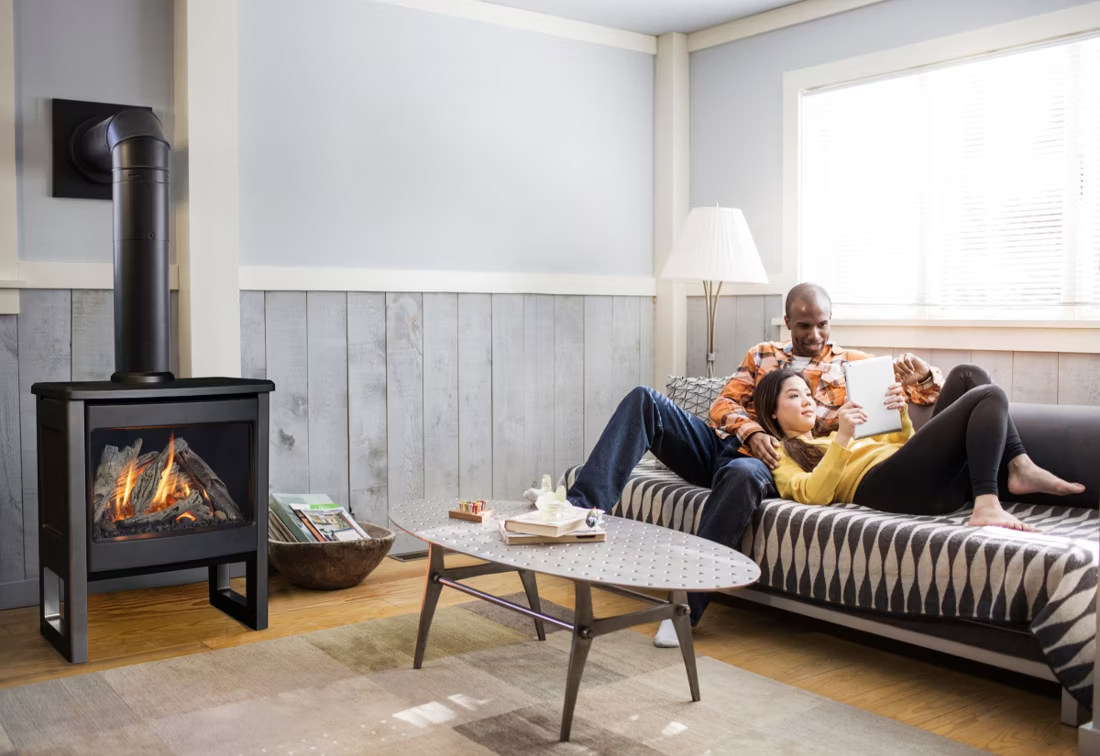
A gas fireplace is a fully built-in unit framed into a wall, typically used in new construction or a full remodel. A gas insert is sized to slide into an existing masonry firebox, sealing it and venting through the existing chimney—the common choice for Shady Side's older cottages with existing wood fireplaces. A gas stove is a freestanding cabinet unit that sits on the floor, useful in additions, sunrooms, or waterfront rooms without an existing chimney to reuse. Most homeowners here with an old wood fireplace go the insert route; those adding heat to a screened porch conversion or bay-view addition often prefer a freestanding stove.
Do I need a permit to install a gas fireplace in Shady Side?
Yes—Anne Arundel County's Department of Inspections and Permits requires a building permit for the fireplace installation and a separate permit for any propane tank placement or gas line work, typically pulled by a licensed gas-fitter or propane contractor. Because parts of Shady Side sit in FEMA-mapped flood zones given the area's low, 7-foot elevation, tank placement and any gas appliance located below base flood elevation may face additional siting requirements. A local propane installer or hearth dealer familiar with the peninsula will know how to site the tank correctly the first time.
What's the difference between vented and vent-free gas fireplaces, and does the bay air matter?
Vented (direct-vent) gas fireplaces draw combustion air from outside and exhaust it back outside through a sealed pipe—they're the cleanest, safest, and most universally code-compliant option. Vent-free units burn directly into the room and are legal in Maryland within room-size and ventilation limits, but they add moisture and combustion byproducts to indoor air, which is worth avoiding in a humid bay-side climate already prone to dampness and mildew in older homes. One more local wrinkle: salty, humid Chesapeake air can accelerate corrosion on lower-quality venting components over time, so ask your installer about stainless steel venting for any direct-vent unit near the water.
How often should my gas fireplace be serviced?
Plan on an annual inspection, ideally in early fall before regular use picks up. A technician checks the burner, pilot assembly, gas connections, and venting, and cleans the glass and interior—typically $150 to $250 for the visit. In a salt-air environment like Shady Side, it's also worth having the technician look over exterior vent caps and connectors for early corrosion, since coastal exposure can wear these components faster than it does farther inland.
Gas vs. wood—which is right for a Shady Side home?
Wood-burning fireplaces and stoves run on no electricity at all, which has real appeal on a peninsula where storm-driven outages happen most winters, and local oak, hickory, and maple firewood is easy to source. Gas trades that off for real convenience: instant heat at the flip of a switch, no ash or creosote, and none of the humidity-prone wood storage headaches that come with a low, damp waterfront lot. Many Shady Side homeowners land on a hybrid approach—a gas insert or stove for daily, no-fuss heat, with a wood-burning option kept or added elsewhere as true storm backup.
Why is my open fireplace making my house colder?
Open fireplaces suck—literally. As the fire burns, it consumes air your furnace already paid to heat and pulls it out through the chimney, so the house is actually colder after the fire goes out than before you lit it. An insert fixes this: it seals the chimney, puts fixed glass across the front, and turns that hole in your house into a real heat source.
Why is a fireplace insert so efficient?
An insert does two things: it seals the chimney completely, so you stop losing air you already paid to heat, and it radiates warmth into the room through the firebox and glass. Most add a heat-exchange fan that pulls cool room air underneath, wraps it around the hot firebox, and pushes it back out warm. Your home is more efficient before you've even lit the first fire.
What is an in-home preview and do I need one?
It's a visit where a hearth professional measures your space, confirms the model you picked actually works in your home, and walks the specs—framing, gas line, venting, finish work—before anything is ordered. Some details you just can't know until you see the house. Never make a down payment without one; it's the single most-skipped step that burns buyers.
Should the dealer who sells my fireplace also install it?
Ideally, yes. A fireplace project involves vent pipe, gas line, electrical, and often tile or stone. Hire three or four separate trades and you own the liability and the game of telephone between them. One company selling and installing means one accountable party, start to finish—ask about factory training, on-time completion records, and what happens if an inspection fails.
Nearby Dealers
Hearth shops serving Shady Side and the surrounding area. Every listing shows whether it is a WhyFire partner, a dealer we have verified as authorized for the brands we recommend, or a local business carrying hearth products. No manufacturer pays for placement. How we verify dealers →
Complete Chimneys Fireplaces & Grills
Costello's Hearth & Spa - Edgewater
Belair Engineering & Service Co, Inc
Masters Pellet Stoves
The Torch Guys
Affordable Outdoor Kitchens
Costello's Hearth & Spa - Pasadena
Costello's Hearth & Spa - Glen Burnie
Tri-County Hearth & Patio
Find your gas fireplace in Shady Side.
Tell us about your home and we'll match you with the right gas fireplace or insert, plus a free Project Guide & Parts List—including the exact vent kit and your recommended local dealer.
Find Your Fireplace →