
Real fire, none of the upkeep—right here in Severna Park.
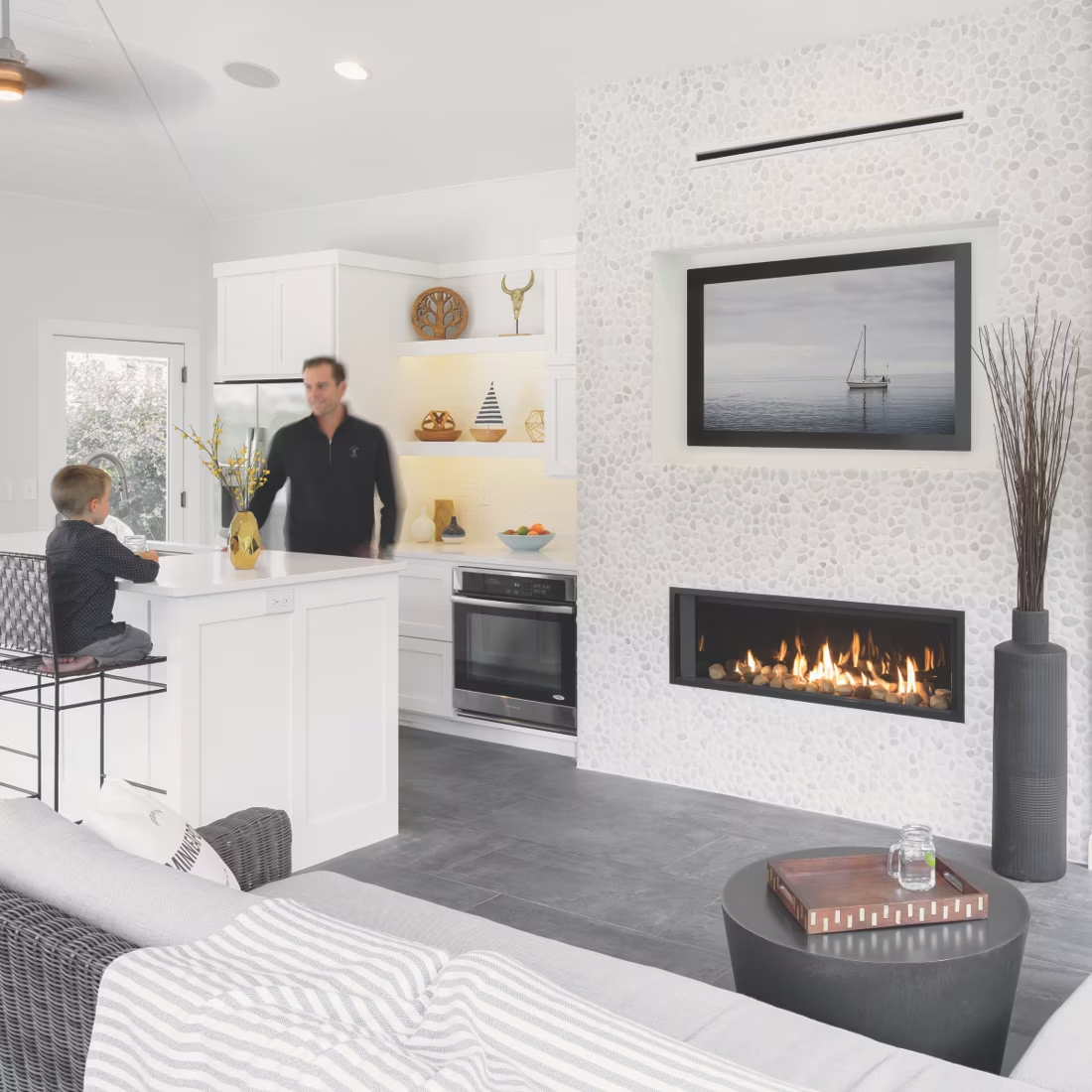
Direct-vent gas heat for Severn River winters, without the wood stacking or chimney maintenance. Find the right unit and connect with a trusted local dealer.
Every Project Starts From One of These Five Situations
Comfort that matches the Bay's mild winters.
Severna Park sits on the peninsula between the Severn and Magothy Rivers in Anne Arundel County, in climate zone 4A with a moderate winter heating season and average winter lows near 29°F. That's a fraction of what a place like Burlington, VT or Duluth, MN sees—this isn't a climate that demands wood heat for survival. What it does reward is a fireplace that turns on with a remote, holds steady heat through a January cold snap, and doesn't need tending after a long commute from Annapolis or Baltimore.
Many homes in Severna Park's older waterfront and colonial-style neighborhoods have existing masonry fireplaces that were built for oak and hickory cordwood but rarely get used because of the mess and draft loss. A gas insert is one of the most common upgrades local hearth dealers install here—it uses the chimney you already have, seals the draft, and delivers real heat instead of a fireplace that mostly just looks nice. Baltimore Gas & Electric (BGE) serves natural gas throughout most of the 21122, 21146, and 21108 zip codes, so most in-town installations don't require a propane tank at all.
Three steps. No salesperson until you're ready.
Tell us about your project
Your zip code, your situation, and the fuel you're leaning toward—or let the answers point you to one.
See what's actually available
The brands dealers within 100 miles genuinely carry—real options, never a catalog mirage.
Get your dealer & Project Guide
A trusted local dealer, plus the free Project Guide & Parts List that names every component of the job.
Frequently Asked Questions
How much does a gas fireplace installation cost in Severna Park?
Most gas fireplace and insert installations in the Severna Park area run somewhere between $4,200 and $9,800, depending on the unit and how much gas line and venting work is involved. Converting an existing masonry fireplace with a gas insert on a home already served by BGE natural gas tends to land on the lower end, since the gas line run is usually short. New direct-vent fireplaces for a remodel or an addition—where a fresh gas line has to be run from the meter and venting has to be routed through an exterior wall—sit toward the higher end. A local dealer will give you a firm number after walking your specific chimney or wall layout.
Can I convert my existing wood-burning fireplace to gas?
Yes, and it's one of the most requested projects among Severna Park homeowners with older colonial or waterfront-style houses. A gas insert slides into your existing masonry firebox, uses a stainless liner run up your current chimney for venting, and seals the whole opening so heat stops escaping up the flue. If your fireplace has been burning oak or hickory cordwood for years, the masonry and chimney are usually in fine shape structurally—the work is mostly the liner, the gas line tie-in, and the insert itself. Expect the project to run similarly to a new installation, generally in the $4,500 to $9,000 range depending on the insert model and how far the gas line has to travel from an existing appliance.
Is natural gas available in Severna Park, or do I need propane?
Most of Severna Park proper is served by natural gas through BGE, which makes a direct-vent gas fireplace straightforward if your home already has gas service for a furnace, water heater, or range. Some of the more rural or waterfront pockets around the Severn and Magothy—particularly properties on private roads or older lots that were never connected to the main gas line—rely on propane instead, either from an existing tank or a new one set by a local propane supplier. Either fuel works in the same fireplace models; your installer just configures the correct orifice and regulator for whichever gas you're running.
Will my gas fireplace still work if the power goes out?
For the most part, yes. Nor'easters and the remnants of Atlantic hurricanes are the main reason Severna Park loses power for a day or two some winters, and most modern gas fireplaces are built with that in mind. Units with intermittent pilot ignition (IPI) run on a small battery backup that kicks in the moment power drops, so the fireplace still lights on demand—you just need to keep fresh batteries in the unit. Valor fireplaces skip batteries entirely: their pilot generates its own electricity through the thermocouple, so the fireplace works whether the power's out for an hour or three days. If reliable heat during outages matters to you—and along the Bay, it often does—ask your local dealer about ignition type specifically.
What's the difference between a gas fireplace, gas insert, and gas stove?
A gas fireplace is a fully built-in unit framed into a wall—the right choice for new construction or a room addition without an existing chimney. A gas insert is built to slide into an existing masonry firebox and vent through the chimney you already have, which is the more common upgrade in Severna Park's older housing stock. A gas stove is a freestanding cast-iron or steel unit that sits on the floor on its own hearth pad, similar in footprint to a wood stove, and works well in a room with no chimney and no interest in framing one in. For most homeowners here with a fireplace that's underperforming, an insert is the straightforward answer.
Do I need a permit to install a gas fireplace in Severna Park?
Yes. Gas fireplace installations in unincorporated Anne Arundel County—which includes Severna Park—require a building permit and a gas permit through the Anne Arundel County Department of Inspections and Permits, and the gas line connection has to be done by a licensed gas fitter. Most established hearth dealers in the area pull these permits as part of the installation and schedule the required inspections, so you're not left coordinating separate trades yourself. This is one of the reasons it's worth using a dealer who does this work regularly rather than a general handyman.
Should I get a vented or vent-free gas fireplace?
Vented (direct-vent) gas fireplaces draw combustion air from outside and exhaust it back outside through a sealed pipe—they're the standard choice and produce genuine heat output without affecting indoor air. Vent-free units burn gas directly into the room with no external venting; Maryland permits them, but they come with strict room-size and ventilation requirements, and they release some water vapor and combustion byproducts indoors. Given that Anne Arundel County has no air quality non-attainment issues to work around and most Severna Park homes have straightforward exterior wall or chimney access, direct-vent units are what most local dealers install and recommend by a wide margin.
How often does a gas fireplace need to be serviced?
Plan on an annual inspection, ideally in early fall before the first cold snap off the Bay. A technician will check the burner and pilot assembly, inspect the venting for any blockage or nesting (common near the water), test the gas connections, and clean the glass and interior. It's a much lighter service than chimney sweeping for a wood-burning unit, and most gas service providers in the Severna Park and Annapolis area charge somewhere between $150 and $250 for the visit.
Gas vs. electric vs. wood—what makes sense for a Severna Park home?
With average winter lows around 29°F, Severna Park doesn't demand wood heat for survival the way a colder climate would, but plenty of homes still burn local oak and hickory for ambiance and backup warmth during outages. Gas fireplaces give you instant, thermostat-controlled heat with none of the wood handling, and they work well as a primary heat source in a main living space. Electric fireplaces are the lowest-cost install—often under $1,200—and simplest option for a room where venting isn't practical, but running one regularly at BGE's residential rate of about $0.1612 per kWh costs more per BTU than gas over a full winter. For most Severna Park homeowners upgrading an underused masonry fireplace, gas hits the best balance of heat output, cost, and convenience.
Why is my open fireplace making my house colder?
Open fireplaces suck—literally. As the fire burns, it consumes air your furnace already paid to heat and pulls it out through the chimney, so the house is actually colder after the fire goes out than before you lit it. An insert fixes this: it seals the chimney, puts fixed glass across the front, and turns that hole in your house into a real heat source.
Is my gas fireplace wasting gas?
If it was installed more than 15 years ago, probably. Older gas fireplaces keep a standing pilot light burning all the time, and that little flame can cost a couple hundred dollars a year. Newer models use pilot-on-demand ignition—the pilot lights only when you use the fireplace and goes out when you turn it off.
Can a fireplace actually lower my heating bill?
Yes—by creating a comfort zone. A furnace heats every square foot of the house just to warm the one room you're in; a gas fireplace on low burns roughly a sixth of the gas a typical furnace does. Set the furnace around 55–60 degrees as a baseline, then heat the rooms your family actually uses. Families who heat this way commonly save $20–$60 a month.
Can I install a fireplace myself?
If you're putting a fire in your house on purpose, it's best to work with an expert. Unless you're genuinely experienced in framing, gas line, vent pipe, and the national code on clearances to combustibles, have a professional do it—and ideally the same company that sells you the fireplace, so warranty, service, and liability all live under one roof.
Nearby Dealers
Hearth shops serving Severna Park and the surrounding area. Every listing shows whether it is a WhyFire partner, a dealer we have verified as authorized for the brands we recommend, or a local business carrying hearth products. No manufacturer pays for placement. How we verify dealers →
Complete Chimneys Fireplaces & Grills
Costello's Hearth & Spa - Pasadena
Affordable Outdoor Kitchens
Costello's Hearth & Spa - Glen Burnie
The Torch Guys
Costello's Hearth & Spa - Edgewater
Masters Pellet Stoves
Fireside Hearth & Home - Elkridge
Trinity Chimney Service
Belair Engineering & Service Co, Inc
Ace Of Diamonds Chimney
Hunters Home Center
Westlake Ace Hardware
Capitol Chimney Service
Fireplaces And Stoves Md
Chimney.com
Watson's Fireplace & Patio
Find your gas fireplace in Severna Park.
Tell us a bit about your home and we'll match you with a trusted local dealer and send over a free Project Guide & Parts List—the exact parts, including the vent kit, for your gas fireplace project in Severna Park.
Find Your Fireplace →