
Instant heat in a town the gas mains never reached.
Poolesville sits inside Montgomery County's Agricultural Reserve, where winter lows average 25°F and the heating season runs long and cold—but almost no street has a natural gas main. I'll match you with a trusted local dealer who knows how to do this right on propane.
Every Project Starts From One of These Five Situations
Most of the Ag Reserve runs on propane, not a pipeline.
At 390 feet along the Potomac River plain, Poolesville sees a milder winter than Western Maryland but still logs a long, cold heating season with winter lows that average 25°F, with plenty of nights dipping colder. The town's population of under 6,000 is spread across a zip code (20837) that's mostly protected farmland—the whole point of the Agricultural Reserve zoning that surrounds Poolesville—and that low-density, preserved landscape is exactly why the utility pipeline networks serving denser Montgomery County suburbs like Rockville never extended out this far.
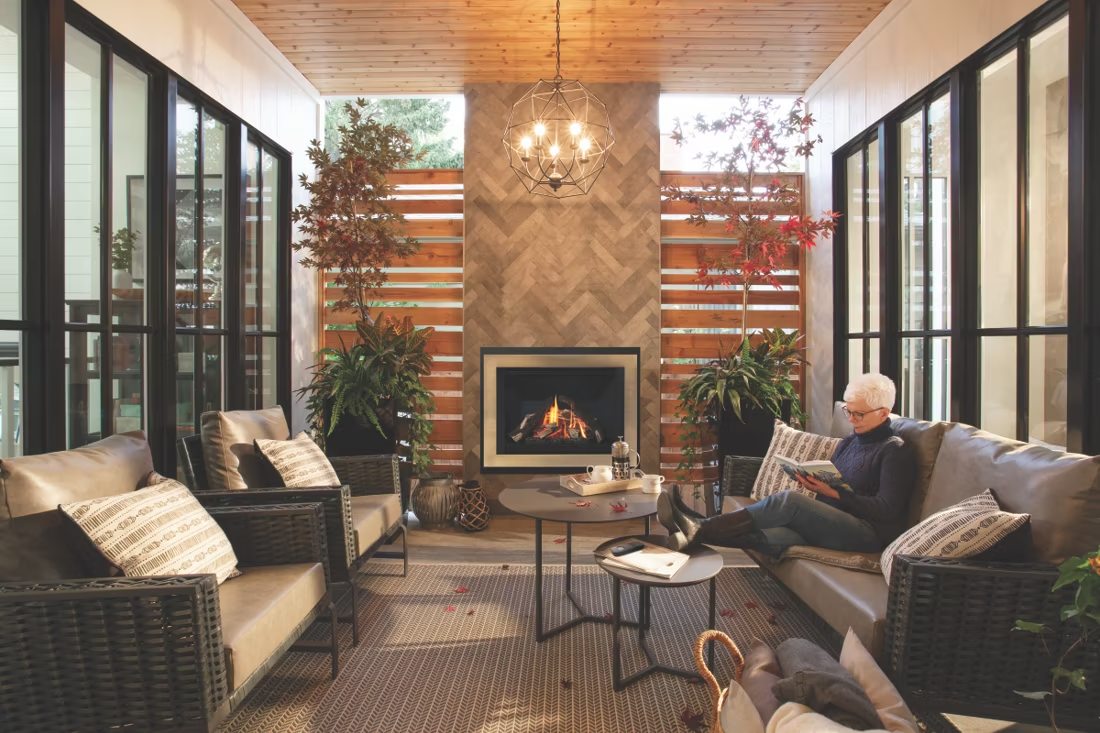
So when a Poolesville homeowner asks about a 'gas fireplace,' the practical answer is almost always propane: a buried or aboveground tank feeding a direct-vent insert or built-in unit, not a tie-in to a city gas line. It works the same way day to day—remote start, no cordwood to split—and it sidesteps the outages that come with Potomac Edison's rural distribution lines during ice storms. Plenty of neighbors here still burn oak, hickory, and maple from the Reserve's hardwood stands, or run a pellet stove on regional fuel like Energex or Greene Team, but for a fireplace that fires instantly with no chimney upkeep, propane gas is the local standard.
Three steps. No salesperson until you're ready.
Tell us about your project
Your zip code, your situation, and the fuel you're leaning toward—or let the answers point you to one.
See what's actually available
The brands dealers within 100 miles genuinely carry—real options, never a catalog mirage.
Get your dealer & Project Guide
A trusted local dealer, plus the free Project Guide & Parts List that names every component of the job.
Frequently Asked Questions
How much does a gas fireplace installation cost in Poolesville?
Because there's no natural gas main to tap into, most Poolesville installs are propane-fed, and that changes the cost math slightly from a typical D.C.-suburb quote. A direct-vent insert into an existing masonry firebox, with a line run to a nearby or existing propane tank, generally runs $3,800-$8,500. A new built-in unit for a remodel, requiring fresh gas line work and a first-time tank set (roughly $500-$1,800 depending on size and whether it's buried), lands closer to $8,000-$11,500. Ask your dealer whether they're pricing off an existing tank or a new one—that's the single biggest swing factor here.
Can I convert my existing wood fireplace to gas in a house without natural gas service?
Yes—it's a common project on the older farmhouses around Poolesville that were originally built with a masonry firebox for oak or hickory. A propane insert typically slides into that existing opening with a stainless liner run through the current chimney, and the propane line ties in from a tank set outside, often the same tank already feeding the range or water heater if the house has one. Expect roughly $4,000-$8,500 depending on tank setup, and know that once it's in, you're free of the chimney sweeps and wood stacking a masonry fireplace demanded.
Do I need natural gas service, or should I plan on propane?
Plan on propane. Poolesville's location inside the Agricultural Reserve means the piped natural gas networks that reach denser parts of Montgomery County generally stop well short of town, and there's no indication that's changing given the zoning that protects the surrounding farmland from denser utility buildout. If your water heater, range, or furnace already run on propane, adding a fireplace is usually a simple tie-in to the existing tank or a small capacity upgrade. If you don't have a tank yet, your dealer can coordinate the tank set as part of the fireplace project.
Will a propane fireplace still work if the power goes out?
Most will, and that matters in a rural area served by Potomac Edison's overhead lines, which are more exposed to ice and downed-tree outages than tighter-grid suburbs closer to D.C. Units with intermittent pilot ignition (IPI) run on AA battery backup that kicks in automatically when the power drops. Some Valor models skip the battery altogether since their pilot generates its own current through the thermocouple. For a Poolesville home where an outage might mean waiting on a rural repair crew, ask your dealer specifically about the ignition system before you settle on a model.
What's the difference between a gas fireplace, insert, and stove for my house?
A gas fireplace is a built-in unit framed into a wall—common in newer construction or an addition. A gas insert fits into an existing masonry firebox, which is the typical retrofit on Poolesville's older farmhouses that originally burned oak or hickory in an open hearth. A gas stove is freestanding on a hearth pad, running off a propane line rather than cordwood, and it's a reasonable option in a home with no chimney at all. For most existing homes in town, an insert is the least disruptive and cheapest of the three to install.
Do I need a permit to install a gas fireplace in Poolesville?
Yes. Depending on the scope of the work, you'll pull a building permit through the Town of Poolesville or Montgomery County's Department of Permitting Services (DPS), plus the propane line and tank placement need to meet Maryland fire code setback distances from the house, property line, and any windows or vents. Most propane suppliers and hearth dealers who work in this part of the county handle both the permit paperwork and the tank siting as part of the installation, which saves you from coordinating the trades yourself.
Should I get a direct-vent or vent-free gas fireplace?
Direct-vent units draw combustion air from outside and exhaust it back outside through sealed venting, and that's what most local dealers install and what Maryland code favors for daily, all-season use. Vent-free units burn into the room and are legal in Maryland with strict room-size and ventilation rules, but they're a harder sell for a primary heat source running through a long, cold winter. Poolesville doesn't carry any special air quality restrictions the way some non-attainment areas do, but direct-vent is still the safer, lower-maintenance choice for a unit that's going to run for months at a stretch.
How often does a propane fireplace need servicing?
Plan on an annual check, ideally in late summer or early fall before the first cold snap rather than mid-winter, when technicians serving rural Montgomery County are booked out. A tech checks the burner, pilot assembly, propane line connections, and venting, and cleans the glass—typically $150-$275 for a standard visit. Propane systems also warrant an occasional look at the tank and regulator, especially after a hard freeze, since regulator issues show up more in cold weather than gas-line problems do.
Gas vs. wood—which makes more sense for a Poolesville home?
Wood—oak, hickory, and maple are the species most commonly split locally off Ag Reserve land—still wins on fuel cost and keeps working with zero electricity or propane delivery needed, which matters when Potomac Edison's rural lines go down during an ice storm. Propane gas wins on daily convenience: no ash, no stacking, instant heat at the push of a button. A fair number of households in town end up running a propane fireplace or insert as the everyday heat source in the main living room, then keeping a wood stove or fireplace elsewhere in the house as backup for extended outages.
Why is a fireplace insert so efficient?
An insert does two things: it seals the chimney completely, so you stop losing air you already paid to heat, and it radiates warmth into the room through the firebox and glass. Most add a heat-exchange fan that pulls cool room air underneath, wraps it around the hot firebox, and pushes it back out warm. Your home is more efficient before you've even lit the first fire.
Is my gas fireplace wasting gas?
If it was installed more than 15 years ago, probably. Older gas fireplaces keep a standing pilot light burning all the time, and that little flame can cost a couple hundred dollars a year. Newer models use pilot-on-demand ignition—the pilot lights only when you use the fireplace and goes out when you turn it off.
How much should I budget for a fireplace?
For an average home—covering the fireplace, the vent pipe, and basic installation—a budget between $3,900 and $5,500 gives you a lot of options across wood, gas, and pellet. By the time you add finish work, gas line, and electrical, the average complete installation lands between $5,000 and $12,000 all-in. In a remodel or new build, a good rule is to put about 2.5% of the total project cost toward the fireplace.
Does a fireplace add value to my home?
On average, a fireplace adds back to the home about the same amount you spent installing it. Add the monthly savings from heating the rooms you actually use instead of the whole house—often hundreds of dollars a year—and the value case is strong before you even count what a fire does for how your family uses the room.
Nearby Dealers
Hearth shops serving Poolesville and the surrounding area. Every listing shows whether it is a WhyFire partner, a dealer we have verified as authorized for the brands we recommend, or a local business carrying hearth products. No manufacturer pays for placement. How we verify dealers →
Lawn & Leisure
Genesis Chimney Services
Aspen Green Gasworks
Bodmer's Stoves And Pottery
The Fireplace Shop
Costello's Hearth & Spa - Rockville
Cyprus Air
Holtzman Propane
Best Htg And Air
Homeliving Fireplaces
Chelsea's Chimney
Deckscapes Of Virginia
Chimney.com
Capitol Chimney Service
Get your free Project Guide & Parts List for a Poolesville gas fireplace.
Tell me about your home, your existing propane setup if you have one, and I'll match you with a trusted local dealer and send a free Project Guide & Parts List with the exact tank, line, and vent kit specs your project needs.
Find Your Fireplace →