
Warm, Bright, and Effortless—Any Room, Any Home.
From Columbia's village townhomes to Ellicott City's historic rowhomes, electric fireplaces bring zone heat and real ambiance to Howard County homes without a chimney, a gas line, or an HOA fight. Find the right unit and connect with a trusted local dealer.
Every Project Starts From One of These Five Situations
The heat option that fits everywhere in the county.
Howard County is a study in contrasts—the planned villages of Columbia (Wilde Lake, Long Reach, Owen Brown, King's Contrivance, Hickory Ridge, River Hill), the historic mill town of Ellicott City, and newer subdivisions spreading out through Clarksville, Fulton, and North Laurel. At climate zone 4A with a solid winter heating season and winter lows averaging 26°F, the county sees real cold—colder than Washington but nowhere near the sustained sub-zero stretches of Duluth MN or Fargo ND. Most homes here already lean on a gas furnace or heat pump for whole-house heating, which means the fireplace question in Howard County usually isn't about survival heat—it's about adding warmth and glow to a specific room without opening a wall for venting.
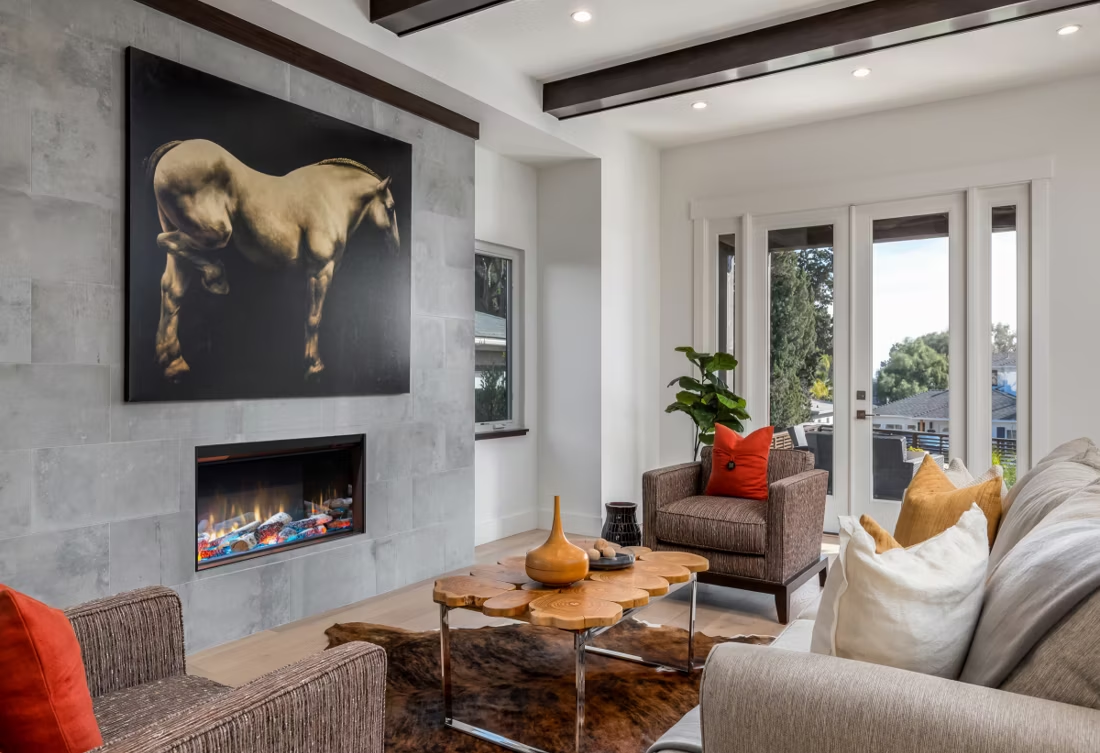
That's exactly the gap electric fills. BGE (Baltimore Gas and Electric Company) serves electric service across the entire county, and an electric fireplace or insert runs on a standard outlet or a dedicated circuit—no flue, no gas line, no masonry chimney. That matters a lot in Columbia's condo and townhome communities, where HOA rules often restrict exterior modifications, and in Ellicott City's historic district, where altering a facade or chimney for venting can trigger a whole separate review. Electric also solves the problem for finished basements in Clarksville and Fulton and for bedroom retrofits in older homes without an existing flue—plug it in, mount it, and you have heat and ambiance the same afternoon.
Three steps. No salesperson until you're ready.
Tell us about your project
Your zip code, your situation, and the fuel you're leaning toward—or let the answers point you to one.
See what's actually available
The brands dealers within 100 miles genuinely carry—real options, never a catalog mirage.
Get your dealer & Project Guide
A trusted local dealer, plus the free Project Guide & Parts List that names every component of the job.
Frequently Asked Questions
How much does an electric fireplace installation cost in Howard County?
Costs vary widely by format. A freestanding or tabletop electric unit runs $150 to $600 with no installation required beyond plugging it in. A wall-mounted or built-in electric insert set into an existing opening, TV wall, or media console typically runs $800 to $2,500 once you factor in mounting hardware and, if needed, a licensed electrician to run a dedicated circuit. Custom builds—a full mantel surround or a media wall with integrated electric fireplace in a Clarksville or Fulton great room—can run $3,000 to $6,000 including carpentry. Because there's no venting or gas work, electric is consistently the least expensive fireplace option available in the county.
Do I need a permit to install an electric fireplace in Howard County?
In most cases, no. Because electric units don't require venting, a chimney, or gas work, they typically fall outside the mechanical and building permit requirements that apply to wood or gas installations through the Howard County Department of Inspections, Licenses and Permits (DILP). The one exception: if your installation requires a new dedicated circuit or panel work, that portion needs an electrical permit and should be pulled by a licensed electrician. A simple plug-in or existing-outlet installation needs no permit at all—one of the reasons electric is such a popular retrofit option in Columbia's condo and townhome communities.
Can I install an electric fireplace in my Columbia condo or townhome?
Yes, and it's one of the most common electric fireplace projects in the county. Many Columbia village HOAs—Wilde Lake, Oakland Mills, Long Reach, Owen Brown, Dorsey's Search, and others—restrict exterior modifications like new chimneys, flues, or vent penetrations, which rules out wood and complicates gas in a lot of these units. An electric insert or wall-mounted unit requires none of that; it goes in without touching the building envelope. Most HOAs have no objection at all, though it's still worth a quick check of your association's interior modification rules before a built-in install with new electrical work.
What about installing electric heat in an Ellicott City historic home?
Electric is often the easiest path for historic Ellicott City properties. Homes in the historic district can face real restrictions on altering chimneys, facades, or roof penetrations for new venting—which makes wood-burning conversions or new gas fireplaces a slower, more complicated process. An electric insert set into an existing (even non-functional) fireplace opening, or a wall-mounted unit in a room without a hearth at all, changes nothing about the exterior of the home. It's a practical way to get supplemental heat and fireplace ambiance in a house where the historic district review board has a say in anything visible from the street.
How much does it cost to run an electric fireplace on my BGE bill?
Most electric fireplace heaters draw around 1,500 watts on high—running one for an evening costs roughly 20 to 30 cents an hour at typical BGE residential electric rates, or a few dollars for several hours of use. That's meaningfully cheaper than heating an entire home with electric resistance heat, because you're only warming the room you're in rather than the whole house. Many Howard County homeowners use their electric fireplace to take the edge off a bedroom or home office on shoulder-season mornings, letting the central heat pump or furnace run at a lower setpoint for the rest of the house—a small but real savings over a solid winter heating season.
What's the difference between an electric fireplace, insert, and stove?
An electric fireplace is typically a wall-mounted or built-in unit designed to sit flush in a framed opening or media wall—common in newer Fulton and Clarksville construction. An electric insert is sized to slot into an existing masonry or prefab firebox, which is the more common route in older Ellicott City and Elkridge homes that already have a fireplace opening but no working chimney. An electric stove is a freestanding cabinet-style unit that mimics a wood or gas stove's footprint without any venting requirement—a good fit for a converted sunroom or basement corner. All three plug into standard household power or a dedicated circuit; none require a chimney.
Is an electric fireplace enough heat for a Howard County winter?
As supplemental or zone heat, yes—as your only heat source, no. Most electric fireplace inserts put out 4,000 to 5,000 BTU (roughly 1,500 watts), enough to noticeably warm a bedroom, home office, or finished basement room, especially given Howard County's relatively moderate winter lows around 26°F. But across a full winter heating season, the county still needs a real HVAC system—gas furnace or heat pump—to carry the whole house. Think of an electric fireplace the way most Howard County homeowners actually use one: turning off (or turning down) the thermostat in one room while the fireplace handles the comfort layer there.
Why don't more Howard County homes have wood-burning fireplaces?
They exist, but they're the exception rather than the rule here. Howard County's housing stock is dominated by planned communities like Columbia, HOA-governed townhomes, and newer subdivisions in Clarksville and Fulton—settings where chimney construction, wood storage, and HOA exterior-modification rules make wood-burning installs impractical. You'll still find wood stoves in older, larger-lot homes out toward Cooksville and Woodbine in the county's rural west, where oak, hickory, and maple are all locally available for firewood. But for the majority of the county's housing—condos, townhomes, and post-1980s subdivisions—electric fills the ambiance-and-warmth role that wood covers in more rural parts of Maryland.
Electric vs. gas fireplace—which is right for my Howard County home?
Gas is the better choice if you want higher heat output, a more realistic flame, and you already have (or can easily add) natural gas service—common in Columbia and Ellicott City proper, where BGE gas lines run through most established neighborhoods. Electric is the better choice if you want the lowest installed cost, zero venting or gas line work, flexibility to place the unit almost anywhere in the house, and a straightforward retrofit for a condo, townhome, or historic-district property where exterior changes are restricted. Some Howard County homeowners choose gas for a primary living room fireplace and electric for a secondary space like a primary bedroom or basement—getting the best of both without over-investing in either room.
Does an electric fireplace need a vent or chimney?
No—that's its superpower. An electric fireplace needs a wall and an outlet, period. No vent pipe, no gas line, no clearances to design around, which is why it works in bedrooms, offices, apartments, and walls where venting a gas or wood unit would be impractical or impossible. Installation is typically the simplest and least expensive of any fireplace type.
Can I put a TV above my fireplace?
Yes—with an asterisk. Fireplaces are hot and TVs don't like heat. Either put a mantel between them to deflect rising warmth, or choose a fireplace with heat-management technology that creates a cool zone on the wall above—the wall stays around 125 degrees, barely warm, while the room still gets full heat. If you like clean lines and don't want a mantel, heat management is the answer.
Can a fireplace actually lower my heating bill?
Yes—by creating a comfort zone. A furnace heats every square foot of the house just to warm the one room you're in; a gas fireplace on low burns roughly a sixth of the gas a typical furnace does. Set the furnace around 55–60 degrees as a baseline, then heat the rooms your family actually uses. Families who heat this way commonly save $20–$60 a month.
Does a fireplace add value to my home?
On average, a fireplace adds back to the home about the same amount you spent installing it. Add the monthly savings from heating the rooms you actually use instead of the whole house—often hundreds of dollars a year—and the value case is strong before you even count what a fire does for how your family uses the room.
Stove and Fireplace Dealers in Howard County
Fireside Hearth & Home - Elkridge
Find your electric fireplace in Howard County.
Tell us about your room, your home, and what's holding you back—HOA rules, no existing chimney, or just wanting simple heat—and we'll put together a free Project Guide & Parts List with the right unit and a trusted local Howard County dealer to install it.
Find Your Fireplace →