
Add real warmth to any room without the venting hassle.
From finished basements in Urbana's newer subdivisions to older Frederick County farmhouses without a working chimney, electric heat drops in fast. Find the right unit and connect with a trusted local dealer.
Every Project Starts From One of These Five Situations
Zone heat that fits any room, no chimney required.
Green Valley sits at about 657 feet in Frederick County, with winter lows averaging around 24°F and a real Mid-Atlantic winter heating load—a real Mid-Atlantic winter, but nowhere near what a place like Burlington, Vermont sees. That moderate climate is part of why electric fireplaces do so well here: homeowners aren't fighting single-digit nights, they're looking to take the edge off a chilly bedroom, finish a basement in one of the newer Urbana-area subdivisions, or add ambiance to a sunroom without opening a wall for gas or masonry work.
Electric service comes through The Potomac Edison Company at roughly 13.26 cents per kWh, which makes running a typical 1,500-watt unit cost about 20 cents an hour—cheap enough to use as everyday zone heat in a room you actually occupy rather than heating the whole house. And because there's no venting, no gas line, and often no permit at all for a plug-in insert, electric is the fastest path to a working fireplace in both the older farmhouses scattered through 21771 and the newer construction going up around 21770 and 21754.
Three steps. No salesperson until you're ready.
Tell us about your project
Your zip code, your situation, and the fuel you're leaning toward—or let the answers point you to one.
See what's actually available
The brands dealers within 100 miles genuinely carry—real options, never a catalog mirage.
Get your dealer & Project Guide
A trusted local dealer, plus the free Project Guide & Parts List that names every component of the job.
Frequently Asked Questions
How much does an electric fireplace installation cost in Green Valley?
A plug-in electric insert or freestanding stove typically runs $400 to $1,200 installed, since most just need an existing outlet and a few minutes of mounting work. A hardwired built-in unit set into a wall or custom mantel runs higher—usually $2,500 to $6,000—because it often requires a dedicated 20-amp circuit and an electrician to run it, plus carpentry for the surround. Homes in the newer Urbana-area subdivisions with modern panels usually land on the lower end of that range; older Frederick County farmhouses with dated electrical service sometimes need a panel upgrade first, which adds cost.
Do electric fireplaces actually produce heat, or are they just for looks?
Most electric fireplaces include a built-in heater, usually rated around 1,500 watts (about 5,000 BTU), which is enough to comfortably warm a single room of 300 to 400 square feet. That's supplemental heat, not a whole-house solution—it won't replace your furnace on a 24°F night—but it's genuinely effective for the finished basements and bonus rooms common in Green Valley's newer construction, where central heat sometimes struggles to reach. Nearly every unit also lets you run the flame effect with the heater switched off, which is popular in three-season sunrooms.
Do I need a permit to install an electric fireplace in Green Valley?
For a standard plug-in insert or freestanding unit, no—since there's no venting, gas line, or structural chimney work involved, Frederick County generally doesn't require a building permit. If you're having a built-in unit hardwired with a new dedicated circuit, that electrical work typically does require a permit through the Frederick County Division of Permitting and Development Review, and it should be pulled by a licensed electrician rather than a handyman. Most local dealers who handle built-in installs will coordinate this for you.
What does it cost to run an electric fireplace with Potomac Edison rates?
At Potomac Edison's residential rate of about 13.26 cents per kWh, a 1,500-watt electric fireplace costs roughly 20 cents per hour to run on the heat setting, or about $4.75 for a full 24-hour day if you left it running continuously, which most people don't. Realistically, using it as evening zone heat in a Green Valley living room or basement for a few hours a night runs closer to $10-$15 a month—a fraction of what it costs to heat the same space with baseboard electric resistance heat or an oversized space heater.
Electric vs. wood vs. gas—what makes sense for my Green Valley home?
Air quality isn't a restriction here the way it is in some Western cities, and oak, hickory, and maple firewood are all readily available locally, so wood remains a solid option for anyone who wants real fire and backup heat during an outage. Gas offers instant, consistent heat but requires a gas line or propane tank and professional venting. Electric wins on simplicity: no fuel to store, no chimney to sweep, no combustion byproducts, and it's the only option that works cleanly in a rented townhome or condo in the newer Urbana developments where modifying the exterior isn't an option. The tradeoff is that electric fireplaces do nothing for you during a power outage, unlike a wood stove.
What's the difference between an electric insert, a built-in, and a freestanding electric stove?
An electric insert is sized to slide into an existing masonry fireplace opening, which makes it the easiest upgrade for a Frederick County farmhouse with an old, rarely-used wood fireplace. A built-in unit is designed to be framed into a wall from scratch, which is common in newer Green Valley-area construction where there's no existing firebox at all. A freestanding electric stove looks like a traditional wood stove and just needs a nearby outlet, making it a good renter-friendly option since it requires no modification to the room at all.
Can I add an electric fireplace to an older home that never had one?
Yes, and it's one of the more common projects local dealers handle around Green Valley. Because electric units need no chimney, flue, or gas line, they can go into a wall of an addition, a finished basement, or a bedroom in a decades-old farmhouse in the 21771 area that was never built with a fireplace. The main thing to check first is whether the circuit you're using can handle the load, which is why a licensed electrician should be involved for any hardwired install.
What are good electric fireplace brands to look for?
Dimplex, Napoleon, and Touchstone are the brands most local Frederick County dealers carry and service, and all three make realistic flame technology that's noticeably better than the fireplaces sold at big-box stores a decade ago. Dimplex's Opti-myst and flame-effect lines are popular for ambiance-focused installs like sunrooms, while Napoleon's built-in linear units are common in basement remodels. A local dealer can show you the flame technology in person, which matters more than most people expect once you're looking at it in your own living room.
How much maintenance does an electric fireplace need?
Very little compared to wood or gas. There's no chimney to sweep, no annual gas line inspection, and no creosote to worry about. Most upkeep is just occasionally dusting the heater vents and, every several years, replacing an LED flame bulb—a $20-$40 part most homeowners can swap themselves. That low-maintenance profile is part of why electric fireplaces are popular in the townhome and condo developments around Green Valley, where nobody wants to schedule an annual chimney sweep.
Can I put a TV above my fireplace?
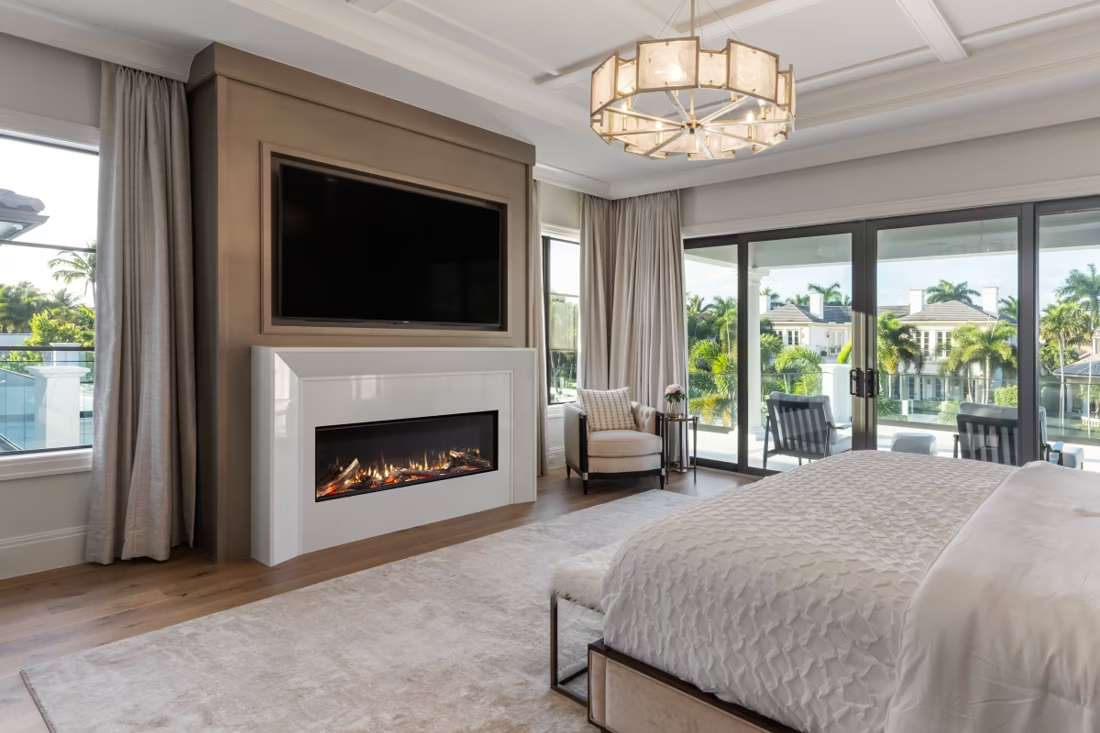
Yes—with an asterisk. Fireplaces are hot and TVs don't like heat. Either put a mantel between them to deflect rising warmth, or choose a fireplace with heat-management technology that creates a cool zone on the wall above—the wall stays around 125 degrees, barely warm, while the room still gets full heat. If you like clean lines and don't want a mantel, heat management is the answer.
What fireplace styles should I know before shopping?
Four cover most of the market: screen-front traditional (mesh front, open feel, fits craftsman homes), traditional door set (the classic look you grew up with), modern linear (wide, low, the statement piece for entertaining), and clean face contemporary (no trim—your tile or stone runs right to the fire's edge). Walk in knowing those four terms and you're ahead of most buyers.
Does a fireplace add value to my home?
On average, a fireplace adds back to the home about the same amount you spent installing it. Add the monthly savings from heating the rooms you actually use instead of the whole house—often hundreds of dollars a year—and the value case is strong before you even count what a fire does for how your family uses the room.
Can a fireplace actually lower my heating bill?
Yes—by creating a comfort zone. A furnace heats every square foot of the house just to warm the one room you're in; a gas fireplace on low burns roughly a sixth of the gas a typical furnace does. Set the furnace around 55–60 degrees as a baseline, then heat the rooms your family actually uses. Families who heat this way commonly save $20–$60 a month.
Nearby Dealers
Hearth shops serving Green Valley and the surrounding area. Every listing shows whether it is a WhyFire partner, a dealer we have verified as authorized for the brands we recommend, or a local business carrying hearth products. No manufacturer pays for placement. How we verify dealers →
Best Htg And Air
Bodmer's Stoves And Pottery
Chelsea's Chimney
The Fireplace Shop
Costello's Hearth & Spa - Rockville
Cyprus Air
Westlake Ace Hardware
Magic Mountain Chimney
Chimney.com
Ash Away Chimney Services
Capitol Chimney Service
Glyndon Gardens
Electric Service in Green Valley
An electric fireplace's heater draws about 1,500 watts—pennies per hour at local rates.
The Potomac Edison Company
Find your electric fireplace in Green Valley.
Tell us a bit about your home and we'll put together a free Project Guide & Parts List for your electric fireplace project—the right unit, the exact parts, and a trusted local Green Valley-area dealer to install it.
Find Your Fireplace →