
Warm, Instant Heat for Elkridge Winters—On Your Schedule.
Elkridge winters rarely demand a woodpile—they demand a fireplace that turns on when you flip a switch. Find the right gas unit and get matched with a trusted local dealer.
Every Project Starts From One of These Five Situations
Convenience over cordwood in the Patapsco Valley.
Elkridge sits along the Patapsco River in Howard County, roughly halfway between Baltimore and Columbia, at just 122 feet of elevation. Winters here are mild by national standards—average lows around 25°F and about 4,484 heating degree days, a fraction of what a place like Buffalo, NY or Duluth, MN sees in a given winter. There's no real wood-cutting culture here, no national forest permits to pull, and lot sizes in most Elkridge subdivisions don't leave much room for a stacked woodpile.
What Elkridge does have is dense natural gas infrastructure through BGE (Baltimore Gas & Electric), which serves most of the area's older mill-town neighborhoods along with the newer development around Route 100 and the BWI corridor. That combination—mild winters, reliable gas service, and suburban lot constraints—is exactly why gas fireplaces and inserts, not wood stoves, are the dominant hearth upgrade in Elkridge. A gas insert turns a drafty masonry fireplace in one of the area's older colonials into real, on-demand zone heat, without ash, smoke, or a permit to cut fuel.
Three steps. No salesperson until you're ready.
Tell us about your project
Your zip code, your situation, and the fuel you're leaning toward—or let the answers point you to one.
See what's actually available
The brands dealers within 100 miles genuinely carry—real options, never a catalog mirage.
Get your dealer & Project Guide
A trusted local dealer, plus the free Project Guide & Parts List that names every component of the job.
Frequently Asked Questions
How much does a gas fireplace installation cost in Elkridge?
Most Elkridge gas fireplace installations run between roughly $4,000 and $10,500, depending on the unit, the venting path, and whether new gas line work is required. A direct-vent insert going into an existing masonry fireplace with gas already run to that wall sits toward the lower end. A new built-in gas fireplace for a remodel or addition—with framing, venting, and a gas line extension from the meter—lands in the middle to upper end. Homes on the far edges of Elkridge that rely on propane rather than BGE service can see slightly higher costs if a new tank is part of the job. A local dealer will give you a firm number after seeing the space.
Can I convert an old masonry fireplace to gas in an older Elkridge home?
Yes, and it's one of the more common projects in Elkridge's older sections near the historic mill village and along US-1, where many homes have original brick fireplaces that were never great at actually heating a room. A gas insert with a stainless liner run up your existing chimney typically runs $4,000 to $8,500 depending on the model and whether your home already has a gas line nearby. Because BGE gas service is well established through most of Elkridge, this is usually a straightforward retrofit rather than a major infrastructure project.
Is natural gas available throughout Elkridge, or do some homes need propane?
Most of Elkridge is within BGE's natural gas territory, particularly the denser neighborhoods closer to US-1 and the Route 100 corridor. Some outlying properties toward the Patapsco Valley State Park side or on larger rural-feeling lots may not have a gas main nearby, in which case propane—with either an existing tank or a new one installed by a local propane supplier—is the standard fallback. Either fuel works in the same fireplace hardware; your installer just sets the orifice and regulator for whichever gas you're running.
Will a gas fireplace still work if BGE service goes down?
It depends on the ignition system, not just the fuel. Units with intermittent pilot ignition (IPI) run on a small internal battery backup and will light on demand even without household power—you just need to keep fresh batteries in the unit. Valor's gas fireplaces take a different approach: the pilot's thermocouple generates the small amount of electricity the unit needs, so there's no battery to remember at all. For Elkridge homes that occasionally lose power during a Mid-Atlantic ice storm or nor'easter, either approach keeps the fireplace usable—standard millivolt or battery-backup IPI models are worth asking about specifically when you talk to a local dealer.
What's the difference between a gas fireplace, gas insert, and gas stove?
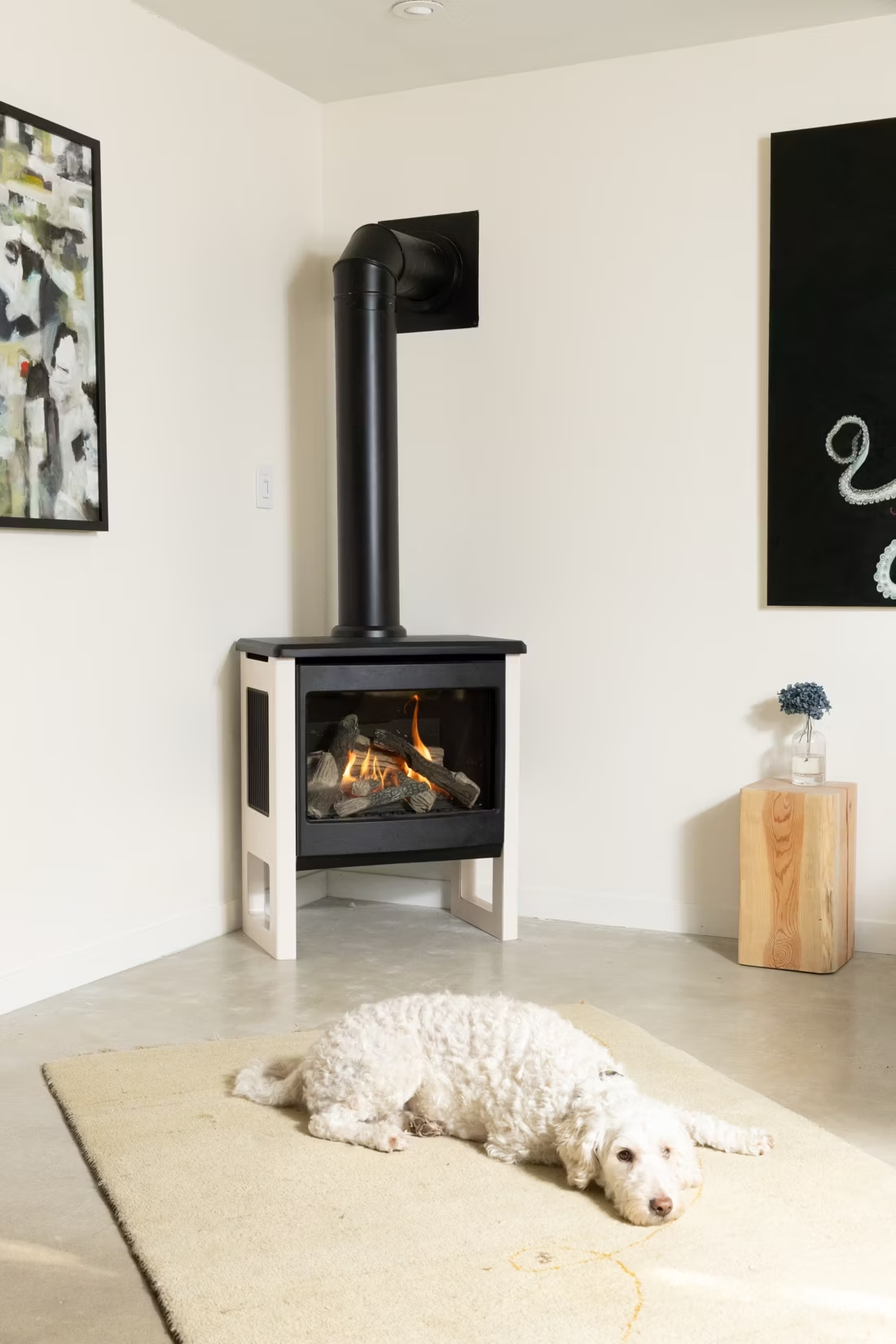
A gas fireplace is a fully built-in unit framed into a wall—the right call for new construction or a remodel without an existing hearth. A gas insert slides into an existing masonry fireplace opening and uses the chimney as its vent path, which is the common choice in Elkridge's older brick-fireplace homes. A gas stove is a freestanding cabinet-style unit that sits on the floor, useful in a room without any existing fireplace or chimney at all. Most Elkridge homeowners with an existing hearth end up choosing an insert; newer homes without one usually go with a built-in fireplace.
Do I need a permit to install a gas fireplace in Elkridge?
Yes. Elkridge is an unincorporated community, so building and gas line permits for a new fireplace installation go through the Howard County Department of Inspections, Licenses and Permits rather than a city office. The gas line connection specifically has to be done by a licensed gas-fitter. Most established hearth dealers in the area handle this paperwork as part of the installation, coordinating the permit, the gas line work, and the final inspection so you're not managing multiple trades yourself.
Should I get a vented or vent-free gas fireplace?
Vented, direct-vent gas fireplaces pull combustion air from outside and exhaust it back outside through sealed venting—they're the safer, more universally recommended choice and what most Elkridge dealers install by default. Vent-free (ventless) units burn gas directly into the room and are legal in Maryland with proper room-sizing and an oxygen depletion sensor, but they release some water vapor and combustion byproducts into your living space. Given Elkridge's mild winters, most homeowners here don't need the marginal efficiency gain of a vent-free unit badly enough to accept the tradeoff—direct-vent is the standard recommendation, though a local dealer can walk you through both.
How often should a gas fireplace be serviced in Elkridge?
Plan on an annual inspection, ideally in early fall before the first cold snap. A technician checks the burner, pilot assembly, venting, and gas connections, and cleans the glass and interior—a much lighter service than a wood chimney sweep but still important for safe operation. Local gas appliance service providers typically charge $150 to $250 for this visit. It's an easy thing to put off in a climate as mild as Elkridge's, but skipping it is how minor issues like a dirty pilot or a failing thermocouple turn into a fireplace that won't light on the first cold night.
Gas or electric fireplace—which makes more sense for an Elkridge home?
Gas fireplaces put out real, sustained heat—enough to warm a room during a chilly February evening—and most Elkridge homes have BGE gas service that makes running one inexpensive. Electric fireplaces plug into a standard outlet, need no venting or gas line at all, and run on BGE's electric rate of about 16.1 cents per kWh, which makes them a good fit for a condo, a rental, or a room where running gas line isn't practical. For a primary heat source or a real fire look in a house with an existing chimney, gas is usually the better investment in Elkridge; for supplemental ambiance in a bedroom or basement, electric is hard to beat on cost and simplicity.
Why is a fireplace insert so efficient?
An insert does two things: it seals the chimney completely, so you stop losing air you already paid to heat, and it radiates warmth into the room through the firebox and glass. Most add a heat-exchange fan that pulls cool room air underneath, wraps it around the hot firebox, and pushes it back out warm. Your home is more efficient before you've even lit the first fire.
Why is my open fireplace making my house colder?
Open fireplaces suck—literally. As the fire burns, it consumes air your furnace already paid to heat and pulls it out through the chimney, so the house is actually colder after the fire goes out than before you lit it. An insert fixes this: it seals the chimney, puts fixed glass across the front, and turns that hole in your house into a real heat source.
Can I install a fireplace myself?
If you're putting a fire in your house on purpose, it's best to work with an expert. Unless you're genuinely experienced in framing, gas line, vent pipe, and the national code on clearances to combustibles, have a professional do it—and ideally the same company that sells you the fireplace, so warranty, service, and liability all live under one roof.
What is an in-home preview and do I need one?
It's a visit where a hearth professional measures your space, confirms the model you picked actually works in your home, and walks the specs—framing, gas line, venting, finish work—before anything is ordered. Some details you just can't know until you see the house. Never make a down payment without one; it's the single most-skipped step that burns buyers.
Nearby Dealers
Hearth shops serving Elkridge and the surrounding area.
Fireside Hearth & Home - Elkridge
Find your gas fireplace in Elkridge.
Tell us about your home and we'll put together a free Project Guide & Parts List—the exact parts, including the vent kit, and a trusted local Elkridge dealer to install it.
Find Your Fireplace →