
Instant warmth for Dorchester County's damp Chesapeake winters.
From Cambridge to the Hoopers Island communities, Dorchester County homeowners are turning to gas for heat that starts at the flip of a switch. Find the right fireplace or insert, and get matched with a trusted local dealer who can actually install it.
Every Project Starts From One of These Five Situations
Reliable heat without the woodpile.
Dorchester County sits low and flat along the Chesapeake Bay, with roughly 3,972 heating degree days a year and average winter lows near 29°F—a milder, wetter cold than you'd find inland, driven by nor'easters and Bay-effect humidity rather than deep freezes. Oak, hickory, and maple have heated farmhouses here for generations, but with a population under 19,000 spread across Cambridge, Hurlock, Vienna, East New Market, and the marshy reaches near Blackwater and Taylors Island, plenty of homeowners—especially in weekend and vacation properties along the Choptank River—want heat that doesn't require splitting, stacking, or hauling wood.
Natural gas service is limited mostly to the Cambridge area through Chesapeake Utilities; most of rural Dorchester County runs on propane, delivered by regional suppliers who serve the county's scattered farms and waterfront homes. With no air quality non-attainment issues or wood-burning curtailment periods here, there's no regulatory reason to avoid gas—it's simply a matter of matching the right unit and fuel source to your home. A direct-vent gas fireplace or insert gives you real heat on demand, works well in the county's humid summers-into-mild-winters climate, and is a natural fit for second homes near the Bay that sit empty for stretches at a time.
Three steps. No salesperson until you're ready.
Tell us about your project
Your zip code, your situation, and the fuel you're leaning toward—or let the answers point you to one.
See what's actually available
The brands dealers within 100 miles genuinely carry—real options, never a catalog mirage.
Get your dealer & Project Guide
A trusted local dealer, plus the free Project Guide & Parts List that names every component of the job.
Frequently Asked Questions
How much does a gas fireplace installation cost in Dorchester County?
Most gas fireplace and insert installations in Dorchester County run somewhere between $4,000 and $10,000, with the low end covering a direct-vent insert dropped into an existing masonry fireplace that already has gas or propane nearby, and the higher end covering new construction or remodels that need fresh venting and gas line runs. Homes on natural gas in the Cambridge service area are often on the lower end since the fuel line already exists; homes relying on propane in more rural parts of the county—Vienna, Church Creek, the Hoopers Island communities—sometimes need a new or upsized propane tank, which adds to the total. A local dealer can give you a firm number after seeing your chimney and fuel setup.
Can I convert my existing wood fireplace to gas?
Yes, and it's a common project in Dorchester County's older farmhouses, many of which still have the original oak or hickory-fed masonry fireplace built decades ago. A gas insert slides into that existing firebox and vents through a stainless liner run up your current chimney, so you keep the look of the original hearth while gaining push-button heat. Expect the project to run roughly $4,000 to $8,500 depending on the insert and whether you're on natural gas in Cambridge or need to tie into a propane tank elsewhere in the county.
Should I go with natural gas or propane in Dorchester County?
It depends on where you live. Chesapeake Utilities provides natural gas service to Cambridge and its immediate surroundings, so homes there with an existing gas water heater or furnace can usually add a fireplace without much extra plumbing. Outside that footprint—which covers most of the county, including Hurlock, East New Market, Vienna, and the waterfront communities near the Choptank and Blackwater—propane is the standard choice, supplied by regional delivery companies with either a leased or owned tank. Most gas fireplace models can be set up for either fuel; your installer just configures the correct orifice and regulator for the one you have.
Will my gas fireplace still work if the power goes out?
Most will, which matters on the Eastern Shore where nor'easters and tropical remnants off the Bay can knock out power for a day or more. Units with intermittent pilot ignition (IPI) run on a small battery backup that kicks in automatically when the grid drops, so the fireplace lights the same way it always does. Valor fireplaces take a different approach—their pilot assembly generates its own electricity through a thermocouple, so there's no battery to remember or replace. Either way, ask your local dealer about the ignition system on any unit you're considering if outage backup matters to you.
What's the difference between a gas fireplace, gas insert, and gas stove?
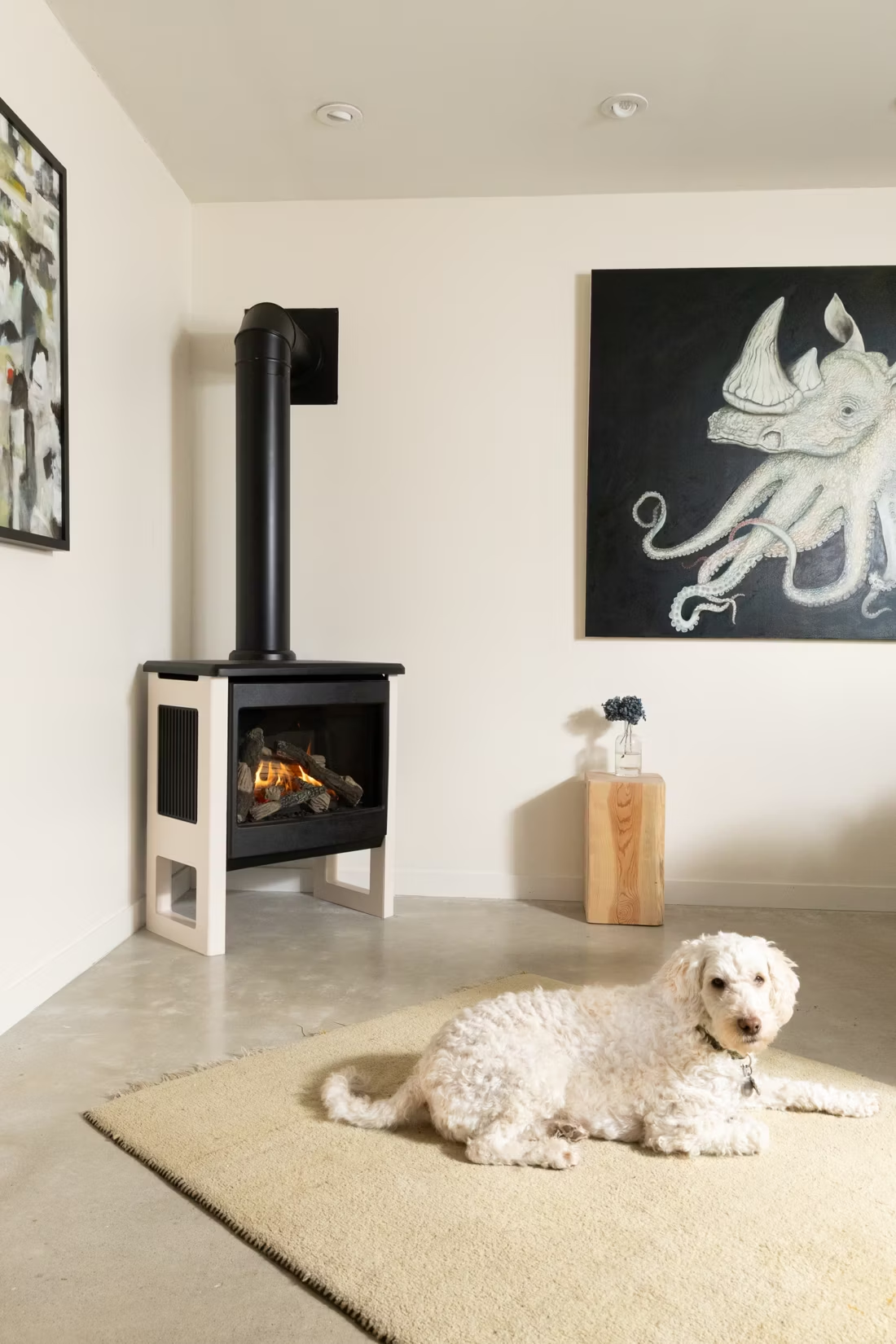
A gas fireplace is a fully built-in unit framed into a wall—the right choice for new construction or a room without an existing fireplace. A gas insert is built to slide into an existing masonry firebox, using your current chimney as the vent path, which makes it the natural fit for Dorchester County's older homes with a working chimney already in place. A gas stove is a freestanding cabinet-style unit that sits on the floor like a wood stove but burns gas or propane—a good option for a sunroom, workshop, or waterfront cottage without a chimney at all.
Do I need a permit to install a gas fireplace in Dorchester County?
Yes. New gas fireplace and insert installations require a building permit through the Dorchester County Department of Permits, Inspections and Code Enforcement, and any new gas line work needs to be done by a licensed gas-fitter and inspected separately. Most established hearth dealers coordinate the permit, the gas line, and the venting inspection as one package, so you're not left managing three separate trades on a project like this.
Vented or vent-free—which makes sense for a Dorchester County home?
Vented (direct-vent) gas fireplaces pull combustion air from outside and exhaust it back outside through a sealed pipe—they're the cleanest, safest option and the one most local dealers recommend. Vent-free units burn fuel directly into the room and are legal in Maryland with proper room-sizing and oxygen-depletion sensors, but they also release some moisture and combustion byproducts indoors. Given how humid Dorchester County already runs—especially in homes near the marshes and Bay shoreline—adding more moisture to the air with a vent-free unit is usually not the better trade-off. Direct-vent is the more common and more recommended choice countywide.
How often does a gas fireplace need to be serviced?
Plan on an annual inspection, ideally before the heating season starts. A technician checks the burner, pilot assembly, venting, and any gas connections, and cleans the glass and interior—a much shorter visit than a wood chimney sweep, but just as important for safe operation. This matters even more for vacation and weekend homes along the Choptank and Little Choptank rivers that sit unused for stretches, since dust, insects, or moisture can affect components between visits.
Gas or wood—which is right for my Dorchester County home?
Wood still makes sense for full-time residents with land and a woodlot—oak and hickory are dense, long-burning species common throughout the county, and a wood stove keeps working without electricity during Bay-area storm outages. Gas makes more sense for weekend and vacation properties, retirees who want heat without the labor of hauling and stacking wood, and anyone adding a second heat source to a primary living space. With no air quality restrictions on burning in Dorchester County, the choice really comes down to lifestyle: gas for convenience and instant heat, wood for self-sufficiency and lower fuel cost over time. Plenty of local homes end up with both.
Is my gas fireplace wasting gas?
If it was installed more than 15 years ago, probably. Older gas fireplaces keep a standing pilot light burning all the time, and that little flame can cost a couple hundred dollars a year. Newer models use pilot-on-demand ignition—the pilot lights only when you use the fireplace and goes out when you turn it off.
Can I put a TV above my fireplace?
Yes—with an asterisk. Fireplaces are hot and TVs don't like heat. Either put a mantel between them to deflect rising warmth, or choose a fireplace with heat-management technology that creates a cool zone on the wall above—the wall stays around 125 degrees, barely warm, while the room still gets full heat. If you like clean lines and don't want a mantel, heat management is the answer.
What is an in-home preview and do I need one?
It's a visit where a hearth professional measures your space, confirms the model you picked actually works in your home, and walks the specs—framing, gas line, venting, finish work—before anything is ordered. Some details you just can't know until you see the house. Never make a down payment without one; it's the single most-skipped step that burns buyers.
Can a fireplace actually lower my heating bill?
Yes—by creating a comfort zone. A furnace heats every square foot of the house just to warm the one room you're in; a gas fireplace on low burns roughly a sixth of the gas a typical furnace does. Set the furnace around 55–60 degrees as a baseline, then heat the rooms your family actually uses. Families who heat this way commonly save $20–$60 a month.
Stove and Fireplace Dealers in Dorchester County
Find your gas fireplace in Dorchester County.
Tell us a bit about your home and fuel setup—natural gas in Cambridge or propane elsewhere in the county—and we'll match you with a trusted local dealer plus a free Project Guide & Parts List for your installation.
Find Your Fireplace →