
Reliable Heat for Montgomery County's In-Between Winters.
Derwood winters rarely hit the extremes of the upper Midwest, but they're long enough and damp enough that a gas fireplace makes sense as daily heat, not just ambiance. Find the right unit and connect with a trusted local dealer.
Every Project Starts From One of These Five Situations
The default choice in a county that's largely moved past wood.
Derwood sits in Montgomery County's Rockville-Gaithersburg corridor at a modest 453 feet of elevation, with winters that average a low around 27°F and a moderate winter heating season lasting a good chunk of the year—nowhere close to the punishing cold of Minneapolis or Buffalo, but consistent enough that supplemental zone heat pays for itself over a Maryland winter. Wood and pellet stoves are rare here, and that's not an oversight in the data—it reflects the reality of a dense, HOA-governed suburban zip code with no nearby national forest land for cutting permits and little of the wood-heat culture you'd find in rural western Maryland.
Natural gas service through Washington Gas reaches most of the Derwood corridor along Redland Road and the I-370 area, which is a big part of why gas fireplaces and inserts have become the practical upgrade for homeowners here—no cordwood storage, no chimney sweeping, and heat that's ready the moment you flip a switch. With Pepco's residential electric rate running close to 18.7 cents per kWh, a well-sized direct-vent gas fireplace also tends to undercut electric resistance heat for the rooms that need it most, whether that's a finished basement, a sunroom addition, or a living room in one of Derwood's older colonial-style homes.
Three steps. No salesperson until you're ready.
Tell us about your project
Your zip code, your situation, and the fuel you're leaning toward—or let the answers point you to one.
See what's actually available
The brands dealers within 100 miles genuinely carry—real options, never a catalog mirage.
Get your dealer & Project Guide
A trusted local dealer, plus the free Project Guide & Parts List that names every component of the job.
Frequently Asked Questions
How much does a gas fireplace installation cost in Derwood?
Most gas fireplace and insert installations in Derwood run $5,000 to $12,000, with the spread driven mainly by venting complexity and whether new gas line work is needed. A direct-vent insert dropped into an existing masonry fireplace with gas already run to the chimney sits toward the lower end. A new built-in unit in a remodel—with framing, a fresh gas line, and Montgomery County permit fees—lands in the middle to upper range. Local retailers will size the job and give a firm number after seeing the space in person.
Can I convert my existing wood fireplace to gas?
Yes, and it's one of the more common calls local dealers get from Derwood homeowners, especially in the older colonial and split-level homes built along the Redland Road and Muncaster Mill corridors in the 1960s through 1980s. A gas insert typically drops into the existing masonry firebox with a stainless liner run up the chimney, and the job usually runs $4,500 to $8,500 depending on whether the home already has natural gas service or needs a new line. It keeps the look of the original fireplace while eliminating firewood storage, which matters on the smaller lots common in this part of Montgomery County.
Do I need natural gas to install a gas fireplace, or can I use propane?
Most homes in the 20855 zip code have access to natural gas through Washington Gas, which makes adding a fireplace straightforward if you already have gas service for a water heater or furnace. A smaller number of properties on larger, older lots at the edges of Derwood rely on propane, typically with a buried or above-ground tank refilled by a regional supplier. Nearly every gas fireplace model can be configured for either fuel—your installer sets the correct orifice and regulator for whichever service your home has.
Will my gas fireplace work during a power outage?
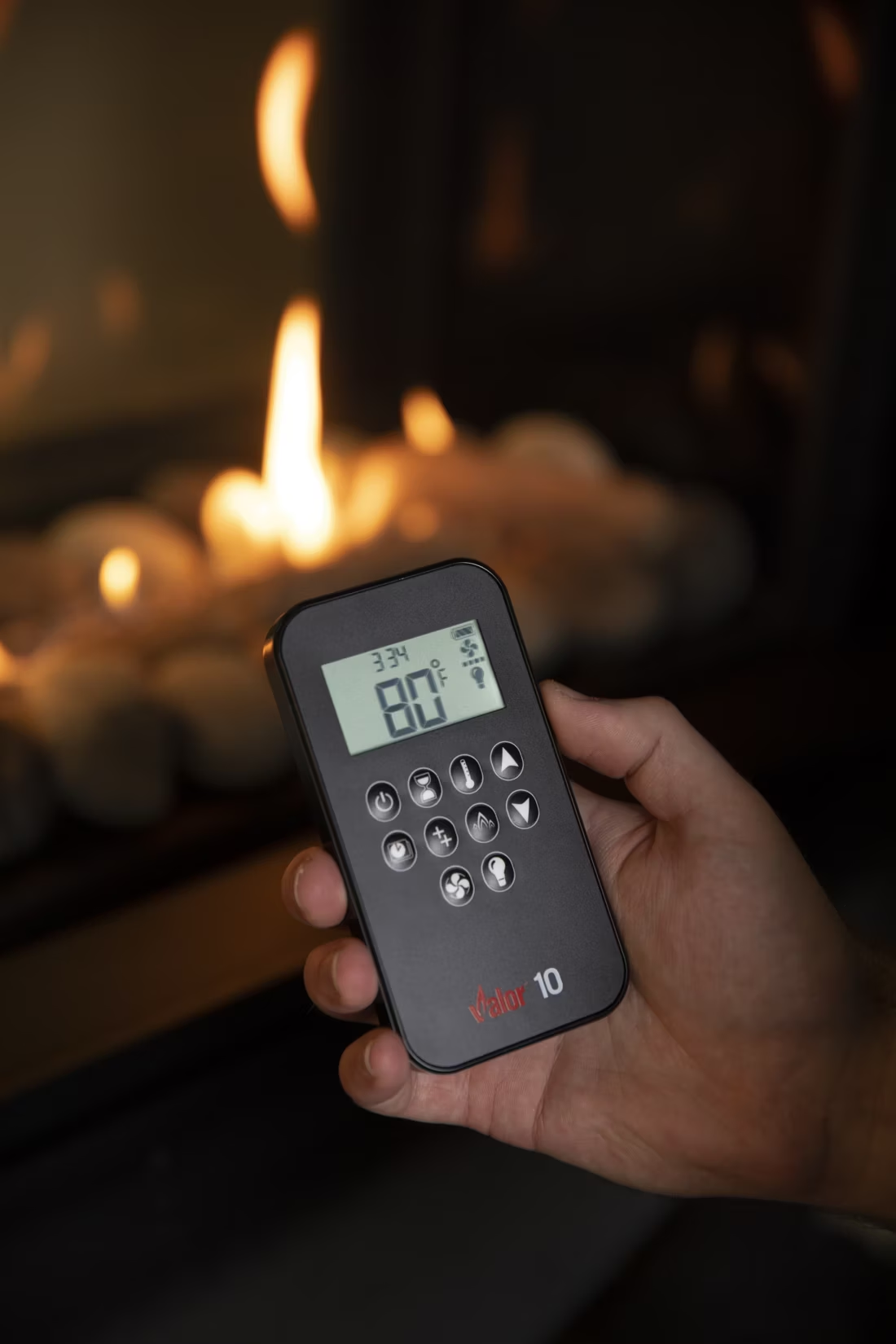
Most modern gas fireplaces will, which matters in Derwood given how summer thunderstorms and occasional winter ice can knock out Pepco service for hours at a stretch. Units with intermittent pilot ignition (IPI) run on a small battery backup that kicks in the moment power drops, so the fireplace lights on demand just like normal. Valor's gas fireplaces take a different route—the pilot's thermocouple generates its own electricity, so there are no batteries to remember at all. Either approach gives you real heat with no power required; ask your local dealer which ignition system a given model uses.
What's the difference between a gas fireplace, gas insert, and gas stove?
A gas fireplace is a fully built-in unit framed into a wall, typically chosen for new construction or a larger remodel. A gas insert slides into an existing masonry firebox and uses the chimney as its vent path—the right call for the many Derwood homes with an existing wood-burning fireplace that's rarely used. A gas stove is a freestanding cabinet unit that sits on the floor, useful in a basement or addition without an existing chimney. For most homes in this area with a fireplace already in place, an insert is the straightforward upgrade.
Do I need a permit to install a gas fireplace in Derwood?
Yes. Montgomery County requires a building permit through the Department of Permitting Services (DPS) for a new gas fireplace or insert, along with a separate gas permit for the line work, which has to be done by a licensed gas fitter. Most established hearth retailers in the area handle the DPS paperwork and inspection scheduling as part of the installation, so you're not coordinating separate trades yourself.
What's the difference between vented and vent-free gas fireplaces?
Vented (direct-vent) units draw combustion air from outside and exhaust it back outside through sealed venting, so they don't affect indoor air quality. Vent-free units burn directly into the room and are legal in Maryland under strict room-size and ventilation rules, but Montgomery County inspectors generally prefer to see direct-vent units, and most local dealers steer homeowners that direction for simplicity and long-term air quality. For a Derwood home, a direct-vent insert or fireplace is the more common and more easily permitted choice.
How often should my gas fireplace be serviced?
Plan on an annual inspection, ideally in early fall before the unit sees regular use. A certified technician checks the burner, pilot assembly, venting, and gas connections, and cleans the glass and interior—a much lighter service than a wood chimney sweep, but just as important for safe operation. Local gas appliance service providers typically charge $150 to $250 for this visit.
Gas vs. electric fireplace—which makes more sense for a Derwood home?
Gas generally wins on raw heat output and operating cost here—with Pepco's residential rate near 18.7 cents per kWh, a gas insert running on Washington Gas service typically costs less per hour of real heat than electric resistance heat, and it keeps working during a power outage if you choose an IPI or Valor unit. Electric fireplaces have their place too: they're the easiest retrofit for a condo, rental, or room without any gas or masonry chimney access, and installation costs are far lower since there's no venting to run. Wood and pellet stoves, by contrast, are genuinely uncommon in Derwood—the dense, HOA-governed lots and lack of nearby forest land for cutting permits mean almost nobody here is set up for cordwood or bulk pellet delivery the way homeowners in rural western Maryland are.
Why is my open fireplace making my house colder?
Open fireplaces suck—literally. As the fire burns, it consumes air your furnace already paid to heat and pulls it out through the chimney, so the house is actually colder after the fire goes out than before you lit it. An insert fixes this: it seals the chimney, puts fixed glass across the front, and turns that hole in your house into a real heat source.
Can I put a TV above my fireplace?
Yes—with an asterisk. Fireplaces are hot and TVs don't like heat. Either put a mantel between them to deflect rising warmth, or choose a fireplace with heat-management technology that creates a cool zone on the wall above—the wall stays around 125 degrees, barely warm, while the room still gets full heat. If you like clean lines and don't want a mantel, heat management is the answer.
Does a fireplace add value to my home?
On average, a fireplace adds back to the home about the same amount you spent installing it. Add the monthly savings from heating the rooms you actually use instead of the whole house—often hundreds of dollars a year—and the value case is strong before you even count what a fire does for how your family uses the room.
Should the dealer who sells my fireplace also install it?
Ideally, yes. A fireplace project involves vent pipe, gas line, electrical, and often tile or stone. Hire three or four separate trades and you own the liability and the game of telephone between them. One company selling and installing means one accountable party, start to finish—ask about factory training, on-time completion records, and what happens if an inspection fails.
Nearby Dealers
Hearth shops serving Derwood and the surrounding area. Every listing shows whether it is a WhyFire partner, a dealer we have verified as authorized for the brands we recommend, or a local business carrying hearth products. No manufacturer pays for placement. How we verify dealers →
Costello's Hearth & Spa - Rockville
Cyprus Air
The Fireplace Shop
Chimney.com
Chelsea's Chimney
Capitol Chimney Service
Aspen Green Gasworks
Genesis Chimney Services
Lawn & Leisure
Westlake Ace Hardware
Bodmer's Stoves And Pottery
Homeliving Fireplaces
Fireside Hearth & Home - Elkridge
Trinity Chimney Service
Masters Pellet Stoves
Best Htg And Air
Find your gas fireplace in Derwood.
Tell us a bit about your home and we'll match you with a trusted local dealer and send over a free Project Guide & Parts List—the exact parts, including the vent kit, for your gas fireplace project in Derwood.
Find Your Fireplace →