
Real Warmth, Right at the Flip of a Switch.
Clean, on-demand heat for Darnestown's mix of farmhouses, wooded lots, and newer builds along the Seneca Creek corridor. Get matched with a local dealer who knows this part of Montgomery County.
Every Project Starts From One of These Five Situations
Convenient heat for a semi-rural corner of Montgomery County.
Darnestown sits at about 377 feet in the Maryland Piedmont, in climate zone 4A with a winter heating load a good bit lighter than Madison, WI, and winter lows averaging 27°F. That's a far gentler winter than places like Madison, WI, but it's still cold enough—especially on the exposed farmland and larger wooded lots that make up much of Darnestown—that homeowners lean on supplemental heat from November through March. Local air quality has no non-attainment designations or burn-curtailment concerns, which gives homeowners here more flexibility than in parts of the country where wood or gas appliances face seasonal restrictions.
Because Darnestown is unincorporated and largely rural in character, natural gas mains don't reach every property the way they do in nearby Rockville or Gaithersburg—many homes here run on propane instead, with tanks supplied by regional delivery companies. Either fuel works fine for a gas fireplace or insert; the difference just affects your install cost and whether you need a tank. Pepco (Potomac Electric Power Co.) is the electric utility serving the area, which matters for anyone weighing battery-backup ignition against an electric fireplace as a secondary option.
Three steps. No salesperson until you're ready.
Tell us about your project
Your zip code, your situation, and the fuel you're leaning toward—or let the answers point you to one.
See what's actually available
The brands dealers within 100 miles genuinely carry—real options, never a catalog mirage.
Get your dealer & Project Guide
A trusted local dealer, plus the free Project Guide & Parts List that names every component of the job.
Frequently Asked Questions
How much does a gas fireplace installation cost in Darnestown?
Expect somewhere between $5,000 and $12,000 for a typical gas fireplace or insert installation in Darnestown, with Montgomery County's higher DC-metro labor rates pushing costs above the national average. A direct-vent insert into an existing masonry fireplace with gas already run to the house sits toward the lower end. New construction, a from-scratch propane tank installation, or a long gas line run across a larger rural lot—common in this area—will push you toward the higher end. A local dealer will give you a firm number after seeing your home and your fuel situation.
Can I convert my existing wood fireplace to gas?
Yes, and it's a common request in Darnestown's older farmhouses and colonials, many of which have a full masonry fireplace and chimney that predates central heat. A gas insert with a stainless liner run up your existing flue is the standard approach, typically running $5,000 to $9,500 depending on whether you're on propane or natural gas and whether new gas line work is needed. If your property runs on propane, factor in tank placement and delivery setup as part of the project—your dealer can walk you through what that adds to the timeline and cost.
Is natural gas available in Darnestown, or do I need propane?
It depends on exactly where your property sits. Some homes closer to the more developed pockets along Darnestown Road and toward Germantown have access to natural gas mains, but much of Darnestown's larger-lot, semi-rural housing stock runs on propane, delivered and stored in an above-ground or buried tank. Most gas fireplace and insert models can be configured for either fuel—your installer sets the correct orifice and regulator—so the choice mostly comes down to what's already serving your house and, if not, whether you want to add a propane tank.
Will my gas fireplace still work if the power goes out?
Most modern gas fireplaces will, which matters in Darnestown given how exposed some of the wooded and farmland properties are to Pepco outages during summer thunderstorms and winter ice events. Units with IPI (intermittent pilot ignition) run on a small battery backup that kicks in automatically when power drops, so the fireplace still lights on demand. Valor's gas fireplaces take a different route—the pilot's thermocouple generates its own electricity, so there's no battery to remember or replace. Either way, ask your local dealer about the ignition system before you buy if backup heat during outages is a priority.
What's the difference between a gas fireplace, gas insert, and gas stove?
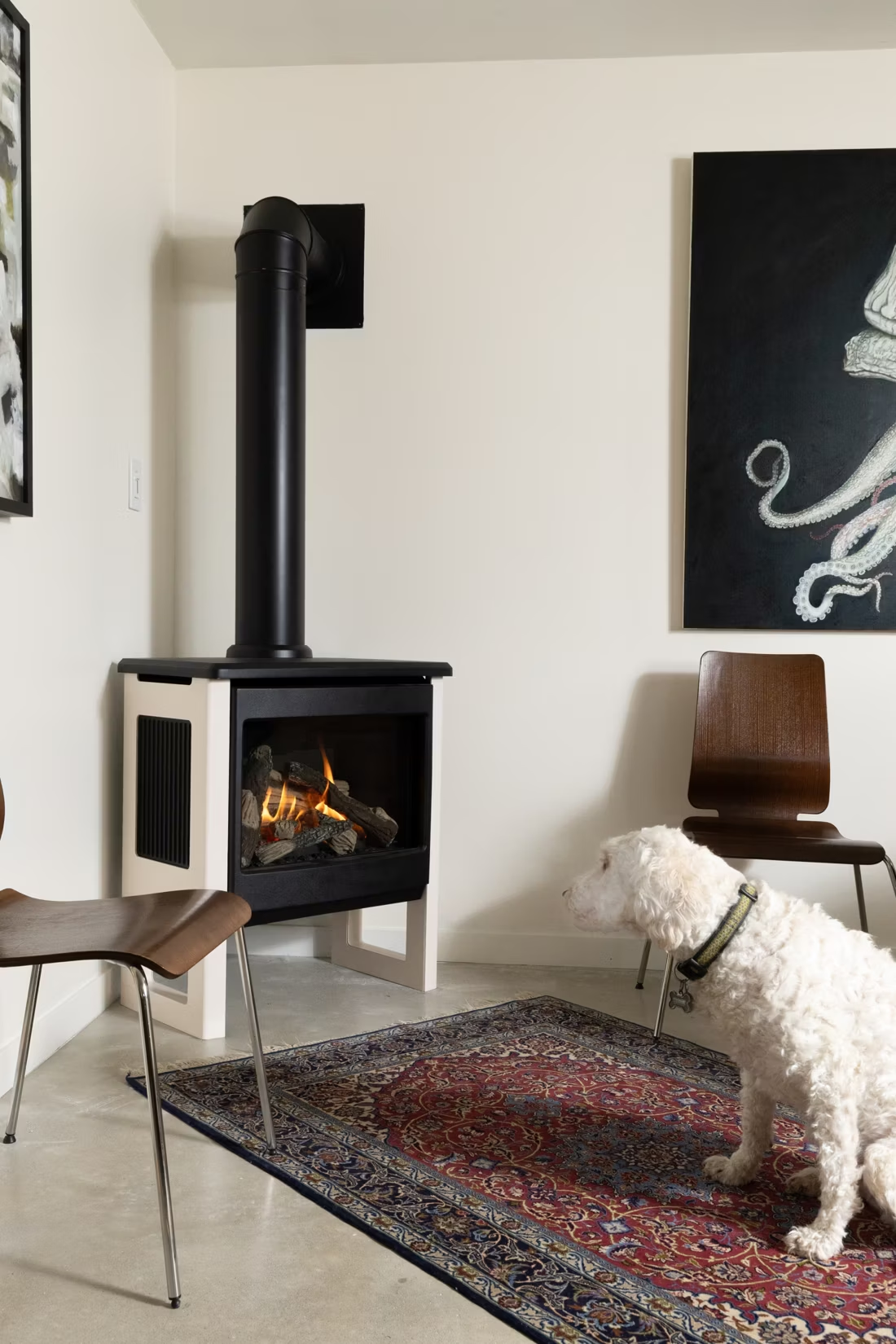
A gas fireplace is a fully built-in unit framed into a wall—the right call for new construction or a remodel without an existing hearth. A gas insert slides into an existing masonry fireplace, using your chimney as the vent path, and is the most common upgrade for Darnestown's older homes with an existing hearth. A gas stove is a freestanding unit on its own hearth pad, similar in footprint to a wood stove, and works well in a converted barn, sunroom, or addition without an existing fireplace. A local dealer can tell you quickly which category fits your space.
Do I need a permit to install a gas fireplace in Darnestown?
Yes. Darnestown falls under Montgomery County jurisdiction, so both a building permit and a gas fitting permit go through the Montgomery County Department of Permitting Services (DPS) rather than a separate city office. Gas line work has to be done by a licensed gas-fitter, and most reputable hearth dealers coordinate the permit, the gas line, and the final inspection as one package rather than leaving you to chase down separate trades.
What's the difference between vented and vent-free gas fireplaces?
Vented (direct-vent) gas fireplaces pull combustion air from outside and exhaust it back outside through sealed venting—they're the cleaner, more universally recommended option and what most Darnestown installers default to. Vent-free units burn directly into the room air and are permitted in Maryland, but only within strict room-size and ventilation guidelines, and with an oxygen depletion sensor built in. Given Darnestown's larger, often older homes with a range of room sizes and insulation levels, a direct-vent unit is usually the safer, more predictable choice—ask your dealer to walk through both if you're weighing options for a smaller room.
How often should my gas fireplace be serviced?
Plan on an annual inspection, ideally before the heating season starts each fall. A certified technician checks the burner, pilot assembly, venting, and gas connections, and cleans the glass and firebox—a much lighter job than chimney sweeping but just as important for safe operation. Local service providers typically charge $150 to $250 for this visit, and it's worth doing even in years when the fireplace saw light use.
Gas vs. wood—which makes more sense for a Darnestown home?
Darnestown's wooded lots and nearby Piedmont woodlands make oak, hickory, and maple readily available locally, and with no air quality non-attainment concerns in the area, wood burning here doesn't run into the seasonal curtailment issues some regions face. Wood also keeps working without electricity, which matters given the area's exposure to storm-related outages. Gas, on the other hand, means no stacking, splitting, or ash cleanup, and instant on-off heat that's easier to live with day to day, especially with propane as a reliable local fuel source even off the natural gas grid. Many Darnestown households end up with both—gas for the main living space, wood or a stove elsewhere for backup and ambiance.
What's the difference between an insert and a zero-clearance fireplace?
An insert is a fireplace that slides into a pre-existing wood-burning fireplace—if you don't have one, there's nothing to insert it into. A zero-clearance fireplace is built into a framed wall, which makes it the answer for remodels and new construction. Simple test: existing masonry fireplace means insert; blank or framed wall means zero-clearance.
Why is a fireplace insert so efficient?
An insert does two things: it seals the chimney completely, so you stop losing air you already paid to heat, and it radiates warmth into the room through the firebox and glass. Most add a heat-exchange fan that pulls cool room air underneath, wraps it around the hot firebox, and pushes it back out warm. Your home is more efficient before you've even lit the first fire.
Can I install a fireplace myself?
If you're putting a fire in your house on purpose, it's best to work with an expert. Unless you're genuinely experienced in framing, gas line, vent pipe, and the national code on clearances to combustibles, have a professional do it—and ideally the same company that sells you the fireplace, so warranty, service, and liability all live under one roof.
How much should I budget for a fireplace?
For an average home—covering the fireplace, the vent pipe, and basic installation—a budget between $3,900 and $5,500 gives you a lot of options across wood, gas, and pellet. By the time you add finish work, gas line, and electrical, the average complete installation lands between $5,000 and $12,000 all-in. In a remodel or new build, a good rule is to put about 2.5% of the total project cost toward the fireplace.
Nearby Dealers
Hearth shops serving Darnestown and the surrounding area. Every listing shows whether it is a WhyFire partner, a dealer we have verified as authorized for the brands we recommend, or a local business carrying hearth products. No manufacturer pays for placement. How we verify dealers →
Costello's Hearth & Spa - Rockville
Cyprus Air
The Fireplace Shop
Lawn & Leisure
Aspen Green Gasworks
Genesis Chimney Services
Chelsea's Chimney
Homeliving Fireplaces
Chimney.com
Bodmer's Stoves And Pottery
Capitol Chimney Service
Best Htg And Air
Holtzman Propane
Deckscapes Of Virginia
Find your gas fireplace in Darnestown.
Tell us about your home and your propane or natural gas situation, and we'll match you with a trusted local dealer and send over a free Project Guide & Parts List—the exact equipment, venting, and next steps for your Darnestown project.
Find Your Fireplace →