
Clean, instant warmth for Burnt Mills, Maryland.
From the brick colonials near Sligo Creek Park to the townhomes off New Hampshire Avenue, gas is the practical heat upgrade for this part of Montgomery County. Get matched with a local dealer who can size the job right.
Every Project Starts From One of These Five Situations
The default heat source for D.C.'s inner suburbs.
Burnt Mills sits just inside the Beltway in unincorporated Montgomery County, wedged between Silver Spring and the FDA's White Oak campus, with Sligo Creek Park running through the neighborhood's edge. Winters here are moderate by national standards—average lows around 25°F and a heating season comparable to the DC suburbs' typical stretch from fall through early spring, nowhere near what a place like Duluth or Burlington, VT deals with—but the heating season is real, and most of the housing stock (1950s-60s brick colonials, split-levels, and capes, plus newer townhomes near the ICC) was built with either a rarely-used masonry fireplace or none at all.
Wood heat is genuinely uncommon in Burnt Mills—small lots, dense tree canopy, and Montgomery County's outdoor burning restrictions all push homeowners toward gas rather than cordwood. Natural gas mains run throughout this stretch of the county, so a gas fireplace or insert is usually a straightforward tie-in rather than a new-service project. For homeowners with an old masonry firebox that hasn't seen a real fire in years, converting it to a direct-vent gas insert is one of the most common upgrades a local hearth dealer sees in this zip code range.
Three steps. No salesperson until you're ready.
Tell us about your project
Your zip code, your situation, and the fuel you're leaning toward—or let the answers point you to one.
See what's actually available
The brands dealers within 100 miles genuinely carry—real options, never a catalog mirage.
Get your dealer & Project Guide
A trusted local dealer, plus the free Project Guide & Parts List that names every component of the job.
Frequently Asked Questions
How much does a gas fireplace installation cost in Burnt Mills?
Most gas fireplace and insert installations in this part of Montgomery County run $4,500 to $10,000, with the spread coming down to venting complexity and whether a gas line already reaches the hearth. A direct-vent insert dropped into an existing masonry fireplace with gas already run to the room sits toward the lower end. A new built-in unit in a room addition or basement remodel—with framing, a fresh gas line, and new venting through the wall or roof—runs toward the higher end. A local dealer will give you a firm number after seeing the space in person.
Can I convert my existing wood fireplace to gas?
Yes, and it's a very common project in Burnt Mills's older brick colonials and split-levels, many of which have a masonry firebox that's sat cold for years. The typical approach is a direct-vent or vented gas insert installed into the existing opening, using the existing chimney as a chase for a new liner. Because most of this area already sits on a natural gas main, the gas line run is often short—which keeps the project closer to the $4,500-$7,000 range rather than the higher end of the scale.
Do I need to use propane, or is natural gas available in Burnt Mills?
Almost every home in Burnt Mills has access to natural gas service, since this stretch of Montgomery County sits well inside the Beltway's built-out gas infrastructure. That makes propane the exception rather than the rule here—it typically only comes up for a detached structure or an outbuilding that's harder to reach with a gas line extension. If your home already has a gas water heater, furnace, or range, adding a fireplace is usually a simple branch off the existing line.
Will my gas fireplace still work if the power goes out?
Most modern gas fireplaces will, which matters in a Pepco service area where summer thunderstorms and the occasional ice event can knock out power for hours. Units with IPI (intermittent pilot ignition) run on a battery backup that kicks in the moment the power drops, so the fireplace lights and operates normally. Valor's gas fireplaces go a step further—their pilot assembly generates its own electricity through the thermocouple, so there's no battery to remember to replace at all. Ask your local dealer which ignition system a given model uses before you buy.
What's the difference between a gas fireplace, gas insert, and gas stove?
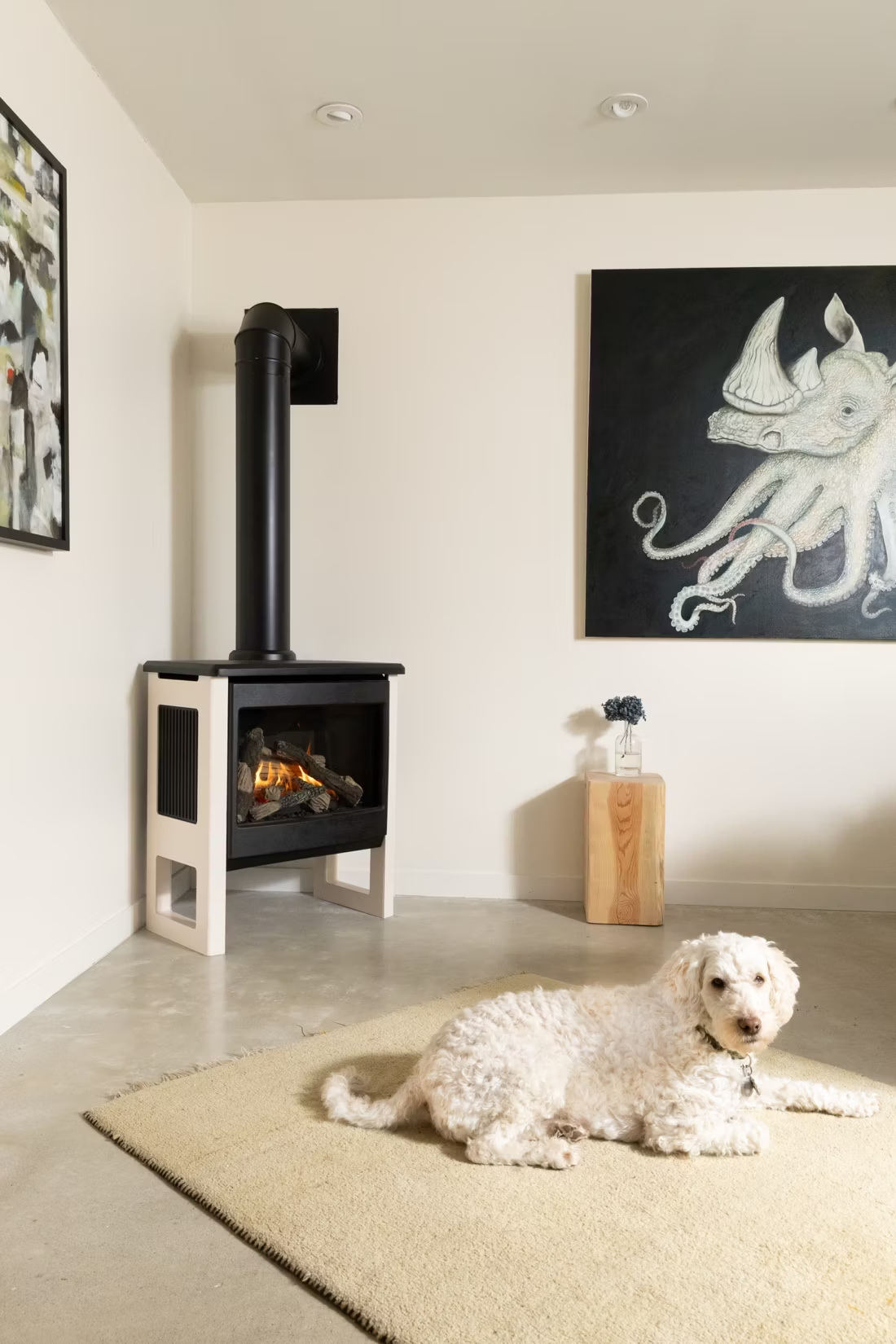
A gas fireplace is a fully built-in unit framed into a wall—the right call for a room addition or a home without an existing chimney. A gas insert is built to slide into an existing masonry firebox, which describes a large share of the older homes around Burnt Mills and Silver Spring. A gas stove is a freestanding cabinet unit, less common here but occasionally used in a basement or sunroom where there's no fireplace opening at all. For most homeowners in this zip code range with an existing but unused fireplace, an insert is the straightforward answer.
Do I need a permit to install a gas fireplace in Burnt Mills?
Yes. Since Burnt Mills is unincorporated, permitting runs through the Montgomery County Department of Permitting Services (DPS) rather than a city building department. Both a mechanical/building permit and a gas piping permit are typically required, and the gas line work has to be done by a licensed gas fitter. Most established hearth dealers in the D.C. metro area handle this paperwork as part of the installation, so you're not coordinating separate trades and separate inspections yourself.
Should I get a vented or vent-free gas fireplace?
Vented (direct-vent) units draw combustion air from outside and exhaust it back outside through sealed venting—they're the standard recommendation almost everywhere, including Burnt Mills. Vent-free units burn directly into the room air and are legal in Maryland under specific room-size and ventilation rules, but they release some moisture and combustion byproducts indoors, which matters more in a tightly sealed, well-insulated newer townhome than in a drafty older colonial. For most homes in this area, a direct-vent unit is the better long-term choice—real heat output, no indoor air tradeoffs, and no restrictions to work around.
How often does a gas fireplace need to be serviced?
Plan on an annual inspection, ideally in early fall before the first cold snap. A technician checks the burner, pilot or ignition system, venting, and gas connections, and cleans the glass and interior. This runs roughly $150 to $250 in the D.C. metro area and is far quicker than a wood chimney sweep, but it's the step that catches a cracked heat exchanger or a venting blockage before it becomes a safety issue.
Why don't more homes in Burnt Mills use wood heat instead?
Wood-burning fireplaces and stoves are genuinely uncommon in this part of Montgomery County—lots here tend to be small and close together, the tree canopy along Sligo Creek and throughout the neighborhood makes storing and seasoning cordwood impractical for most households, and gas infrastructure already reaches nearly every home. Where wood shows up at all, it's usually a decorative masonry fireplace that homeowners eventually convert to gas rather than a primary heat source. For Burnt Mills, gas is the practical default, not a compromise.
Is my gas fireplace wasting gas?
If it was installed more than 15 years ago, probably. Older gas fireplaces keep a standing pilot light burning all the time, and that little flame can cost a couple hundred dollars a year. Newer models use pilot-on-demand ignition—the pilot lights only when you use the fireplace and goes out when you turn it off.
Why is a fireplace insert so efficient?
An insert does two things: it seals the chimney completely, so you stop losing air you already paid to heat, and it radiates warmth into the room through the firebox and glass. Most add a heat-exchange fan that pulls cool room air underneath, wraps it around the hot firebox, and pushes it back out warm. Your home is more efficient before you've even lit the first fire.
What is an in-home preview and do I need one?
It's a visit where a hearth professional measures your space, confirms the model you picked actually works in your home, and walks the specs—framing, gas line, venting, finish work—before anything is ordered. Some details you just can't know until you see the house. Never make a down payment without one; it's the single most-skipped step that burns buyers.
Does a fireplace add value to my home?
On average, a fireplace adds back to the home about the same amount you spent installing it. Add the monthly savings from heating the rooms you actually use instead of the whole house—often hundreds of dollars a year—and the value case is strong before you even count what a fire does for how your family uses the room.
Nearby Dealers
Hearth shops serving Burnt Mills and the surrounding area. Every listing shows whether it is a WhyFire partner, a dealer we have verified as authorized for the brands we recommend, or a local business carrying hearth products. No manufacturer pays for placement. How we verify dealers →
Complete Chimneys Fireplaces & Grills
Capitol Chimney Service
Chimney.com
Cyprus Air
Costello's Hearth & Spa - Rockville
The Fireplace Shop
Masters Pellet Stoves
Chelsea's Chimney
Belair Engineering & Service Co, Inc
The Torch Guys
Fireside Hearth & Home - Elkridge
Trinity Chimney Service
Westlake Ace Hardware
Affordable Outdoor Kitchens
Cyprus Air, Indoor Comfort
Costello's Hearth & Spa - Glen Burnie
Aspen Green Gasworks
Genesis Chimney Services
Lawn & Leisure
Costello's Hearth & Spa - Edgewater
Get your Burnt Mills gas fireplace Project Guide & Parts List.
Tell us about your home and your existing fireplace or gas line situation, and we'll match you with a trusted local dealer plus a free Project Guide & Parts List—the exact parts, vent kit, and recommended installer for your project.
Find Your Fireplace →