
Instant heat for Harford County's mild winters.
Bel Air South sees winter lows around 25°F and a moderate winter heating season overall—enough to want real heat on the coldest nights, not so much that you need a wood-burning setup to get through them. I'll match you with a trusted local dealer who knows BGE's service area and what actually vents correctly in your neighborhood.
Every Project Starts From One of These Five Situations
Convenience wins in a climate that rarely gets brutal.
At 200 feet of elevation in climate zone 4A, Bel Air South has a heating season that's real but moderate—a winter heating load that's a fraction of what a place like Fargo, North Dakota racks up, and winter lows averaging 25°F rarely force a household to depend on backup heat to survive a cold snap. That's a climate where a gas fireplace makes sense as the primary hearth feature: instant flame, steady output, and none of the splitting or stacking that a harder winter climate might justify.
Wood-burning fireplaces do exist in some of Bel Air South's older subdivisions, often framed originally for oak, hickory, or maple, but wood has become a niche choice here rather than a practical necessity—the area has no significant air quality restrictions or burn advisories, but it also doesn't have the sustained cold that makes cutting and hauling cordwood worth the effort for most homeowners. Pellet stoves see similarly limited local demand for the same reason, even though regional brands like Energex, Hamer Pellet Fuel, and Greene Team Pellet Fuel are available through Mid-Atlantic dealers. Gas, by contrast, is well supported: Baltimore Gas & Electric (BGE) serves much of the area for both gas and electric, with propane filling in for homes on the county's outer edges that fall outside the gas main footprint.
Three steps. No salesperson until you're ready.
Tell us about your project
Your zip code, your situation, and the fuel you're leaning toward—or let the answers point you to one.
See what's actually available
The brands dealers within 100 miles genuinely carry—real options, never a catalog mirage.
Get your dealer & Project Guide
A trusted local dealer, plus the free Project Guide & Parts List that names every component of the job.
Frequently Asked Questions
How much does a gas fireplace installation cost in Bel Air South?
Most gas fireplace and insert installs in this area run roughly $4,000 to $10,000, with the spread coming down to the scope of work. Dropping a direct-vent insert into an existing masonry firebox—common in Bel Air South homes built during the 1970s-90s boom, many originally framed for oak or hickory—sits toward the lower end since the chimney chase is already there. A new built-in unit for a remodel or addition, with fresh gas line runs and wall or roof venting, lands higher. Homes outside BGE's gas footprint that need a propane tank set should budget extra for the tank and line work.
Can I convert my existing wood fireplace to gas?
Yes, and it's a routine project here. A lot of the older wood-burning fireboxes around 21009 and 21015 were built for oak, hickory, or maple and simply aren't getting much use anymore as year-round heating needs stay modest. A gas insert with a stainless liner typically slides into that existing masonry opening, ties into either a BGE gas line or a new propane tank, and gets you push-button heat without the upkeep. It's one of the more common upgrade requests local dealers see in Harford County's established neighborhoods.
Is natural gas available in Bel Air South, or do I need propane?
It depends on your street. Baltimore Gas & Electric (BGE) provides gas service through much of the more built-up parts of Bel Air South and the surrounding Route 24 and I-95 corridor, but coverage thins out toward the county's rural fringes near Norrisville and Pylesville, where propane is the standard fallback. If your home already runs a gas water heater or range, adding a fireplace is usually a simple tie-in; if not, a propane tank setup is a well-worn path that most local installers handle routinely.
Will a gas fireplace still work if the power goes out?
Most will, which is worth planning for given how Mid-Atlantic thunderstorms and the occasional nor'easter can knock out BGE service for a few hours at a time. Units with intermittent pilot ignition (IPI) run on AA battery backup that kicks in automatically when the power drops. Valor models go a step further and skip the battery altogether, since their pilot's thermocouple generates its own current. It's a reasonable question to ask your dealer before choosing a model, even in a climate as mild as this one.
What's the difference between a gas fireplace, insert, and stove?
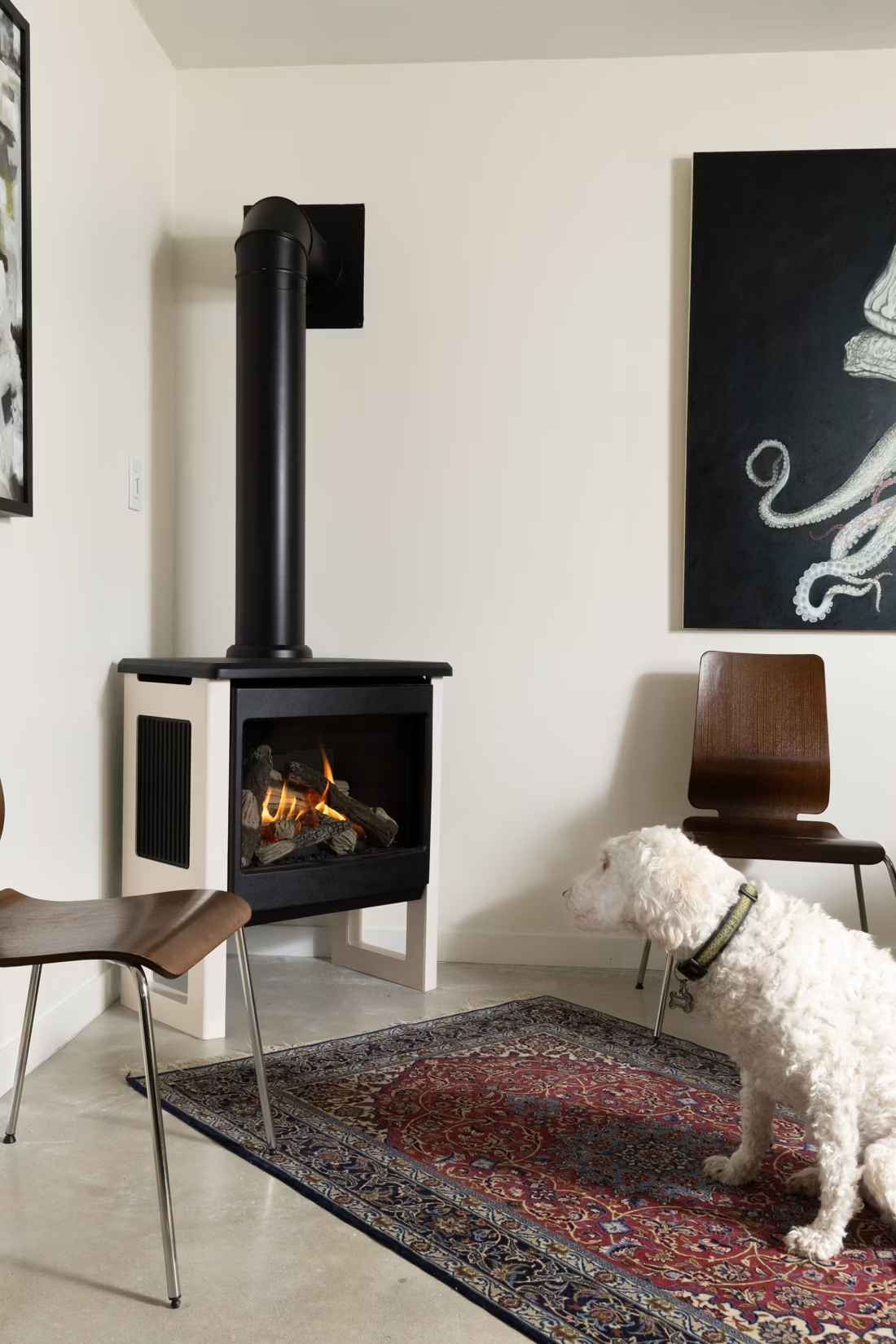
A gas fireplace is a built-in unit framed into a wall, the typical choice for new construction or a full remodel. A gas insert fits inside an existing masonry firebox—the common route in Bel Air South's older homes that still have a wood-era chimney chase in place. A gas stove is freestanding on a hearth pad and vents through a wall or ceiling, similar in footprint to a wood stove but running off a gas line or propane tank. For most existing homes here, an insert is the least disruptive path since the masonry opening is already framed and sized.
Do I need a permit to install a gas fireplace in Bel Air South?
Yes. Since Bel Air South is unincorporated, permitting runs through Harford County's Permits, Inspections & Enforcement division rather than a city building department. You'll need a building permit for the unit and venting, plus a separate gas line permit tied to licensed gas-fitter work if you're extending or tapping a new line. Most established hearth dealers who work in Harford County handle both permits and schedule the final inspection as part of the installation.
Should I get a vented (direct-vent) or vent-free gas fireplace?
Direct-vent units pull combustion air from outside and exhaust it back outside through sealed pipe, which is the safer, code-preferred choice and what most Harford County dealers install by default. Vent-free units burn into the room and are legal under Maryland code within room-size limits, but they add combustion byproducts and moisture indoors—a real consideration given how humid Mid-Atlantic summers already run, even though winter air quality itself isn't a local concern here. For a primary living-room fireplace, direct-vent is the more common and generally recommended route.
How often does a gas fireplace need to be serviced in Bel Air South?
Plan on an annual check, ideally in September or October before the first real cold spell rather than mid-winter when technicians book up. A service visit covers the burner, pilot assembly, gas connections, and glass cleaning, and typically runs $150 to $250. Given the area's relatively short, moderate heating season, a unit here sees less daily runtime than in a colder climate, but skipping the annual check is still the most common reason ignition problems show up on the first genuinely cold night.
Gas vs. wood vs. electric—what actually makes sense in Bel Air South?
Gas is the practical default for most homes here: instant heat, no fuel storage, and BGE's gas network already reaches much of the area. Wood-burning fireplaces exist but have become a secondary or decorative feature rather than a heating strategy—with a modest winter heating load and winter lows around 25°F, this area simply doesn't demand the sustained BTU output that makes splitting oak, hickory, or maple worth the effort the way it would in a colder climate. Electric fireplaces are a legitimate lower-cost alternative for supplemental warmth or homes without gas access, running off BGE power at about $0.1612 per kWh, though they cost more per hour of heat than gas and won't match it as a primary source in a colder-than-average stretch.
Can I put a TV above my fireplace?
Yes—with an asterisk. Fireplaces are hot and TVs don't like heat. Either put a mantel between them to deflect rising warmth, or choose a fireplace with heat-management technology that creates a cool zone on the wall above—the wall stays around 125 degrees, barely warm, while the room still gets full heat. If you like clean lines and don't want a mantel, heat management is the answer.
Is my gas fireplace wasting gas?
If it was installed more than 15 years ago, probably. Older gas fireplaces keep a standing pilot light burning all the time, and that little flame can cost a couple hundred dollars a year. Newer models use pilot-on-demand ignition—the pilot lights only when you use the fireplace and goes out when you turn it off.
How much should I budget for a fireplace?
For an average home—covering the fireplace, the vent pipe, and basic installation—a budget between $3,900 and $5,500 gives you a lot of options across wood, gas, and pellet. By the time you add finish work, gas line, and electrical, the average complete installation lands between $5,000 and $12,000 all-in. In a remodel or new build, a good rule is to put about 2.5% of the total project cost toward the fireplace.
Should the dealer who sells my fireplace also install it?
Ideally, yes. A fireplace project involves vent pipe, gas line, electrical, and often tile or stone. Hire three or four separate trades and you own the liability and the game of telephone between them. One company selling and installing means one accountable party, start to finish—ask about factory training, on-time completion records, and what happens if an inspection fails.
Nearby Dealers
Hearth shops serving Bel Air South and the surrounding area. Every listing shows whether it is a WhyFire partner, a dealer we have verified as authorized for the brands we recommend, or a local business carrying hearth products. No manufacturer pays for placement. How we verify dealers →
Clearwater Pool & Spa
Costello's Hearth & Spa - Forest Hill
Maryland Dream Kitchens And Baths, LLC
Courtland Hearth & Hardware
Fireplaces And Stoves Md
Hunters Home Center
Ace Of Diamonds Chimney
Starks Chimney Services
Watson's Fireplace & Patio
Duvall's Lawn & Garden Inc.
Bulls Supply Co, Inc
Get your free Project Guide & Parts List for a Bel Air South gas fireplace.
Tell me about your home and whether you're on BGE gas or propane, and I'll match you with a trusted local Harford County dealer and send a free Project Guide & Parts List with the exact vent kit and parts your project needs.
Find Your Fireplace →