
The fireplace built for Baltimore's rowhomes.
No flue, no chimney, no gas line—just plug in and go. Find the right electric fireplace or insert for your rowhouse or condo, and connect with a trusted local dealer.
Every Project Starts From One of These Five Situations
Real heat and ambiance, without touching a chimney.
Baltimore sits at just 82 feet in elevation with a comparatively mild climate zone 4A profile—average winter lows around 30°F and a winter heating load that's a fraction of what a place like Buffalo, NY sees in a typical winter. That milder heating load is part of why electric fireplaces work so well here: they're not being asked to carry a whole house through weeks of single-digit cold, just to add zone heat and ambiance to a room. In a city built largely of narrow brick and Formstone rowhomes—many without a working chimney or any flue at all—that matters.
It also matters in Baltimore's historic districts. Federal Hill, Fells Point, Bolton Hill, and Mount Vernon all fall under CHAP (the Commission for Historical and Architectural Preservation) review, which can complicate any project requiring new exterior venting or masonry work. Electric fireplaces sidestep that entirely—no exterior penetration, no venting path to argue about. Baltimore Gas & Electric (BGE) serves the whole city as both gas and electric utility, so whether you're adding a wall-mounted unit in a Canton condo or a built-in insert in a Bolton Hill parlor, the wiring question is usually simpler than the venting question ever was.
Three steps. No salesperson until you're ready.
Tell us about your project
Your zip code, your situation, and the fuel you're leaning toward—or let the answers point you to one.
See what's actually available
The brands dealers within 100 miles genuinely carry—real options, never a catalog mirage.
Get your dealer & Project Guide
A trusted local dealer, plus the free Project Guide & Parts List that names every component of the job.
Frequently Asked Questions
How much does it cost to install an electric fireplace in Baltimore?
Costs vary widely by unit type. A plug-in insert or freestanding electric stove that uses a standard outlet can run $300 to $1,200 installed with essentially no construction work. A built-in wall unit or mantel package that requires a dedicated 20-amp circuit typically runs $1,500 to $3,500 once you factor in an electrician, framing, and finish work—common in Baltimore rowhome renovations where a fireplace is being added to a room that never had one. Because there's no chimney, liner, or venting to install, electric is consistently the least expensive fireplace option available in the city.
Do I need a chimney or vent for an electric fireplace?
No. This is the main reason electric fireplaces are popular in Baltimore's older housing stock—a lot of rowhomes in neighborhoods like Locust Point, Hampden, and Pigtown either never had a chimney or had one removed decades ago. Electric units heat with a resistance coil or infrared element and don't produce combustion byproducts, so there's nothing to vent. That also makes them a fit for upper-floor condo units and apartments where running a flue to the roof simply isn't possible.
Do I need a permit for an electric fireplace in a Baltimore rowhome?
A plug-in unit needs no permit at all. A built-in electric fireplace that requires new electrical circuitry typically needs an electrical permit through the Baltimore City Department of Housing & Community Development. If your home sits in a CHAP-regulated historic district—Federal Hill, Bolton Hill, Mount Vernon, and several others—you generally won't need historic commission approval for an electric install, since there's no exterior venting or facade change involved. That's a real advantage over gas or wood options in those neighborhoods, where any new venting penetration through a historic facade can trigger a CHAP review.
What does it cost to run an electric fireplace in Baltimore?
BGE's residential rate runs about 16.12 cents per kWh, which is somewhat above the national average. A typical electric fireplace on its heat setting draws around 1,500 watts, so running it on high costs roughly 24 cents an hour—about $2.40 for a 10-hour evening. Most owners run the flame effect without heat during warmer months, which draws only a few watts and costs pennies a day. Compared to central heat or a gas fireplace, electric is cheap to operate as a supplemental or zone-heat source, though it's not meant to replace your furnace on Baltimore's coldest nights.
Should I get an electric fireplace or a gas fireplace in Baltimore?
Both are common choices here. BGE provides natural gas throughout most of the city, so a gas fireplace or insert is a realistic option if your home already has gas service, and it delivers more heat output for a cold snap. Electric wins on installation simplicity and cost—no gas line, no venting, no CHAP review in historic districts—and it's the practical answer for condos, upper floors, and rowhomes without an existing flue. Many Baltimore homeowners choose electric specifically because their unit renovation budget doesn't include running new gas line through 100-year-old brick walls.
What about wood or pellet stoves in Baltimore?
They're uncommon in the city proper. Baltimore's dense rowhome blocks and limited chimney access mean wood and pellet stoves aren't a realistic fit for most city addresses—there's rarely a masonry chimney to accept a liner, and running new Class A pipe through a shared rowhome wall or a CHAP-regulated facade is a hard sell. A small number of homeowners in outer Baltimore County with detached houses and existing chimneys still install wood inserts, and oak, hickory, and maple are the common local firewood species where that's the case. But for the vast majority of city and inner-county addresses, electric or gas is the practical path.
What's the best type of electric fireplace for a Baltimore home?
For rowhomes with narrow floor plans, a built-in wall-mounted unit or a linear insert set flush into a stud wall makes efficient use of limited square footage—brands like Dimplex and Napoleon make models sized for exactly this. For a more traditional look in a formal parlor or dining room, a mantel package that mimics a wood-burning surround works well and can often be installed without any electrical upgrade if it's near an existing outlet. Condo owners and renters tend to do best with a freestanding or TV-stand-style unit that requires no modification to the unit at all—ask a local dealer which format fits your specific room and outlet situation.
Will my electric fireplace work during a power outage?
No—this is the tradeoff worth knowing upfront. Electric fireplaces need power to run the heating element, blower, and flame effect, so they go dark along with everything else during a BGE outage. If backup heat during winter storms is a priority, a gas fireplace with battery-backup or self-powered ignition, or a wood-burning option where your home has the chimney for it, will keep working when the grid doesn't. For most Baltimore homes, though, outages are infrequent enough that this doesn't outweigh the simplicity electric offers day to day.
Where can I get an electric fireplace installed near me in Baltimore?
The best path is a hearth dealer who regularly works in Baltimore's rowhome stock and understands both the electrical requirements and, where relevant, CHAP considerations in historic neighborhoods. Rather than guessing between big-box options, Find My Fireplace matches you with a trusted local dealer who knows what actually fits your home's wiring and layout, then provides a free Project Guide & Parts List so you walk into the conversation already knowing what you need.
Can I put a TV above my fireplace?
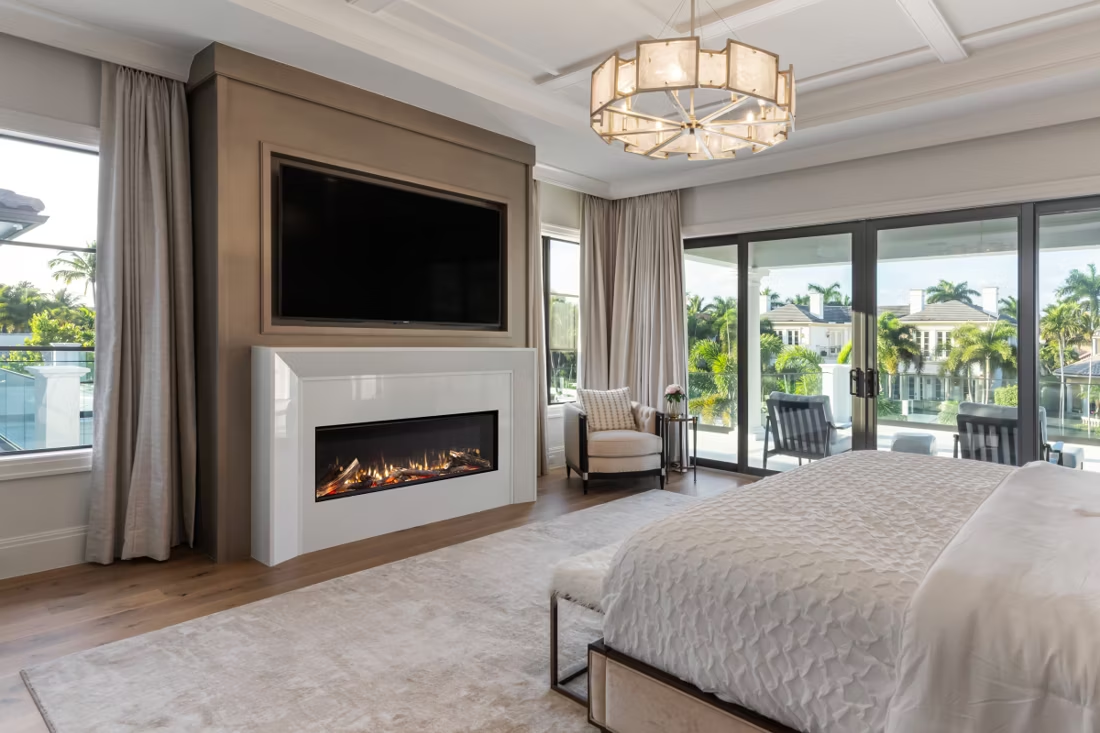
Yes—with an asterisk. Fireplaces are hot and TVs don't like heat. Either put a mantel between them to deflect rising warmth, or choose a fireplace with heat-management technology that creates a cool zone on the wall above—the wall stays around 125 degrees, barely warm, while the room still gets full heat. If you like clean lines and don't want a mantel, heat management is the answer.
Do electric fireplaces actually produce heat?
Yes—most put out around 4,800–5,000 BTUs from a standard outlet, which comfortably warms a bedroom, office, or den as a comfort-zone heater. What they won't do is carry a whole house the way wood, gas, or pellet can. Think of electric as ambiance-first with honest supplemental heat: flames on with no heat in July, flames plus warmth in January.
How much should I budget for a fireplace?
For an average home—covering the fireplace, the vent pipe, and basic installation—a budget between $3,900 and $5,500 gives you a lot of options across wood, gas, and pellet. By the time you add finish work, gas line, and electrical, the average complete installation lands between $5,000 and $12,000 all-in. In a remodel or new build, a good rule is to put about 2.5% of the total project cost toward the fireplace.
Does a fireplace add value to my home?
On average, a fireplace adds back to the home about the same amount you spent installing it. Add the monthly savings from heating the rooms you actually use instead of the whole house—often hundreds of dollars a year—and the value case is strong before you even count what a fire does for how your family uses the room.
Nearby Dealers
Hearth shops serving Baltimore and the surrounding area. Every listing shows whether it is a WhyFire partner, a dealer we have verified as authorized for the brands we recommend, or a local business carrying hearth products. No manufacturer pays for placement. How we verify dealers →
Complete Chimneys Fireplaces & Grills
Hunters Home Center
Ace Of Diamonds Chimney
Watson's Fireplace & Patio
Fireplaces And Stoves Md
Trinity Chimney Service
Fireside Hearth & Home - Elkridge
Costello's Hearth & Spa - Glen Burnie
Costello's Hearth & Spa - Pasadena
Westlake Ace Hardware
Affordable Outdoor Kitchens
Courtland Hearth & Hardware
Glyndon Gardens
The Torch Guys
Ash Away Chimney Services
Masters Pellet Stoves
Clearwater Pool & Spa
Costello's Hearth & Spa - Forest Hill
Electric Service in Baltimore
An electric fireplace's heater draws about 1,500 watts—pennies per hour at local rates.
Baltimore Gas & Electric Co
Find your electric fireplace in Baltimore.
Tell us a bit about your home and we'll match you with the right electric fireplace or insert, plus a free Project Guide & Parts List and a trusted local dealer to install it.
Find Your Fireplace →