
Instant heat for Arnold's mild Chesapeake winters.
Clean, on-demand gas heat for Broadneck Peninsula homes—a comfortable backup when a nor'easter knocks out power, and a warm focal point the rest of the year. Find the right unit and connect with a trusted local dealer.
Every Project Starts From One of These Five Situations
Zone heat for a heat-pump climate.
Arnold sits on the Broadneck Peninsula at just 122 feet of elevation, wedged between the Severn River and the Chesapeake Bay in Anne Arundel County. With a moderate winter heating season and winter lows averaging 29°F, this is a far gentler climate than places like Duluth, MN or Burlington, VT—most Arnold homes run heat pumps as their primary system rather than a wood stove or furnace built for sustained sub-zero cold. A gas fireplace fits that reality well: it's not the only thing standing between a family and hypothermia, it's the zone heat that takes the edge off a damp February evening and keeps the living room comfortable without running the whole-house system.
Baltimore Gas & Electric (BGE) serves Arnold as both the electric and natural gas utility, and gas mains run through most of the established neighborhoods off College Parkway, Broadneck Road, and the peninsula's older subdivisions. Homes further out toward the water or on unserved lots typically run on propane instead. A lot of Arnold's housing stock—split-levels and colonials from the 1960s through the 1980s—was built with a wood-burning masonry fireplace that rarely gets used. Converting that fireplace to a direct-vent gas insert is one of the most common projects local hearth dealers handle here, and it also means the fireplace can provide light and heat during the power outages that come with Chesapeake Bay storms, provided the unit has battery-backup ignition.
Three steps. No salesperson until you're ready.
Tell us about your project
Your zip code, your situation, and the fuel you're leaning toward—or let the answers point you to one.
See what's actually available
The brands dealers within 100 miles genuinely carry—real options, never a catalog mirage.
Get your dealer & Project Guide
A trusted local dealer, plus the free Project Guide & Parts List that names every component of the job.
Frequently Asked Questions
How much does a gas fireplace installation cost in Arnold?
A typical gas fireplace or insert installation in Arnold runs roughly $4,000 to $9,500, depending on the unit, the venting path, and whether new gas line work is needed. Converting an existing masonry fireplace to a direct-vent gas insert on a home already served by BGE natural gas tends to land on the lower half of that range. New construction, room additions, or homes that need a propane tank and line run from scratch push toward the higher end. Anne Arundel County requires a permit through the Department of Inspections and Permits, and most local dealers include that paperwork as part of the installation.
Can I convert my existing wood fireplace to gas?
Yes—it's one of the more common calls local dealers get in Arnold, especially from owners of the split-level and colonial homes built here in the 1960s through 1980s that came with a masonry wood fireplace nobody uses anymore. A direct-vent gas insert slides into the existing firebox and uses a stainless liner run through your current chimney, so the exterior look of the house doesn't change. Cost typically runs $4,500 to $8,500 depending on the insert and whether the home already has a gas line nearby. If you're on BGE natural gas, the conversion is usually straightforward; if you're on propane, your installer will size a tank and regulator to match the unit.
Do I need natural gas, or can I use propane?
Either works, and both are common on the Broadneck Peninsula. BGE runs natural gas mains through most of Arnold's established neighborhoods, so if you already have a gas water heater or range, adding a fireplace usually just means extending the line. Homes further out toward the water, or on lots the main doesn't reach, typically run on propane with a buried or above-ground tank. Most gas fireplace models can be set up for either fuel—your installer selects the correct orifice and regulator for the unit you choose.
Will my gas fireplace work during a power outage?
Most will, which matters in a place like Arnold where nor'easters and summer thunderstorms off the Bay regularly knock out BGE service for hours at a stretch. Units with intermittent pilot ignition (IPI) run on a battery backup that kicks in the moment power drops, so the fireplace lights on demand just like normal. Valor's gas fireplaces take a different approach—the pilot's thermocouple generates its own electricity, so there are no batteries to replace at all. If storm-driven outages are a real concern for your household, ask your local dealer about the ignition system before you buy.
What's the difference between a gas fireplace, gas insert, and gas stove?
A gas fireplace is a fully built-in unit framed into a wall—the right choice for new construction or a remodel where there's no existing chimney. A gas insert is built to slide into an existing masonry firebox, which describes a lot of the older fireplaces sitting unused in Arnold's colonials and split-levels. A gas stove is a freestanding cast-iron or steel unit that sits on the floor and vents through a wall or existing chimney, often used in a den, sunroom, or finished basement where a full fireplace isn't practical. For most Arnold homeowners with an existing fireplace, an insert is the simplest upgrade.
Do I need a permit to install a gas fireplace in Arnold?
Yes—Anne Arundel County requires a building permit and a separate gas permit for new gas fireplace or insert installations, issued through the county's Department of Inspections and Permits. The gas line work has to be done by a licensed gas fitter, which is one of the reasons it pays to use an established local hearth dealer rather than a general contractor: they coordinate the gas line, venting, and county inspection as one job instead of leaving you to manage separate trades.
What's the difference between vented and vent-free gas fireplaces?
Vented (direct-vent) gas fireplaces pull combustion air from outside and exhaust it back outside through sealed venting—they're the standard choice and the one most Arnold dealers install by default. Vent-free units burn gas directly into the room without external venting; they're legal in Maryland but come with strict room-size and ventilation requirements and release some water vapor and combustion byproducts indoors. Given Arnold's humid Chesapeake climate, where excess indoor moisture is already something homeowners manage, most local dealers steer customers toward direct-vent units. Ask about both if you're weighing the choice, particularly for a tightly sealed newer home.
How often should my gas fireplace be serviced?
Plan on an annual inspection, ideally in early fall before the unit sees regular use. A technician checks the burner, pilot assembly, venting, and gas connections, and cleans the glass and interior. This is a much smaller job than chimney sweeping but shouldn't be skipped—it's what catches a failing thermocouple or a venting issue before it becomes a safety problem. Local service providers in the Arnold and Annapolis area typically charge $150 to $250 for this visit.
Gas vs. wood—which is right for my home?
Arnold's mild winters (a moderate winter heating season, lows averaging around 29°F) mean most homes don't need wood as a primary heat source the way a colder inland climate would. Wood—oak, hickory, and maple are the common local species—still has appeal for the ambiance and the ability to burn during an extended outage without any electricity at all. Gas offers instant on-off convenience, no ash or creosote to manage, and pairs naturally with the heat-pump systems already installed in most Broadneck Peninsula homes. For a house here that already has an unused masonry fireplace, converting it to gas is usually the more practical upgrade; wood tends to be the choice for owners who specifically want the hands-on ritual of a real fire.
Why is my open fireplace making my house colder?
Open fireplaces suck—literally. As the fire burns, it consumes air your furnace already paid to heat and pulls it out through the chimney, so the house is actually colder after the fire goes out than before you lit it. An insert fixes this: it seals the chimney, puts fixed glass across the front, and turns that hole in your house into a real heat source.
Can I put a TV above my fireplace?
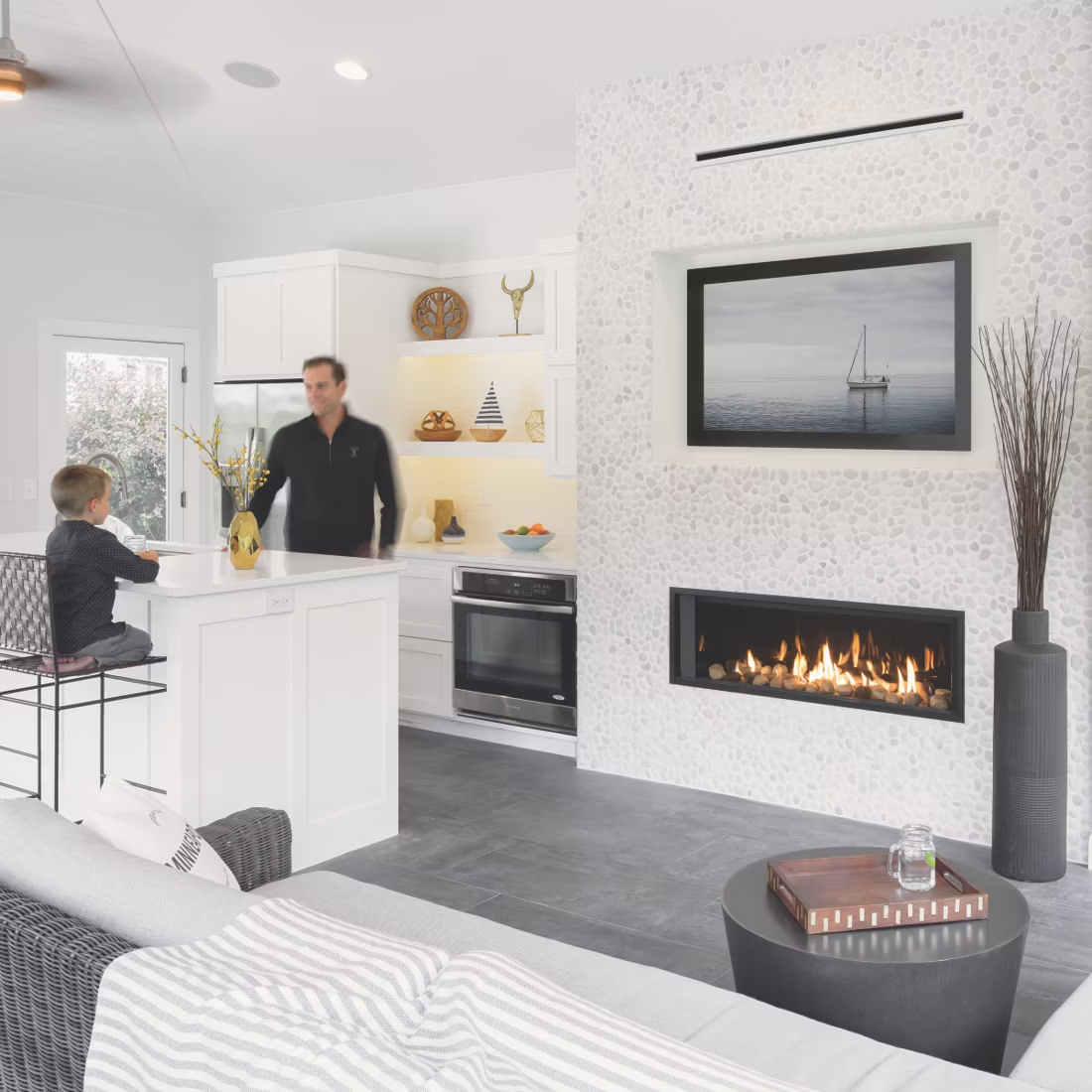
Yes—with an asterisk. Fireplaces are hot and TVs don't like heat. Either put a mantel between them to deflect rising warmth, or choose a fireplace with heat-management technology that creates a cool zone on the wall above—the wall stays around 125 degrees, barely warm, while the room still gets full heat. If you like clean lines and don't want a mantel, heat management is the answer.
Does a fireplace add value to my home?
On average, a fireplace adds back to the home about the same amount you spent installing it. Add the monthly savings from heating the rooms you actually use instead of the whole house—often hundreds of dollars a year—and the value case is strong before you even count what a fire does for how your family uses the room.
Can I install a fireplace myself?
If you're putting a fire in your house on purpose, it's best to work with an expert. Unless you're genuinely experienced in framing, gas line, vent pipe, and the national code on clearances to combustibles, have a professional do it—and ideally the same company that sells you the fireplace, so warranty, service, and liability all live under one roof.
Nearby Dealers
Hearth shops serving Arnold and the surrounding area. Every listing shows whether it is a WhyFire partner, a dealer we have verified as authorized for the brands we recommend, or a local business carrying hearth products. No manufacturer pays for placement. How we verify dealers →
Complete Chimneys Fireplaces & Grills
Costello's Hearth & Spa - Pasadena
Affordable Outdoor Kitchens
Costello's Hearth & Spa - Edgewater
Costello's Hearth & Spa - Glen Burnie
The Torch Guys
Masters Pellet Stoves
Belair Engineering & Service Co, Inc
Fireside Hearth & Home - Elkridge
Trinity Chimney Service
Ace Of Diamonds Chimney
Hunters Home Center
Shore Lumber & Millwork
Fireplaces And Stoves Md
Find your gas fireplace in Arnold.
Tell us a bit about your home and we'll put together a free Project Guide & Parts List—the right gas fireplace or insert, the exact parts including the vent kit, and a trusted local Arnold-area dealer to install it.
Find Your Fireplace →