
Reliable Heat for Annapolis Neck's Coastal Winters.
Clean, instant heat for the Bay-front homes of Annapolis Neck—whether you're converting an old masonry fireplace or starting fresh. Find the right unit and connect with a trusted local dealer.
Every Project Starts From One of These Five Situations
Mild winters, but flip-of-a-switch warmth still matters.
Annapolis Neck is a low-lying peninsula bounded by the Chesapeake Bay, the Severn River, and Back Creek, sitting at just 23 feet of elevation in climate zone 4A. Winters here are mild by national standards—the average winter low hovers around 30°F, and the area has less than half the winter heating load that a city like Burlington, VT sees in a typical winter. But mild doesn't mean irrelevant: nor'easters and the occasional hurricane remnant regularly knock out power along the peninsula's waterfront streets, and the damp, salt-air chill off the Bay makes a good heat source welcome even when the thermometer doesn't demand it.
Because winters are short and moderate, wood stoves and pellet stoves see little use on the Neck—most of the older homes near Eastport and the Bay Ridge corridor that still have a wood-burning fireplace use it for atmosphere on a handful of nights, not for heat. Gas has become the default instead. Piped natural gas service reaches many neighborhoods closer to Forest Drive and downtown Annapolis, while homes further out on the peninsula and along the waterfront more often run on propane, delivered and stored in a tank on the property. Either way, a direct-vent gas fireplace or insert gives you real, instant heat without babysitting a fire, and—with the right ignition system—a way to stay warm through the outages that come with living this close to the water. Baltimore Gas & Electric serves electric here, and at roughly $0.16 per kWh, an electric fireplace can make sense as a low-cost, no-venting supplement in a condo or guest room, but gas remains the workhorse for whole-room heat.
Three steps. No salesperson until you're ready.
Tell us about your project
Your zip code, your situation, and the fuel you're leaning toward—or let the answers point you to one.
See what's actually available
The brands dealers within 100 miles genuinely carry—real options, never a catalog mirage.
Get your dealer & Project Guide
A trusted local dealer, plus the free Project Guide & Parts List that names every component of the job.
Frequently Asked Questions
How much does a gas fireplace installation cost in Annapolis Neck?
Most gas fireplace and insert installations in Annapolis Neck run somewhere between $4,000 and $10,000. An insert dropped into an existing masonry fireplace—common in the older colonials and capes around Eastport and the Neck—sits toward the lower end, especially if the home already has gas service. A new direct-vent fireplace built into a wall for a room addition or waterfront remodel runs higher once framing, venting, and gas line work are added in. Homes relying on propane instead of piped gas should also budget for tank placement or a new tank installation, which a local dealer will factor into the quote.
Can I convert my wood-burning fireplace to gas?
Yes, and it's a common request on the Neck, where many mid-century and older homes still have an open masonry fireplace that rarely gets used for heat. A gas insert fits into that existing opening, uses the existing chimney as a liner-protected vent path, and turns a fireplace that's mostly decorative into a real heat source. Expect $4,000 to $8,500 depending on the insert and whether the home is already plumbed for natural gas or needs a propane hookup. The masonry stays, the mantel stays—you just gain a fireplace you'll actually use on a raw, windy evening off the Bay.
Do I need natural gas, or should I plan on propane?
It depends on where you are on the peninsula. Neighborhoods closer to Forest Drive and downtown Annapolis are more likely to have piped natural gas already running to the house. Homes further out toward the water—much of the waterfront and the quieter pockets of Annapolis Neck—typically run on propane instead, with a tank set on the property and refilled by a local supplier. Both fuels work fine in the same gas fireplace models; your installer just sets the orifice and regulator for whichever you have. If you're not sure which is available at your address, a local dealer can check before quoting the job.
Will a gas fireplace work when the power goes out?
Most modern gas fireplaces with intermittent pilot ignition (IPI) run on a small battery backup that kicks in the moment the power drops, so the fireplace still lights on demand. That matters on Annapolis Neck, where nor'easters and tropical system remnants off the Bay can knock out power along the waterfront for a day or more. Valor's gas fireplaces take a different approach—the pilot's thermocouple generates its own electricity, so there's no battery to remember to replace. Either system will keep a room warm during an outage; ask your local dealer which ignition type is on the model you're considering.
What's the difference between a gas fireplace, insert, and stove?
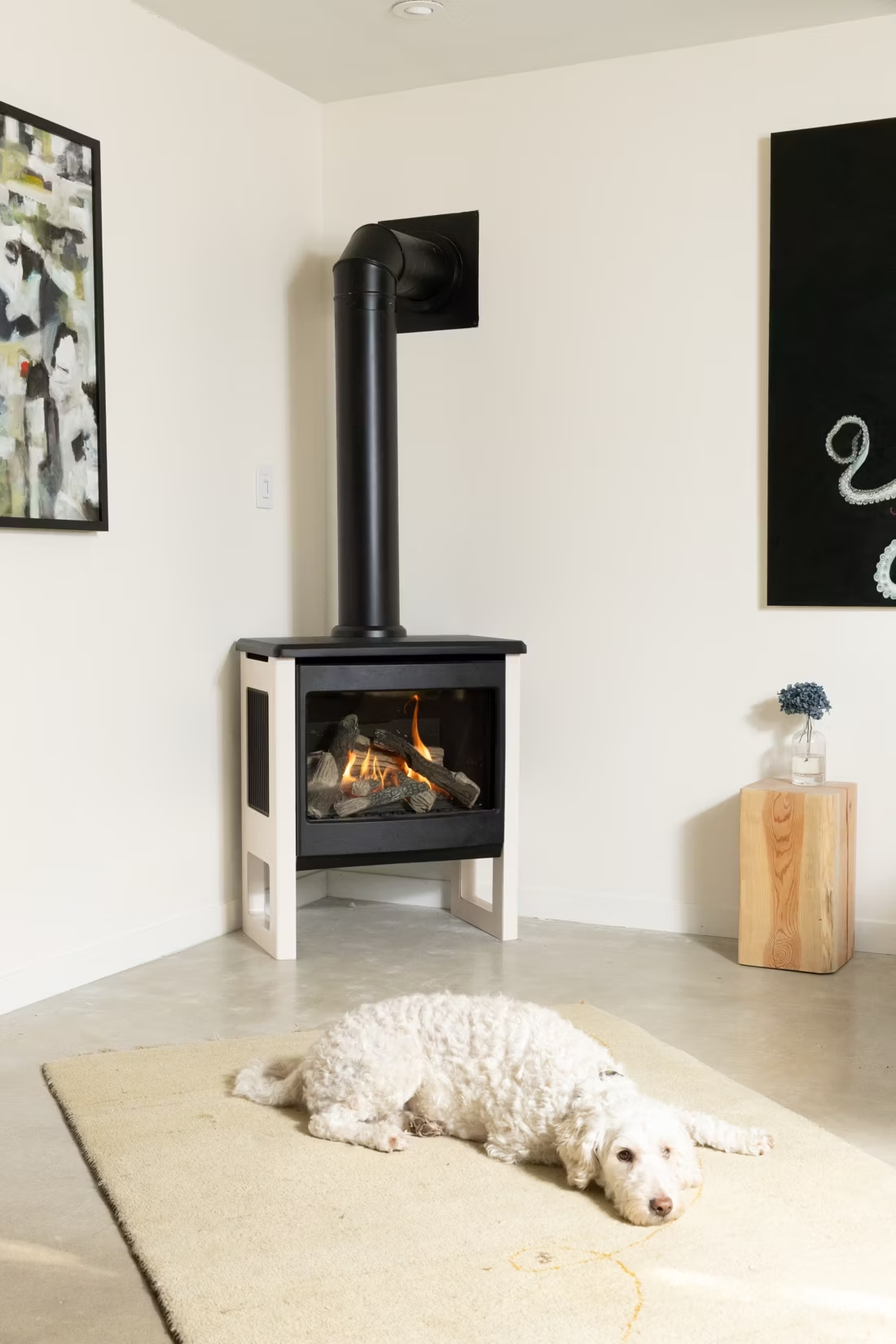
A gas fireplace is a fully built-in unit framed into a wall—the right call for new construction or a remodel that doesn't already have a fireplace opening. A gas insert slides into an existing masonry fireplace, which fits a lot of the older housing stock around Eastport and the Neck. A gas stove is a freestanding unit that sits out in the room like a wood stove but burns gas, useful in a sunroom or addition where there's no chimney to work with. For most Annapolis Neck homeowners with an existing hearth, an insert is the simplest and most cost-effective upgrade.
Do I need a permit to install a gas fireplace in Annapolis Neck?
Yes—Anne Arundel County requires both a building permit and a gas permit for a new gas fireplace or insert installation, and a licensed gas-fitter has to handle the fuel line. Because much of Annapolis Neck sits at low elevation right along the Bay and its tributaries, some properties also fall inside a coastal flood zone, which can affect where mechanical equipment and venting terminations are allowed relative to base flood elevation. A local hearth dealer who's worked on the Neck before will already know which streets that applies to and coordinate the permitting for you.
Vented vs. vent-free gas fireplaces—what's the difference for a home like mine?
Vented, direct-vent gas fireplaces draw combustion air from outside and exhaust it back outside through a sealed pipe—they're the cleanest option and what most Annapolis Neck installers recommend. Vent-free units burn without any outside venting at all, releasing some water vapor and combustion byproducts into the room; Maryland permits them under strict room-sizing and oxygen-sensor rules, but they're a harder sell in the newer, tightly sealed waterfront construction going up around the Neck, where indoor humidity and air quality already need careful management. For most homes here, direct-vent is the safer, more universally recommended choice.
How often does a gas fireplace need to be serviced?
Plan on an annual inspection, ideally before fall—a technician checks the burner, pilot or ignition system, venting, and gas connections, and cleans the glass. That's worth taking seriously on Annapolis Neck specifically: the salt air and humidity off the Bay can accelerate corrosion on exterior vent terminations and hardware faster than it would inland. Most local service providers charge in the $150 to $250 range for a standard annual visit.
Gas vs. electric fireplace—which fits my home better?
For Annapolis Neck's mild winters, both are reasonable, but they solve different problems. A gas fireplace or insert delivers real heat output—enough to warm a living room or great room on a cold, windy night off the Bay—and, with battery backup or a self-powered pilot, can keep running through a power outage. An electric fireplace needs no venting or gas line at all, installs in an afternoon for $400 to $1,200, and works well as ambiance or light supplemental heat in a condo, guest room, or a home where running a gas line isn't practical. At Baltimore Gas & Electric's residential rate of roughly $0.16 per kWh, electric heat costs more to run for real warmth over a long evening, so most homeowners here choose gas for the main living space and save electric units for smaller, secondary rooms.
What's the difference between an insert and a zero-clearance fireplace?
An insert is a fireplace that slides into a pre-existing wood-burning fireplace—if you don't have one, there's nothing to insert it into. A zero-clearance fireplace is built into a framed wall, which makes it the answer for remodels and new construction. Simple test: existing masonry fireplace means insert; blank or framed wall means zero-clearance.
Is my gas fireplace wasting gas?
If it was installed more than 15 years ago, probably. Older gas fireplaces keep a standing pilot light burning all the time, and that little flame can cost a couple hundred dollars a year. Newer models use pilot-on-demand ignition—the pilot lights only when you use the fireplace and goes out when you turn it off.
Does a fireplace add value to my home?
On average, a fireplace adds back to the home about the same amount you spent installing it. Add the monthly savings from heating the rooms you actually use instead of the whole house—often hundreds of dollars a year—and the value case is strong before you even count what a fire does for how your family uses the room.
How much should I budget for a fireplace?
For an average home—covering the fireplace, the vent pipe, and basic installation—a budget between $3,900 and $5,500 gives you a lot of options across wood, gas, and pellet. By the time you add finish work, gas line, and electrical, the average complete installation lands between $5,000 and $12,000 all-in. In a remodel or new build, a good rule is to put about 2.5% of the total project cost toward the fireplace.
Nearby Dealers
Hearth shops serving Annapolis Neck and the surrounding area. Every listing shows whether it is a WhyFire partner, a dealer we have verified as authorized for the brands we recommend, or a local business carrying hearth products. No manufacturer pays for placement. How we verify dealers →
Complete Chimneys Fireplaces & Grills
Costello's Hearth & Spa - Edgewater
Affordable Outdoor Kitchens
The Torch Guys
Costello's Hearth & Spa - Pasadena
Belair Engineering & Service Co, Inc
Masters Pellet Stoves
Costello's Hearth & Spa - Glen Burnie
Fireside Hearth & Home - Elkridge
Trinity Chimney Service
Shore Lumber & Millwork
Find your gas fireplace in Annapolis Neck.
Tell us about your Annapolis Neck home and we'll match you with a trusted local dealer and send you a free Project Guide & Parts List—the exact parts, vent kit, and recommended installer for your gas fireplace project.
Find Your Fireplace →