
Thermostat-set heat for a prairie winter that averages -20.6°C.
Virden sits at 442 metres in Southern Manitoba, where long, dry prairie winters push homes toward reliable, controllable heat. I'll match you with a trusted local dealer who knows the venting, the fuel supply, and what's actually installable on your street.
Every Project Starts From One of These Five Situations
Set-it-and-forget-it heat for a town that takes winter seriously.
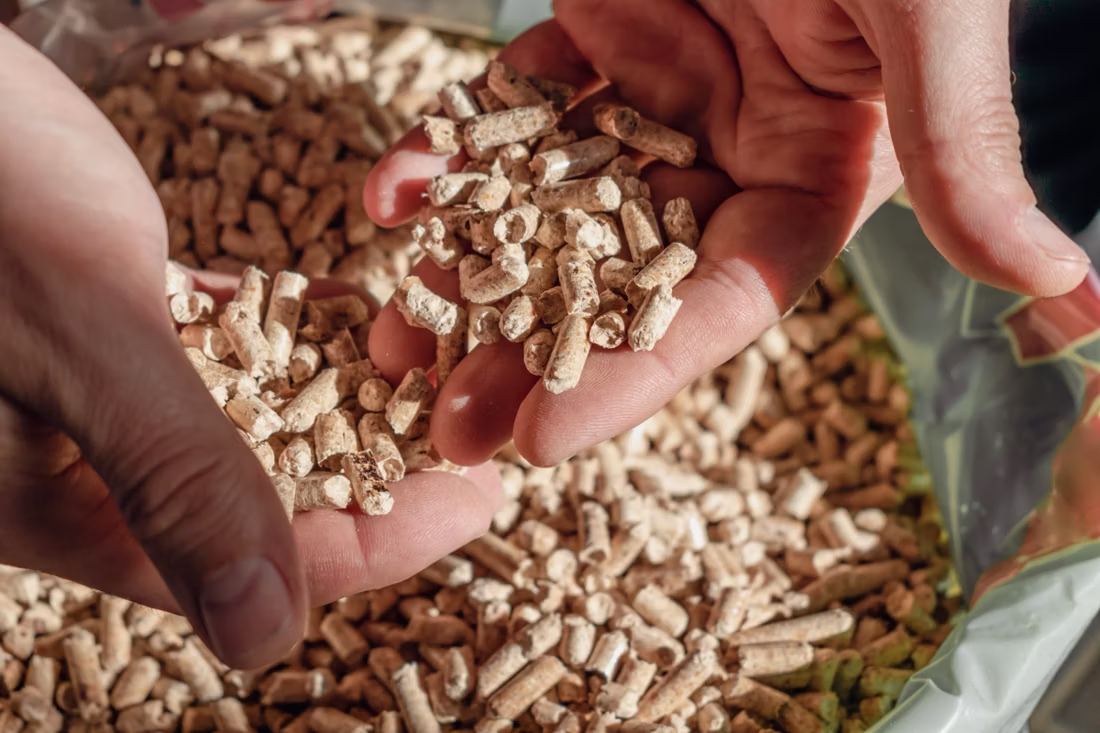
Virden's winters rank among the coldest of any sizable Canadian town outside the true north—an average low near -20.6°C and a heating season nearly as long as Regina's. That kind of cold makes a thermostat-controlled appliance genuinely useful rather than a novelty: a pellet stove holds a set temperature overnight without the split-and-stack routine that wood demands, and it burns cleaner through the stagnant cold-air stretches that settle over the prairie in January. Pellets sold locally through mills like La Crete Sawmills and Spruce Products are typically milled from the same trembling aspen, paper birch, and bur oak that grow across Southern Manitoba, so the fuel supply chain stays regional rather than shipped in from across the country.
Manitoba Hydro's residential electricity rate is among the lowest in the country at roughly 10.3 cents per kWh, and it powers plenty of Virden homes directly—but hydro's own transmission lines run long distances across open prairie, and ice storms or high winds do take the grid down for stretches most winters. That's part of why pellet and gas appliances (Manitoba Hydro also supplies natural gas here) stay in steady demand as backup heat even in a low-rate electricity market. A pellet unit still needs power for its auger and blower, so most Virden households pair one with a small battery backup or generator rather than relying on it alone during an extended outage.
Three steps. No salesperson until you're ready.
Tell us about your project
Your postal code, your situation, and the fuel you're leaning toward—or let the answers point you to one.
See what's actually available
The brands dealers within 100 miles genuinely carry—real options, never a catalog mirage.
Get your dealer & Project Guide
A trusted local dealer, plus the free Project Guide & Parts List that names every component of the job.
Frequently Asked Questions
How much does a pellet stove installation cost in Virden?
Most pellet installs here run $6,000 to $10,000 CAD. A freestanding stove with a straightforward through-wall vent to the outside sits toward the lower end, while a pellet insert going into an existing masonry firebox—common in Virden's older character homes near downtown—costs more once the liner and hearth work are factored in. Your municipal building department requires a permit either way, and most local dealers include that paperwork as part of the quote.
Will a pellet stove keep working if the power goes out?
Not on its own. Pellet stoves need electricity to run the auger that feeds fuel and the blower that pushes heat into the room, so a grid outage stops the stove even with a full hopper. Given how exposed Manitoba Hydro's long rural lines are to prairie ice storms and wind events, most Virden households pairing a pellet appliance for daily convenience keep a small battery backup or portable generator on hand, or install a wood stove or gas unit elsewhere in the house as a true outage-proof backup.
Where do I buy pellets near Virden, and what do they cost?
Regional mills including La Crete Sawmills and Spruce Products supply most of the bagged pellet fuel sold through Southern Manitoba hearth dealers, with current pricing running roughly $400 to $575 CAD per ton depending on hardwood versus softwood blend and how far a retailer is from the mill. Buying a full season's supply in late summer, before demand and price both climb heading into the cold months, is the standard local strategy—a household burning through a typical Virden winter often goes through two to three tons.
Do I need a permit to install a pellet stove in Virden?
Yes. New installations need a permit through the municipal building department, and the work has to meet CSA B365 installation code, the same standard that governs wood-burning appliances across Manitoba. Most insurers also want a WETT inspection on file before they'll cover a pellet or wood appliance, so it's worth scheduling that inspection as soon as the install is finished rather than waiting until renewal time raises questions.
What size pellet stove do I need for a Virden home?
With winter lows averaging -20.6°C and cold snaps that drop well past that, undersizing is the more common regret here than oversizing. A unit rated for 1,200 to 1,800 square feet suits most Virden bungalows and older two-storeys as a primary heat source for the main living area, while a smaller unit is fine if you're supplementing an existing gas or electric furnace. A local dealer will size against your actual insulation and ceiling height, not just floor area—older homes near downtown often lose more heat than newer builds on the edge of town.
How is a pellet stove vented differently from a wood stove?
Pellet stoves use a smaller-diameter vent pipe, often 3 or 4 inches, and can typically run horizontally through an exterior wall rather than requiring a full vertical chimney the way a wood stove does. That makes pellet retrofits noticeably simpler in Virden homes that never had a masonry chimney to begin with—a common situation in the town's newer subdivisions—since there's no need to build a Class A chimney system from the roof down.
How often does a pellet stove need maintenance in a climate like this?
Given how many hours a pellet stove runs through a Virden heating season that stretches from October into April, plan on cleaning the burn pot and glass weekly during heavy-use months and scheduling a full professional service annually, ideally in late summer before the first cold snap. Ash buildup and clinker formation happen faster with lower-quality pellets, so sourcing from established regional suppliers like La Crete Sawmills or Spruce Products tends to mean fewer mid-winter service calls than off-brand bagged fuel.
Pellet vs. natural gas—which makes more sense for a Virden home?
Natural gas through Manitoba Hydro fires instantly, needs no fuel storage, and typically installs for $6,000 to $15,000 CAD depending on venting and gas line work. Pellet appliances cost less to run fuel-wise for many households and give you a visible flame and stove-top radiant heat that gas inserts don't fully replicate, but they need a place to store bags and a hopper to refill regularly. Plenty of Virden homes run natural gas as the main heat source and add a pellet stove in a family room or basement for supplemental warmth and the ambience gas alone doesn't provide.
Is a pellet stove a good backup heat source for a Virden power outage?
It can be, but only with a plan for keeping it powered—the auger and blower both need electricity, so a pellet stove alone won't help during a grid failure caused by a prairie ice storm. A small battery backup or inverter generator solves that gap and is inexpensive relative to the stove itself. If true outage independence matters more than convenience, a wood stove burning local trembling aspen or bur oak needs no electricity at all, which is why some Virden households end up choosing wood for backup and saving pellet for everyday comfort.
Why do fireplace quotes vary so much?
Because a fireplace is an iceberg—there's more behind the wall than in front of it. A low quote often covers only the unit; the full scope includes vent pipe, gas line or electrical, framing, and the tile or stone that has to come off and go back on. Make every bidder price the whole job. If a dealer can't speak to the full scope with confidence, that's your signal to keep looking.
Is it worth replacing an old fireplace that still sort of works?
Ask three questions: Is it ugly? Is it drafty? Does it actually work? Most old fireplaces fail at least two. Beyond looks, an old unit leaks air around the damper year-round and—if it's gas with a standing pilot—quietly burns a couple hundred dollars a year. A modern replacement seals the wall, heats the room, and changes how the whole space gets used.
What does it take to replace an existing fireplace?
Fireplaces are like icebergs—bigger behind the wall than in front of it. Replacement means removing the surrounding tile or stone (the finish material laps onto the fireplace face), pulling the old unit, setting the new one in the same enclosure, and re-finishing the wall. A hearth professional can determine what's behind your wall without demolition during an in-home preview.
Why is my open fireplace making my house colder?
Open fireplaces suck—literally. As the fire burns, it consumes air your furnace already paid to heat and pulls it out through the chimney, so the house is actually colder after the fire goes out than before you lit it. An insert fixes this: it seals the chimney, puts fixed glass across the front, and turns that hole in your house into a real heat source.
Nearby Dealers
Hearth shops serving Virden and the surrounding area. Every listing shows whether it is a WhyFire partner, a dealer we have verified as authorized for the brands we recommend, or a local business carrying hearth products. No manufacturer pays for placement. How we verify dealers →
Linco Auto
Interlake Heating & Ventilation
Interlake Wood Stove & Spa
Pellet Brands Stocked Around Virden
Typical price runs $400-$575 per ton—buy early-season for the best rates. Manufacturers will point you to the nearest stocking dealer.
La Crete Sawmills
Spruce Products
Get your free Project Guide & Parts List for a Virden pellet project.
Tell me about your home and how you're heating it now, and I'll match you with a trusted local dealer and send a free Project Guide & Parts List sized for Southern Manitoba's cold winters, with the exact vent kit and parts specified.
Find Your Fireplace →