
Every fuel, every town across Southern Manitoba.
Wood, gas, pellet, and electric fireplace resources for the whole region, from the grain-belt towns south of Winnipeg to the Pembina Valley. Pick a fuel and get matched with a local dealer who actually installs it here.
Every Project Starts From One of These Five Situations
Long, hard winters near -22.4°C, and a region that heats for when the power goes out.
Southern Manitoba spans flat, open prairie and aspen parkland dotted with towns like Steinbach, Winkler, Morden, and Portage la Prairie. Winter lows averaging -22.4°C, in a Climate Zone 7B, put this region in the same heating-load territory as Regina—a long, dry cold that settles in by November and doesn't fully let go until April. Trembling aspen, paper birch, bur oak, and black ash are the wood species most local households burn, much of it cut under permits from Manitoba Natural Resources, Forestry Branch, which keeps firewood heat both accessible and genuinely practical on acreages and farmyards across the region.
What sets this region apart is the backup-heat calculation every homeowner here eventually makes: Manitoba Hydro rates are among the lowest in the country, but a hydro outage during a -30°C prairie system is a real risk, and that's precisely why wood and gas appliances remain standard here rather than nostalgic extras. Most municipal building departments require installations to follow CSA B365, and insurers commonly ask for a WETT inspection before covering a wood stove or insert. This hub rolls up hearth retailers, service techs, and fuel suppliers across the whole region, from the Steinbach and Niverville corridor west through Winkler and Morden to Portage la Prairie. Pick your fuel below for local dealers, install costs, and unit recommendations specific to your town.
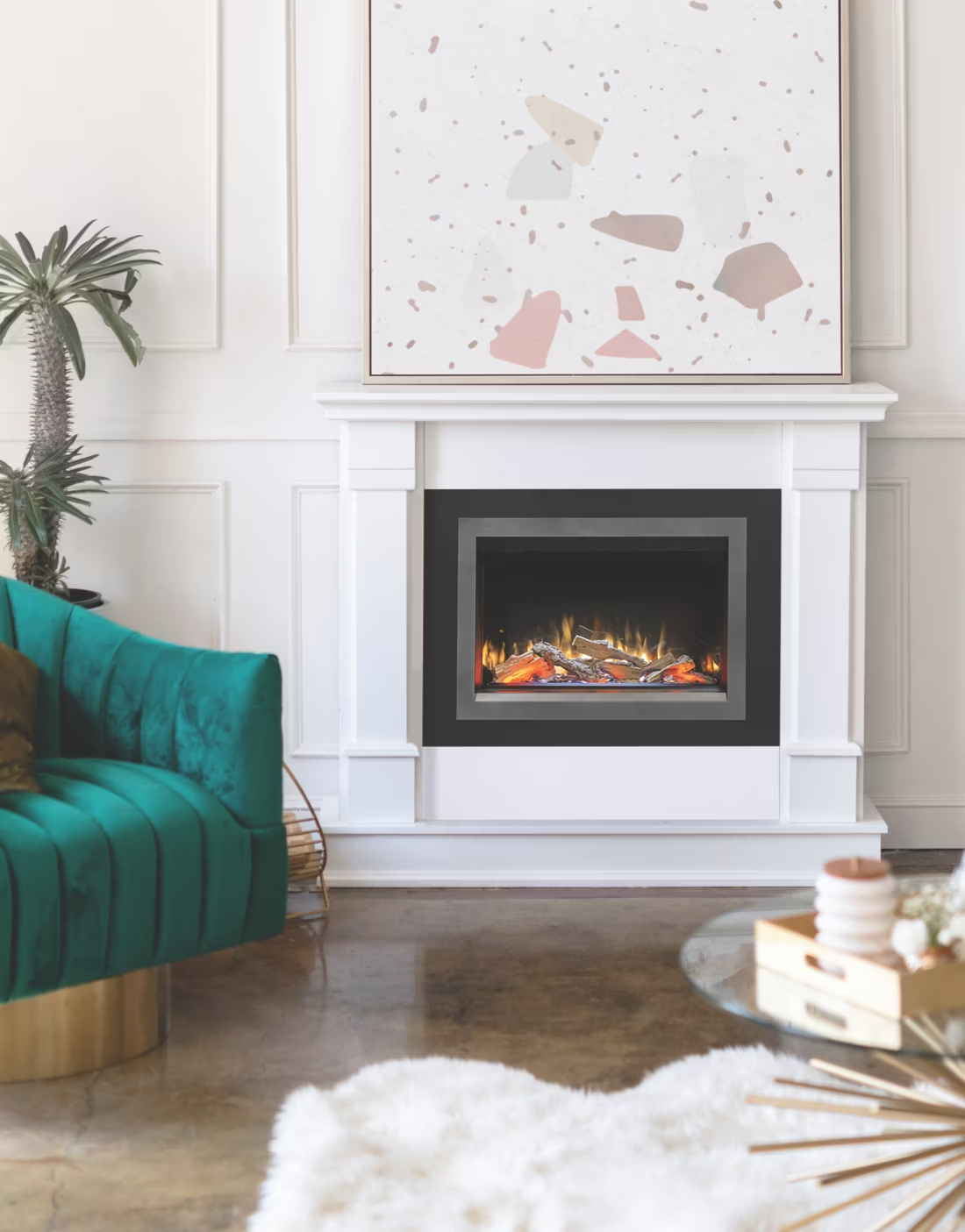
Four fuels. One honest answer for Southern Manitoba.
Three steps. No salesperson until you're ready.
Tell us about your project
Your postal code, your situation, and the fuel you're leaning toward—or let the answers point you to one.
See what's actually available
The brands dealers within 100 miles genuinely carry—real options, never a catalog mirage.
Get your dealer & Project Guide
A trusted local dealer, plus the free Project Guide & Parts List that names every component of the job.
Frequently Asked Questions
Which fireplace fuel makes the most sense in Southern Manitoba?
All four fuels see genuine use here, and the right pick usually comes down to how you want to handle a hydro outage in the middle of a cold snap. Wood remains the default backup heat on acreages and farmyards, where a catalytic stove burning bur oak or dried aspen will hold a fire through a -22°C overnight without any dependence on the grid. Natural gas is widely available across the larger towns in the region and is popular precisely because it's low-maintenance and available on demand, though a standing pilot or battery-backup ignition matters if you're buying it partly for outage protection. Pellet stoves have a solid following too—La Crete Sawmills and Spruce Products both distribute pellets regionally—but they do need electricity to run the auger and fan, so most pellet households pair one with a generator or a wood backup. Electric fireplaces are supplemental almost everywhere here; Manitoba Hydro rates are genuinely low, which makes electric heat attractive for ambiance and zone heat, but it isn't a stand-in for a primary source through a five-month winter.
Do I need a permit to install a wood stove or fireplace in Southern Manitoba?
Yes, in nearly every municipality. Installations go through your local municipal building department, and CSA B365 governs how the appliance, chimney, and clearances are installed regardless of which town you're in. If you're adding or replacing a wood stove or insert, plan on a WETT inspection as well—most home insurers in the region either require one before binding coverage or ask for one at renewal once they know a wood appliance is in the house. Gas installations need a licensed gas fitter and a separate gas-line permit; pellet stove permitting is similar to wood but without the WETT requirement in most cases. Electric fireplaces usually skip the permit process unless you're hardwiring a built-in unit that needs a new circuit. The retailers we match homeowners with typically handle this paperwork directly as part of the project.
Why do so many homes here keep a wood or gas backup even with low hydro rates?
Manitoba Hydro rates are among the lowest in the country, so electric heat is genuinely cheap to run day to day—but a region this exposed to prairie cold treats a hydro outage differently than a milder climate would. When a winter storm knocks out power at -25°C or colder, a home with electric baseboard heat alone can lose its safety margin within hours, which is why wood stoves and gas fireplaces are considered practical infrastructure here rather than optional extras. A wood stove needs no power at all to run, and a gas fireplace with a millivolt or battery-backup ignition system will keep working through an outage that takes down the furnace blower. It's a genuinely local reason to size your hearth appliance for real heat output, not just supplemental ambiance.
Where does firewood come from, and do I need a permit to cut my own?
Trembling aspen, paper birch, bur oak, and black ash are the species most commonly burned across Southern Manitoba, and a fair amount of it is self-cut on private land or under a permit from Manitoba Natural Resources, Forestry Branch for Crown land access. Bur oak and birch season slower than aspen but burn hotter and longer once dry, which matters if you're relying on wood as backup heat rather than just supplemental warmth. Most local firewood dealers sell seasoned cords by species, so it's worth asking specifically for oak or birch if you want a longer overnight burn out of a catalytic stove.
Can I find a retailer in the region that carries more than one fuel type?
Most hearth retailers across Southern Manitoba carry at least two fuel types rather than specializing in just one, which tracks with how many households here run one fuel as primary heat and keep a second appliance for outages or ambiance. A multi-fuel dealer is useful if you're still deciding between, say, a wood insert for backup heat and a gas fireplace for everyday convenience—you can see working displays side by side and talk through trade-offs specific to your address and whether mains gas actually reaches your street. We match you with the retailer whose fuel lineup and service area genuinely fits your project rather than sending you to whoever's biggest.
What does a fireplace installation typically cost in Southern Manitoba?
Costs vary by fuel and by how much venting or gas-line work is involved. Wood stove or insert installs, including a WETT inspection, typically run $4,500-$9,000 CAD, with a full new chimney pushing higher. Gas fireplaces, inserts, and stoves generally run $4,000-$10,000 CAD depending on whether an existing gas line reaches the install location. Pellet stove or insert installs tend to land around $4,000-$7,000 CAD. Electric fireplaces are the outlier—$300-$3,000 CAD for the unit itself, plus a modest labor charge for anything beyond a simple plug-and-play placement. The region and fuel pages above break these numbers down further with local retailer pricing.
How many BTUs do I need in a fireplace?
Wrong question—and the industry's favorite way to confuse you. More BTUs isn't better if the fireplace cooks you out of the room you spent thousands to enjoy. Think in terms you can verify: how many square feet the unit heats, whether it's primary or backup heat, and whether you want it running overnight. Those three answers size a fireplace correctly every time.
Will we actually use a fireplace once we have one?
In my own home, the room with the fireplace has never been the same—it became the social hub. Game nights, holidays, date nights after the kids are down: the fire is where the house gathers. There's a reason people in this industry joke that we're really in the romance and entertainment business. You won't wonder whether you'll use it; you'll wonder how the room worked before.
Wood, gas, pellet, or electric—how do I choose?
Match the fuel to your life, not the other way around. Wood: lowest fuel cost and total power-outage independence, but you're hauling and stacking. Gas: press a button, set a thermostat, no maintenance to speak of. Pellet: wood economics with automatic feeding, in exchange for weekly cleaning and a need for electricity. Electric: plugs in anywhere with honest supplemental heat. Nobody regrets the fuel that fits how they actually live.
What is an in-home preview and do I need one?
It's a visit where a hearth professional measures your space, confirms the model you picked actually works in your home, and walks the specs—framing, gas line, venting, finish work—before anything is ordered. Some details you just can't know until you see the house. Never make a down payment without one; it's the single most-skipped step that burns buyers.
Stove and Fireplace Dealers in Southern Manitoba
Listings include WhyFire partner dealers, dealers we have verified as authorized for the brands we recommend, and established local businesses that carry hearth products. Every listing shows which one it is. The ones marked Preferred run on WhyFire's software, so they can show you real pricing and book your appointment right here. No manufacturer pays for placement. How we verify dealers →
Linco Auto
Interlake Heating & Ventilation
Interlake Wood Stove & Spa
Get matched with a local Southern Manitoba dealer.
Pick your fuel below and we'll put together a free Project Guide & Parts List—the right unit, the vent kit it needs, and the local dealer we recommend for your project.
Find Your Fireplace →