
Built for winters that average minus 24 on the lake.
Gimli's winter lows average -23.9°C, among the coldest major-city winters in Canada, and a lot of local heat plans lean on a pellet stove for steady, thermostat-like warmth without splitting cordwood. I'll match you with a trusted local dealer and send a free Project Guide & Parts List sized for your home.
Every Project Starts From One of These Five Situations
A clean, steady burn for a town used to real cold.
Gimli sits at 221 metres on the western shore of Lake Winnipeg, about 90 minutes north of Winnipeg, and shares that city's reputation for genuinely brutal cold: winter lows here average -23.9°C, placing Gimli among the coldest major-city winters in Canada. The heating season runs long, typically October through April, and a fireplace or stove here isn't decorative, it's part of how a household gets through a Prairie winter that doesn't let up.
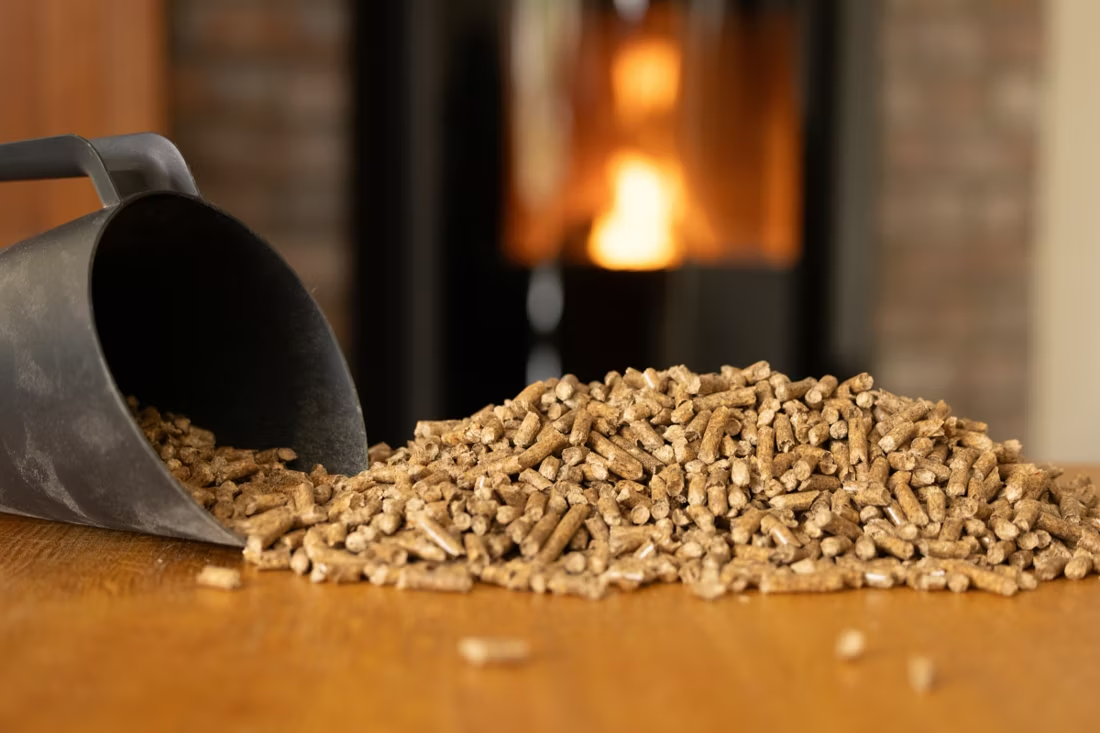
Pellet stoves have carved out a real niche in that mix. Regional brands like La Crete Sawmills and Spruce Products keep pellets in local supply at roughly $400-$575 a tonne, and a modern pellet insert delivers thermostat-controlled, even heat without the splitting, stacking, and daily reloading that wood demands. The one tradeoff worth planning for: pellet stoves need electricity to run their auger and blower, and this is a region where winter outages are a real enough risk that many households keep a wood stove or a natural gas unit on Manitoba Hydro's gas network as backup rather than relying on pellet alone.
Three steps. No salesperson until you're ready.
Tell us about your project
Your postal code, your situation, and the fuel you're leaning toward—or let the answers point you to one.
See what's actually available
The brands dealers within 100 miles genuinely carry—real options, never a catalog mirage.
Get your dealer & Project Guide
A trusted local dealer, plus the free Project Guide & Parts List that names every component of the job.
Frequently Asked Questions
How much does a pellet stove installation cost in Gimli?
Typical pellet installs in Gimli run $6,000 to $10,000 CAD, a narrower spread than wood or gas because pellet venting is simpler—most units vent through an existing wall with smaller-diameter pipe rather than requiring a full chimney system. A straightforward insert into an existing hearth sits toward the low end, while a new freestanding stove with a fresh through-wall vent run in a home without any existing hearth pushes toward the top. Your municipal building department will want a permit either way, and most installers include that step in their quote.
What size pellet stove do I need for a Gimli home?
With winter lows averaging -23.9°C and stretches that go colder, a lot of homes here undersize their first pellet stove because the square-footage numbers on the box assume a milder climate than the Interlake region actually delivers. For an older Gimli home near town with average insulation, sizing toward the upper end of a stove's rated range is the safer call, so it can hold output through a multi-day cold snap without running flat out around the clock. A local dealer will size against your actual floor plan, ceiling height, and insulation rather than square footage alone.
Do I need a permit to install a pellet stove in Gimli?
Yes. Installations go through your municipal building department, and the work needs to meet CSA B365, the national code covering solid-fuel burning appliances. Many home insurers in Manitoba also ask for a WETT-qualified inspection before covering a new pellet installation, even though WETT is best known for cordwood stoves—the credential covers solid-fuel appliances broadly, and having that inspection on file makes a future home sale or insurance renewal much simpler.
Pellet stove vs. pellet insert—what's the difference for my house?
A freestanding pellet stove sits on a hearth pad and vents through a wall or up through the roof, which works well in a newer Gimli home without an existing masonry fireplace. A pellet insert slides into an existing wood-fireplace firebox and reuses part of the chimney chase with a smaller liner, which is the common retrofit in older homes around town that were originally built with an open wood fireplace decades ago. Inserts generally land toward the lower end of the $6,000-$10,000 range since less new venting is involved.
Where do I buy pellets in the Gimli area?
La Crete Sawmills and Spruce Products are the two regional brands most local dealers stock, generally running $400-$575 a tonne depending on the season and how early you buy. Buying a season's supply in late summer, before the first cold snap drives demand up, is the standard local strategy—most Interlake households store several tonnes in a garage or shed rather than buying bag by bag through the winter.
What's the best pellet stove for Gimli's winters?
Given lows that regularly hit -24°C or colder, look for a unit with a larger hopper and a genuine high-heat-output rating rather than the smallest model on the showroom floor—a bigger hopper means fewer refills during stretches when you'd rather not be topping it up at midnight. Because pellet stoves depend on electricity for the auger and blower, pairing one with a small battery backup or inverter generator is worth the extra cost here, where winter outages aren't rare. Your local dealer can point you toward models with lower standby power draw, which makes battery backup more practical.
What happens to my pellet stove during a power outage?
It stops. Pellet stoves rely on electricity to run the auger that feeds fuel and the blower that moves heat into the room, so an outage shuts the whole system down regardless of how full the hopper is. This is a real planning conversation for a Gimli household, since the same cold snaps that push heating demand up are also the conditions most likely to cause an outage. Many homes here keep a wood stove or a natural gas fireplace on the Manitoba Hydro gas network as backup heat, or invest in a battery backup sized to run the pellet stove's electronics through a shorter outage.
How often does a pellet stove need maintenance in Gimli?
Plan on a full annual service, ideally in September before the heating season starts in earnest, plus a weekly ash pan cleaning and a burn pot scrape every few days during heavy winter use. Pellet stoves running daily through a Manitoba heating season that stretches from October into April put more hours on the auger motor and blower than a stove used only occasionally, so a fall inspection catches worn igniters or gaskets before you're relying on the stove through a January cold snap.
Pellet vs. wood vs. gas—what makes sense for a Gimli home?
Wood, split from local trembling aspen, paper birch, or bur oak, is the traditional choice and it keeps working without power, which matters given how often deep cold and outages arrive together here. Natural gas, available through Manitoba Hydro's gas network across most of Gimli, offers instant heat with no fuel handling, and with Manitoba Hydro's low electric rates around 10.3 cents a kilowatt hour, running a gas insert stays affordable too. Pellet splits the difference: cleaner and more convenient than splitting cordwood, with steadier output than most people expect, but it shares wood's need for a fuel supply on hand and adds a dependence on electricity that wood doesn't have. A lot of Gimli homes end up running gas or pellet daily and keeping a wood stove as the outage-proof backup.
Why do fireplace quotes vary so much?
Because a fireplace is an iceberg—there's more behind the wall than in front of it. A low quote often covers only the unit; the full scope includes vent pipe, gas line or electrical, framing, and the tile or stone that has to come off and go back on. Make every bidder price the whole job. If a dealer can't speak to the full scope with confidence, that's your signal to keep looking.
Is it worth replacing an old fireplace that still sort of works?
Ask three questions: Is it ugly? Is it drafty? Does it actually work? Most old fireplaces fail at least two. Beyond looks, an old unit leaks air around the damper year-round and—if it's gas with a standing pilot—quietly burns a couple hundred dollars a year. A modern replacement seals the wall, heats the room, and changes how the whole space gets used.
Do I need a permit to install a fireplace?
In most jurisdictions, yes—fireplace and stove installations involve venting, clearances, and often gas or electrical work that gets permitted and inspected. That's a feature, not a hassle: the inspection protects your family and your homeowner's insurance. A professional installer pulls the permit, installs to code, and stands behind the inspection. If someone suggests skipping it, keep looking.
What do I measure to size a fireplace insert?
Four numbers tell you what fits: the front width, the front height, the back width, and the overall depth of your existing fireplace opening. Grab a tape measure, jot those down, and snap a photo of the wall—those two things do more to move your project forward than anything else you can do today.
Nearby Dealers
Hearth shops serving Gimli and the surrounding area. Every listing shows whether it is a WhyFire partner, a dealer we have verified as authorized for the brands we recommend, or a local business carrying hearth products. No manufacturer pays for placement. How we verify dealers →
Interlake Wood Stove & Spa
Interlake Heating & Ventilation
Linco Auto
Pellet Brands Stocked Around Gimli
Typical price runs $400-$575 per ton—buy early-season for the best rates. Manufacturers will point you to the nearest stocking dealer.
La Crete Sawmills
Spruce Products
Get your free Project Guide & Parts List for a Gimli pellet stove.
Tell me about your home and your hopper-size preferences, and I'll match you with a trusted local dealer and send a free Project Guide & Parts List—sized for Interlake winters, with the vent kit and parts specified.
Find Your Fireplace →