
Instant ambiance, no chimney required in Sanford.
Zone heat and real-flame ambiance for Sanford homes, condos, and converted mill-building apartments—no chimney, no gas line, no venting. Find the right unit and connect with a trusted local dealer.
Every Project Starts From One of These Five Situations
Heat and ambiance without the venting problem.
Sanford sits in climate zone 6A in southern York County, where winters average a low around 10°F and the heating season runs long—colder and lengthier than in most of New England. In a mill city built up with older triple-deckers, converted textile-mill lofts, and additions without existing chimneys, electric fireplaces solve a real problem: rooms that need warmth and a real-flame look but have no flue, no gas line, and no room for combustion venting.
Central Maine Power serves Sanford at a residential rate of roughly 22.4 cents per kWh, one of the higher rates in New England, which is worth knowing before treating an electric fireplace as a whole-house heat source. Most Sanford homeowners install electric inserts and stoves as supplemental zone heat for a bedroom, finished basement, or mill-loft unit, or simply for the fireplace look in a room that can't support a flue. For renters and condo owners in Sanford's older multi-family stock, electric is often the only fireplace option available at all, since plug-in and built-in units need no chimney, no gas permit, and minimal structural work.
Three steps. No salesperson until you're ready.
Tell us about your project
Your zip code, your situation, and the fuel you're leaning toward—or let the answers point you to one.
See what's actually available
The brands dealers within 100 miles genuinely carry—real options, never a catalog mirage.
Get your dealer & Project Guide
A trusted local dealer, plus the free Project Guide & Parts List that names every component of the job.
Frequently Asked Questions
How much does it cost to install an electric fireplace in Sanford?
Plug-in freestanding or wall-mount electric fireplaces run $300 to $1,500 installed, since most just need a standard outlet and can be running the same day. Built-in electric inserts or linear wall units that require a dedicated 20-amp circuit typically run $1,500 to $4,000 once a licensed electrician runs new wiring, and larger linear models with custom mantel surrounds can push toward $5,000. Because there's no chimney, gas line, or venting involved, electric installs in Sanford cost a fraction of a comparable wood or gas project—most of the cost is the unit itself plus any electrical work.
What does an electric fireplace cost to run in Sanford?
Central Maine Power bills Sanford residential customers at roughly 22.4 cents per kWh, one of the higher rates in New England. A typical 1,500-watt electric fireplace running on the heat setting costs about 34 cents an hour to operate. Run it four hours an evening and that's roughly $40 to $45 a month in electricity. That math is exactly why most Sanford homeowners treat electric fireplaces as supplemental zone heat or pure ambiance rather than a way to heat the whole house through a long, cold Maine winter—a wood stove or gas insert is far cheaper to run as primary heat here.
Do I need a permit to install an electric fireplace in Sanford?
In most cases, no building permit is required for a plug-in electric fireplace—it's treated like any other appliance. If you're adding a built-in insert or linear unit that needs a new dedicated circuit, Sanford's Code Enforcement Office typically requires an electrical permit, and the work needs to be done by a licensed Maine electrician. There's no chimney, gas line, or combustion venting to inspect, which is part of why electric installs move faster than wood or gas projects in Sanford.
What's the difference between an electric fireplace, insert, and stove?
A freestanding electric fireplace looks like a console or mantel unit and simply plugs into a wall outlet—no installation beyond placement. An electric insert is built to slide into an existing masonry firebox, letting Sanford homeowners with an old wood-burning fireplace they no longer use light it with a switch instead of a match. An electric stove is a freestanding unit styled like a wood or pellet stove, often with a more realistic flame effect, and works well in a room with no fireplace at all. All three plug into standard household power or a dedicated circuit for larger models—none require venting.
Can an electric fireplace heat my whole house?
Not realistically, and any dealer worth trusting will tell you the same. Sanford's winters average a low around 10°F and stretch on long and hard, and electric resistance heat simply isn't efficient as a whole-home solution in a winter like that, especially with Central Maine Power's residential rate near 22.4 cents per kWh. Electric fireplaces are best used for zone heating a single room, den, or finished basement, or purely for ambiance, while a furnace, heat pump, wood stove, or gas system carries the main heating load.
Are electric fireplaces a good fit for Sanford's mill-building apartments and condos?
Yes—this is one of the strongest use cases for electric in Sanford. Many of the city's converted mill lofts, triple-deckers, and multi-family conversions don't have a working chimney or the structural allowance for new venting, which rules out wood and often gas. An electric insert or wall-mount unit needs nothing more than an outlet or a simple dedicated circuit, making it the realistic fireplace option for renters, condo associations, and older buildings where a landlord won't approve venting work.
Should I get an electric fireplace or a heat pump for supplemental heat?
They solve different problems. Ductless heat pumps, which have become standard in Maine homes over the past decade, are far more efficient at actually heating a room through the winter—they move heat rather than generate it with resistance elements, so they cost less to run even at Central Maine Power's higher rate. An electric fireplace can't compete on efficiency, but it delivers something a heat pump head unit doesn't: the visual and ambiance of a fireplace. Many Sanford homeowners run both—a heat pump for the real heating load and an electric fireplace or insert for the look and feel of fire in the room where it matters.
Can I convert my old wood fireplace to electric?
Yes, and it's a common project for Sanford's older housing stock. An electric insert slides into your existing masonry firebox with no chimney liner, no gas line, and no combustion byproducts to vent—you can even cap the chimney afterward if you want. It's the simplest of all fireplace conversions and typically costs $1,500 to $3,500 installed, well below what a gas or wood-to-wood upgrade runs. It's a popular option for homeowners who want the mantel and look of their original fireplace back in service without dealing with firewood, creosote, or chimney sweeps.
Electric vs. wood or pellet—which is right for my Sanford home?
Wood and pellet stoves both deliver real heat output through Sanford's long winters—locally available maple, birch, beech, oak, and spruce cordwood, or bagged pellets from regional producers like Maine Woods Pellet Co and New England Wood Pellet, both burn far cheaper per BTU than electric resistance heat at Central Maine Power's rates. They also keep working during a power outage, at least in wood's case, since most pellet stoves still need electricity for the auger. Electric wins on simplicity: no venting, no ash, no firewood to stack, and it's often the only option in a condo or mill-loft apartment with no chimney. If you want backup heat during a Maine winter storm or the lowest fuel cost, wood or pellet is the better fit. If you want fireplace ambiance in a room that can't support venting, electric is the clear answer.
Can I put a TV above my fireplace?
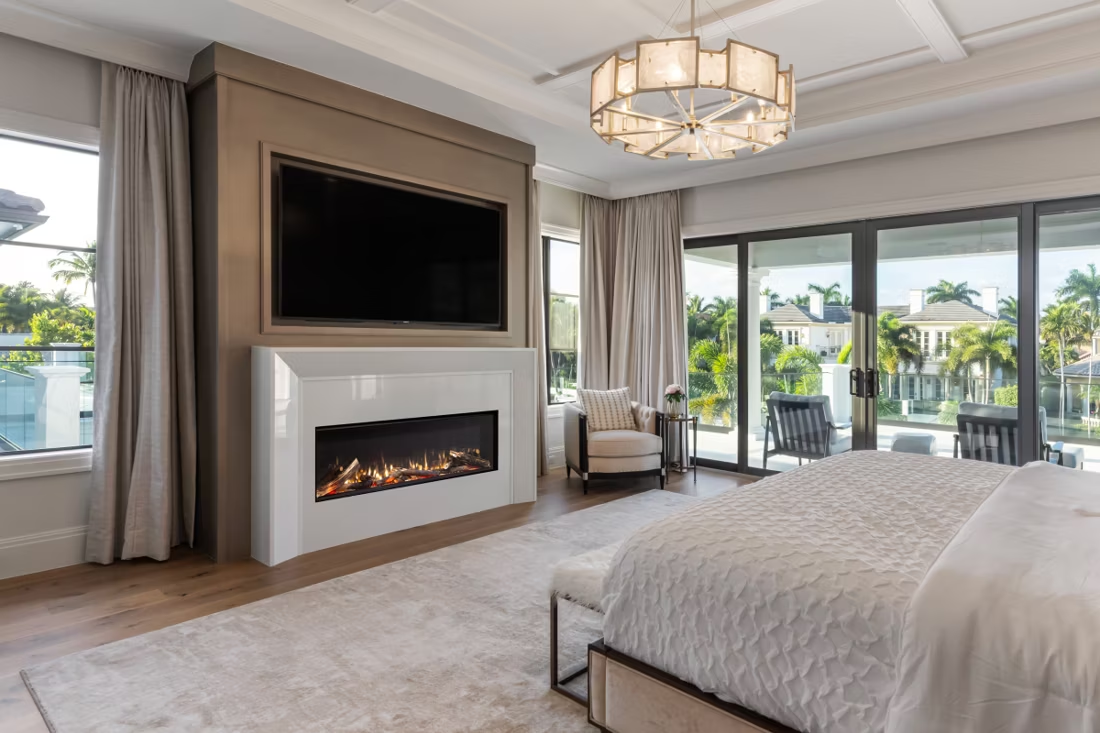
Yes—with an asterisk. Fireplaces are hot and TVs don't like heat. Either put a mantel between them to deflect rising warmth, or choose a fireplace with heat-management technology that creates a cool zone on the wall above—the wall stays around 125 degrees, barely warm, while the room still gets full heat. If you like clean lines and don't want a mantel, heat management is the answer.
Do electric fireplaces actually produce heat?
Yes—most put out around 4,800–5,000 BTUs from a standard outlet, which comfortably warms a bedroom, office, or den as a comfort-zone heater. What they won't do is carry a whole house the way wood, gas, or pellet can. Think of electric as ambiance-first with honest supplemental heat: flames on with no heat in July, flames plus warmth in January.
What is an in-home preview and do I need one?
It's a visit where a hearth professional measures your space, confirms the model you picked actually works in your home, and walks the specs—framing, gas line, venting, finish work—before anything is ordered. Some details you just can't know until you see the house. Never make a down payment without one; it's the single most-skipped step that burns buyers.
Can a fireplace actually lower my heating bill?
Yes—by creating a comfort zone. A furnace heats every square foot of the house just to warm the one room you're in; a gas fireplace on low burns roughly a sixth of the gas a typical furnace does. Set the furnace around 55–60 degrees as a baseline, then heat the rooms your family actually uses. Families who heat this way commonly save $20–$60 a month.
Nearby Dealers
Hearth shops serving Sanford and the surrounding area. Every listing shows whether it is a WhyFire partner, a dealer we have verified as authorized for the brands we recommend, or a local business carrying hearth products. No manufacturer pays for placement. How we verify dealers →
D & J Home & Hearth
Somersworth Stove Shop
Waltz & Sons Propane
Metcalf’s Hearth Services
Electric Service in Sanford
An electric fireplace's heater draws about 1,500 watts—pennies per hour at local rates.
Central Maine Power Co
Find your electric fireplace in Sanford.
Tell us about your room and we'll put together a free Project Guide & Parts List for your electric fireplace project—the exact unit, any electrical work needed, and a trusted local Sanford-area dealer to install it.
Find Your Fireplace →