
Warm, Instant Heat for Portland's Long Winters.
With a long, demanding winter heating season and damp Casco Bay winters, Portland homes need reliable, on-demand warmth. Find the right gas fireplace or insert and connect with a trusted local dealer.
Every Project Starts From One of These Five Situations
Steady heat for a damp, cold coastal climate.
Portland sits at sea level on Casco Bay, and despite the coastal location, winters here are long and raw—average lows near 16°F, a Climate Zone 6A designation, and a long, demanding winter heating season put Portland closer in heating demand to inland New England than its harbor views might suggest. Many of the city's homes, especially the Victorian and Colonial-era housing stock in the West End, Munjoy Hill, and Deering neighborhoods, were built with masonry fireplaces that were never designed to actually heat a room. A gas insert changes that equation without changing the character of the house.
Natural gas reaches a good share of Portland's peninsula and close-in neighborhoods, but coverage thins out fast once you move into the surrounding Cumberland County towns, where propane is the standard fallback. Either fuel gives you the same result: heat at the flip of a switch, no wood to split or stack, and none of the smoke or soot that comes with an open masonry hearth. With Central Maine Power's residential electric rate running well above the national average, a gas fireplace also makes a practical case as efficient zone heat for the rooms you actually live in, rather than running the furnace—or electric baseboard—harder than it needs to.
Three steps. No salesperson until you're ready.
Tell us about your project
Your zip code, your situation, and the fuel you're leaning toward—or let the answers point you to one.
See what's actually available
The brands dealers within 100 miles genuinely carry—real options, never a catalog mirage.
Get your dealer & Project Guide
A trusted local dealer, plus the free Project Guide & Parts List that names every component of the job.
Frequently Asked Questions
How much does a gas fireplace installation cost in Portland?
Most gas fireplace installations in the Portland area run roughly $4,000 to $10,000, with the spread driven mainly by venting and gas line work. A direct-vent insert dropped into an existing masonry fireplace—common in the West End and Munjoy Hill's older housing stock—tends to land on the lower end, especially if the home already has a gas line for a range or water heater. New construction or a built-in unit requiring fresh gas line runs and framed venting through an exterior wall sits higher. A local dealer will give you a firm number after seeing your chimney and gas service in person.
Can I convert my existing wood fireplace to gas?
Yes, and it's one of the most common projects in Portland's older neighborhoods, where original brick fireboxes are everywhere but rarely put out real heat. A gas insert is installed into the existing masonry opening with a stainless liner run up the current chimney, so you keep the look of the original fireplace while gaining actual usable warmth. Whether you run natural gas or propane depends on what's already at the house; homes on the peninsula with existing gas service usually see the most straightforward, lower-cost conversions.
Do I need natural gas, or can I use propane?
Either works, and most gas fireplace models can be set up for one or the other. Natural gas service covers a meaningful chunk of Portland proper, so if your home already has a gas water heater or stove, adding a fireplace is usually a simple tie-in. Once you're out past the denser parts of the city and into surrounding Cumberland County towns, natural gas mains often don't reach, and propane—supplied from a tank on the property—is the default. Your local dealer will confirm what's available at your address and configure the unit's orifice and regulator accordingly.
Will my gas fireplace work if the power goes out?
Most will, which matters in a city that regularly loses power to winter nor'easters and coastal wind storms. Units with intermittent pilot ignition (IPI) run on a small battery backup that kicks in automatically when the power drops, so the fireplace lights on demand just like normal—just remember to keep fresh batteries in the unit. Valor fireplaces take a different approach: the pilot's thermocouple generates its own electricity, so there's no battery to forget at all. Given how often Portland sees multi-day outages after a bad storm off the Gulf of Maine, that's a real consideration worth raising with your dealer.
What's the difference between a gas fireplace, gas insert, and gas stove?
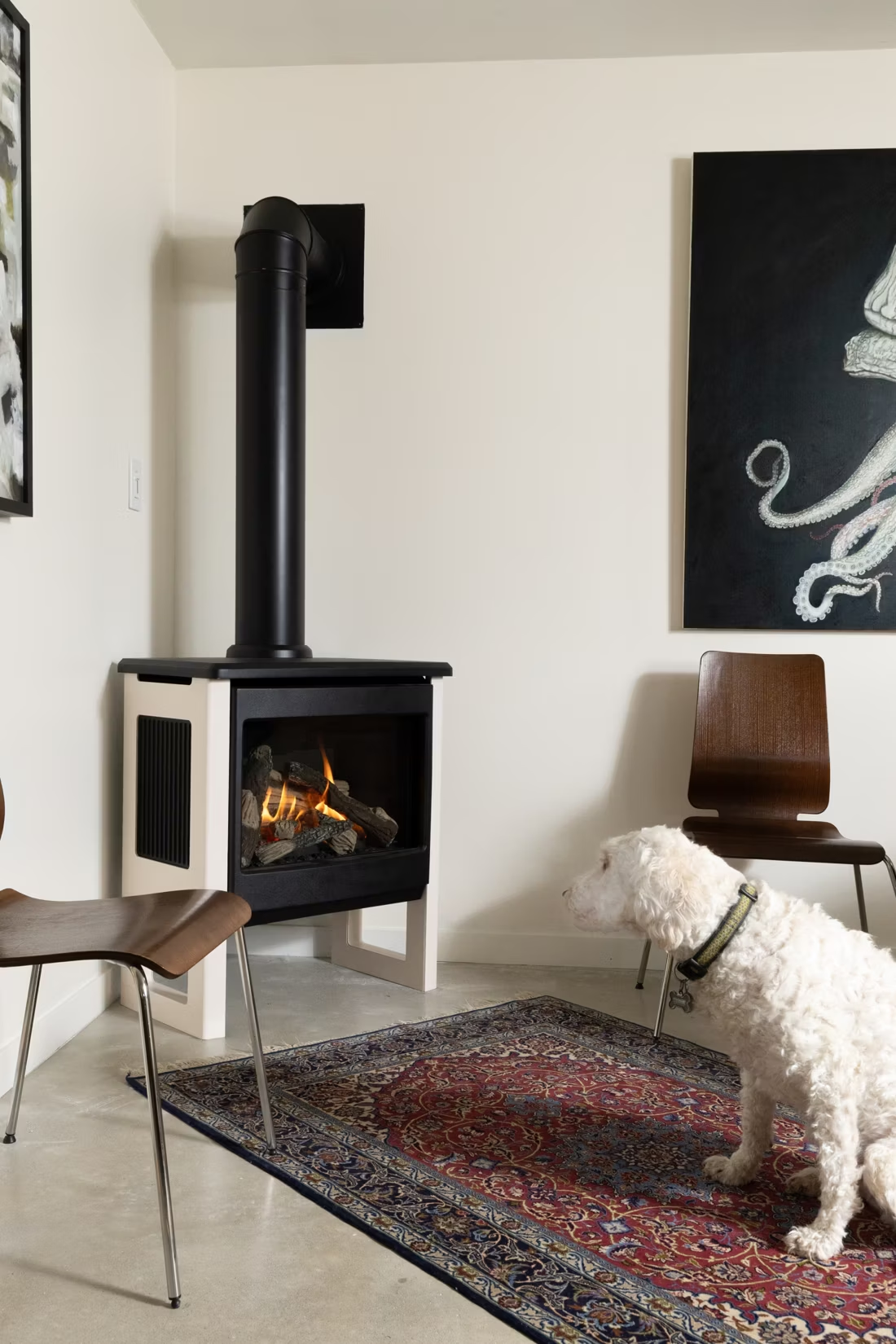
A gas fireplace is a fully built-in unit framed into a wall, typically used in new construction or a remodel. A gas insert is sized to slide into an existing masonry firebox—the go-to option for Portland's many pre-war homes with an old brick fireplace that's more decorative than functional. A gas stove is a freestanding cast-iron or steel unit that sits on the floor on its own hearth pad, useful in rooms without an existing chimney opening. For most Portland homeowners working with an inherited fireplace, the insert is the natural fit.
Do I need a permit to install a gas fireplace in Portland?
Yes. The City of Portland requires a building permit for the fireplace installation and a separate gas permit for any new or modified gas line, and the gas line work itself has to be done by a licensed gas fitter. Most established hearth dealers coordinate all of this as part of the job—pulling permits, scheduling the gas fitter, and getting the final inspection signed off—so you're not left managing multiple trades on your own.
What's the difference between vented and vent-free gas fireplaces?
Vented (direct-vent) units draw combustion air from outside and exhaust everything back outside through sealed venting—they run cleaner and are the standard choice almost everywhere. Vent-free units burn directly into the room with no chimney or vent pipe required, which sounds convenient but releases moisture and combustion byproducts indoors. That's a particular downside in a coastal city like Portland, where winter humidity and window condensation are already common complaints in older, less-insulated homes. Vent-free units are legal in Maine with proper room-sizing and oxygen-depletion sensors, but most local dealers steer homeowners toward direct-vent models for exactly this reason.
How often should my gas fireplace be serviced?
Plan on an annual inspection, ideally in early fall before the heating season ramps up. A technician checks the burner, pilot assembly, venting, and gas connections, and cleans the glass and interior—a much smaller job than a wood chimney sweep, but still important given how much use these units see through a Portland winter. Expect to pay somewhere in the $150 to $250 range for a standard annual service call.
Gas vs. wood—which is right for my home?
Wood is genuinely accessible here—Cumberland County's maple, birch, beech, oak, and spruce are all common firewood species, and self-cut permits through the White Mountain National Forest run about $20 a cord during the May-to-October season. Wood also keeps working when the power's out, which is a real factor after a bad nor'easter. Gas trades that self-sufficiency for convenience: no splitting or stacking, instant on-off heat, and—with an IPI or Valor pilot system—a fireplace that still lights during most outages. Given Central Maine Power's above-average electric rates, either fuel beats running electric heat as a primary source; the choice mostly comes down to whether you want the ritual of a real wood fire or the ease of flipping a switch on a cold Portland night.
Is my gas fireplace wasting gas?
If it was installed more than 15 years ago, probably. Older gas fireplaces keep a standing pilot light burning all the time, and that little flame can cost a couple hundred dollars a year. Newer models use pilot-on-demand ignition—the pilot lights only when you use the fireplace and goes out when you turn it off.
Can I put a TV above my fireplace?
Yes—with an asterisk. Fireplaces are hot and TVs don't like heat. Either put a mantel between them to deflect rising warmth, or choose a fireplace with heat-management technology that creates a cool zone on the wall above—the wall stays around 125 degrees, barely warm, while the room still gets full heat. If you like clean lines and don't want a mantel, heat management is the answer.
Can a fireplace actually lower my heating bill?
Yes—by creating a comfort zone. A furnace heats every square foot of the house just to warm the one room you're in; a gas fireplace on low burns roughly a sixth of the gas a typical furnace does. Set the furnace around 55–60 degrees as a baseline, then heat the rooms your family actually uses. Families who heat this way commonly save $20–$60 a month.
Does a fireplace add value to my home?
On average, a fireplace adds back to the home about the same amount you spent installing it. Add the monthly savings from heating the rooms you actually use instead of the whole house—often hundreds of dollars a year—and the value case is strong before you even count what a fire does for how your family uses the room.
Nearby Dealers
Hearth shops serving Portland and the surrounding area. Every listing shows whether it is a WhyFire partner, a dealer we have verified as authorized for the brands we recommend, or a local business carrying hearth products. No manufacturer pays for placement. How we verify dealers →
Performance Building Supply
Frost N Flame
Waltz & Sons Propane
Frost & Flame
Sagadahoc Stove Co.
Alternative Heat Source Inc.
Find your gas fireplace in Portland.
Tell us about your home and your existing fireplace or chimney, and we'll put together a free Project Guide & Parts List—the right gas fireplace or insert, the vent kit it needs, and a trusted local dealer to install it.
Find Your Fireplace →