
Electric fireplace heat for the corners your wood stove can't reach in Kennebec County.
No chimney, no venting, no gas line—just plug-in or hardwired warmth for bedrooms, dens, and finished basements from Augusta to Oakland. Find the right unit and connect with a trusted local dealer.
Every Project Starts From One of These Five Situations
Instant heat, zero venting, and a good fit for old Kennebec County housing stock.
Kennebec County sits in climate zone 6A with a long, demanding winter heating season and an average winter low around 12°F—a season on par with Burlington, Vermont, that runs from October well into April. Most homes here, especially outside Augusta and Waterville, still lean on wood, oil, or pellet as primary heat, burning locally abundant maple, birch, beech, oak, and spruce. Electric fireplaces aren't trying to replace that. They're doing a different job: warming a single room without cutting a hole in a roofline, running a gas line, or touching a chimney that's been sound since the 1800s.
That matters in a county full of older housing—the brick rowhouses and capes of Hallowell, the mill-town duplexes of Waterville and Gardiner, converted upstairs apartments in Winthrop and Oakland. An electric insert can drop into an existing masonry firebox without any structural work, and a wall-mount unit needs nothing more than an outlet or a dedicated circuit. The honest caveat: electric fireplaces run on grid power, and Central Maine Power's lines through this county aren't immune to ice-storm outages. Unlike a wood stove, an electric unit goes dark the moment the power does—worth factoring in if you're weighing it as your only heat source in a back bedroom or a camp on China Lake.
Three steps. No salesperson until you're ready.
Tell us about your project
Your zip code, your situation, and the fuel you're leaning toward—or let the answers point you to one.
See what's actually available
The brands dealers within 100 miles genuinely carry—real options, never a catalog mirage.
Get your dealer & Project Guide
A trusted local dealer, plus the free Project Guide & Parts List that names every component of the job.
Frequently Asked Questions
How much does an electric fireplace installation cost in Kennebec County?
Plug-in electric inserts and freestanding units typically run $200 to $800 for the unit itself, with no installation cost beyond finding an outlet—many homeowners set them up themselves the same day they buy. Built-in or wall-mount models wired to a dedicated 120V or 240V circuit run higher, usually $800 to $2,500 installed, once a licensed electrician runs the circuit and a local dealer handles the surround or mantel finish work. That's a fraction of what a wood or gas installation costs in this county, since there's no chimney, no venting, and no gas line to account for.
Will my electric fireplace work if the power goes out?
No—and this is worth being direct about. Electric fireplaces run entirely on grid power, so when Central Maine Power lines go down during an ice storm or a nor'easter, the unit goes dark along with everything else in the house. If you're in a part of Kennebec County that sees regular winter outages—rural stretches around Vassalboro, China, or Belgrade tend to lose power longer than in-town Augusta or Waterville—an electric fireplace should be treated as supplemental comfort heat, not emergency backup. A wood or pellet stove is the better choice if losing heat during a multi-day outage is a real concern for your household.
Do I need a permit to install an electric fireplace in Kennebec County?
Usually not for a plug-in unit—there's no combustion, no venting, and nothing that touches the structure of the house. If you're installing a built-in or wall-mount model that requires a new dedicated circuit, your electrician may need to pull an electrical permit through your town's code enforcement office (Augusta, Waterville, Gardiner, and Winthrop each run their own). It's a much lighter process than a wood or gas permit, and most licensed electricians handle the paperwork as part of the job.
What's the difference between an electric fireplace, insert, and stove?
An electric fireplace is typically a built-in unit set into a wall or mantel surround, styled to look like a traditional hearth. An electric insert is sized to slide into an existing masonry firebox, which is a common project in Kennebec County's older Hallowell and Gardiner homes where the fireplace opening already exists but the chimney isn't being used. An electric stove is a freestanding cabinet-style unit that sits on the floor like a wood stove but plugs in—a good fit for a room with no fireplace or chimney at all, like a finished basement or a converted porch.
Can an electric fireplace actually heat a room in a Kennebec County winter?
It can take the edge off a single room, but it's not sized for whole-home heating at this county's heating load. Most units put out around 5,000 BTU (roughly 1,500 watts), enough to noticeably warm a bedroom, den, or home office with the door closed, but not enough to carry a drafty farmhouse living room through a 12°F January night on its own. Think of it as zone heat that lets you turn the thermostat down in a room you're using while the rest of the house coasts on your primary system—wood, pellet, or oil, depending on the home.
What's the best electric fireplace for an older Kennebec County home?
For homes in Hallowell's historic district or the older mill-town housing in Waterville and Gardiner, an electric insert that fits into the existing masonry firebox is usually the cleanest option—it doesn't require altering the fireplace opening, running new venting, or getting sign-off for exterior chimney work, which matters if your property falls under local historic guidelines. For rooms without an existing fireplace, a wall-mount or built-in linear unit gives you flexibility on placement without any of that. A local dealer can look at your firebox dimensions and tell you which insert sizes will actually fit.
How much does it cost to run an electric fireplace in Kennebec County?
Most units draw about 1,500 watts on the heat setting. At typical Central Maine Power residential rates, running one for several hours a night through the coldest months adds a modest but real amount to a winter bill—usually less than what you'd spend keeping a whole room warm with baseboard electric heat, since the fireplace is heating one space rather than a whole zone. It's meant to supplement, not replace, whatever's carrying the bulk of your heating load through a long, demanding Central Maine winter.
Electric vs. pellet stove—which makes more sense for my Kennebec County home?
A pellet stove burning bagged fuel from brands like New England Wood Pellet or Maine Woods Pellet Co. can genuinely carry a room or even a whole small home through winter, putting out real heat output in the tens of thousands of BTU range—but it needs a hopper refilled regularly and, like electric, needs power to run its auger and blower. An electric fireplace is lower-maintenance, needs no hopper, no venting, and no annual service, but tops out at a fraction of a pellet stove's heat output. If you want a genuine primary or near-primary heat source, pellet wins. If you want ambiance and zone comfort in a room that doesn't need serious heat, electric is the simpler answer.
Electric vs. wood—which is right for my home?
Wood—burning the maple, birch, beech, oak, or spruce common throughout this county—delivers far more heat, works with zero electricity during an outage, and has been the backbone of central Maine winter heating for generations. Electric offers instant on-off convenience, no chimney or venting, no ash, and installation that's measured in hours rather than days. For a primary heat source in a Kennebec County home built for a long, demanding winter heating season, wood is usually still the workhorse. For a bedroom, a den, an apartment where running a flue isn't possible, or supplemental ambiance in a home that's already heated another way, electric is the practical fit.
Can I put a TV above my fireplace?
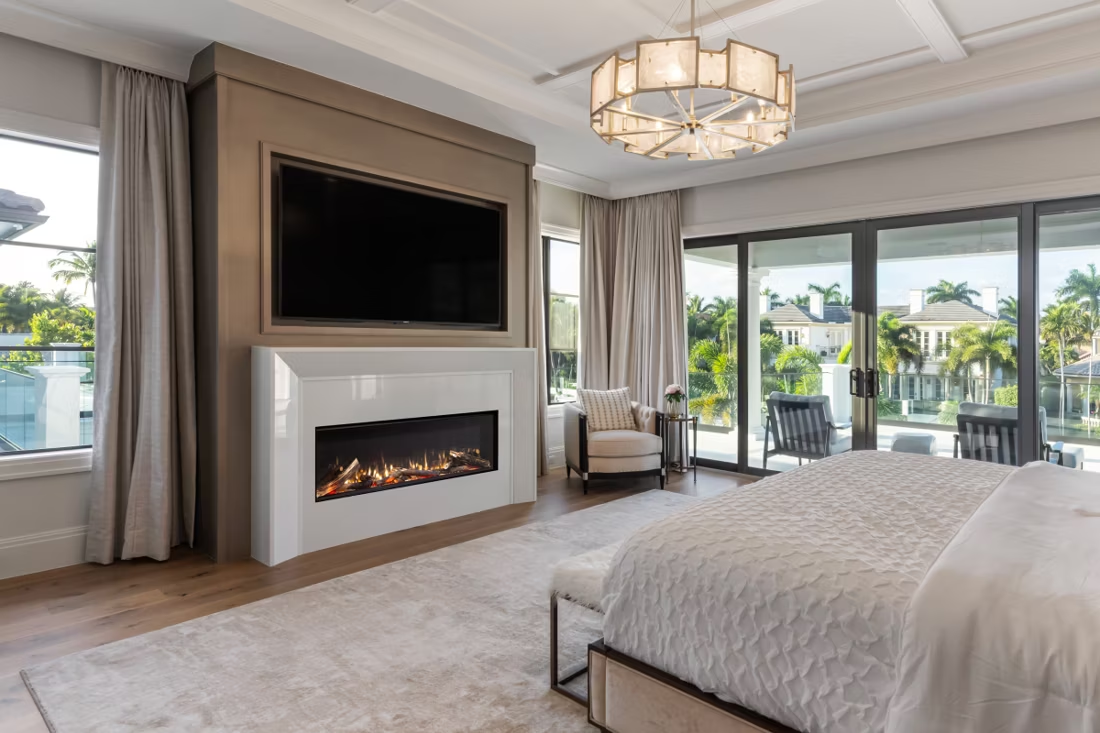
Yes—with an asterisk. Fireplaces are hot and TVs don't like heat. Either put a mantel between them to deflect rising warmth, or choose a fireplace with heat-management technology that creates a cool zone on the wall above—the wall stays around 125 degrees, barely warm, while the room still gets full heat. If you like clean lines and don't want a mantel, heat management is the answer.
Do electric fireplaces actually produce heat?
Yes—most put out around 4,800–5,000 BTUs from a standard outlet, which comfortably warms a bedroom, office, or den as a comfort-zone heater. What they won't do is carry a whole house the way wood, gas, or pellet can. Think of electric as ambiance-first with honest supplemental heat: flames on with no heat in July, flames plus warmth in January.
Does a fireplace add value to my home?
On average, a fireplace adds back to the home about the same amount you spent installing it. Add the monthly savings from heating the rooms you actually use instead of the whole house—often hundreds of dollars a year—and the value case is strong before you even count what a fire does for how your family uses the room.
Can a fireplace actually lower my heating bill?
Yes—by creating a comfort zone. A furnace heats every square foot of the house just to warm the one room you're in; a gas fireplace on low burns roughly a sixth of the gas a typical furnace does. Set the furnace around 55–60 degrees as a baseline, then heat the rooms your family actually uses. Families who heat this way commonly save $20–$60 a month.
Stove and Fireplace Dealers in Kennebec County
Listings include WhyFire partner dealers, dealers we have verified as authorized for the brands we recommend, and established local businesses that carry hearth products. Every listing shows which one it is. The ones marked Preferred run on WhyFire's software, so they can show you real pricing and book your appointment right here. No manufacturer pays for placement. How we verify dealers →
Somerset Stone & Stove
Louis Doe Home Center
Damariscotta Hardware Inc.
Find your electric fireplace in Kennebec County.
Tell us a bit about your home and we'll match you with a trusted local dealer and send over a free Project Guide & Parts List—the right unit, the wiring needs, and what it takes to get it installed right.
Find Your Fireplace →