
Warmth and glow, without the wood pile or the wait.
With winter lows averaging 36°F and a short heating season, Union Parish homes don't need a furnace-grade fire—they need clean, instant warmth on the handful of genuinely cold nights. Find the right electric unit and connect with a trusted local dealer.
Every Project Starts From One of These Five Situations
Mild winters make electric an easy, honest choice.
Union Parish sits in north Louisiana's Zone 3A climate, where winter lows average 36°F and the heating season is short and mild—nowhere near the winter heating load of a place like Duluth, MN, where the cold season is far longer and harsher. That's not a knock on the parish's cold snaps, which do happen, but it means most Farmerville, Marion, and Bernice homes don't need a stove capable of holding a fire through a subzero night. They need something that takes the edge off a 30-degree morning and looks good doing it the rest of the year.
Union Parish has real wood-heating heritage—oak, pecan, and cypress from the bottomlands around Lake D'Arbonne have warmed local homes for generations, and plenty of houses still burn wood. But for a guest bedroom, a sunroom, a rental property, or a homeowner who doesn't want to deal with ash, chimney sweeps, or gas line work, an electric fireplace or insert is a straightforward fit. No venting, no combustion byproducts, and in most cases no building permit beyond standard electrical work—which matters in a parish where a lot of housing stock is older and doesn't have an existing masonry chimney or gas hookup to work with.
Three steps. No salesperson until you're ready.
Tell us about your project
Your zip code, your situation, and the fuel you're leaning toward—or let the answers point you to one.
See what's actually available
The brands dealers within 100 miles genuinely carry—real options, never a catalog mirage.
Get your dealer & Project Guide
A trusted local dealer, plus the free Project Guide & Parts List that names every component of the job.
Frequently Asked Questions
How much does an electric fireplace installation cost in Union Parish?
Most electric fireplace projects in Union Parish run somewhere between $500 and $3,000 installed, depending on the unit. A plug-in freestanding stove or a wall-mounted unit on an existing outlet sits at the low end—sometimes it's not even a true 'installation,' just placement. A built-in wall unit or an insert dropped into an existing masonry fireplace opening runs higher, especially if a licensed electrician needs to run a dedicated 20-amp circuit, which is common for larger units pulling 1,500 watts. Because there's no venting, chimney, or gas line involved, electric is consistently the least expensive fireplace option available to Union Parish homeowners.
Will an electric fireplace actually heat my house, or is it just for looks?
Most electric fireplaces are built for zone heating—warming the room they're in, not the whole house—and that's actually well matched to Union Parish's climate. With winter lows averaging 36°F and a heating season under 2,400 degree-days, a single 5,000-BTU electric unit can comfortably supplement central heat in a bedroom, den, or sunroom on all but the coldest nights of the year. It's not going to replace a furnace during a January cold front, but for the bulk of the parish's mild heating season, it's often all the room actually needs.
Can I convert my old wood-burning fireplace to electric?
Yes, and it's a common request in older Farmerville and Marion homes that still have a masonry fireplace built decades ago for burning local oak or pecan. A zero-clearance electric insert slides into the existing firebox opening, plugs into a nearby outlet or a new dedicated circuit, and gives you flame-effect ambiance and supplemental heat without touching the chimney. It's a popular option for homeowners who want to keep the look of the original hearth but are done with hauling wood and cleaning ash.
Do I need a permit to install an electric fireplace in Union Parish?
A plug-in freestanding or wall-mounted electric fireplace that runs off an existing outlet typically doesn't need a permit—it's treated like any other appliance. Where permitting comes in is electrical work: if your installer needs to run a new dedicated circuit for a higher-draw built-in unit, that work should be pulled through Union Parish's building permit process and performed by a licensed electrician. Most local dealers who sell built-in electric units will coordinate that step for you rather than leaving you to sort it out.
Electric vs. wood—which makes more sense for a Union Parish home?
Wood still has a real place here—oak, pecan, and cypress are locally abundant, firewood is cheap or free for anyone with land access, and a wood stove keeps working when the power goes out. Electric wins on convenience: no ash, no chimney maintenance, no smoke, and instant on-off operation, which suits homes where the fireplace is more about ambiance and mild-weather comfort than serious heating load. Given that Union Parish's heating season is short and lows rarely stay in the teens for long, a lot of homeowners here run electric in living spaces and keep wood as backup or supplemental heat in a den or workshop.
Does Union Parish's humid climate cause problems for electric fireplace units?
Not typically. Electric fireplace components are sealed and don't involve combustion, so the humid subtropical conditions common to north Louisiana summers aren't a real concern the way they can be for exposed metal chimney components on wood systems. The main thing to watch for is any unit installed in an enclosed, poorly ventilated space—make sure there's adequate airflow around the unit's internal fan and heating element regardless of season.
What happens to my electric fireplace during a power outage?
It stops working—that's the honest tradeoff. North Louisiana does see occasional ice storms and severe weather that knock out power in rural parts of Union Parish for a day or more. If backup heat during an outage matters to you, an electric-only fireplace shouldn't be your only heat source; pair it with a wood stove, propane unit, or generator plan. For homes where the fireplace is primarily for ambiance and daily comfort rather than emergency heat, this tradeoff is usually a non-issue.
How much does it cost to run an electric fireplace day to day?
A typical 1,500-watt electric fireplace costs roughly 15 to 25 cents per hour to run on heat setting, depending on your electric rate—many Union Parish households are served by a rural electric cooperative, so it's worth checking your actual per-kWh rate. Given the parish's mild winters, most owners run their unit a few hours a day during cold spells rather than continuously, which keeps the added cost to a few dollars a month rather than a meaningful line item on the power bill.
Electric vs. pellet stove—which is the better fit?
Pellet stoves, using regional brands like Lignetics, Hamer Pellet Fuel, or Greenway Renewable Energy, put out real BTU heat and a genuine flame, but they require venting, a hopper to refill, and electricity to run the auger and blower—so they're not a backup during an outage either. Electric fireplaces skip the venting and pellet handling entirely, install in almost any room, and cost far less upfront. For Union Parish's mild winters, where supplemental ambiance heat covers most needs, electric is usually the simpler, lower-maintenance choice; pellet makes more sense if you want a unit doing real heavy lifting on the coldest days.
Can I put a TV above my fireplace?
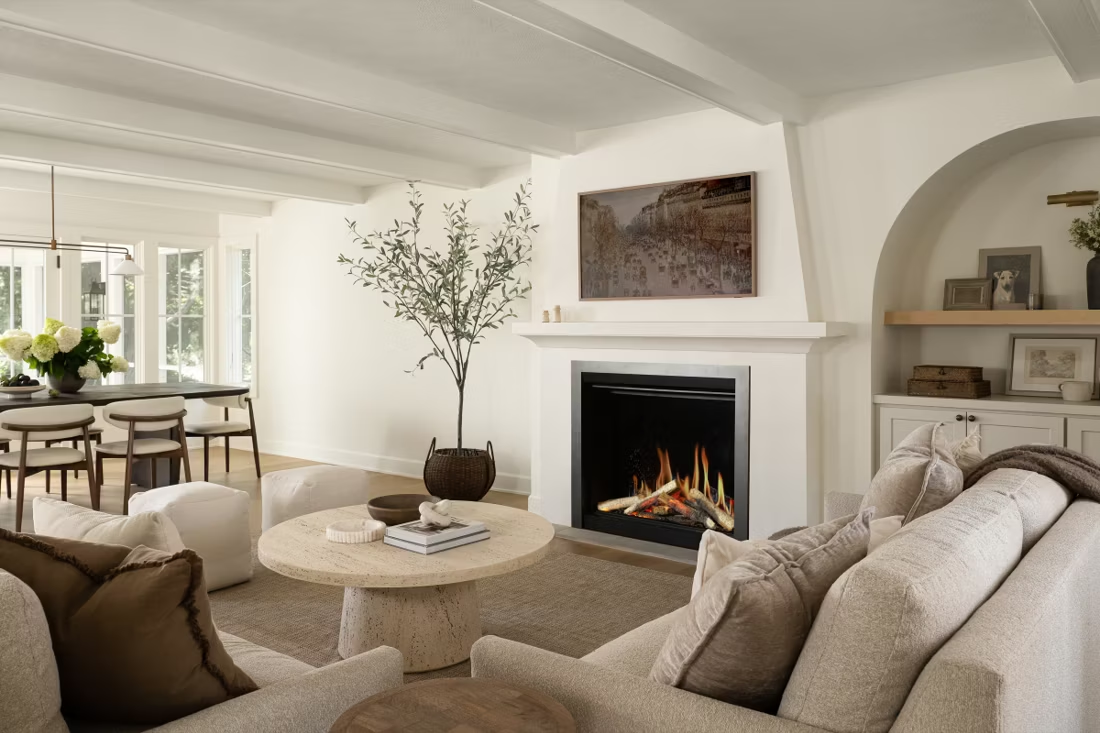
Yes—with an asterisk. Fireplaces are hot and TVs don't like heat. Either put a mantel between them to deflect rising warmth, or choose a fireplace with heat-management technology that creates a cool zone on the wall above—the wall stays around 125 degrees, barely warm, while the room still gets full heat. If you like clean lines and don't want a mantel, heat management is the answer.
Does an electric fireplace need a vent or chimney?
No—that's its superpower. An electric fireplace needs a wall and an outlet, period. No vent pipe, no gas line, no clearances to design around, which is why it works in bedrooms, offices, apartments, and walls where venting a gas or wood unit would be impractical or impossible. Installation is typically the simplest and least expensive of any fireplace type.
Can I install a fireplace myself?
If you're putting a fire in your house on purpose, it's best to work with an expert. Unless you're genuinely experienced in framing, gas line, vent pipe, and the national code on clearances to combustibles, have a professional do it—and ideally the same company that sells you the fireplace, so warranty, service, and liability all live under one roof.
Can a fireplace actually lower my heating bill?
Yes—by creating a comfort zone. A furnace heats every square foot of the house just to warm the one room you're in; a gas fireplace on low burns roughly a sixth of the gas a typical furnace does. Set the furnace around 55–60 degrees as a baseline, then heat the rooms your family actually uses. Families who heat this way commonly save $20–$60 a month.
Find your electric fireplace in Union Parish.
Tell us a bit about your home and we'll put together a free Project Guide & Parts List—the right electric unit for your space, the exact parts needed, and a trusted local dealer in Union Parish to install it.
Find Your Fireplace →