
Instant gas heat for St. Landry Parish's mild, humid winters.
From Opelousas to Eunice to the rural stretches around Sunset and Melville, gas fireplaces here are less about surviving winter and more about ambiance, occasional cold snaps, and heat you can flip on without tending a fire. Find the right unit and get matched with a trusted local dealer.
Every Project Starts From One of These Five Situations
Ambiance and occasional warmth—not a furnace replacement.
St. Landry Parish sits in climate zone 2A, with an average winter low around 41°F and only a light winter heating season—a fraction of what a place like Duluth, MN or Burlington, VT logs in a single month. Most winters here mean a handful of genuinely cold nights, occasional hard freezes, and every few years an ice event severe enough to shut down Opelousas and Eunice for a day or two. That's the reality a gas fireplace is built for in this parish: not constant heating load, but instant, reliable warmth exactly when a cold front rolls through the prairie and bayou country.
Natural gas service reaches most of Opelousas and Eunice, with propane filling in across the more rural parts of the parish—Sunset, Grand Coteau, Melville, Krotz Springs, and the unincorporated areas along the Bayou Teche and Courtableau. A lot of homes here still have the original masonry fireplace from an old Creole cottage or a 1950s brick ranch, and a direct-vent gas insert is often the simplest way to bring that fireplace back into daily use—no ash, no chimney fire risk, and heat on demand for the rare night it actually gets cold enough to need it.
Three steps. No salesperson until you're ready.
Tell us about your project
Your zip code, your situation, and the fuel you're leaning toward—or let the answers point you to one.
See what's actually available
The brands dealers within 100 miles genuinely carry—real options, never a catalog mirage.
Get your dealer & Project Guide
A trusted local dealer, plus the free Project Guide & Parts List that names every component of the job.
Frequently Asked Questions
How much does a gas fireplace installation cost in St. Landry Parish?
A direct-vent gas insert installed into an existing masonry fireplace—common in the older homes around Opelousas, Grand Coteau, and Eunice—is usually the most affordable route, especially if a gas line is already run to the room. A new built-in gas fireplace as part of a remodel or new construction, with fresh venting and gas line work, runs higher. If your home is on propane rather than natural gas, add the cost of a tank if you don't already have one. Exact pricing depends on the unit and the scope of gas and venting work, and a local dealer will give you a firm number after seeing the space in person.
Can I convert my existing fireplace to gas?
Yes, and it's a common project in St. Landry Parish given how many homes—particularly the Creole cottages and older brick houses around Opelousas and Grand Coteau—still have a functioning masonry fireplace that rarely gets used. A gas insert slides into that opening and vents through a stainless liner run up the existing chimney, so you keep the look of the original hearth but get a unit you can turn on with a switch instead of hauling and stacking wood you'll barely burn in a climate this mild.
Do I need natural gas, or can I use propane?
Either works, and which one you use mostly comes down to where in the parish you live. Homes inside or near Opelousas and Eunice are more likely to have natural gas service already running to the house. Outside those areas—Sunset, Melville, Washington, Krotz Springs, and the more rural stretches of the parish—propane is the standard, either from an existing tank or a new one set by a local propane supplier. Most gas fireplace models can be set up for either fuel; your installer configures the orifice and regulator for whichever you have.
Will my gas fireplace work during a power outage?
Most modern gas fireplaces will, which matters in a parish that sees real hurricane risk—Laura and Ida both knocked out power across St. Landry Parish for days. Units with intermittent pilot ignition (IPI) run on battery backup, so the fireplace lights and operates normally even with the grid down; just keep fresh batteries in the unit. Valor fireplaces take a different approach—their pilot generates its own electricity through the thermocouple, so there's no battery to remember at all. For a parish where a tropical system can mean days without power, that's worth asking your local dealer about.
What's the difference between a gas fireplace, insert, and stove?
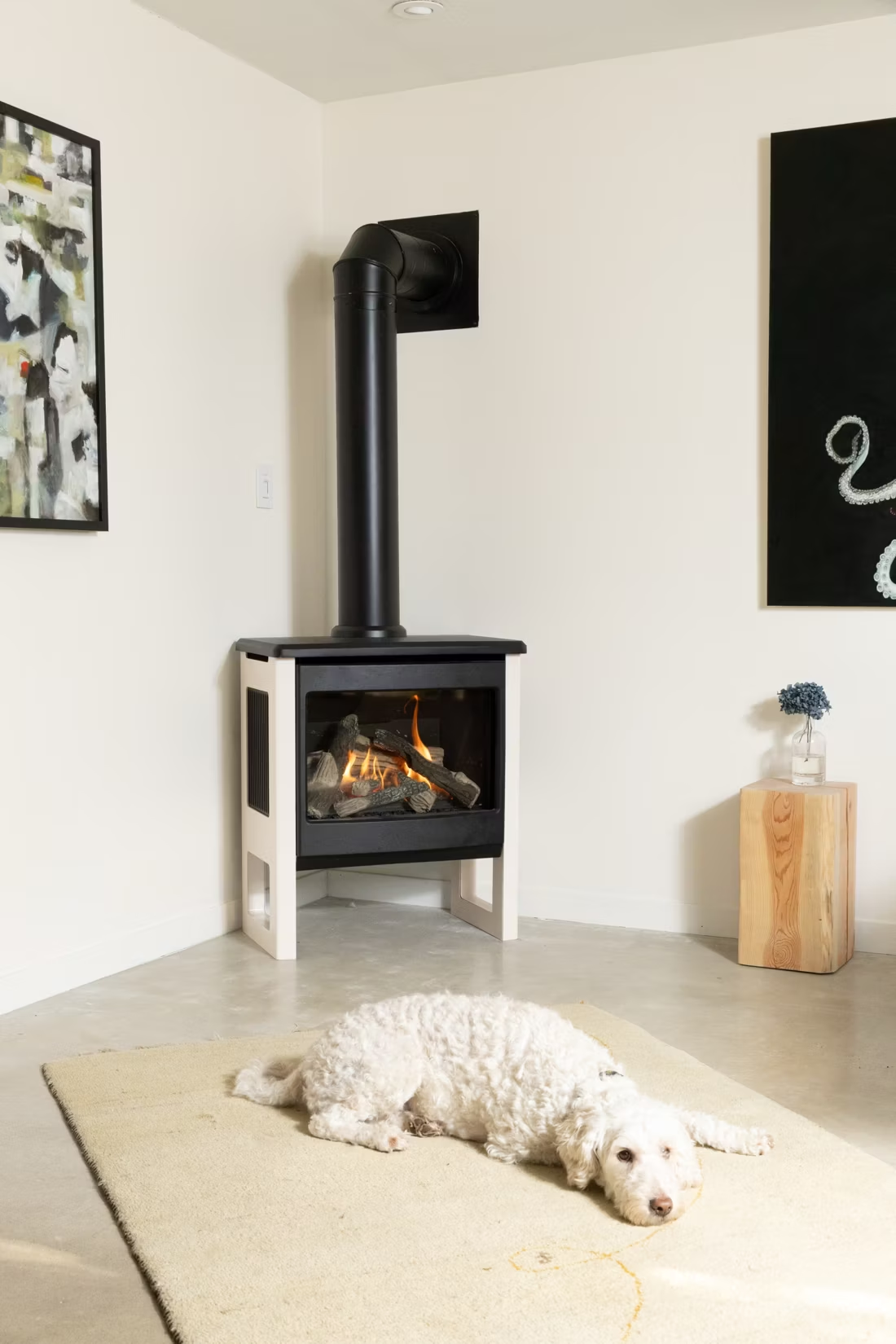
A gas fireplace is a built-in unit framed into a wall—the right call for new construction or a room without an existing hearth. A gas insert fits into an existing masonry fireplace opening and uses that chimney as its vent path, which is why it's the go-to choice for St. Landry Parish's older homes with original fireplaces. A gas stove is a freestanding unit that sits out on the floor like a wood stove but burns gas—less common here, but an option for a room where a built-in isn't practical.
Do I need a permit to install a gas fireplace in St. Landry Parish?
Yes—homes within Opelousas or Eunice city limits go through that city's building department, while unincorporated parts of the parish go through the St. Landry Parish Permit Office. Gas line work also requires a licensed gas-fitter. Most dealers who sell and install gas fireplaces coordinate the permitting, gas line, and venting inspection as one job, which is one of the real advantages of working with a local pro instead of piecing the project together yourself.
Should I get a vented or vent-free gas fireplace?
Vented (direct-vent) units draw combustion air from outside and exhaust it back outside through sealed venting—the cleanest, most universally recommended option. Vent-free units burn directly into the room, which means they release water vapor into your living space along with the heat. That's a bigger consideration in St. Landry Parish than in a drier climate—this is already a humid, subtropical part of the Gulf Coast, and adding more moisture indoors from a vent-free unit can aggravate mold and mildew issues that are already a fact of life here. For that reason, most local dealers steer homeowners toward direct-vent units.
How often should my gas fireplace be serviced?
Once a year, ideally before the parish's first real cold front of the season. A technician checks the burner, pilot, gas connections, and venting, and cleans the glass and interior. Given St. Landry Parish's hurricane exposure, it's also worth having your fireplace checked after any major storm if you lost power for an extended stretch, since debris and moisture intrusion around venting can go unnoticed until the next time you try to light it.
Should I even consider a wood fireplace instead of gas in St. Landry Parish?
For most homes here, no—with only a light winter heating season and winter lows averaging in the low 40s, a wood-burning heating appliance is overkill, and wood stoves are genuinely uncommon across the parish. Where wood does show up is culturally, not for heat: oak, pecan, and cypress are the local go-to species for boucheries, cochon de lait, and backyard smokers, not for keeping a house warm. If you want the look of a wood fire without the upkeep, a gas log set or insert gives you that same visual on the handful of nights a year you'd actually want it—with none of the ash, creosote, or chimney maintenance a wood system requires in a climate that barely calls for one.
What's the difference between an insert and a zero-clearance fireplace?
An insert is a fireplace that slides into a pre-existing wood-burning fireplace—if you don't have one, there's nothing to insert it into. A zero-clearance fireplace is built into a framed wall, which makes it the answer for remodels and new construction. Simple test: existing masonry fireplace means insert; blank or framed wall means zero-clearance.
Why is my open fireplace making my house colder?
Open fireplaces suck—literally. As the fire burns, it consumes air your furnace already paid to heat and pulls it out through the chimney, so the house is actually colder after the fire goes out than before you lit it. An insert fixes this: it seals the chimney, puts fixed glass across the front, and turns that hole in your house into a real heat source.
How much should I budget for a fireplace?
For an average home—covering the fireplace, the vent pipe, and basic installation—a budget between $3,900 and $5,500 gives you a lot of options across wood, gas, and pellet. By the time you add finish work, gas line, and electrical, the average complete installation lands between $5,000 and $12,000 all-in. In a remodel or new build, a good rule is to put about 2.5% of the total project cost toward the fireplace.
Does a fireplace add value to my home?
On average, a fireplace adds back to the home about the same amount you spent installing it. Add the monthly savings from heating the rooms you actually use instead of the whole house—often hundreds of dollars a year—and the value case is strong before you even count what a fire does for how your family uses the room.
Stove and Fireplace Dealers in St. Landry County
Find your gas fireplace in St. Landry Parish.
Tell us a bit about your home and we'll put together a free Project Guide & Parts List—the exact parts, including the vent kit, and a trusted local dealer in St. Landry Parish who can install it right.
Find Your Fireplace →