
Ambiance without the humidity headaches of St. Charles Parish.
With such a short, mild heating season and winter lows that rarely dip below the mid-40s, most parish homes need the look and glow of a fireplace far more than they need real heat output. Electric delivers both, cleanly. Find the right unit and connect with a trusted local dealer.
Every Project Starts From One of These Five Situations
A mild, humid climate built for electric, not for wood.
St. Charles Parish sits low in the Mississippi River delta between Lake Pontchartrain and the river itself, in climate zone 2A—hot, humid, and mild almost year-round. With an average winter low around 46°F and a short, mild heating season, this is not cold-climate territory. Compare that to Duluth, MN, which sees a long, brutal winter heating season—St. Charles Parish faces barely a tenth of that heating demand. Homeowners here aren't fighting single-digit overnight lows; they're looking for a cozy focal point on the occasional cool front that rolls through Luling, Destrehan, or Hahnville.
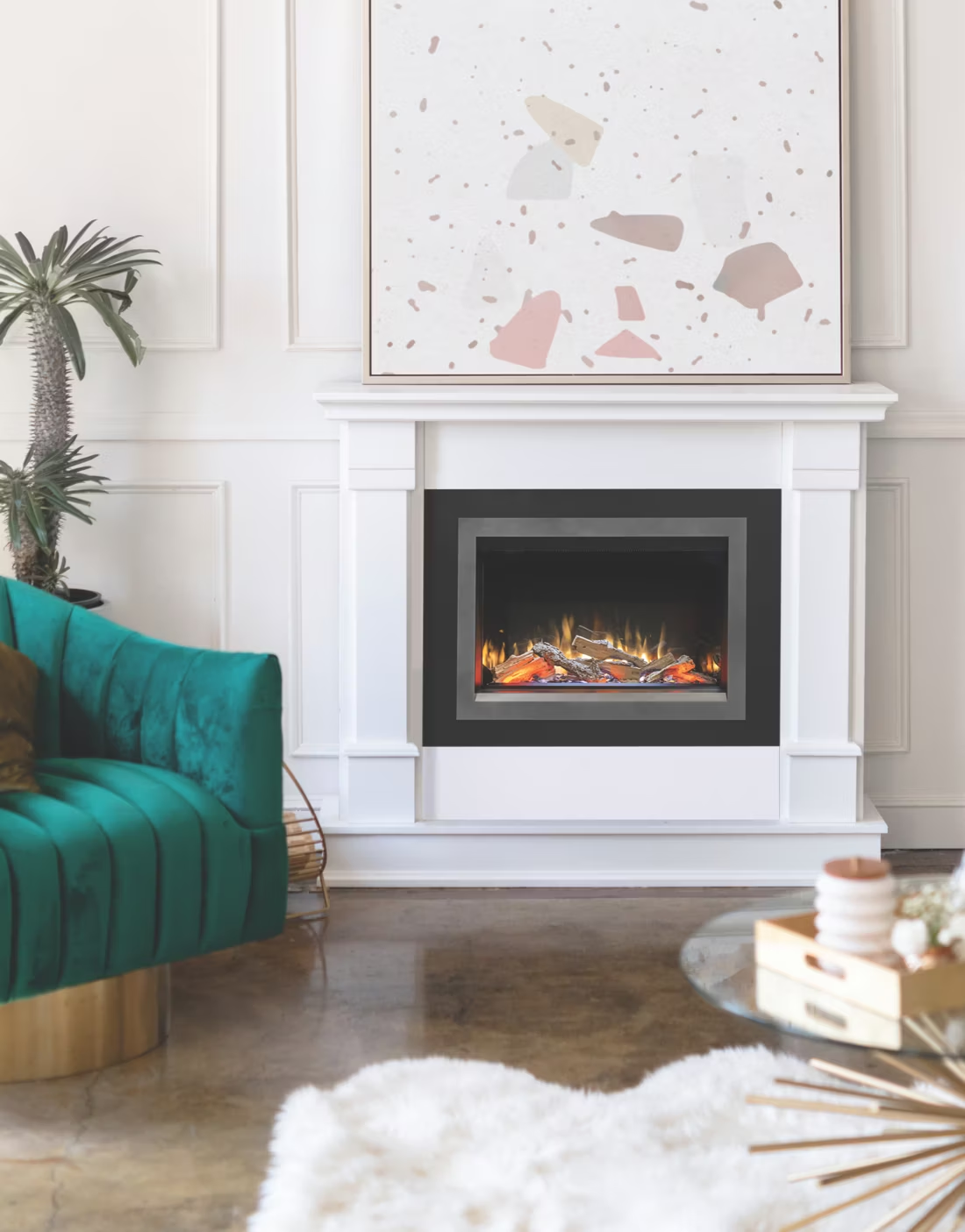
That reality makes wood and pellet appliances a poor fit for most parish homes—there's no meaningful cutting or wood-supply culture here despite the oak, pecan, and cypress that grow throughout the region, and pellet stoves designed for sustained cold-weather heating go mostly unused in a climate this mild. Electric fireplaces, by contrast, fit the parish perfectly: no venting, no combustion byproducts in a humid, moisture-sensitive building envelope, and the ability to run the flame effect without heat during the long stretches of the year when it's simply too warm for supplemental heat. It's a low-commitment way to add a fireplace to a Louisiana home without fighting the climate.
Three steps. No salesperson until you're ready.
Tell us about your project
Your zip code, your situation, and the fuel you're leaning toward—or let the answers point you to one.
See what's actually available
The brands dealers within 100 miles genuinely carry—real options, never a catalog mirage.
Get your dealer & Project Guide
A trusted local dealer, plus the free Project Guide & Parts List that names every component of the job.
Frequently Asked Questions
How much does an electric fireplace installation cost in St. Charles Parish?
Most electric fireplace and insert installations in St. Charles Parish run between $400 and $1,200, which is dramatically lower than gas or wood installs because there's no venting, no gas line, and no chimney work involved. A basic plug-in insert dropped into an existing fireplace opening sits at the low end. A built-in wall unit with a dedicated 120V or 240V circuit run by an electrician—common in newer construction in Luling and Destrehan—lands toward the higher end. Local dealers can walk you through the tradeoffs during a home consultation.
Do electric fireplaces make sense in a humid Gulf South climate like St. Charles Parish?
Yes, and arguably more sense here than almost anywhere else. With no combustion, there's no moisture, soot, or open flame byproducts to manage in a climate that's already fighting humidity control year-round. Electric units also let you run just the flame visual without any heat output—useful in a parish where the AC is running more months than the furnace. For a home in Boutte or Hahnville where a real wood-burning setup would sit unused nine months a year, electric is the practical choice.
Can I convert my existing wood-burning fireplace to electric?
Yes—this is one of the most common projects in the parish. An electric insert slides into your existing masonry fireplace opening, no chimney liner or venting required, and typically plugs into a standard outlet or a new dedicated circuit if the unit calls for one. It's a straightforward retrofit for older homes in Destrehan or Norco with a fireplace that rarely if ever gets used for a real wood fire. The masonry surround stays, but you get supplemental heat and ambiance without any of the upkeep a wood-burning setup requires.
Do I need a permit to install an electric fireplace in St. Charles Parish?
In most cases, a simple plug-in electric insert doesn't require a permit since it's treated like any other appliance. If your installation calls for a new dedicated electrical circuit—common for larger built-in wall units—that electrical work typically does require a permit through the St. Charles Parish Building Department, and it needs to be pulled by a licensed electrician. Local dealers who install built-in units generally coordinate this as part of the job so you're not left tracking down the permit yourself.
What's the difference between an electric insert and a built-in electric fireplace?
An electric insert is designed to slide into an existing fireplace opening—masonry or zero-clearance—and plug into a standard outlet, making it the fastest and least invasive option for parish homes with an old, unused wood fireplace. A built-in electric fireplace is a wall unit installed during framing or a remodel, often wired to a dedicated circuit, and designed to be the focal point of a new room rather than a retrofit. For most existing homes in Luling or Hahnville with a fireplace opening already in place, an insert is the simpler and less expensive route.
Is wood heat ever practical in St. Charles Parish?
Wood stoves are uncommon in St. Charles Parish, and for good reason—with average winter lows around 46°F and a heating season a fraction as demanding as what a place like Bozeman, MT sees in a single cold month, there's rarely enough sustained cold to justify the wood handling, chimney maintenance, and creosote management a wood stove demands. Oak, pecan, and cypress all grow locally, but there's little cutting-permit culture or firewood supply infrastructure built around home heating here the way there is in colder states. A small number of homeowners do install wood-burning fireplaces for occasional ambiance on cold fronts or in camp-style properties, but it's the exception, not the norm—electric or gas covers the vast majority of the parish comfortably.
Does an electric fireplace actually put out real heat, or is it just for looks?
Most electric fireplaces include a real heating element—typically 1,500 watts, enough to warm a single room by several degrees—in addition to the flame visual, which can be run independently of the heat. That's a good match for St. Charles Parish, where a genuinely cold night is the exception rather than the rule; you get supplemental warmth on the handful of nights each winter that actually call for it, and pure ambiance the rest of the year. It's not designed to replace central heat, but as a zone-heat supplement for a den or living room in Destrehan or Boutte, it does real work.
How long do electric fireplaces last, and do they need much maintenance?
Quality electric fireplaces and inserts typically last 10 to 15 years with minimal maintenance—occasional dusting of the heating element and vents, and eventually replacing the LED light strip that drives the flame effect. There's no annual chimney sweep, no gas line inspection, and no combustion byproducts to manage, which is part of why electric appeals to parish homeowners who want a low-maintenance fireplace in a climate where humidity already complicates enough home upkeep. If a unit stops heating but the flame effect still runs, it's usually a simple heating element or thermostat issue a local dealer can diagnose quickly.
Electric vs. gas fireplace—which is right for my St. Charles Parish home?
Gas fireplaces offer higher, more consistent heat output and the option to run during a power outage with the right battery-backup ignition system—a real consideration during hurricane season in the parish. Electric fireplaces cost far less to install, require no gas line or venting, and let you run the flame visual without heat, which suits a climate where actual heat demand is low most of the year. For a primary living space where you want a dependable heat source, gas is often the better fit. For a bedroom, sunroom, or secondary space where ambiance matters more than BTUs, electric is usually the simpler and more affordable answer. Local dealers carry both and can walk you through the tradeoffs for your specific room.
Can I put a TV above my fireplace?
Yes—with an asterisk. Fireplaces are hot and TVs don't like heat. Either put a mantel between them to deflect rising warmth, or choose a fireplace with heat-management technology that creates a cool zone on the wall above—the wall stays around 125 degrees, barely warm, while the room still gets full heat. If you like clean lines and don't want a mantel, heat management is the answer.
How much does an electric fireplace cost to run?
With the heater on, a typical unit draws about 1,500 watts—at average electric rates that's roughly 20 cents an hour. Run the flame effect alone and it costs pennies; the flames are LED-driven and use about as much power as a light bulb. There's no pilot light, no fuel delivery, and essentially no maintenance.
Can a fireplace actually lower my heating bill?
Yes—by creating a comfort zone. A furnace heats every square foot of the house just to warm the one room you're in; a gas fireplace on low burns roughly a sixth of the gas a typical furnace does. Set the furnace around 55–60 degrees as a baseline, then heat the rooms your family actually uses. Families who heat this way commonly save $20–$60 a month.
Can I install a fireplace myself?
If you're putting a fire in your house on purpose, it's best to work with an expert. Unless you're genuinely experienced in framing, gas line, vent pipe, and the national code on clearances to combustibles, have a professional do it—and ideally the same company that sells you the fireplace, so warranty, service, and liability all live under one roof.
Find your electric fireplace in St. Charles Parish.
Tell us a bit about your home and we'll match you with the right electric fireplace or insert, plus a free Project Guide & Parts List with your recommended local dealer in St. Charles Parish.
Find Your Fireplace →