
Built for Gulf South winters that barely dip below 40°F.
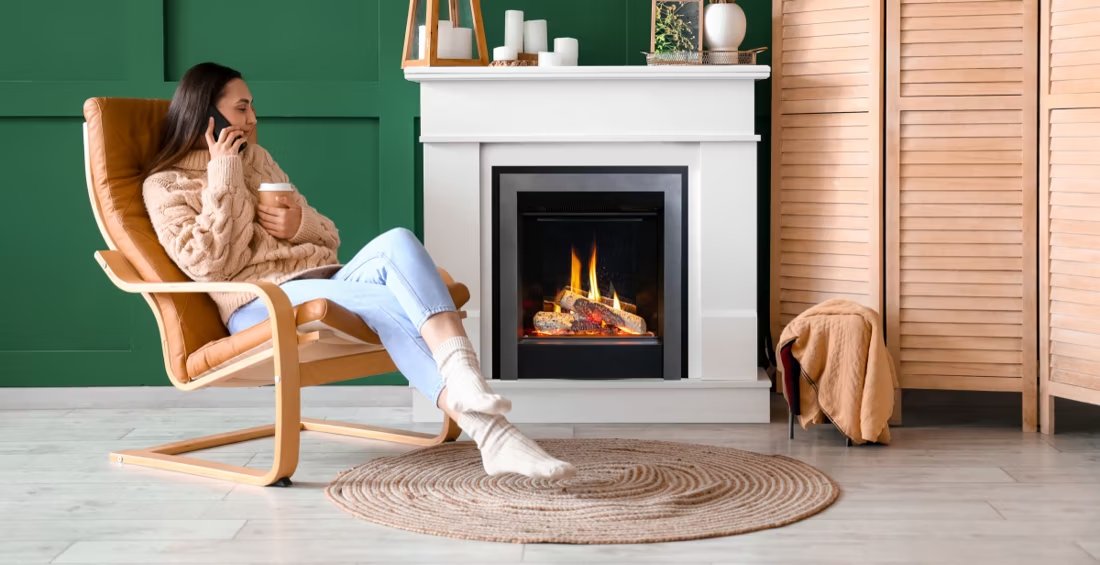
With a winter season so short it barely registers and winter lows averaging 40°F, Shenandoah doesn't need a cordwood operation to stay comfortable. I'll match you with a trusted local dealer who can size an electric unit for genuine ambiance and the occasional cold snap.
Every Project Starts From One of These Five Situations
Heat you flip on, not haul in.
At 36 feet of elevation along the edge of East Baton Rouge Parish, Shenandoah sits squarely in climate zone 2A—a short, mild heating season where a hard freeze is news, not routine. Oak, pecan, and cypress are the woods locals know well from backyard fire pits and smokers, but an actual wood stove is a rare sight here; with winter lows averaging 40°F and only a token few weeks of real winter cold each year, there's simply not enough cold to justify splitting and stacking cordwood as a heat source the way homeowners in Duluth or Burlington would. Electric fireplaces fill the gap that's actually there: a living room focal point that also takes the chill off during the two or three weeks a year when it genuinely gets cold.
Shenandoah's electric service runs through a mix of Entergy Louisiana and Dixie Electric Membership Corp, with residential rates around 11 cents per kWh—on the lower end nationally, which matters since an electric insert or built-in unit is the one fireplace type whose entire running cost shows up on the power bill rather than a fuel delivery. No chimney, no gas line, no venting to plan around means a plug-in insert can go into an existing masonry opening in an older ranch home near the subdivision's center, or a built-in linear unit can be framed into a new addition, both without touching the roofline.
Three steps. No salesperson until you're ready.
Tell us about your project
Your zip code, your situation, and the fuel you're leaning toward—or let the answers point you to one.
See what's actually available
The brands dealers within 100 miles genuinely carry—real options, never a catalog mirage.
Get your dealer & Project Guide
A trusted local dealer, plus the free Project Guide & Parts List that names every component of the job.
Frequently Asked Questions
How much does an electric fireplace installation cost in Shenandoah?
A plug-in insert that drops into an existing fireplace opening or a freestanding console typically runs $300 to $800 installed, since it just needs a standard outlet. A built-in linear electric fireplace set into new framing with a custom surround—a popular choice in newer construction around Shenandoah—runs higher, generally $1,200 to $2,500, mostly driven by carpentry and whether a dedicated 240-volt circuit needs to be run. Either way, there's no chimney or vent kit to budget for, which is the single biggest cost difference versus wood or gas here.
Do I need a permit to install an electric fireplace in Shenandoah?
A simple plug-in unit on an existing household circuit generally doesn't trigger a permit. If your installer is adding a new dedicated circuit or doing any electrical panel work for a built-in unit, that work needs to go through East Baton Rouge Parish's Permits and Inspections Division, since Shenandoah is unincorporated parish territory rather than inside Baton Rouge city limits. A licensed local electrician handling the install will typically pull that permit as part of the job.
Why don't more homes in Shenandoah use wood stoves?
The climate doesn't really call for it. With winter lows averaging 40°F and a heating season that's over almost as soon as it starts, a wood stove would spend most of the year unused, and there's no local cutting-permit culture the way there is in colder timber country—oak, pecan, and cypress around here go toward smokers and fire pits more than home heating. A handful of homeowners still install a wood-burning fireplace purely for atmosphere on the rare 30-degree night, but electric and gas cover the practical heating need far more efficiently for this climate.
How much does it cost to run an electric fireplace in Shenandoah?
At the roughly 11-cent-per-kWh rate typical of Entergy Louisiana and Dixie Electric Membership Corp service, a standard 1,500-watt electric insert running on high costs about 16 to 17 cents an hour. Most owners run it on a lower heat setting or flame-only mode most evenings, which keeps a full winter's worth of use to a modest line item on the power bill—especially given how few genuinely cold nights Shenandoah sees in a typical year.
Entergy Louisiana or Dixie Electric Membership Corp—which one serves my house?
Both utilities run service through this part of East Baton Rouge Parish, and which one reaches your specific address in the 70817 zip code depends on exactly where you sit relative to the parish's utility boundaries—Dixie Electric Membership Corp, a cooperative, tends to serve more of the unincorporated and outlying areas, while Entergy Louisiana covers large stretches closer to Baton Rouge proper. Check a recent power bill to confirm; it won't change how an electric fireplace installs, but it's worth knowing before an electrician quotes any new circuit work.
What size electric fireplace do I need for a Shenandoah home?
Given how mild the heating season is here, sizing is driven more by the room and the look you want than by raw BTU need. A standard 1,500-watt insert or built-in unit comfortably supplements a living room up to around 400 square feet, which covers most great rooms in the brick ranch and traditional homes common around Shenandoah. Larger open-concept layouts sometimes call for two zones or a wider linear unit, but very few homes here need anything close to the output a colder climate would require.
Plug-in insert vs. built-in electric fireplace—which makes sense for my house?
A plug-in insert is the simpler, cheaper route and is the natural fit if you've got an existing masonry fireplace opening in an older Shenandoah home that you want to convert away from wood without any construction. A built-in linear unit requires framing and usually a dedicated circuit, but it reads as a true architectural feature and is a common choice during a renovation or in new construction, where it can be set flush into a wall with a custom mantel rather than tucked into a repurposed firebox.
How much maintenance does an electric fireplace need?
Very little, which is part of the appeal in a climate where it's not running daily for months on end. Wipe the glass front occasionally, vacuum any dust out of the vents a couple of times a year, and expect the LED ember bed to eventually need bulb or board replacement after years of use—there's no annual chimney sweep or gas line inspection the way wood and gas units require. It's effectively a large appliance, not a combustion system.
Electric vs. gas fireplace—which is the better fit in Shenandoah?
Gas fireplaces are genuinely popular in Baton Rouge-area homes that already have natural gas service for the water heater or range, and they put out more consistent heat on the rare cold snap. Electric sidesteps that question entirely—no gas line, no venting, and it installs in homes anywhere in Shenandoah regardless of utility footprint, running instead off Entergy Louisiana or Dixie Electric Membership Corp power at a low per-kWh rate. For a climate where real winter cold is rare and brief, a lot of homeowners find electric gives them the visual warmth they actually want without paying for heating capacity they'll rarely use.
Do electric fireplaces actually produce heat?
Yes—most put out around 4,800–5,000 BTUs from a standard outlet, which comfortably warms a bedroom, office, or den as a comfort-zone heater. What they won't do is carry a whole house the way wood, gas, or pellet can. Think of electric as ambiance-first with honest supplemental heat: flames on with no heat in July, flames plus warmth in January.
Can I put a TV above my fireplace?
Yes—with an asterisk. Fireplaces are hot and TVs don't like heat. Either put a mantel between them to deflect rising warmth, or choose a fireplace with heat-management technology that creates a cool zone on the wall above—the wall stays around 125 degrees, barely warm, while the room still gets full heat. If you like clean lines and don't want a mantel, heat management is the answer.
How much should I budget for a fireplace?
For an average home—covering the fireplace, the vent pipe, and basic installation—a budget between $3,900 and $5,500 gives you a lot of options across wood, gas, and pellet. By the time you add finish work, gas line, and electrical, the average complete installation lands between $5,000 and $12,000 all-in. In a remodel or new build, a good rule is to put about 2.5% of the total project cost toward the fireplace.
What is an in-home preview and do I need one?
It's a visit where a hearth professional measures your space, confirms the model you picked actually works in your home, and walks the specs—framing, gas line, venting, finish work—before anything is ordered. Some details you just can't know until you see the house. Never make a down payment without one; it's the single most-skipped step that burns buyers.
Nearby Dealers
Hearth shops serving Shenandoah and the surrounding area. Every listing shows whether it is a WhyFire partner, a dealer we have verified as authorized for the brands we recommend, or a local business carrying hearth products. No manufacturer pays for placement. How we verify dealers →
Woodburners, Inc
Acoustical Spec & Supply
Area – Baton Rouge, La
Economy Brick Sales
Electric Service in Shenandoah
An electric fireplace's heater draws about 1,500 watts—pennies per hour at local rates.
Entergy Louisiana LLC
Dixie Electric Membership Corp
Get your free Project Guide & Parts List for a Shenandoah electric fireplace.
Tell me about your home and whether you're on Entergy Louisiana or Dixie Electric Membership Corp, and I'll match you with a trusted local dealer and send a free Project Guide & Parts List sized right for your room—no chimney, no gas line, just the right unit and circuit specified.
Find Your Fireplace →