
Add gas fireplace comfort to your Scott home.
Instant, clean-burning warmth for Acadiana's mild winters and the backup heat that matters most during hurricane season. Find the right unit and connect with a trusted local dealer.
Every Project Starts From One of These Five Situations
Comfort heat for short, mild Acadiana winters.
Scott sits at just 32 feet of elevation in Lafayette Parish, in climate zone 2A—a hot, humid Gulf Coast zone where winter lows average 41°F and the whole heating season stays short and mild, far from a true northern winter. Compare that to a place like Duluth, Minnesota, which faces a heating season nearly six times longer and colder most winters, and it's clear nobody in Scott is heating a home with a fireplace out of necessity. Most years bring a handful of nights in the 30s and maybe one or two hard freezes—the kind of cold that makes a gas fireplace feel less like survival gear and more like a genuine upgrade to how a room feels on a January evening.
That said, gas fireplaces earn their keep here in ways that have little to do with how cold the winters actually get. Acadiana sits squarely in hurricane season's path from June through November, and when a storm like Laura, Delta, or Ida knocks out power across Lafayette Parish, a gas fireplace with the right ignition system keeps producing real heat and light without a generator running. Homes closer to Lafayette's natural gas mains typically run a direct-vent unit off the household gas line, while homes further out in unincorporated parts of the parish often run on a propane tank instead—either setup works, and a local dealer will know which is standard for your street.
Three steps. No salesperson until you're ready.
Tell us about your project
Your zip code, your situation, and the fuel you're leaning toward—or let the answers point you to one.
See what's actually available
The brands dealers within 100 miles genuinely carry—real options, never a catalog mirage.
Get your dealer & Project Guide
A trusted local dealer, plus the free Project Guide & Parts List that names every component of the job.
Frequently Asked Questions
How much does a gas fireplace installation cost in Scott?
Every install is different, but expect somewhere in the range of $3,500 to $9,000 depending on the unit, whether you're running a new gas line, and how far the vent run has to travel. A direct-vent insert going into an existing masonry fireplace with gas already nearby sits toward the low end. A new built-in unit for a room addition or remodel—with framing, a fresh gas line, and venting through an exterior wall—lands in the middle to upper end. Homes on propane that need a new tank set will add to the total. A local dealer will give you a firm number after walking your home.
Can I convert an existing wood-burning fireplace to gas?
Yes, and it's a common project in this part of Lafayette Parish. Older homes around Scott built with traditional oak or cypress mantels often have a masonry firebox that saw only occasional use, since the region's mild, humid winters never demanded serious wood heat the way they might further north. Converting that firebox to a gas insert or log set keeps the mantel and hearth look while eliminating the humidity-and-storage headache of keeping cordwood dry in south Louisiana. Most conversions use the existing chimney with a stainless liner, and a local hearth dealer can tell you within a few minutes of looking at your fireplace whether it's a straightforward job.
Should I go with natural gas or propane?
It depends on where in the Scott / Lafayette Parish area you are. Homes closer to Lafayette's urban core are more likely to sit on a natural gas main, while homes in more rural stretches of unincorporated Lafayette Parish typically run on propane with a tank on the property. Both fuels work fine in the vast majority of gas fireplace models sold today—your installer sets the unit up for whichever you have with the correct orifice and regulator. If you're building new construction outside city limits, ask your builder or a local propane supplier what's already on-site before you shop for a fireplace.
Will a gas fireplace keep working if the power goes out during a hurricane?
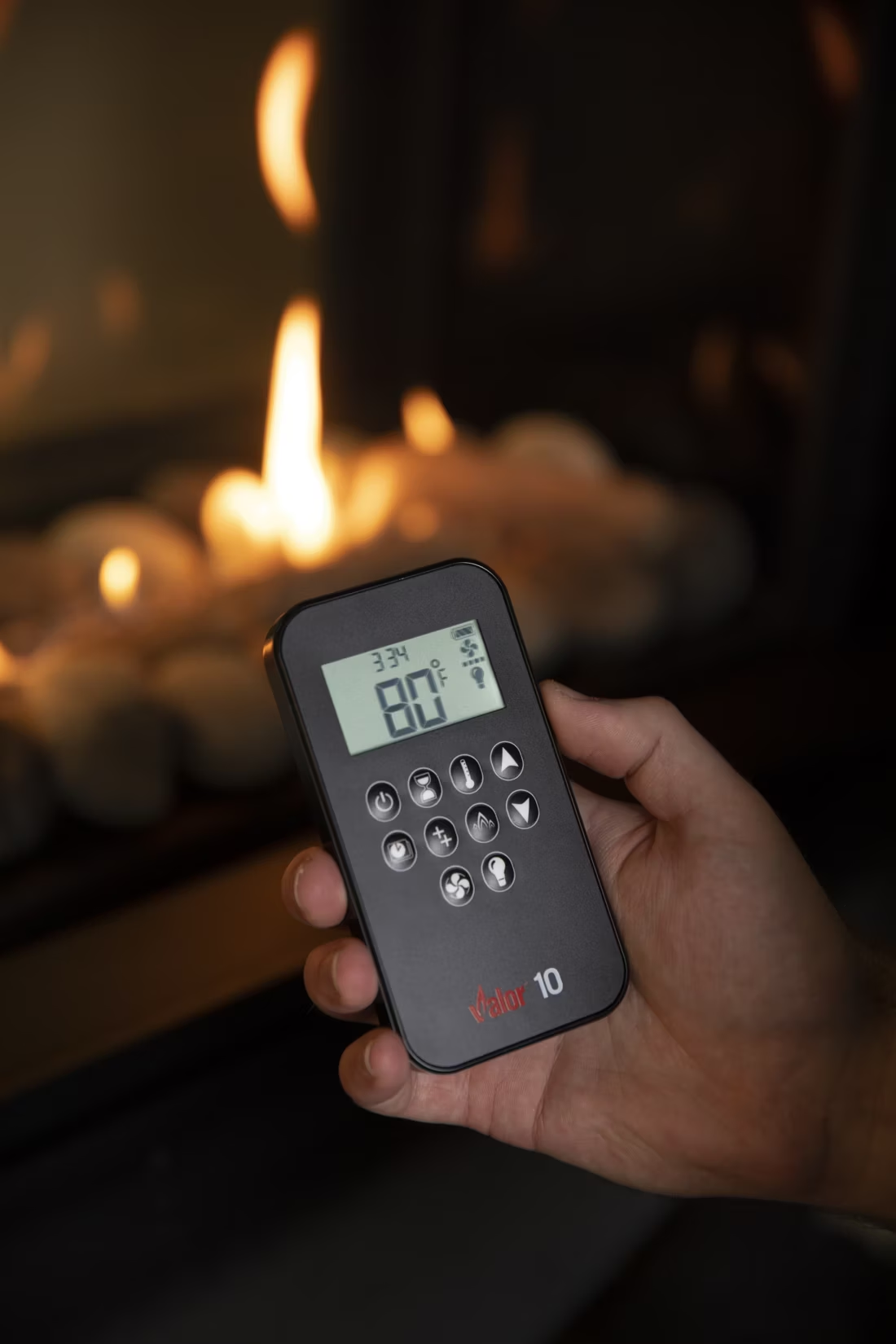
Most will, with one caveat worth understanding. Units with standing pilot or IPI (intermittent pilot ignition) systems typically run on a small battery backup that keeps the igniter working when the grid drops—useful, but only as good as the batteries you remember to replace before storm season. Valor fireplaces take a different approach: the pilot's thermocouple generates its own electricity, so there's no battery to fail, ever. For a region where Entergy Louisiana and the local co-ops can take days to fully restore power after a major storm, that distinction matters more here than almost anywhere else in the country. Ask your local dealer specifically about the ignition system on any model you're considering.
What's the difference between a gas fireplace, insert, and stove?
A gas fireplace is a fully built-in unit, framed into a wall—the right choice for new construction or a remodel where there's no existing masonry opening. A gas insert is built to slide into an existing masonry firebox, which is common in older Scott and Lafayette homes that already have a chimney but rarely burn wood in it. A gas stove is a freestanding cabinet-style unit that doesn't need a masonry opening at all, which works well in a den or sunroom that never had a fireplace to begin with. Most homeowners here with an existing firebox go the insert route since it reuses the chimney they've already got.
Do I need a permit to install a gas fireplace in Scott?
Yes. If your home is within Scott's city limits, the permit runs through the City of Scott's building department; homes in unincorporated Lafayette Parish go through Lafayette Consolidated Government's permitting office instead. Either way, the gas line portion of the work has to be pulled by a licensed gas-fitter, which is one of the main reasons to hire an established hearth dealer rather than a handyman—they coordinate the gas work, the venting, and the inspection as one job instead of leaving you to manage separate trades.
Are vent-free gas fireplaces legal and a good option here?
Louisiana permits vent-free (unvented) gas fireplaces, and given how mild winters are in Scott, some homeowners consider them for a den or bonus room that doesn't have an easy path to an exterior wall for venting. They burn fuel directly into the room, so they come with room-size minimums and require an oxygen depletion sensor, which any code-compliant unit has built in. Vented direct-vent units are still the more common recommendation from local dealers, since they don't add any humidity or combustion byproducts to a house that already deals with Gulf Coast humidity for most of the year. Ask about both when you talk to a dealer—for occasional-use rooms, vent-free can make sense here in a way it wouldn't in a drier climate.
How often does a gas fireplace need service?
Plan on an annual inspection, ideally before hurricane season ramps up in early summer since that's when you're most likely to actually need the fireplace to work. A technician checks the burner, pilot assembly, venting, and gas connections, and cleans the glass and interior. It's a lighter lift than wood-stove chimney sweeping, but skipping it is how pilot assemblies fail quietly and don't fire up when you need them most—like during a post-storm outage.
Gas vs. electric fireplace—which is right for my home in Scott?
Gas gives you real, radiant heat and—with the right ignition system—a source of warmth that keeps running through a power outage, which counts for a lot in hurricane season. Electric fireplaces plug into a standard outlet, skip the gas line and venting entirely, and cost far less to install, but they go dark the moment Entergy Louisiana, Southwest Louisiana EMC, or your local co-op power drops, since they need electricity to run. Electric rates here run roughly 10 to 11.5 cents per kWh depending on which utility serves your address, which keeps day-to-day electric fireplace operating costs low. For a primary living space where storm backup matters, gas usually wins in Scott; for a bedroom, apartment, or secondary room where ambiance is the main goal, electric is often the simpler, cheaper install.
Can I put a TV above my fireplace?
Yes—with an asterisk. Fireplaces are hot and TVs don't like heat. Either put a mantel between them to deflect rising warmth, or choose a fireplace with heat-management technology that creates a cool zone on the wall above—the wall stays around 125 degrees, barely warm, while the room still gets full heat. If you like clean lines and don't want a mantel, heat management is the answer.
What's the difference between an insert and a zero-clearance fireplace?
An insert is a fireplace that slides into a pre-existing wood-burning fireplace—if you don't have one, there's nothing to insert it into. A zero-clearance fireplace is built into a framed wall, which makes it the answer for remodels and new construction. Simple test: existing masonry fireplace means insert; blank or framed wall means zero-clearance.
What is an in-home preview and do I need one?
It's a visit where a hearth professional measures your space, confirms the model you picked actually works in your home, and walks the specs—framing, gas line, venting, finish work—before anything is ordered. Some details you just can't know until you see the house. Never make a down payment without one; it's the single most-skipped step that burns buyers.
Can a fireplace actually lower my heating bill?
Yes—by creating a comfort zone. A furnace heats every square foot of the house just to warm the one room you're in; a gas fireplace on low burns roughly a sixth of the gas a typical furnace does. Set the furnace around 55–60 degrees as a baseline, then heat the rooms your family actually uses. Families who heat this way commonly save $20–$60 a month.
Nearby Dealers
Hearth shops serving Scott and the surrounding area. Every listing shows whether it is a WhyFire partner, a dealer we have verified as authorized for the brands we recommend, or a local business carrying hearth products. No manufacturer pays for placement. How we verify dealers →
Area – Baton Rouge, La
Find your gas fireplace in Scott.
Tell us a bit about your home and we'll match you with a trusted local dealer and send over your free Project Guide & Parts List—the exact parts, including the vent kit, for your gas fireplace project in Scott.
Find Your Fireplace →