
Real Warmth, Even When the Power Goes Out.
Bayou winters in Terrebonne Parish rarely get cold, but hurricane season takes the power out more than the thermometer ever will. A gas fireplace gives Presquille homes reliable heat and ambiance either way.
Every Project Starts From One of These Five Situations
Less about cold nights, more about backup heat.
Presquille sits at just 8 feet of elevation along the bayous of Terrebonne Parish, where winter lows average a mild 44°F and the region has a short, mild heating season—a fraction of what a place like Duluth, MN sees. Wood and pellet heat barely register here; there's simply not enough cold to justify them, and the local cypress, oak, and pecan you'll find in the swamps around Chauvin and Houma are more likely to end up as lumber or smoker wood than firewood. Gas, on the other hand, earns its keep for a different reason.
Most of rural Terrebonne Parish, including the Presquille and Chauvin area, runs on propane rather than piped natural gas, so a fireplace install usually means either tying into an existing residential propane tank or setting a new one. What makes gas genuinely valuable here isn't warmth on a 44-degree evening—it's what happens during hurricane season, when Entergy Louisiana and South Louisiana Electric Cooperative lines can stay down for days after a storm like Ida. A direct-vent gas fireplace with standing pilot or battery-backup ignition keeps working when the grid doesn't, which for a lot of families in this part of the parish is the whole reason to install one.
Three steps. No salesperson until you're ready.
Tell us about your project
Your zip code, your situation, and the fuel you're leaning toward—or let the answers point you to one.
See what's actually available
The brands dealers within 100 miles genuinely carry—real options, never a catalog mirage.
Get your dealer & Project Guide
A trusted local dealer, plus the free Project Guide & Parts List that names every component of the job.
Frequently Asked Questions
How much does a gas fireplace installation cost in Presquille?
For homes already running on an existing propane tank, a direct-vent gas fireplace or insert typically runs $3,500 to $7,000 installed. If a new propane tank and line need to be set—common for newer construction or homes converting from all-electric—expect the total to run closer to $6,500 to $9,000 once tank placement, line burial, and venting are factored in. Raised and pier-built homes, which are common throughout Terrebonne Parish given the flood elevation requirements here, sometimes add framing or venting complexity that a local installer will price during an in-home visit rather than over the phone.
Is natural gas available in Presquille, or do I need propane?
Piped natural gas service is limited in this part of Terrebonne Parish—most homes in and around Presquille and Chauvin run on propane, either from a leased tank or a homeowner-owned tank set on the property. This isn't a downside for a fireplace: propane direct-vent units perform identically to natural gas models, and your local dealer will size the orifice and regulator for propane during installation. If you're unsure which fuel serves your address, a local hearth retailer can check for you before quoting the job.
Will my gas fireplace still work if the power goes out during a hurricane?
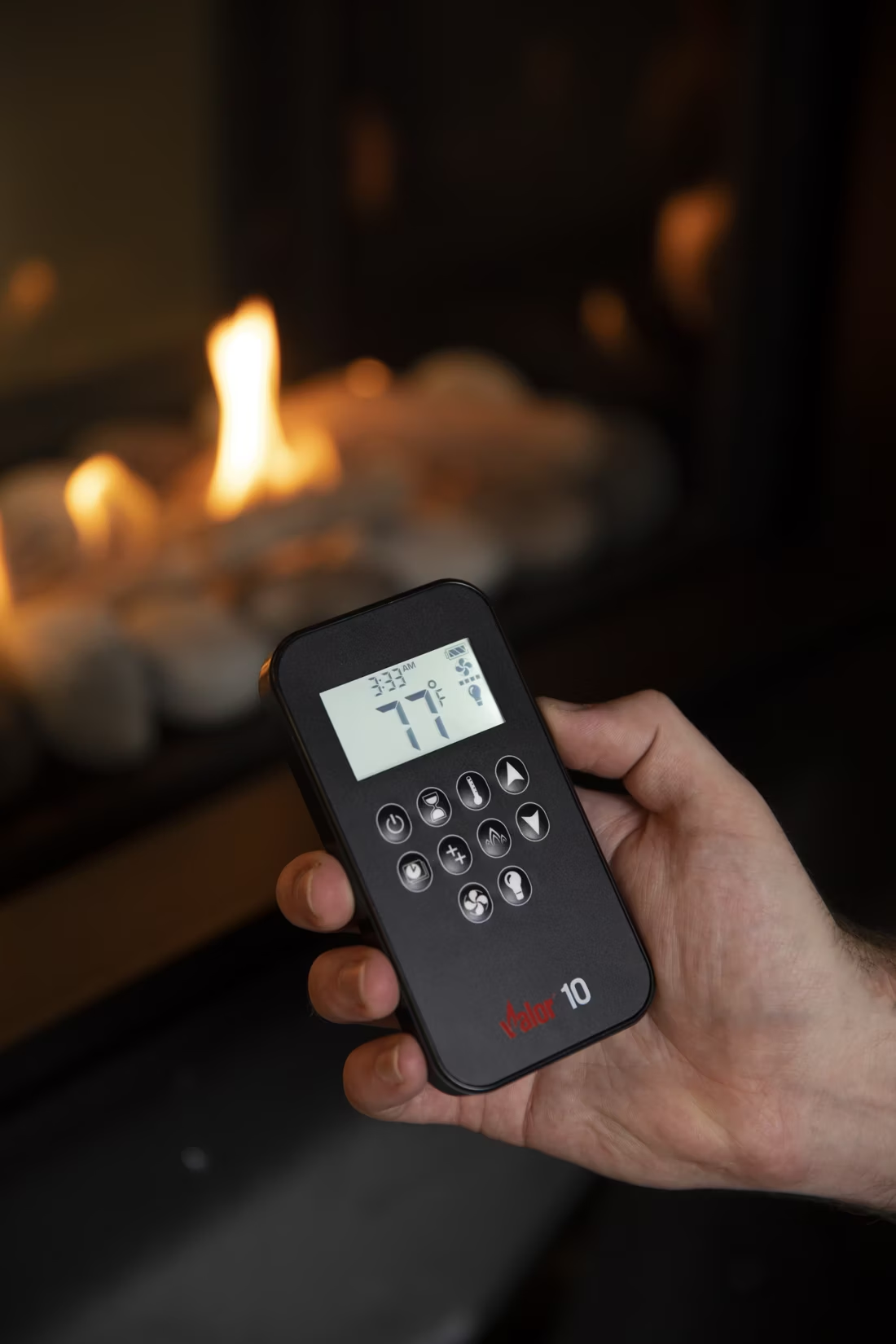
Most direct-vent gas fireplaces with IPI (intermittent pilot ignition) include a battery backup that keeps the unit operable when the grid is down—you'll want fresh AA batteries in the unit going into hurricane season, June through November. Valor fireplaces take it a step further: their pilot assembly generates its own electricity through the thermocouple, so the unit never depends on batteries at all. For Presquille homes that have weathered multi-day Entergy Louisiana outages after storms like Ida, that self-powered ignition is worth asking a local dealer about specifically.
What's the difference between a gas fireplace, insert, and stove for a home like mine?
A gas insert drops into an existing masonry fireplace and uses the chimney as a vent path—straightforward for older Houma-area homes that already have a hearth. A built-in gas fireplace is framed into a wall, which is the more common route for the raised, pier-built new construction typical of flood-zone Terrebonne Parish, since many of these homes were never built with a masonry chimney to begin with. A freestanding gas stove is a third option that works well in camps or smaller living spaces along the bayou. A local installer can tell you which fits your home's construction in about five minutes.
Do I need a permit to install a gas fireplace in Presquille?
Yes—gas appliance installs in unincorporated Terrebonne Parish, including Presquille, go through the parish permitting process, and propane line work requires a licensed gas-fitter regardless of jurisdiction. Because much of this area sits at or near flood elevation, permitting can also touch on where a new propane tank is anchored relative to base flood elevation requirements. Most local hearth dealers coordinate the permit, the gas line, and the tank placement together, which is one less thing to manage yourself.
Should I go with a vented or vent-free gas fireplace here?
Vented (direct-vent) units draw combustion air from outside and exhaust it back outside—the standard, code-compliant choice everywhere, including Terrebonne Parish. Vent-free units are legal in Louisiana but release some combustion moisture into the room, which is worth thinking twice about in a climate this humid; Presquille's Gulf Coast air already runs high humidity most of the year, and adding more indoor moisture from a vent-free unit isn't ideal for a home near the bayou. Direct-vent is the more common and generally recommended choice locally for that reason.
How often should my gas fireplace be serviced in this climate?
Plan on an annual inspection, same as anywhere, but coastal Louisiana's salt air and humidity mean corrosion on burner components and venting hardware can show up faster than it would inland. It's also worth having a technician check the unit after any hurricane or tropical storm that brought heavy rain or debris near the exterior vent termination—a blocked or damaged vent cap is an easy thing to miss. Local gas appliance technicians typically charge $150 to $250 for a standard annual service call.
Would an electric fireplace make more sense than gas for my home?
Electric fireplaces cost less upfront ($400–$1,200 typically) and need no gas line or venting at all, but they're entirely dependent on grid power—which is precisely what tends to fail during the tropical storms and hurricanes that hit this part of Terrebonne Parish. With Entergy Louisiana, South Louisiana Electric Cooperative, and Terrebonne Parish Consolidated Government all serving different pockets of the area at rates around 11–13 cents per kWh, electric heat is affordable day-to-day, but it offers zero backup value when the power's out—which is often exactly when you want a working fireplace. For that reason, most homeowners here treat electric as a supplemental or secondary unit and gas as the one that matters during storm season.
Why doesn't anyone install wood stoves in Presquille?
With average winter lows around 44°F and only a short, mild heating season each year, there's rarely enough sustained cold for wood heat to make sense here—it's a different world from a place like Fargo, ND, where wood stoves are a genuine heating strategy. The oak, pecan, and cypress that grow throughout the bayous around Presquille are prized for lumber, furniture, and smoking meat, but you won't find much of a local firewood market built around home heating. Gas fireplaces fill the role wood stoves play in colder states—except here the draw is hurricane-season backup heat and evening ambiance rather than surviving a hard winter.
What's the difference between an insert and a zero-clearance fireplace?
An insert is a fireplace that slides into a pre-existing wood-burning fireplace—if you don't have one, there's nothing to insert it into. A zero-clearance fireplace is built into a framed wall, which makes it the answer for remodels and new construction. Simple test: existing masonry fireplace means insert; blank or framed wall means zero-clearance.
Why is a fireplace insert so efficient?
An insert does two things: it seals the chimney completely, so you stop losing air you already paid to heat, and it radiates warmth into the room through the firebox and glass. Most add a heat-exchange fan that pulls cool room air underneath, wraps it around the hot firebox, and pushes it back out warm. Your home is more efficient before you've even lit the first fire.
Can a fireplace actually lower my heating bill?
Yes—by creating a comfort zone. A furnace heats every square foot of the house just to warm the one room you're in; a gas fireplace on low burns roughly a sixth of the gas a typical furnace does. Set the furnace around 55–60 degrees as a baseline, then heat the rooms your family actually uses. Families who heat this way commonly save $20–$60 a month.
Does a fireplace add value to my home?
On average, a fireplace adds back to the home about the same amount you spent installing it. Add the monthly savings from heating the rooms you actually use instead of the whole house—often hundreds of dollars a year—and the value case is strong before you even count what a fire does for how your family uses the room.
Nearby Dealers
Hearth shops serving Presquille and the surrounding area. Every listing shows whether it is a WhyFire partner, a dealer we have verified as authorized for the brands we recommend, or a local business carrying hearth products. No manufacturer pays for placement. How we verify dealers →
Antique Brick Company
The Brick Yard
Find your gas fireplace in Presquille.
Tell us about your home and your propane or gas setup, and we'll match you with a trusted local dealer plus a free Project Guide & Parts List—the right unit, the vent kit, and a plan built for hurricane-season reliability.
Find Your Fireplace →