
Instant gas warmth for New Roads and all of Pointe Coupee Parish.
With winter lows averaging 42°F and only a light winter heating load overall, Pointe Coupee doesn't need a furnace-grade fire—just clean, instant heat for the handful of genuinely cold nights along False River and the river parishes. Find the right gas fireplace and connect with a trusted local dealer.
Every Project Starts From One of These Five Situations
Heat that matches a short, mild season.
Pointe Coupee Parish sits in the humid-subtropical belt of climate zone 2A, wrapped by the Mississippi River on one side and False River's oxbow on the other. Winters here are short and mild—an average low of 42°F and a winter heating load that's just a fraction of what a place like Duluth, MN or Bismarck, ND deals with. That means the parish's old plantation homes around New Roads, Parlange, and Morganza, many built with cypress beams and oak framing pulled from the surrounding bottomland, were never designed around all-winter wood heat the way colder regions were. A handful of cold fronts a year, not a five-month heating season, is the reality.
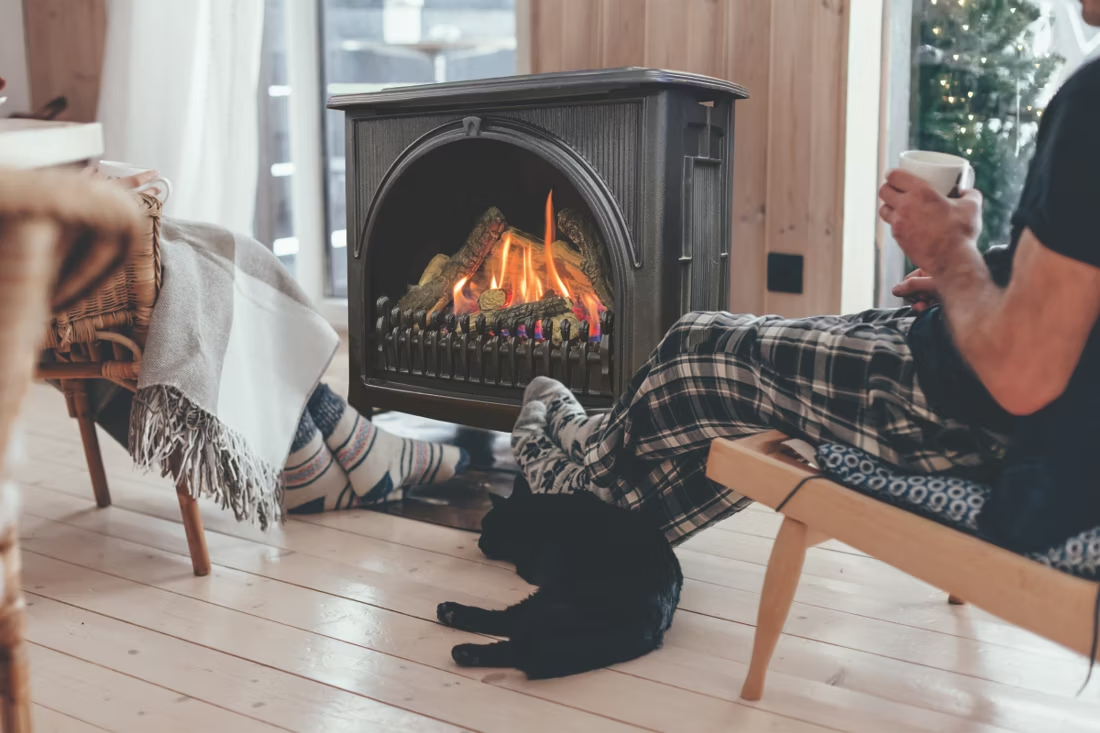
That's exactly why gas has become the practical choice for supplemental heat and ambiance across Pointe Coupee. A direct-vent gas fireplace or insert lights instantly on a 30-degree January morning and shuts off just as easily once the front passes—no seasoning firewood, no ash, no chimney maintenance for a fuel you'd only burn a dozen nights a year. In and around New Roads, natural gas service reaches many homes; out in the rural stretches toward Morganza, Batchelor, and Livonia, propane delivered by regional suppliers is the standard fuel. Either way, a properly sized, properly vented unit gives parish homeowners real heat on demand—and, with the right ignition system, a working fireplace even when a summer storm or winter front knocks out power.
Three steps. No salesperson until you're ready.
Tell us about your project
Your zip code, your situation, and the fuel you're leaning toward—or let the answers point you to one.
See what's actually available
The brands dealers within 100 miles genuinely carry—real options, never a catalog mirage.
Get your dealer & Project Guide
A trusted local dealer, plus the free Project Guide & Parts List that names every component of the job.
Frequently Asked Questions
How much does a gas fireplace installation cost in Pointe Coupee Parish?
Most gas fireplace and insert installations in Pointe Coupee Parish run roughly $3,500 to $9,500, depending on the unit, whether you're converting an existing masonry fireplace or building new, and whether propane or natural gas is your fuel source. A gas insert dropped into an existing fireplace opening in an older New Roads or Morganza home—using the existing chimney as a liner path—tends to land on the lower end. New construction requiring fresh gas line runs, a new propane tank, or through-wall venting where no chimney exists pushes toward the higher end. Local dealers will size the job and quote a firm number after walking the space.
Can I convert an existing wood fireplace to gas in an older Pointe Coupee home?
Yes, and it's a common project in the parish's older housing stock—many of the historic homes around New Roads and False River have masonry fireplaces with cypress or oak mantels that see little actual wood-burning use given how mild the winters are. A gas insert or vented log set installed into that existing opening, with a stainless liner run up the chimney, preserves the look of the original hearth while giving you instant, clean heat for the cold-front nights that do come through. Because wood heat was never really built into daily life here the way it is farther north, most of these conversions are about upgrading an underused decorative fireplace into something that actually gets lit.
Should I get natural gas or propane for my fireplace in Pointe Coupee Parish?
It depends largely on where in the parish you're located. Homes in and near New Roads are more likely to have natural gas service already run to the house, which makes adding a fireplace straightforward if you already have a gas water heater or range. Out in the more rural reaches—toward Morganza, Batchelor, Livonia, and the farmland along the river—propane from a regional bulk supplier is the standard, either with an existing tank or a new one set for the project. Nearly every gas fireplace model on the market can be configured for either fuel; your installer sets the correct orifice and regulator for whichever you have.
Will my gas fireplace still work if the power goes out?
For most units, yes. Gas fireplaces with IPI (intermittent pilot ignition) run on battery backup—typically AA batteries built into the unit—that kick in automatically when utility power drops, so the fireplace lights and operates as normal. That matters in Pointe Coupee Parish, where tropical storm activity and severe spring weather can knock out power for hours or days at a time even when the fireplace itself sees only light seasonal use. Valor fireplaces take a different approach: their pilot assembly generates its own electricity through a thermocouple, so there's no battery to remember to replace. Ask your local dealer about the ignition system on any unit you're considering if outage-proof heat matters to you.
What's the difference between a gas fireplace, gas insert, and gas stove?
A gas fireplace is a fully built-in unit framed into a wall—the right choice for new construction or a full remodel. A gas insert is built to slide into an existing masonry fireplace opening, using the existing chimney as a vent path—the common upgrade for Pointe Coupee's older homes with underused wood fireplaces. A gas stove is a freestanding cabinet-style unit that sits on the floor, similar in shape to a wood stove but running on gas. For most parish homeowners with an existing fireplace opening they'd rather see actually used, an insert is the natural fit; new rooms without an existing chimney are better suited to a built-in fireplace or freestanding stove.
Do I need a permit to install a gas fireplace in Pointe Coupee Parish?
Gas appliance installations generally require both a building permit and sign-off on the gas line work, whether that's routed through the parish permitting office for unincorporated areas or the Town of New Roads for in-town projects. The gas line connection specifically needs a licensed gas-fitter—one reason it's worth using a hearth dealer who coordinates the gas work, venting, and inspection together rather than juggling separate trades yourself. Local installers who work regularly in the parish typically handle this paperwork as part of the installation.
Vented vs. vent-free gas fireplaces—which makes more sense in Pointe Coupee's climate?
Vented (direct-vent) gas fireplaces draw combustion air from outside and exhaust it back outside through sealed venting, keeping combustion byproducts—including water vapor—out of the living space. Vent-free units burn directly into the room and release some of that moisture indoors instead. In a humid, subtropical climate zone like Pointe Coupee's, where indoor humidity and mold pressure are already a year-round concern in older homes near the river and False River, adding extra moisture from a vent-free unit is a real drawback rather than a minor detail. Louisiana permits vent-free units with room-sizing and oxygen-sensor requirements, but for parish homes, direct-vent units are the more common and generally recommended choice.
How often should a gas fireplace be serviced in Pointe Coupee Parish?
An annual inspection before the fall cold fronts arrive is the standard recommendation for any gas fireplace or insert, even one that only sees light seasonal use. A technician checks the burner, pilot assembly, gas connections, and venting, and cleans the glass and interior—important in this climate because humidity and dust from agricultural land nearby can accumulate in the burner assembly during the long stretches the unit sits idle each summer. Expect to pay roughly $150 to $250 for a standard annual service call from a local gas appliance technician.
Since wood heat isn't common here, why not just skip a fireplace altogether?
Wood-burning stoves are genuinely rare in Pointe Coupee Parish—with a winter heating load a fraction of what a place like Bozeman, MT sees, there's simply no year-round heating case for one, and very few local dealers stock them. But that doesn't mean fireplaces themselves are pointless here. A gas fireplace or insert gives parish homeowners real, on-demand heat for the genuinely cold nights that do roll through, plus the ambiance and resale appeal of a working fireplace in a historic home—without asking anyone to season firewood or sweep a chimney for a fuel they'd use a dozen times a season. For this climate, gas is less a compromise than the more sensible original choice.
Can I put a TV above my fireplace?
Yes—with an asterisk. Fireplaces are hot and TVs don't like heat. Either put a mantel between them to deflect rising warmth, or choose a fireplace with heat-management technology that creates a cool zone on the wall above—the wall stays around 125 degrees, barely warm, while the room still gets full heat. If you like clean lines and don't want a mantel, heat management is the answer.
Why is my open fireplace making my house colder?
Open fireplaces suck—literally. As the fire burns, it consumes air your furnace already paid to heat and pulls it out through the chimney, so the house is actually colder after the fire goes out than before you lit it. An insert fixes this: it seals the chimney, puts fixed glass across the front, and turns that hole in your house into a real heat source.
Does a fireplace add value to my home?
On average, a fireplace adds back to the home about the same amount you spent installing it. Add the monthly savings from heating the rooms you actually use instead of the whole house—often hundreds of dollars a year—and the value case is strong before you even count what a fire does for how your family uses the room.
How much should I budget for a fireplace?
For an average home—covering the fireplace, the vent pipe, and basic installation—a budget between $3,900 and $5,500 gives you a lot of options across wood, gas, and pellet. By the time you add finish work, gas line, and electrical, the average complete installation lands between $5,000 and $12,000 all-in. In a remodel or new build, a good rule is to put about 2.5% of the total project cost toward the fireplace.
Find your gas fireplace in Pointe Coupee Parish.
Tell us a bit about your home and we'll match you with a trusted local dealer and send over a free Project Guide & Parts List—the exact parts, including the vent kit, for your gas fireplace project in Pointe Coupee Parish.
Find Your Fireplace →