
Warm, low-maintenance heat for Madison Parish winters.
Mild Delta winters don't call for a wood pile—they call for instant, reliable warmth you can switch on for a January cold snap and forget about the rest of the year. Find the right gas fireplace or insert and connect with a trusted local dealer.
Every Project Starts From One of These Five Situations
Comfort heat for a short, mild season—on demand.
Madison Parish sits in the Mississippi Delta, a flat expanse of cotton and soybean country with roughly 6,987 residents spread between Tallulah and the surrounding rural communities. Climate zone 3A means winters here are short and mild by national standards—the average winter low sits around 38°F, and the parish logs about 1,893 heating degree days a year, a fraction of what a place like Duluth, MN racks up (closer to 10,000). Oak, pecan, and cypress grow throughout the parish and show up in old mantels and fence rows, but with a heating season this brief, cutting and stacking wood for warmth just doesn't pencil out for most households—which is why wood heat is essentially a non-factor here and gas has become the practical choice for anyone who wants real heat without the upkeep.
As is typical across much of the rural Delta, natural gas service tends to concentrate in and around Tallulah, the parish seat, while propane is the standard fuel for farms, hunting camps, and the more spread-out parts of the parish. Either way, a gas fireplace or insert gives you heat at the flip of a switch for the handful of genuinely cold nights each winter, plus a reliable backup source if a storm knocks out power—without the ash, smoke, or year-round maintenance a wood-burning setup would require in a climate this mild.
Three steps. No salesperson until you're ready.
Tell us about your project
Your zip code, your situation, and the fuel you're leaning toward—or let the answers point you to one.
See what's actually available
The brands dealers within 100 miles genuinely carry—real options, never a catalog mirage.
Get your dealer & Project Guide
A trusted local dealer, plus the free Project Guide & Parts List that names every component of the job.
Frequently Asked Questions
How much does a gas fireplace installation cost in Madison Parish?
For a climate as mild as Madison Parish's, most gas fireplace and insert installations run in the $3,000 to $8,000 range, with the low end covering a direct-vent insert into an existing masonry fireplace where a gas or propane line is already nearby. Costs climb toward the higher end for new construction or remodels that require framing a built-in unit, running new gas line, or setting a propane tank for a home that isn't already on propane. Because heating demand here is light compared to colder parts of the country, many homeowners opt for a smaller unit sized for supplemental warmth and ambiance rather than a large primary-heat model—which also keeps costs down.
Can I convert my existing wood fireplace to gas?
Yes, and it's a common project in older Madison Parish homes that still have their original oak or cypress mantel and masonry firebox. A gas insert slides into the existing opening and vents through a stainless liner run up your current chimney, which keeps the install cost lower than a full built-in unit—typically toward the lower end of the local $3,000-$8,000 range if the firebox is in good shape. You'll want a technician to confirm the flue is sound and correctly sized before the liner goes in, especially in older Delta homes where chimneys weren't always built to current standards.
Do I need natural gas, or should I plan on propane?
Either works, and which one makes sense depends on where in the parish you live. Homes in and around Tallulah are more likely to have access to natural gas service; out in the farm country and smaller outlying communities, propane is the standard, either from an existing tank or a new one set by a local propane supplier. Most gas fireplace models can be configured for either fuel—your installer sets the orifice and regulator to match. If you're not sure what's available at your address, that's one of the first things a local dealer will check during a home visit.
Will my gas fireplace still work if the power goes out?
Most modern gas fireplaces will, which matters in a parish that sees its share of severe thunderstorms and occasional ice events knocking out power for a day or more. Units with IPI (intermittent pilot ignition) run on battery backup—usually a few AA batteries tucked inside the unit—so the fireplace lights and heats normally even with the grid down. Valor fireplaces take a different route: they generate their own electricity off the pilot flame's thermocouple, so there's no battery to remember at all. Either approach gives Madison Parish homeowners a heat source that doesn't depend on the power staying on.
What's the difference between a gas fireplace, gas insert, and gas stove?
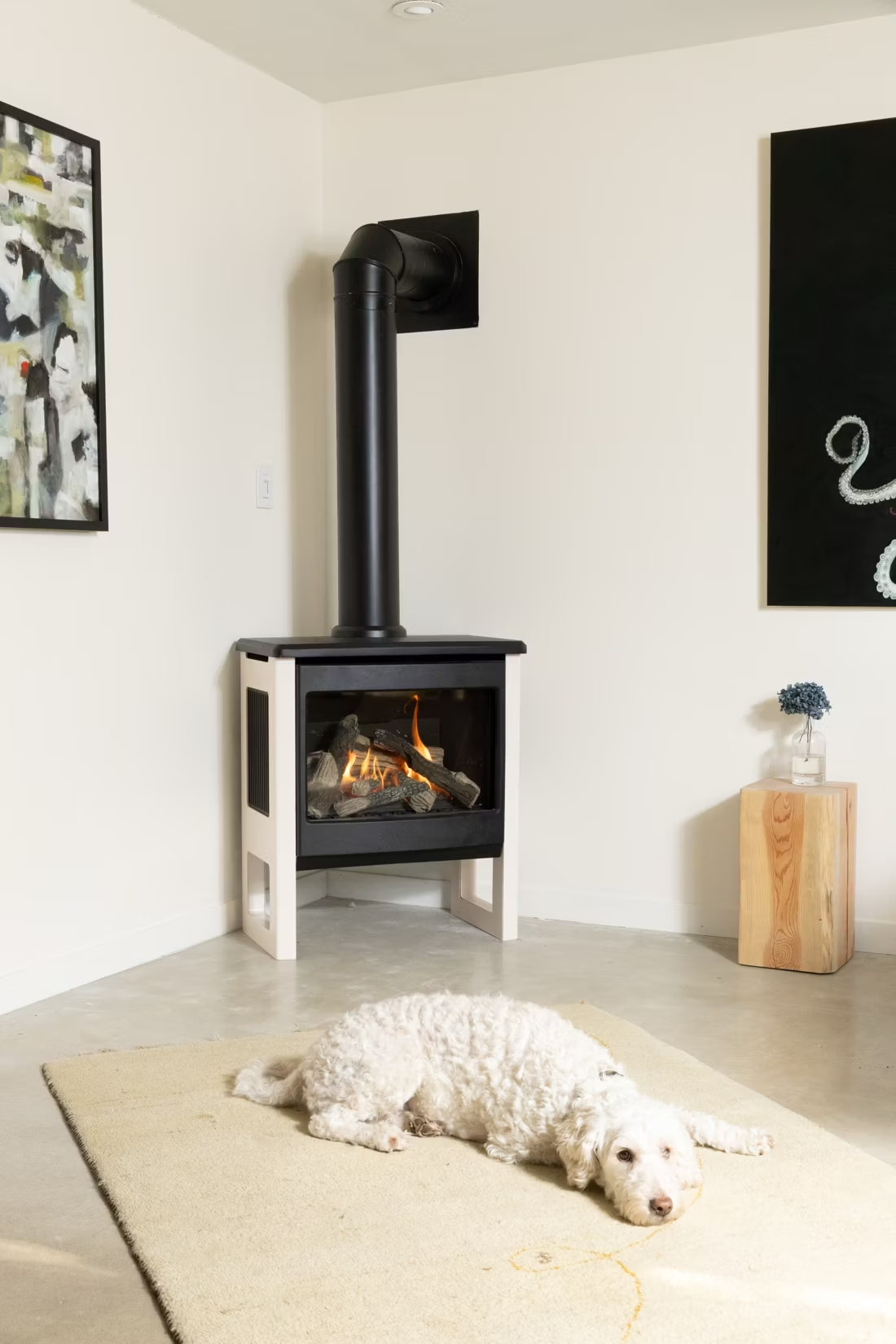
A gas fireplace is a fully built-in unit framed into a wall—the right choice for new construction or a remodel without an existing firebox. A gas insert is built to drop into an existing masonry fireplace, which is common in Madison Parish's older homes, and uses the existing chimney as its vent path. A gas stove is a freestanding cabinet-style unit that sits on the floor, similar in footprint to a wood stove but running on gas or propane. For most parish homeowners working with an existing fireplace, an insert is the straightforward upgrade; a stove or built-in fireplace makes more sense for a room with no chimney to begin with.
Do I need a permit to install a gas fireplace in Madison Parish?
Yes—a building permit is required through the Madison Parish permitting office, and any new gas line run needs to be done by a licensed gas-fitter and inspected before it's covered. Because Madison Parish has no air quality non-attainment designations or wood-smoke curtailment rules to navigate, the permitting process here is comparatively simple and centers on standard code compliance—clearances, venting, and gas line safety—rather than any emissions restrictions. Most local hearth retailers handle the permit paperwork as part of the installation.
What's the difference between vented and vent-free gas fireplaces, and which is allowed here?
Vented (direct-vent) gas fireplaces draw combustion air from outside and exhaust it back outside through a sealed pipe—they're the cleanest and most widely recommended option. Vent-free units burn fuel directly into the room without any outdoor venting; they're legal in Louisiana but come with strict room-size minimums and oxygen depletion sensor requirements, since combustion byproducts stay indoors. For most Madison Parish homes, direct-vent units are the more common and more straightforward choice, especially in smaller or well-sealed rooms where a vent-free unit's sizing rules get restrictive. A local dealer can walk you through both options for your specific space.
How often should a gas fireplace be serviced?
An annual inspection is the standard recommendation, even in a mild climate where the unit might only run a few weeks a year. A technician checks the burner, pilot assembly, venting, and gas connections, and cleans the glass and firebox interior. Given how lightly gas fireplaces get used in Madison Parish's short heating season, some homeowners stretch this to every other year without issue—but it's worth having a professional confirm that's safe for your particular unit rather than assuming.
Should I even consider wood, or is gas the obvious choice here?
For nearly everyone in Madison Parish, gas is the more practical choice. With average winter lows around 38°F and under 1,900 heating degree days a year, there simply isn't enough sustained cold to justify the work of sourcing, splitting, and stacking wood—even though oak, pecan, and cypress are all plentiful locally. A small number of rural homeowners still keep a wood-burning fireplace going for ambiance on the occasional cold evening or for camp-style cooking, but as a heating strategy, wood has largely given way to gas here. A gas fireplace or insert gives you the same fireside evenings without the ash, the wood supply, or the year-round upkeep a wood setup demands in climates that actually need it.
Why is my open fireplace making my house colder?
Open fireplaces suck—literally. As the fire burns, it consumes air your furnace already paid to heat and pulls it out through the chimney, so the house is actually colder after the fire goes out than before you lit it. An insert fixes this: it seals the chimney, puts fixed glass across the front, and turns that hole in your house into a real heat source.
Can I put a TV above my fireplace?
Yes—with an asterisk. Fireplaces are hot and TVs don't like heat. Either put a mantel between them to deflect rising warmth, or choose a fireplace with heat-management technology that creates a cool zone on the wall above—the wall stays around 125 degrees, barely warm, while the room still gets full heat. If you like clean lines and don't want a mantel, heat management is the answer.
How much should I budget for a fireplace?
For an average home—covering the fireplace, the vent pipe, and basic installation—a budget between $3,900 and $5,500 gives you a lot of options across wood, gas, and pellet. By the time you add finish work, gas line, and electrical, the average complete installation lands between $5,000 and $12,000 all-in. In a remodel or new build, a good rule is to put about 2.5% of the total project cost toward the fireplace.
Does a fireplace add value to my home?
On average, a fireplace adds back to the home about the same amount you spent installing it. Add the monthly savings from heating the rooms you actually use instead of the whole house—often hundreds of dollars a year—and the value case is strong before you even count what a fire does for how your family uses the room.
Stove and Fireplace Dealers in Madison County
Find your gas fireplace in Madison Parish.
Tell us a bit about your home and we'll match you with a trusted local dealer and send over a free Project Guide & Parts List—the exact parts, vent kit included, for your gas fireplace project in Madison Parish.',
Find Your Fireplace →