
Instant warmth for Iowa's occasional cold snaps.
A clean, reliable flame for the handful of nights a year Calcasieu Parish actually needs it—and a backup heat source when hurricane season knocks out power. Find the right unit and connect with a trusted local dealer.
Every Project Starts From One of These Five Situations
Built for a few cold nights, not a long winter.
Iowa, Louisiana sits at just 20 feet above sea level in Calcasieu Parish, in climate zone 2A, where the winter heating load totals around 1,315 (in the same units used to compare climates) a year and the average winter low sits at a mild 43 degrees. Compare that to a place like Duluth, MN, which racks up nine times the heating demand, and it's clear this small rice-and-farming town near Lake Charles was never built around a furnace running all winter. A gas fireplace here isn't primary heat—it's zone comfort for the occasional January freeze, and it's real backup when a Gulf storm takes the grid down.
Not every home in Iowa has natural gas service. Homes closer to town on the 70647 grid may have access through a local provider, but a lot of the surrounding parish runs on propane tanks, same as most rural Southwest Louisiana. Either fuel works fine in a direct-vent gas fireplace or insert—the installer just swaps the orifice and regulator to match. Many local homeowners pair a gas unit with a realistic oak or pecan log set, since those are the species that would be burning in a wood fireplace here anyway if the humidity and pine-beetle pressure on cordwood storage didn't make wood burning more trouble than it's worth this far south.
Three steps. No salesperson until you're ready.
Tell us about your project
Your zip code, your situation, and the fuel you're leaning toward—or let the answers point you to one.
See what's actually available
The brands dealers within 100 miles genuinely carry—real options, never a catalog mirage.
Get your dealer & Project Guide
A trusted local dealer, plus the free Project Guide & Parts List that names every component of the job.
Frequently Asked Questions
How much does a gas fireplace installation cost in Iowa, LA?
Most gas fireplace and insert installations in the Iowa/Lake Charles area run somewhere between $3,500 and $9,000. Where you land in that range depends heavily on fuel source—a home already on natural gas service is usually cheaper to hook up than one that needs a new propane tank set and a supply line run from it. Converting an existing masonry fireplace to a direct-vent gas insert, common in the older brick ranch homes around town, tends to sit in the middle of that range. New construction with no existing chimney and a longer gas line run pushes toward the higher end.
Should I plan on natural gas or propane for my fireplace?
It depends on where in Calcasieu Parish you're located. Iowa is small enough that natural gas coverage isn't guaranteed the way it is in Lake Charles proper—some streets have it, others don't. If your water heater or range already runs on natural gas, your fireplace can tie into the same line. If you're on propane already (common outside the town core), a local propane supplier can set a tank sized for your fireplace's BTU load, or your installer can tap an existing tank. Almost every gas fireplace model sold locally can be configured for either fuel, so the choice comes down to what's already run to your house.
Can I convert an old wood-burning fireplace to gas?
Yes, and it's a common project in Iowa's older homes, many of which have a wood-burning masonry fireplace from the 1970s or 80s that's rarely, if ever, used—the humidity and short cold season here make wood burning a lot less practical than it is further north. A gas insert dropped into that existing firebox, vented through a stainless liner in the same chimney, typically runs $3,500 to $7,000 and gives you real, on-demand heat without the ash, humidity-swollen firewood, or termite concerns that come with storing cordwood on the Gulf Coast.
Will my gas fireplace still work if the power goes out?
For most units, yes—and in this part of Calcasieu Parish, that matters. Hurricane Laura and Hurricane Delta both knocked out power across the area for extended stretches in 2020, and outages are a realistic part of owning a home here. Gas fireplaces with IPI (intermittent pilot ignition) run on AA batteries as backup and will still light and heat a room with the grid down. Valor fireplaces go a step further—their pilot assembly generates its own electricity through the thermocouple, so there's no battery to remember to replace before storm season. Either option beats a furnace that goes dark the moment Entergy Louisiana's lines come down.
What's the difference between a gas fireplace, insert, and stove?
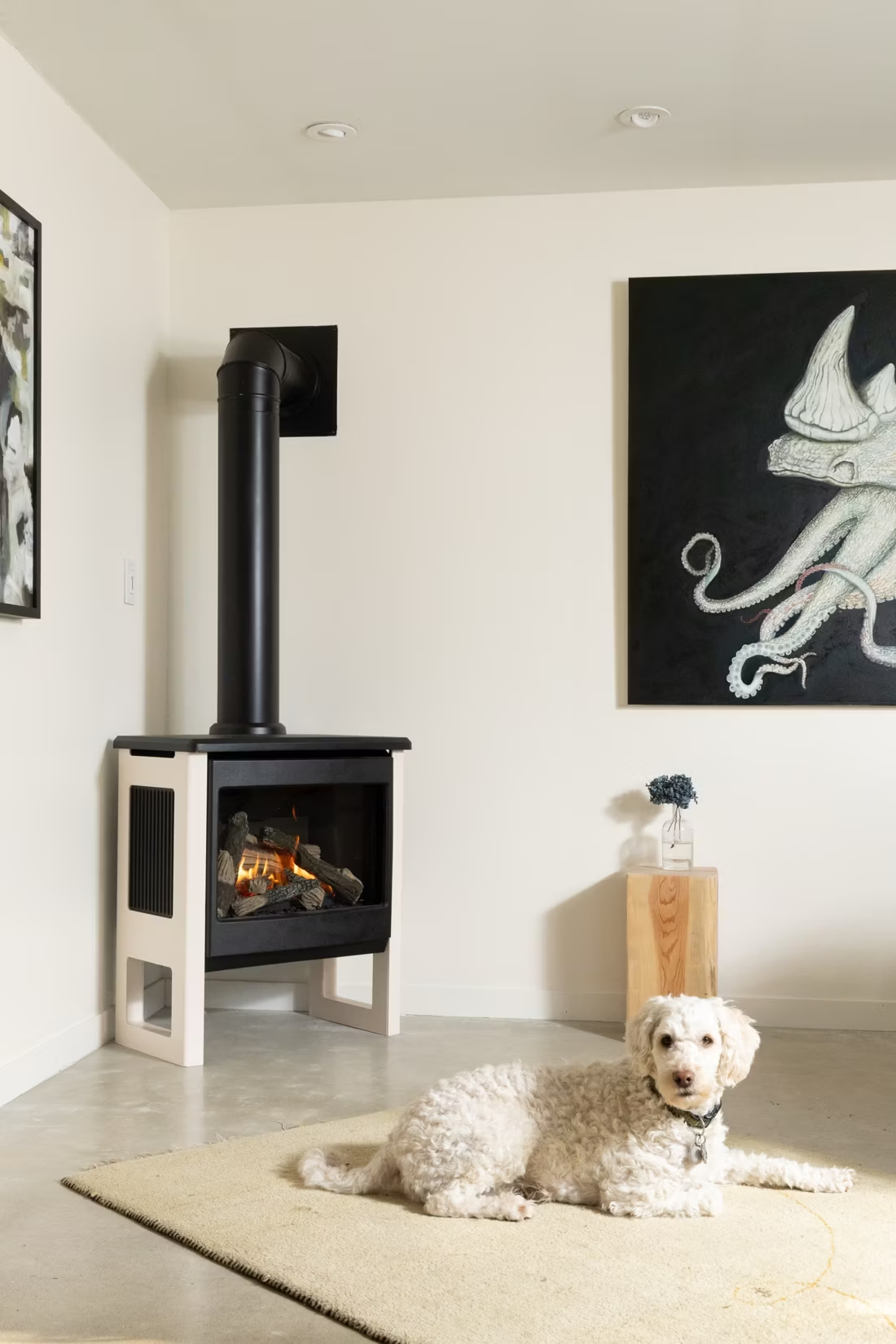
A gas fireplace is a built-in unit framed into a wall—the right call for new construction or a remodel with no existing firebox. A gas insert slides into an existing masonry fireplace opening and uses the chimney as its vent path, which fits a lot of Iowa's older brick homes. A gas stove is a freestanding cabinet unit that sits on the floor, useful in a den or sunroom addition that never had a fireplace to begin with. For most homeowners here upgrading an existing brick fireplace, the insert is the straightforward option.
Do I need a permit for a gas fireplace in Iowa, LA?
Yes. Gas appliance installations in unincorporated Calcasieu Parish and small towns like Iowa require both a building permit and a gas line permit pulled through the parish permit office, and the actual gas line connection has to be run by a licensed gas-fitter, not a general handyman. A local hearth dealer who regularly works in the Lake Charles metro will typically pull these permits as part of the installation quote, which saves you from coordinating separate trades yourself.
Are vent-free gas fireplaces allowed in Louisiana?
Vent-free (unvented) gas fireplaces are legal in Louisiana under state fire marshal rules, but they come with strict room-size and ventilation requirements since they release combustion byproducts directly into the room. Direct-vent units, which draw outside air and exhaust outside through a sealed pipe, are the more common recommendation and don't carry the same air-quality tradeoffs—a relevant point in a humid Gulf Coast climate where indoor moisture is already something homeowners manage. Ask your local dealer which option fits your room before committing to either.
How often does a gas fireplace need servicing, and who does it near Iowa?
Plan on an annual inspection—a technician checks the burner, pilot assembly, venting, and gas connections, and cleans the glass. Because Iowa is a town of about 3,300 people, most full-service hearth dealers and gas appliance techs are based in the Lake Charles metro, roughly 15 minutes east, and make regular service calls out to the parish. Expect to pay somewhere in the $150–$250 range for a standard annual check, similar to pricing across most of Southwest Louisiana.
Why would I choose gas over wood in Iowa?
With a winter heating load of only about 1,315 (in the same units used to compare climates) a year and a winter low averaging 43 degrees, wood heat just doesn't pull its weight here the way it does in a colder climate—and storing cordwood through Louisiana's humidity invites insects and mold. Oak, pecan, and cypress are the wood species you'd find locally if you did burn, and some homeowners still keep a wood fireplace going purely for the look and smell on a rare cold evening. But for anyone who wants heat on demand, no ash cleanup, and a reliable flame during storm-season outages, gas is the more practical fit for a Calcasieu Parish home.
Is my gas fireplace wasting gas?
If it was installed more than 15 years ago, probably. Older gas fireplaces keep a standing pilot light burning all the time, and that little flame can cost a couple hundred dollars a year. Newer models use pilot-on-demand ignition—the pilot lights only when you use the fireplace and goes out when you turn it off.
Why is a fireplace insert so efficient?
An insert does two things: it seals the chimney completely, so you stop losing air you already paid to heat, and it radiates warmth into the room through the firebox and glass. Most add a heat-exchange fan that pulls cool room air underneath, wraps it around the hot firebox, and pushes it back out warm. Your home is more efficient before you've even lit the first fire.
What is an in-home preview and do I need one?
It's a visit where a hearth professional measures your space, confirms the model you picked actually works in your home, and walks the specs—framing, gas line, venting, finish work—before anything is ordered. Some details you just can't know until you see the house. Never make a down payment without one; it's the single most-skipped step that burns buyers.
Can a fireplace actually lower my heating bill?
Yes—by creating a comfort zone. A furnace heats every square foot of the house just to warm the one room you're in; a gas fireplace on low burns roughly a sixth of the gas a typical furnace does. Set the furnace around 55–60 degrees as a baseline, then heat the rooms your family actually uses. Families who heat this way commonly save $20–$60 a month.
Nearby Dealers
Hearth shops serving Iowa and the surrounding area. Every listing shows whether it is a WhyFire partner, a dealer we have verified as authorized for the brands we recommend, or a local business carrying hearth products. No manufacturer pays for placement. How we verify dealers →
Herman Brown Brick Co.
Below The Mantle
Find your gas fireplace in Iowa, LA.
Tell us a bit about your home and fuel setup, and we'll put together a free Project Guide & Parts List—the right unit, the exact parts including venting, and a trusted local dealer to install it.
Find Your Fireplace →