
Warmth on demand for Iberville Parish's mild winters.
From the River Road plantation homes near White Castle to newer construction around Plaquemine and St. Gabriel, gas gives Iberville Parish homeowners instant heat and real flame without tending a fire. Find the right unit and connect with a trusted local dealer.
Every Project Starts From One of These Five Situations
Ambiance and warmth, built for a Gulf South winter.
Iberville Parish sits in climate zone 2A, where the winter low averages a mild 43°F and the parish sees a light, short winter heating season—a fraction of what a place like Fargo, North Dakota racks up in a single season. Heating here isn't a survival issue; it's mostly about the handful of genuinely cold nights each winter, plus the occasional hard freeze that pushes down from the north and catches River Road homes off guard. That's exactly the gap a gas fireplace fills: real, immediate heat for the nights that call for it, with none of the upkeep a wood-burning setup would require in a climate that rarely justifies one.
Plenty of Iberville Parish homes—especially the historic properties along the Mississippi River near Plaquemine and White Castle, including homes with original 19th-century masonry fireplaces—are strong candidates for a gas insert conversion that keeps the mantel and brickwork intact while swapping in clean, efficient heat. Natural gas service reaches much of the river corridor around Plaquemine and St. Gabriel; homes further out toward Grosse Tete, Bayou Goula, and the rural stretches of the parish more often run on propane. Either way, a trusted local dealer will size the unit, handle the venting, and pull the parish permit—no big-box guesswork, and no manufacturer kickback influencing the recommendation.
Three steps. No salesperson until you're ready.
Tell us about your project
Your zip code, your situation, and the fuel you're leaning toward—or let the answers point you to one.
See what's actually available
The brands dealers within 100 miles genuinely carry—real options, never a catalog mirage.
Get your dealer & Project Guide
A trusted local dealer, plus the free Project Guide & Parts List that names every component of the job.
Frequently Asked Questions
How much does a gas fireplace installation cost in Iberville Parish?
Most gas fireplace and insert installations in the parish land somewhere between $3,000 and $8,500, depending on the unit and the venting path. A direct-vent gas insert dropped into an existing masonry fireplace—common in the older homes around Plaquemine and White Castle—sits on the lower to middle end if the flue is in good shape. New construction or a built-in fireplace requiring fresh gas line runs, especially on properties currently running on propane, pushes toward the higher end. A local installer will confirm a firm number after seeing your existing chimney, gas service, and the room you're heating.
Can I convert my existing wood fireplace to gas?
Yes, and it's a common project on the older homes along the River Road corridor, where original masonry fireplaces were built for wood but rarely get used that way anymore given how mild the winters run here. A gas insert with a stainless liner uses your existing chimney as the vent path, so the mantel and brick surround stay untouched while the heat output and convenience improve dramatically. Whether you're on natural gas near Plaquemine or propane further out toward Grosse Tete, most inserts can be configured for either fuel—your installer sets the orifice and regulator to match.
Do I need natural gas, or is propane the standard around here?
Both are in play depending on where you are in the parish. Natural gas service runs along the river corridor near Plaquemine and St. Gabriel, so homes in those areas can often tie a fireplace into existing service. Out toward Grosse Tete, Bayou Goula, White Castle, and the more rural farm country, propane is the standard—usually from an existing tank already serving a range or water heater. Nearly every gas fireplace model on the market can be set up for either fuel; it's a matter of which supply line reaches your house.
Will my gas fireplace still work if the power goes out?
Most will, which matters in a parish that sits well within hurricane country. Units with intermittent pilot ignition (IPI) run on a small battery backup that kicks in the moment power drops, so the fireplace lights on demand just like normal—just remember to keep fresh batteries in the unit before storm season. Valor fireplaces skip the battery question entirely: their pilot's thermocouple generates its own electricity, so the unit stays operable through extended outages with nothing to remember or replace. Worth asking about directly if you're shopping ahead of hurricane season.
What's the difference between a gas fireplace, gas insert, and gas stove?
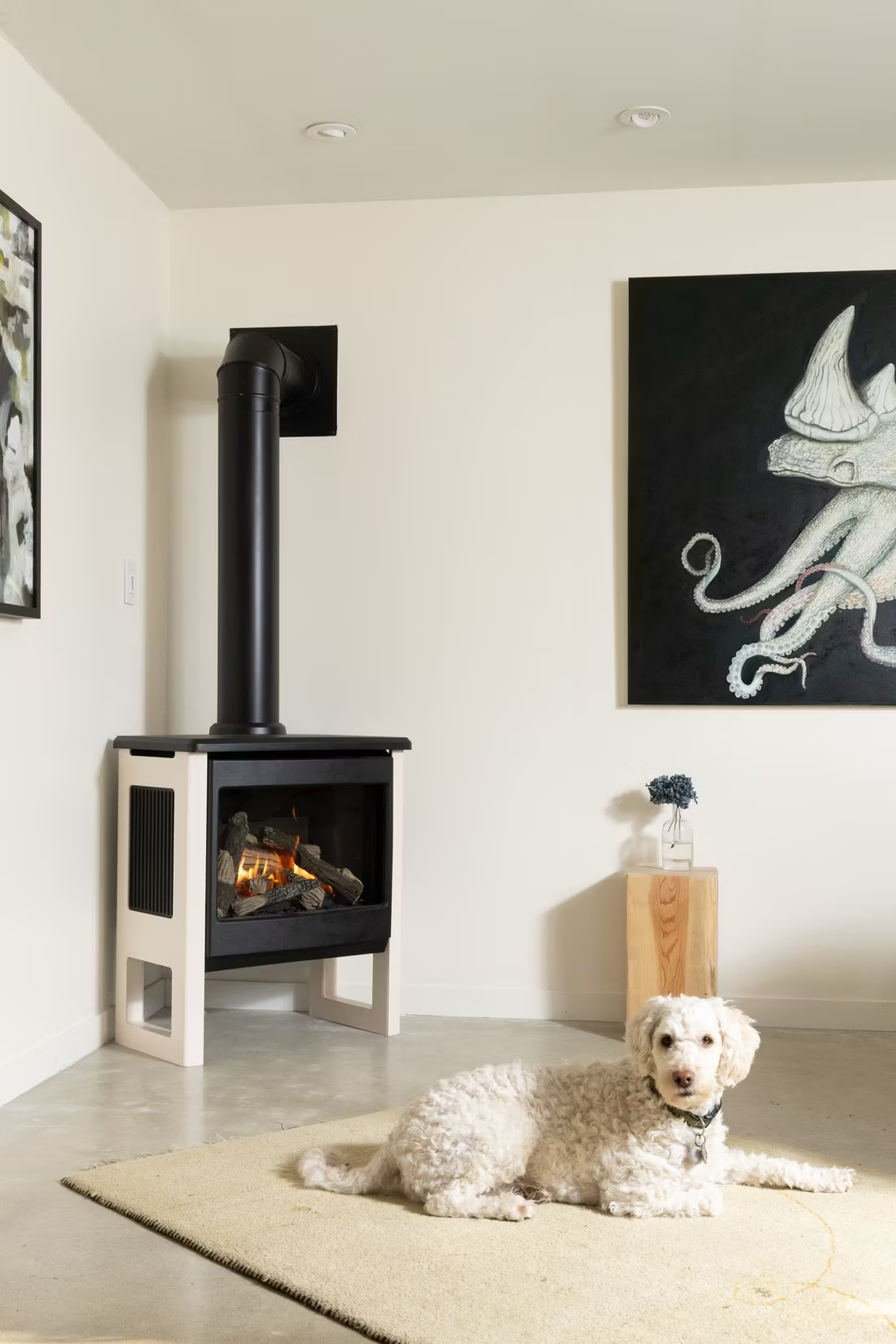
A gas fireplace is a fully built-in unit framed into a wall—the right call for new construction or a remodel where there's no existing fireplace. A gas insert slides into an existing masonry opening, which fits a lot of the older homes around Plaquemine and White Castle, using the chimney you already have as the vent. A gas stove is a freestanding cabinet unit that sits on the floor, useful when you want heat in a room with no fireplace or chimney at all. For most Iberville Parish homeowners with an existing hearth, an insert is the straightforward choice.
Do I need a permit to install a gas fireplace in Iberville Parish?
Yes—a building permit and a gas line permit are typically required for new gas fireplace or insert installations, coordinated through the parish's permitting process. The gas line connection specifically needs a licensed gas-fitter, which is part of why it's worth working with an established local dealer rather than a general contractor: they handle the gas hookup, the venting, and the inspection sign-off together instead of you having to coordinate separate trades.
Should I get a vented or vent-free gas fireplace given the humidity here?
Vented—specifically direct-vent—is the better fit for Iberville Parish. Vent-free units burn fuel directly into the room and release water vapor as a byproduct, which is the last thing you want to add to a home that's already fighting Gulf Coast humidity most of the year. Direct-vent units draw combustion air from outside and exhaust everything back outside through a sealed system, so they don't add moisture load to your living space and don't require the room-size and ventilation workarounds vent-free units need. Louisiana permits vent-free units, but for this climate, direct-vent is the recommendation local dealers give most often.
How often should a gas fireplace be serviced?
An annual inspection is standard—a technician checks the burner, pilot assembly, venting, and gas connections, and cleans the glass and interior. It's a lighter lift than chimney sweeping for a wood stove, but just as important, particularly if the unit sits unused for most of the year and only fires up during a cold spell. Scheduling it before the parish's occasional December-through-February freeze events hit is the easiest way to make sure the fireplace actually works when you need it.
Gas vs. wood vs. electric—which makes sense in Iberville Parish?
Wood heating is genuinely uncommon here—with only a light, short winter heating season and winter lows averaging in the low 40s, there's not much of a case for a wood stove, even though oak, pecan, and cypress are all over the parish. Those species get used plenty for smoking meat and cabinetry, just rarely for home heat. Pellet stoves face the same climate mismatch, even with regional pellet suppliers like Lignetics and Hamer Pellet Fuel nearby—the demand simply isn't there. Electric fireplaces are a legitimate option for pure ambiance with zero venting required, but they don't produce meaningful heat output. For the parish's actual pattern—long mild stretches punctuated by the occasional hard freeze—gas is the fuel that makes sense: real heat when you need it, none of the upkeep when you don't.
What's the difference between an insert and a zero-clearance fireplace?
An insert is a fireplace that slides into a pre-existing wood-burning fireplace—if you don't have one, there's nothing to insert it into. A zero-clearance fireplace is built into a framed wall, which makes it the answer for remodels and new construction. Simple test: existing masonry fireplace means insert; blank or framed wall means zero-clearance.
Is my gas fireplace wasting gas?
If it was installed more than 15 years ago, probably. Older gas fireplaces keep a standing pilot light burning all the time, and that little flame can cost a couple hundred dollars a year. Newer models use pilot-on-demand ignition—the pilot lights only when you use the fireplace and goes out when you turn it off.
What is an in-home preview and do I need one?
It's a visit where a hearth professional measures your space, confirms the model you picked actually works in your home, and walks the specs—framing, gas line, venting, finish work—before anything is ordered. Some details you just can't know until you see the house. Never make a down payment without one; it's the single most-skipped step that burns buyers.
Can I install a fireplace myself?
If you're putting a fire in your house on purpose, it's best to work with an expert. Unless you're genuinely experienced in framing, gas line, vent pipe, and the national code on clearances to combustibles, have a professional do it—and ideally the same company that sells you the fireplace, so warranty, service, and liability all live under one roof.
Find your gas fireplace in Iberville Parish.
Tell us a bit about your home—Plaquemine, White Castle, St. Gabriel, or anywhere in between—and we'll match you with a trusted local dealer and put together a free Project Guide & Parts List with the exact vent kit and parts your install needs.
Find Your Fireplace →