
Warmth on Demand for Hammond's Mild Winters.
Real flame, instant heat, and backup warmth for the occasional Gulf South cold snap or storm outage. Find the right gas fireplace and get matched with a trusted local dealer.
Every Project Starts From One of These Five Situations
Built for occasional cold, not brutal winters.
Hammond sits in climate zone 2A at just 39 feet of elevation, with an average winter low near 39°F and only a light winter heating load each year—a fraction of what a place like Duluth, Minnesota logs in a single season. Nobody in Tangipahoa Parish is heating a home through a five-month winter. But Hammond does get hard freezes, ice events, and the occasional Arctic blast that catches Gulf South homes without adequate heat off guard, and that's exactly where a gas fireplace earns its keep—instant, controllable warmth without the split-second decision to run a space heater on an aging circuit.
There's also a storm-season angle that matters more here than in most parts of the country. Entergy Louisiana and Washington-St. Tammany Electric Cooperative both serve the Hammond area, and extended power outages after hurricanes and severe thunderstorms are a normal part of life in Tangipahoa Parish. A gas fireplace with battery-backup or self-powered ignition keeps working when the grid doesn't. Many older Hammond homes near downtown were built with traditional masonry fireplaces burning local oak or pecan—a gas insert converts that same firebox into clean, on-demand heat without giving up the fireplace you already have.
Three steps. No salesperson until you're ready.
Tell us about your project
Your zip code, your situation, and the fuel you're leaning toward—or let the answers point you to one.
See what's actually available
The brands dealers within 100 miles genuinely carry—real options, never a catalog mirage.
Get your dealer & Project Guide
A trusted local dealer, plus the free Project Guide & Parts List that names every component of the job.
Frequently Asked Questions
How much does a gas fireplace installation cost in Hammond?
Most gas fireplace installations in Hammond run between roughly $3,500 and $9,000, depending on whether you're installing a direct-vent insert into an existing masonry firebox, a new built-in unit during a remodel, or a freestanding gas stove. Homes already on natural gas service with a line near the fireplace location land on the lower end; homes needing a new propane tank, a long gas line run, or new venting through brick or siding run higher. Local dealers will confirm a firm number after seeing the space in person.
Can I convert my existing wood fireplace to gas?
Yes, and it's a common project in Hammond's older neighborhoods, where many homes still have the original masonry fireplace that once burned local oak, pecan, or cypress. A gas insert drops into that existing firebox and vents through the current chimney with a stainless liner, so you keep the look of the fireplace while gaining instant on-off heat and no more ash or creosote. Conversions typically run $3,500 to $8,000 depending on the insert and whether the chimney needs relining or a gas line needs to be run to the hearth.
Do I need natural gas, or should I use propane?
Either works, and which one makes sense depends on where in Tangipahoa Parish you live. Homes within Hammond's city limits are more likely to already have natural gas piped in for water heaters and ranges, which keeps installation simpler. Out in unincorporated parts of the parish, propane delivered by a local supplier is the standard fallback, and a new or existing tank is factored into the install. Most gas fireplace models can be configured for either fuel—your dealer sets the correct orifice and regulator during installation.
Will my gas fireplace still work if the power goes out?
Most modern gas fireplaces will, which matters in a hurricane-prone area like Hammond served by Entergy Louisiana and Washington-St. Tammany Electric Cooperative. Units with intermittent pilot ignition (IPI) run on AA batteries that kick in automatically the moment power drops, so the fireplace lights on demand just like normal. Valor fireplaces go a step further—their pilot's thermocouple generates its own electricity, so there are no batteries to remember or replace, ever. After a tropical storm knocks out power for days, that's a real difference. Ask your local dealer which ignition system a unit uses before you buy.
What's the difference between a gas fireplace, insert, and stove?
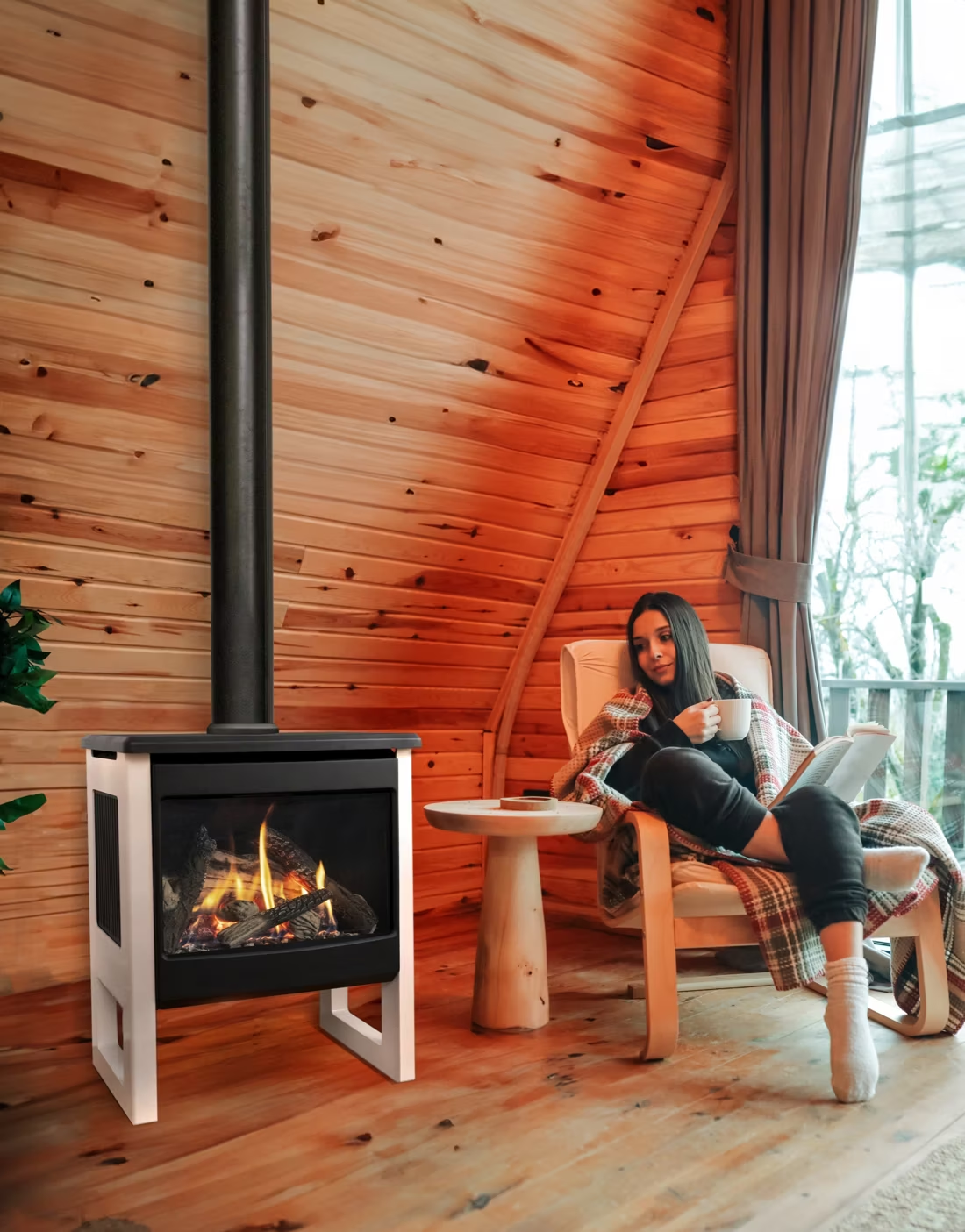
A gas fireplace is a fully built-in unit framed into a wall—the right call for new construction or a major remodel. A gas insert slides into an existing masonry firebox, which fits a lot of Hammond's older housing stock built around a traditional wood fireplace. A gas stove is a freestanding cabinet-style unit that sits on the floor and vents through a wall or existing chimney, a good option for rooms without a fireplace at all, like a converted sunroom or den addition. Most Hammond homeowners with an existing fireplace go the insert route; new rooms or additions usually call for a built-in unit or freestanding stove.
Do I need a permit to install a gas fireplace in Hammond?
Yes—installations inside Hammond city limits require a permit through the City of Hammond Building Department, and homes in unincorporated Tangipahoa Parish go through the parish permitting office instead. Gas line work specifically has to be done or signed off by a licensed gas fitter, which is one reason it's worth using an established local hearth dealer rather than a general handyman: they coordinate the gas line, venting, and inspection in one process instead of you managing separate trades.
Should I get a vented or vent-free gas fireplace?
Vented (direct-vent) units draw combustion air from outside and exhaust it back outside through sealed venting—they're the cleaner, more universally recommended choice. Vent-free units burn directly into the room and release water vapor and trace combustion byproducts indoors, and Louisiana's climate is a real argument against them here: Hammond's humidity is already high for much of the year, and adding a vent-free unit's moisture output on top of that can aggravate condensation and mold issues in a way it wouldn't in a drier climate. Vent-free units are legal in Louisiana with proper room sizing and oxygen depletion sensors, but most local dealers steer Hammond homeowners toward direct-vent models for exactly this reason.
How often does a gas fireplace need to be serviced?
Plan on an annual inspection, ideally before the first cold snap each year. A technician checks the burner, pilot assembly, gas connections, and any battery or electronic ignition components, and cleans the glass and interior. This matters even in a mild climate like Hammond's, since a fireplace that only sees occasional use in a hurricane-humid environment can develop corrosion or insect nesting in the venting between uses. Annual service typically runs $150 to $250 through a local gas appliance technician.
Gas vs. wood—which makes more sense for a Hammond home?
Wood still has a place here—local oak, pecan, and cypress are all readily available, and a wood fireplace has genuine appeal for the handful of truly cold nights and the tradition around it. But with only a light winter heating load each year (compared to a much longer, far colder heating season in a place like Fargo, North Dakota), Hammond homes simply don't need a wood-burning appliance for daily heat the way a colder climate does. Gas gives you the same instant ambiance without stacking or hauling wood, plus reliable backup heat during hurricane-season power outages when you may not be around to tend a fire. Most Hammond homeowners who want a fireplace mainly for comfort and storm resilience land on gas; those who want the full wood-burning tradition still have good local sourcing for it.
What's the difference between an insert and a zero-clearance fireplace?
An insert is a fireplace that slides into a pre-existing wood-burning fireplace—if you don't have one, there's nothing to insert it into. A zero-clearance fireplace is built into a framed wall, which makes it the answer for remodels and new construction. Simple test: existing masonry fireplace means insert; blank or framed wall means zero-clearance.
Why is a fireplace insert so efficient?
An insert does two things: it seals the chimney completely, so you stop losing air you already paid to heat, and it radiates warmth into the room through the firebox and glass. Most add a heat-exchange fan that pulls cool room air underneath, wraps it around the hot firebox, and pushes it back out warm. Your home is more efficient before you've even lit the first fire.
Can a fireplace actually lower my heating bill?
Yes—by creating a comfort zone. A furnace heats every square foot of the house just to warm the one room you're in; a gas fireplace on low burns roughly a sixth of the gas a typical furnace does. Set the furnace around 55–60 degrees as a baseline, then heat the rooms your family actually uses. Families who heat this way commonly save $20–$60 a month.
How much should I budget for a fireplace?
For an average home—covering the fireplace, the vent pipe, and basic installation—a budget between $3,900 and $5,500 gives you a lot of options across wood, gas, and pellet. By the time you add finish work, gas line, and electrical, the average complete installation lands between $5,000 and $12,000 all-in. In a remodel or new build, a good rule is to put about 2.5% of the total project cost toward the fireplace.
Nearby Dealers
Hearth shops serving Hammond and the surrounding area. Every listing shows whether it is a WhyFire partner, a dealer we have verified as authorized for the brands we recommend, or a local business carrying hearth products. No manufacturer pays for placement. How we verify dealers →
Lacox Propane Gas Co., Inc.
Brandon's Furniture
Outdoor Living Center
Harrell Gas Inc
Find your gas fireplace in Hammond.
Tell us a bit about your home and we'll put together a free Project Guide & Parts List for your Hammond gas fireplace project—the right unit, the exact vent kit, and a trusted local dealer to install it.
Find Your Fireplace →