
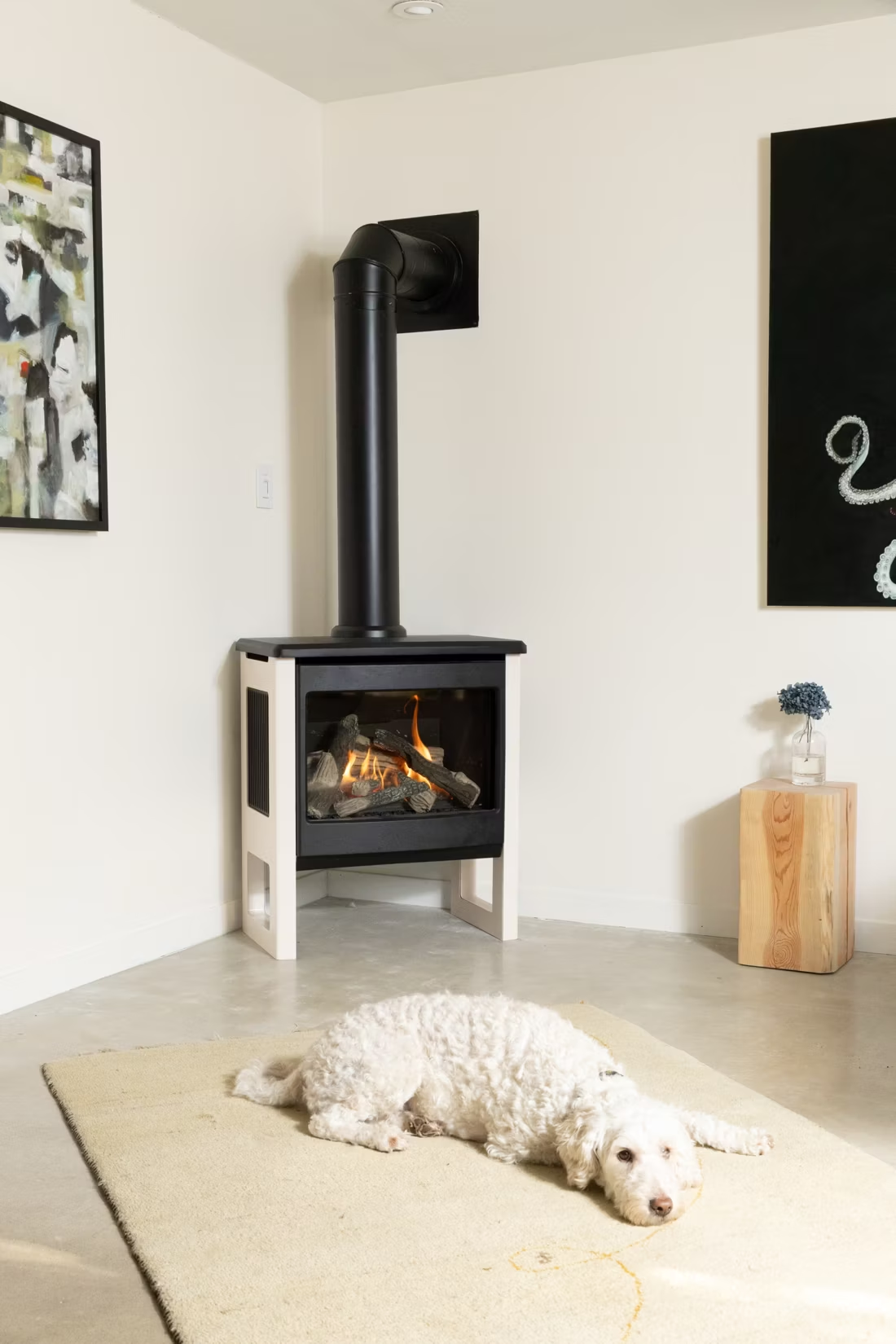
A gas fireplace for the few cold nights Gray actually gets.
Real flame and real backup heat for Terrebonne Parish homes—useful on the occasional cold front, and even more useful when a storm knocks the power out for days.
Every Project Starts From One of These Five Situations
Built for ambiance, ready for outages.
Gray sits at just 9 feet of elevation in the bayou country of Terrebonne Parish, where the climate is classified 2A—hot and humid most of the year, with only a short, mild winter heating season and a winter low averaging 44°F. There's no real cold-climate heating season here the way there is in a place like Duluth, MN. But cool, damp fronts do roll through most winters, and many local homes—especially older raised camps along Bayou Black and Bayou Terrebonne—were built for heat and humidity, not cold, which makes them harder to keep comfortable when the temperature does drop into the 30s.
Most unincorporated parts of Terrebonne Parish, including Gray, run on propane rather than piped natural gas, so a propane tank is a normal part of a gas fireplace project here. What makes gas genuinely valuable in this area isn't just the occasional cold snap—it's hurricane season. After Hurricane Ida in 2021, thousands of Terrebonne Parish homes went without power for a week or more. A gas fireplace with battery-backup ignition lights on demand with no electricity at all, giving a home real heat and light during exactly the kind of extended outage this parish knows well.
Three steps. No salesperson until you're ready.
Tell us about your project
Your zip code, your situation, and the fuel you're leaning toward—or let the answers point you to one.
See what's actually available
The brands dealers within 100 miles genuinely carry—real options, never a catalog mirage.
Get your dealer & Project Guide
A trusted local dealer, plus the free Project Guide & Parts List that names every component of the job.
Frequently Asked Questions
How much does a gas fireplace installation cost in Gray?
Most gas fireplace and insert installations in the Gray area run in the $3,500 to $9,500 range. Homes that already have a propane tank and existing masonry fireplace tend to land on the lower end, since the insert just needs a liner and gas line hookup. New direct-vent fireplace installs in raised, pier-built homes—common throughout Terrebonne Parish—can run higher because of the additional framing and venting work needed to route through an elevated floor structure. A local retailer will give you a firm number after seeing your home in person.
Do I need natural gas, or does propane work for a gas fireplace in Gray?
Propane is the standard fuel for most homes in and around Gray, since piped natural gas service is limited to parts of the more built-up Houma area and doesn't reach much of unincorporated Terrebonne Parish. Nearly every gas fireplace, insert, and stove on the market can be set up to run on propane with the correct orifice and regulator, so fuel availability isn't a limiting factor—you'll just need either an existing propane tank or a new tank installed by a local propane supplier as part of the project.
Will a gas fireplace still work if the power goes out during a hurricane?
Yes, and for Terrebonne Parish this is often the main reason people install one. Units with intermittent pilot ignition (IPI) run on internal AA batteries and will light and operate with zero utility power—you just need to keep fresh batteries in the unit before storm season. Valor fireplaces take it a step further: their pilot generates its own electricity through the thermocouple, so there's no battery to remember at all. After storms like Ida, when Entergy Louisiana and South Louisiana Electric Cooperative customers alike went a week or more without power, a gas fireplace was one of the only reliable heat and light sources in the house.
What's the difference between a gas fireplace, gas insert, and gas stove?
A gas fireplace is a fully built-in unit framed into a wall—the right call for new construction or a remodel. A gas insert drops into an existing masonry fireplace opening and uses the existing chimney (relined) as its vent path, which is the common upgrade for older camps and homes around Gray with a fireplace that's rarely used. A gas stove is a freestanding cabinet-style unit that vents through a wall or roof without needing an existing fireplace opening at all—a good option for homes that never had a hearth to begin with.
Do I need a permit to install a gas fireplace in Gray?
Yes. Terrebonne Parish Consolidated Government's permitting office requires both a building permit and a gas permit for new fireplace installations, and any propane tank work needs to be handled by a licensed gas fitter. Because so many homes in Gray are raised on piers for flood elevation, venting and gas line routing through the floor system also has to meet parish flood-zone construction rules—one more reason to use an installer who works in this parish regularly rather than a generalist crew.
Should I get a vented or vent-free gas fireplace in a climate like Gray's?
Vented (direct-vent) units draw combustion air from outside and exhaust it back outside, keeping combustion byproducts out of the living space entirely. Vent-free units burn without any outside venting and release some water vapor into the room—which is a real drawback in a Gulf Coast climate that's already fighting humidity most of the year. Adding more moisture indoors in a place like Gray, where mold and mildew are constant concerns in raised, humid homes, is rarely worth the trade-off. Direct-vent units are the more sensible choice here, and it's what most local installers recommend by default.
How often should a gas fireplace be serviced in Gray?
Plan on an annual inspection, same as anywhere, but pay extra attention to it here—the salt air and humidity along this stretch of the Gulf Coast accelerates corrosion on burners, venting, and electronic ignition components faster than it would inland. A technician should check the gas connections, clean the burner and glass, and inspect venting for any moisture or salt-related wear. Most local service calls for an annual inspection run $150 to $250.
Does anyone in Gray actually install wood-burning fireplaces?
It's uncommon. With only a short, mild winter heating season and winter lows averaging 44°F, there's little practical need for wood as a heat source in Gray, and the parish's humidity makes seasoning and storing firewood—even good local oak, pecan, or cypress—more of a hassle than it's worth for most homeowners. A handful of camps and rural properties still keep a wood-burning unit for ambiance or occasional use, but for anyone weighing options here, gas or electric almost always makes more practical sense.
Gas vs. electric fireplace—which makes more sense for a home in Gray?
Electric fireplaces are far cheaper to install—typically a few hundred dollars for a plug-in unit—and work well as supplemental ambiance in a bedroom, camp, or rental property, but they offer little real heat and, more importantly, do nothing during a power outage. Gas fireplaces cost more upfront but deliver genuine heat output and, with battery-backup or self-generating ignition, keep working when Entergy Louisiana or South Louisiana Electric Cooperative service goes down after a storm. For a primary living space in hurricane country, gas is usually the better long-term investment; electric works fine as a secondary, lower-stakes install elsewhere in the house.
Can I put a TV above my fireplace?
Yes—with an asterisk. Fireplaces are hot and TVs don't like heat. Either put a mantel between them to deflect rising warmth, or choose a fireplace with heat-management technology that creates a cool zone on the wall above—the wall stays around 125 degrees, barely warm, while the room still gets full heat. If you like clean lines and don't want a mantel, heat management is the answer.
Why is a fireplace insert so efficient?
An insert does two things: it seals the chimney completely, so you stop losing air you already paid to heat, and it radiates warmth into the room through the firebox and glass. Most add a heat-exchange fan that pulls cool room air underneath, wraps it around the hot firebox, and pushes it back out warm. Your home is more efficient before you've even lit the first fire.
How much should I budget for a fireplace?
For an average home—covering the fireplace, the vent pipe, and basic installation—a budget between $3,900 and $5,500 gives you a lot of options across wood, gas, and pellet. By the time you add finish work, gas line, and electrical, the average complete installation lands between $5,000 and $12,000 all-in. In a remodel or new build, a good rule is to put about 2.5% of the total project cost toward the fireplace.
Can I install a fireplace myself?
If you're putting a fire in your house on purpose, it's best to work with an expert. Unless you're genuinely experienced in framing, gas line, vent pipe, and the national code on clearances to combustibles, have a professional do it—and ideally the same company that sells you the fireplace, so warranty, service, and liability all live under one roof.
Nearby Dealers
Hearth shops serving Gray and the surrounding area. Every listing shows whether it is a WhyFire partner, a dealer we have verified as authorized for the brands we recommend, or a local business carrying hearth products. No manufacturer pays for placement. How we verify dealers →
The Brick Yard
Antique Brick Company
Economy Brick Sales
Find your gas fireplace in Gray, LA.
Tell us a bit about your home and we'll put together a free Project Guide & Parts List—the right unit, the vent kit, and a trusted local Terrebonne Parish dealer to install it.
Find Your Fireplace →