
Effortless Warmth for the Few Cold Nights Bossier Parish Gets.
Natural gas from CenterPoint Energy in and around Bossier City, propane out toward Haughton and Plain Dealing—either way, gas fireplaces give Bossier Parish homes instant, low-maintenance heat and ambiance. Find the right unit and connect with a trusted local dealer.
Every Project Starts From One of These Five Situations
Built for a climate that rarely demands much heat.
Bossier Parish sits along the Red River in northwest Louisiana, home to roughly 82,000 residents spread across Bossier City, Haughton, Benton, Plain Dealing, Elm Grove, and Princeton. This is climate zone 3A—hot and humid most of the year, with an average winter low around 39 degrees and a very light winter heating load annually. For comparison, a place like Duluth, Minnesota has a winter heating load more than four and a half times as heavy—Bossier Parish's heating season is short and mild by contrast, with maybe a few dozen nights a winter that actually call for supplemental heat. Many older homes in the parish were built with masonry wood-burning fireplaces, traditionally fed with local oak, pecan, and cypress, but full-time wood heat was never really a necessity here the way it is farther north.
That's exactly why gas has become the standard choice for parish homeowners upgrading a fireplace. CenterPoint Energy provides natural gas service through Bossier City and much of the surrounding incorporated area, while propane fills in for homes in more rural stretches of the parish—Haughton, Plain Dealing, and pockets of unincorporated Bossier. A direct-vent gas fireplace or insert gives you real flame and real heat at the flip of a switch, with none of the firewood, ash, or creosote upkeep that made sense when wood heat was the only option. For a climate where central HVAC (often heat pumps, given how mild winters run in zone 3A) already handles the bulk of heating, gas is mostly about instant, reliable warmth on the handful of nights you actually want it, plus year-round ambiance.
Three steps. No salesperson until you're ready.
Tell us about your project
Your zip code, your situation, and the fuel you're leaning toward—or let the answers point you to one.
See what's actually available
The brands dealers within 100 miles genuinely carry—real options, never a catalog mirage.
Get your dealer & Project Guide
A trusted local dealer, plus the free Project Guide & Parts List that names every component of the job.
Frequently Asked Questions
How much does a gas fireplace installation cost in Bossier Parish?
Cost depends mainly on three things: the unit itself, how far the gas line has to run, and how the venting is routed. A gas log insert dropped into an existing masonry firebox with a gas line already nearby is the simplest and least expensive path. A full direct-vent gas fireplace in new construction or a remodel—with framing, a new venting run through a wall or roof, and a fresh gas line—costs more. Homes on propane that need a new tank set also add to the total. Because Bossier Parish's mild winters mean most homeowners are installing for ambiance and occasional use rather than daily primary heat, local dealers can often recommend a simpler, lower-cost configuration than you'd need in a colder climate. A local retailer will give you a firm number after seeing your existing fireplace or install location.
Can I convert my existing wood-burning fireplace to gas?
Yes, and it's one of the most common projects in Bossier Parish. A lot of homes here—especially older ones in Bossier City and Haughton—were built with a masonry fireplace designed to burn oak, pecan, or cypress, but given how few genuinely cold nights the parish sees each winter, many of those fireboxes go unused most of the year, or collect creosote from irregular burning. Converting to a gas log set or direct-vent insert lets you reuse the existing chimney (often with a stainless liner), keep the look of the original fireplace, and get real heat and flame without hauling wood or sweeping a chimney you rarely use. Whether you're on natural gas through CenterPoint Energy or on a propane tank, the conversion process is similar.
Do I need natural gas, or can I use propane?
Either works, and which one you use mostly comes down to where you live in the parish. CenterPoint Energy runs natural gas service through Bossier City and much of the surrounding developed area—if your home already has a gas water heater or range, you likely have a line nearby that a fireplace can tap into. Out toward Haughton, Plain Dealing, and other more rural parts of Bossier Parish where natural gas mains don't reach, propane is the standard fallback, either from an existing tank or a new one set by a local supplier. Most gas fireplace models can be configured for either fuel—your installer sets the correct orifice and regulator for whichever you're running.
Will my gas fireplace work during a power outage?
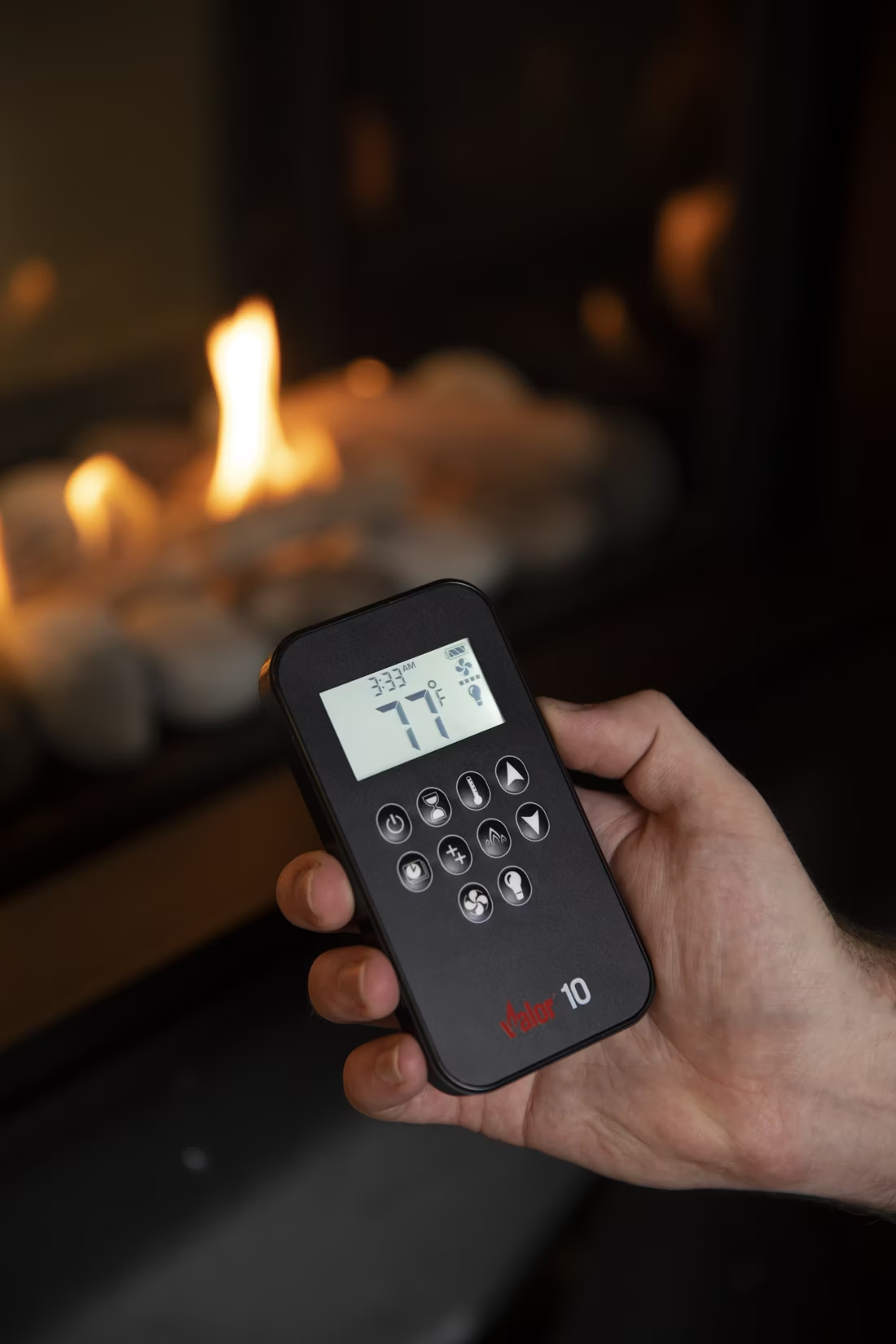
Most modern gas fireplaces will, which matters in a parish that occasionally sees ice storms take down power for days—as happened during the February 2021 winter storm across north Louisiana. Units with IPI (intermittent pilot ignition) run on a small battery backup that kicks in automatically when the power drops, so the fireplace still lights on demand. Valor fireplaces take a different approach: the pilot's thermocouple generates its own electricity, so there's no battery to replace or forget about at all. If backup heat during outages matters to you, ask your local dealer about the ignition system on any unit you're considering before you buy.
What's the difference between a gas fireplace, gas insert, and gas stove?
A gas fireplace is a fully built-in unit, framed into a wall—the right call for new construction or a remodel without an existing firebox. A gas insert slides into an existing masonry fireplace opening and uses your current chimney as the vent path, which is the common route for older Bossier Parish homes with a wood-burning fireplace they want to modernize. A gas stove is a freestanding cast-iron or steel unit that sits on the floor, similar in shape to a wood stove but running on gas—a good option if you want a stand-alone heat source in a room without a fireplace at all.
Do I need a permit to install a gas fireplace in Bossier Parish?
Yes. Inside Bossier City, permits for gas fireplace installations and any associated gas line work go through the city's building inspection department; in unincorporated parts of the parish—Haughton, Plain Dealing, and outlying areas—permitting runs through the Bossier Parish permits office. Gas line work specifically requires a licensed gas-fitter, which is one reason it pays to use an established hearth retailer rather than a general handyman: they coordinate the gas line, venting, and inspection sign-off as one job instead of leaving you to manage separate trades.
What's the difference between vented and vent-free gas fireplaces?
Vented (direct-vent) gas fireplaces pull combustion air from outside and exhaust it back outside through a sealed pipe—clean, code-compliant everywhere, and the most common choice for real heat output. Vent-free units burn directly into the room with no external venting, which makes them cheaper to install but releases some water vapor and combustion byproducts indoors. That's a bigger consideration in Bossier Parish than it might be elsewhere: this is a hot-humid climate zone 3A, and adding extra moisture from a vent-free unit into an already humid home can make indoor air feel stickier and, over time, contribute to condensation issues. Vent-free units are legal in Louisiana within room-size and ventilation limits, but most local dealers steer parish homeowners toward direct-vent models for that reason.
How often should my gas fireplace be serviced?
An annual inspection is the standard recommendation for any gas appliance, including direct-vent fireplaces and inserts. A technician checks the burner, pilot assembly, venting, and gas connections, and cleans the glass and interior—a much quicker job than a wood chimney sweep, but still important for safety and warranty coverage. Given how lightly most Bossier Parish units get used compared to colder climates, an annual check before the first cool snap of the season, usually late fall, is generally plenty.
Why would I choose gas over a wood-burning fireplace in Bossier Parish?
Wood heat just doesn't have the same role here that it does farther north. With an average winter low around 39 degrees and a very light winter heating load, Bossier Parish doesn't produce the sustained cold that makes cutting, stacking, and burning cordwood worthwhile as a heat strategy—most homes rely on central HVAC for the handful of genuinely cold weeks, with a fireplace used a few nights a season for ambiance rather than survival heat. Legacy masonry fireplaces built for oak, pecan, or cypress still exist across the parish, but many sit unused most of the year. A gas insert or log set gives you the same fireplace experience—flame, glow, warmth—without a woodpile, ash, or a chimney that needs sweeping for a firebox you might light six or eight times a winter.
Why is a fireplace insert so efficient?
An insert does two things: it seals the chimney completely, so you stop losing air you already paid to heat, and it radiates warmth into the room through the firebox and glass. Most add a heat-exchange fan that pulls cool room air underneath, wraps it around the hot firebox, and pushes it back out warm. Your home is more efficient before you've even lit the first fire.
Can I put a TV above my fireplace?
Yes—with an asterisk. Fireplaces are hot and TVs don't like heat. Either put a mantel between them to deflect rising warmth, or choose a fireplace with heat-management technology that creates a cool zone on the wall above—the wall stays around 125 degrees, barely warm, while the room still gets full heat. If you like clean lines and don't want a mantel, heat management is the answer.
Can a fireplace actually lower my heating bill?
Yes—by creating a comfort zone. A furnace heats every square foot of the house just to warm the one room you're in; a gas fireplace on low burns roughly a sixth of the gas a typical furnace does. Set the furnace around 55–60 degrees as a baseline, then heat the rooms your family actually uses. Families who heat this way commonly save $20–$60 a month.
How much should I budget for a fireplace?
For an average home—covering the fireplace, the vent pipe, and basic installation—a budget between $3,900 and $5,500 gives you a lot of options across wood, gas, and pellet. By the time you add finish work, gas line, and electrical, the average complete installation lands between $5,000 and $12,000 all-in. In a remodel or new build, a good rule is to put about 2.5% of the total project cost toward the fireplace.
Stove and Fireplace Dealers in Bossier County
Listings include WhyFire partner dealers, dealers we have verified as authorized for the brands we recommend, and established local businesses that carry hearth products. Every listing shows which one it is. The ones marked Preferred run on WhyFire's software, so they can show you real pricing and book your appointment right here. No manufacturer pays for placement. How we verify dealers →
Bradley Brick LLC
O'Neal Gas Inc.
Acme Brick
Custom-Bilt Cabinet & Supply
Fireplace Specialties
Hol-Mont Sales
Find the right gas fireplace for your Bossier Parish home.
Tell us a bit about your home and we'll match you with a trusted local Bossier Parish dealer and put together your free Project Guide & Parts List—the exact parts, including the vent kit, and the dealer we recommend for your gas fireplace project.
Find Your Fireplace →