
Instant Warmth for Baker's Mild Winter Nights.
A gas fireplace gives Baker homes clean, on-demand heat for cold snaps and hurricane-season outages, plus year-round ambiance. Find the right unit and connect with a trusted local dealer.
Every Project Starts From One of These Five Situations
Ambiance and backup heat for Gulf South winters.
Baker sits just north of Baton Rouge in East Baton Rouge Parish, in climate zone 2A with an average winter low near 42°F and a mild winter that's just a fraction of the heating a place like Duluth, MN sees in a single hard month. Furnaces here run a handful of weeks a year, and wood heat and pellet stoves aren't part of the local heating picture the way they are farther north. Gas fireplaces fill a different role: they add real, flip-of-a-switch warmth on the nights temperatures drop into the 30s, and they double as a dependable heat source when storms take out power.
That last point matters more here than in most places. Baker and the surrounding parish are squarely in hurricane country, and Entergy Louisiana and Dixie Electric Membership Corp customers both know what a multi-day outage after a summer storm—or an unusual freeze event like the one that hit the Gulf South in February 2021—looks like. A gas fireplace with a standing pilot or battery-backup ignition keeps working when the grid doesn't. Many older homes in Baker also have an existing open masonry fireplace built decades ago that rarely gets used for wood; converting it to a gas log set or insert is one of the most common upgrades local hearth dealers handle.
Three steps. No salesperson until you're ready.
Tell us about your project
Your zip code, your situation, and the fuel you're leaning toward—or let the answers point you to one.
See what's actually available
The brands dealers within 100 miles genuinely carry—real options, never a catalog mirage.
Get your dealer & Project Guide
A trusted local dealer, plus the free Project Guide & Parts List that names every component of the job.
Frequently Asked Questions
How much does a gas fireplace installation cost in Baker?
Most gas fireplace and insert installations in the Baker area run roughly $3,500 to $8,500, depending on whether you're converting an existing masonry fireplace, running new gas line, or installing a built-in unit in a room that's never had one. A gas log set placed in an existing wood-burning fireplace with a gas line already nearby is on the low end. New gas line runs, direct-vent installations through an exterior wall, or propane tank setups for homes outside natural gas service push toward the higher end. A local installer will give you a firm number after seeing your fireplace and gas access in person.
Can I convert my existing wood-burning fireplace to gas?
Yes, and it's the most common gas project in Baker. Because wood heat isn't really needed here given how mild the winters run, a lot of older masonry fireplaces sit unused most of the year. A gas log set or a sealed gas insert converts that fireplace into something you'll actually use—no ash, no chimney draft pulling conditioned air out of the house, and instant heat on the rare cold night. Log sets are the simplest and least expensive route; a full gas insert with glass doors offers more efficiency and a cleaner look. Either way, your installer will check the flue and firebox condition before recommending which fits your fireplace.
Do I need natural gas, or should I plan on propane?
It depends on where in Baker you're located. Homes closer to town with natural gas service already run to the house are the simplest—your installer just taps into the existing line. Homes on the outer edges of East Baton Rouge Parish or in newer subdivisions without gas mains typically run on propane, either from a small exchange-style tank or a larger buried tank for whole-home use. Nearly every gas fireplace and insert on the market can be set up for either fuel; your installer configures the correct orifice and regulator for whichever you have.
Will a gas fireplace keep working during a power outage?
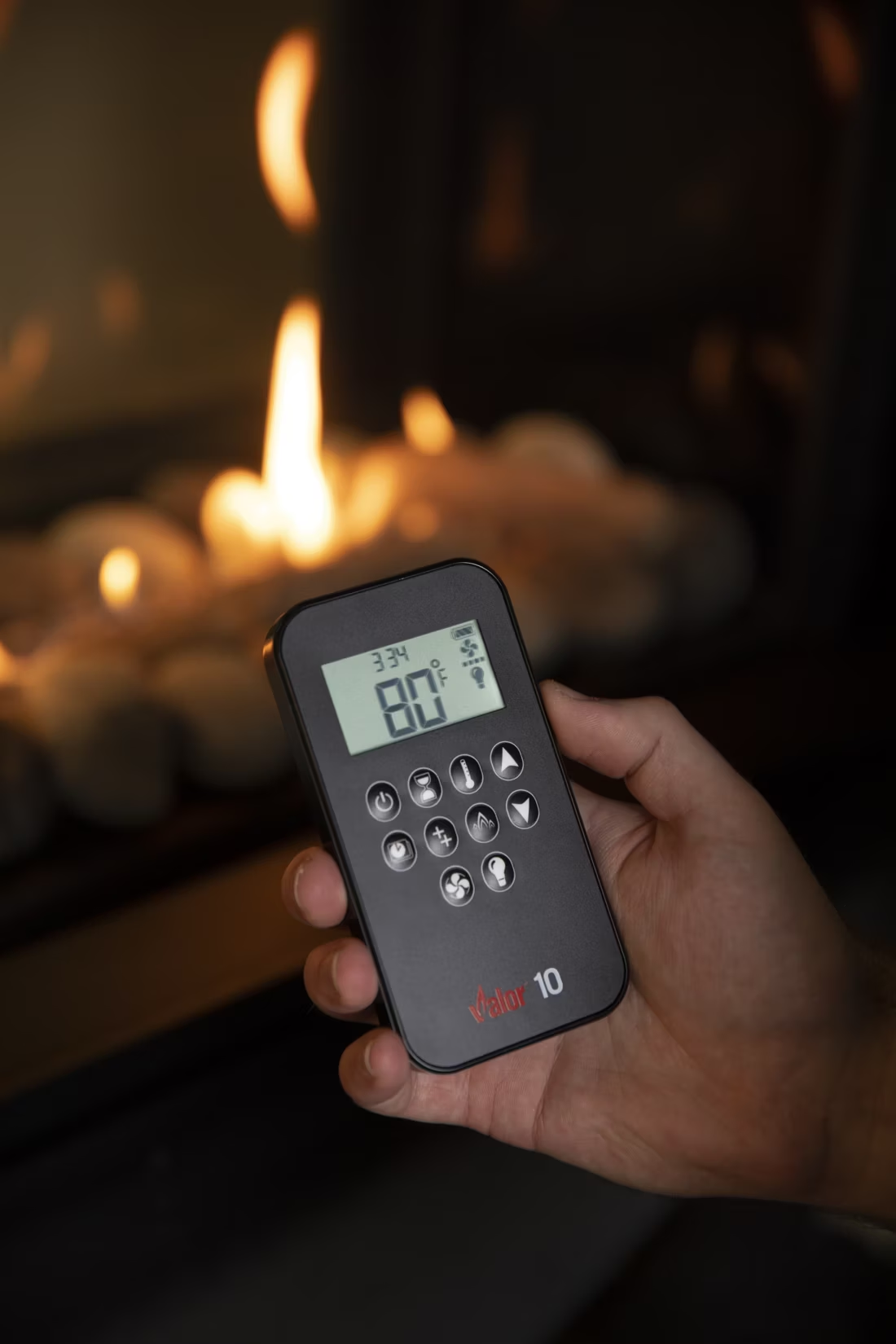
For a Baker homeowner, this is often the deciding factor. Standard electronic-ignition gas fireplaces need power to run their control board, so they go dark in an outage unless they include a battery backup. Units with a standing pilot, or with millivolt/IPI ignition and battery backup, will keep lighting on demand when Entergy or Dixie Electric service goes down after a summer storm—which happens most years in this part of Louisiana. Valor fireplaces take it a step further: their pilot generates its own electricity through the thermocouple, so there's no battery to remember to replace. Ask specifically about the ignition system before you buy if outage performance matters to you.
What's the difference between a gas fireplace, insert, and log set?
A gas log set is the simplest option—realistic ceramic logs placed inside your existing open masonry fireplace, either vented through your current chimney or, in some cases, vent-free. A gas insert is a sealed, high-efficiency unit that slides into that same masonry opening and uses the chimney as a vent path, delivering real usable heat rather than just ambiance. A gas fireplace is a fully built-in unit, framed into a wall, used for new construction or rooms without an existing fireplace. For most Baker homes with an older masonry fireplace that's rarely used, a log set or insert is the practical choice; new construction leans toward a built-in unit.
Do I need a permit to install a gas fireplace in Baker?
Yes. Gas fireplace installations require a building permit and gas permit through the East Baton Rouge Parish Permits and Inspections Department, which covers the city of Baker. Any new or extended gas line work has to be done by a licensed gas fitter and inspected before it's covered over or connected. Most established hearth dealers in the Baton Rouge area pull these permits as part of the installation, so you're not left coordinating the gas line, venting, and inspection separately.
Should I get a vented or vent-free gas fireplace in Baker's climate?
Vented (direct-vent) units draw combustion air from outside and exhaust it back outside, which keeps combustion byproducts and moisture out of the house—a real consideration in Louisiana's already humid climate, where extra indoor moisture from a vent-free unit can contribute to condensation and mold issues. Vent-free log sets and fireplaces are legal in Louisiana and popular for their lower installation cost, but they're best limited to occasional supplemental use in a properly sized room, not all-day operation. For a room that will see regular use, most local dealers steer Baker homeowners toward a direct-vent unit.
How often should a gas fireplace be serviced?
Plan on an annual inspection, ideally in early fall before the first cool nights. A technician checks the burner, pilot assembly, gas connections, and glass seal, and cleans out any dust, insect nests, or debris that built up over a long, humid Louisiana summer—a bigger issue here than in drier climates, since gas lines and vent terminations left idle for months can attract wasps and other insects. Local gas appliance service techs typically charge $125 to $200 for a standard inspection and cleaning.
Gas vs. electric fireplace—which makes more sense for a Baker home?
Given how mild winters are here, both are reasonable choices, but they solve different problems. A gas fireplace with battery-backup or standing-pilot ignition keeps producing real heat during the power outages that follow hurricane season storms—something an electric unit, which needs grid power to run at all, can't do. Electric fireplaces cost far less to install (often under $1,000), require no gas line or venting, and are simple to add to nearly any room, which makes them a good fit for supplemental ambiance in a bedroom or den. Entergy Louisiana and Dixie Electric residential rates run around 11 cents per kWh, so operating cost is low either way. For a primary living space where you want heat you can count on, gas tends to be the better long-term investment in this area.
Is my gas fireplace wasting gas?
If it was installed more than 15 years ago, probably. Older gas fireplaces keep a standing pilot light burning all the time, and that little flame can cost a couple hundred dollars a year. Newer models use pilot-on-demand ignition—the pilot lights only when you use the fireplace and goes out when you turn it off.
Why is my open fireplace making my house colder?
Open fireplaces suck—literally. As the fire burns, it consumes air your furnace already paid to heat and pulls it out through the chimney, so the house is actually colder after the fire goes out than before you lit it. An insert fixes this: it seals the chimney, puts fixed glass across the front, and turns that hole in your house into a real heat source.
Can a fireplace actually lower my heating bill?
Yes—by creating a comfort zone. A furnace heats every square foot of the house just to warm the one room you're in; a gas fireplace on low burns roughly a sixth of the gas a typical furnace does. Set the furnace around 55–60 degrees as a baseline, then heat the rooms your family actually uses. Families who heat this way commonly save $20–$60 a month.
Does a fireplace add value to my home?
On average, a fireplace adds back to the home about the same amount you spent installing it. Add the monthly savings from heating the rooms you actually use instead of the whole house—often hundreds of dollars a year—and the value case is strong before you even count what a fire does for how your family uses the room.
Nearby Dealers
Hearth shops serving Baker and the surrounding area. Every listing shows whether it is a WhyFire partner, a dealer we have verified as authorized for the brands we recommend, or a local business carrying hearth products. No manufacturer pays for placement. How we verify dealers →
Area – Baton Rouge, La
Acoustical Spec & Supply
Woodburners, Inc
Find your gas fireplace in Baker.
Tell us a bit about your home and we'll match you with the right gas fireplace, insert, or log set—and connect you with a trusted local dealer who can pull the permit and size the vent kit correctly.
Find Your Fireplace →