
Bring gas fireplace warmth to your Bayou-country home.
Assumption Parish sees mild winters with only a light winter heating load overall, so a gas fireplace here is mostly about ambiance and backup comfort—not survival heat. Find the right unit for your home in Napoleonville, Pierre Part, Belle Rose, or Bayou Corne, and connect with a trusted local dealer.
Every Project Starts From One of These Five Situations
Gas heat that suits Assumption Parish's short, mild winters.
Assumption Parish sits low in the Atchafalaya Basin and along Bayou Lafourche, in climate zone 2A—hot, humid, and rarely cold. Winter lows average around 42°F, and the parish has a very light winter heating load, a fraction of what a place like Duluth, Minnesota racks up in a single winter. Freezing nights are the exception here, not the rule, and snow is essentially unheard of in Napoleonville, Pierre Part, Belle Rose, or Bayou Corne.
That doesn't mean gas fireplaces don't have a place. Occasional Gulf-driven cold fronts still push overnight temperatures down enough to want real heat in a living room, and a direct-vent gas fireplace or insert delivers that instantly without the humidity and ash concerns that come with wood in this climate. Gas also holds an edge during hurricane season: many parts of the parish lost power for days after storms like Hurricane Ida, and a gas fireplace with a standing pilot or battery-backed ignition can keep a room warm and lit when the grid is down. Whether natural gas or propane makes sense for your home depends on where you sit in the parish—we help sort that out.
Three steps. No salesperson until you're ready.
Tell us about your project
Your zip code, your situation, and the fuel you're leaning toward—or let the answers point you to one.
See what's actually available
The brands dealers within 100 miles genuinely carry—real options, never a catalog mirage.
Get your dealer & Project Guide
A trusted local dealer, plus the free Project Guide & Parts List that names every component of the job.
Frequently Asked Questions
How much does a gas fireplace installation cost in Assumption Parish?
Most gas fireplace and insert installations in Assumption Parish run roughly $3,500 to $8,500, depending on the unit, whether you're converting an existing masonry fireplace or building new, and how far the gas line has to travel. Homes built on piers near Pierre Part or Bayou Corne—common in this flood-prone parish—sometimes add cost for running gas line under an elevated floor system rather than through a slab. A straightforward insert into an existing fireplace with gas already nearby sits at the low end; new construction with fresh line work and venting runs higher. A local dealer will give you a firm number after seeing your home.
Can I convert my wood-burning fireplace to gas?
Yes, and it's a common upgrade in Assumption Parish's older homes, including the historic properties around Napoleonville with original brick or cypress-mantled masonry fireplaces. A gas insert typically slides into the existing firebox, using a stainless liner run up the existing flue, and keeps the mantel and surround you already have. Expect the conversion to land in the same $3,500 to $8,000 range as a standalone insert install, with cost driven mainly by whether the home already has a gas line nearby or needs propane service added.
Should I use natural gas or propane for my fireplace?
It depends on where in Assumption Parish you're located. Natural gas lines reach some areas around Napoleonville and Belle Rose, but most of the parish—including Pierre Part, Bayou Corne, and the more rural stretches along Bayou Lafourche—runs on propane, delivered and stored in a tank on the property. Nearly every gas fireplace model on the market can be set up for either fuel; your installer just configures the correct orifice and regulator. If you're not sure which service reaches your address, a local dealer can check for you before you buy.
Will a gas fireplace still work if the power goes out?
Many will, which matters in a parish that regularly loses power for days after Gulf hurricanes like Ida. Units with intermittent pilot ignition (IPI) run on battery backup and light on demand even with the grid down, as long as the batteries are fresh. Standing-pilot models with millivolt ignition go a step further—they generate their own electricity from the pilot flame and need no batteries at all, which is worth asking about if hurricane-season reliability is a priority for your household.
What's the difference between a gas fireplace, insert, and stove?
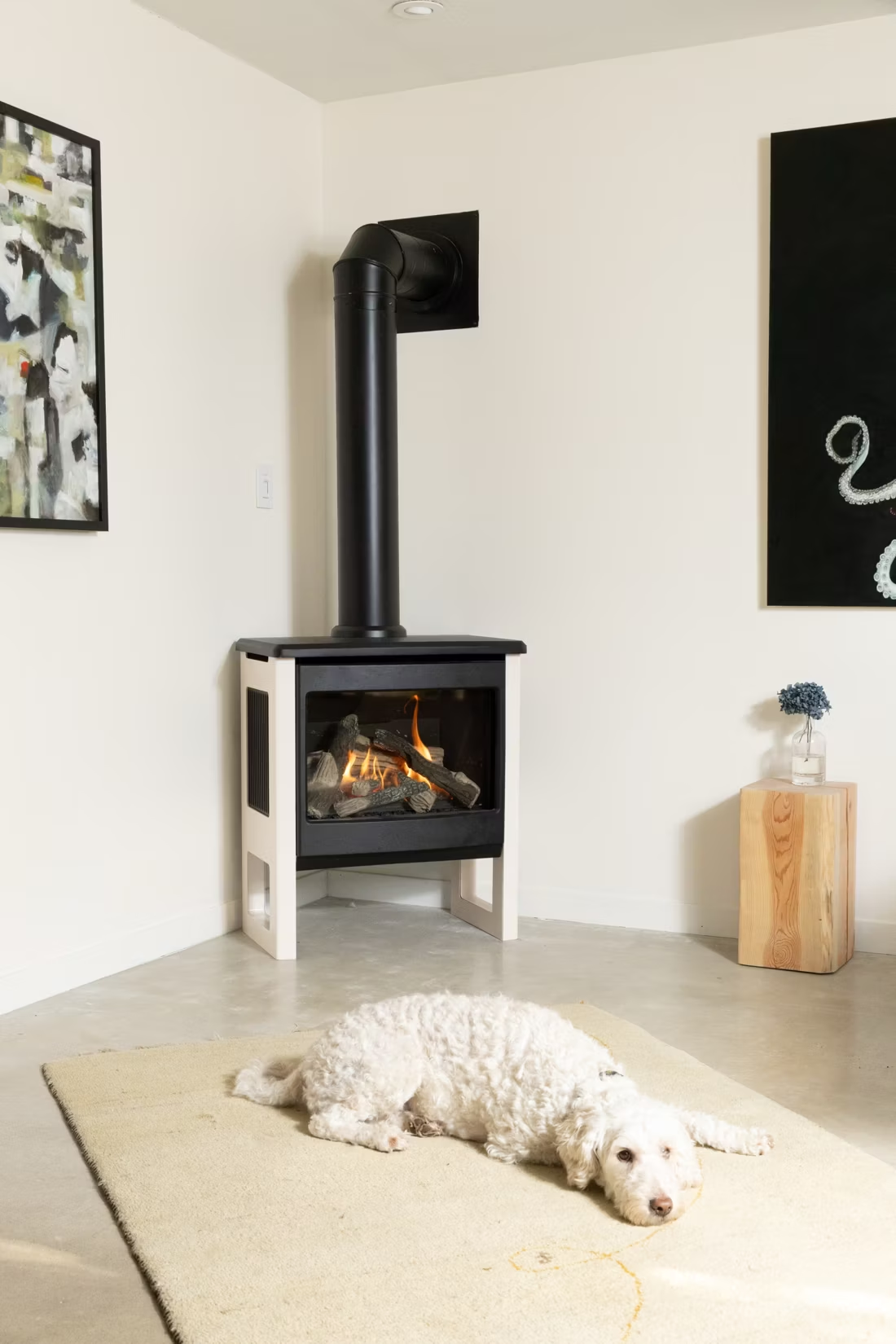
A gas fireplace is a fully built-in unit framed into a wall, typically chosen for new construction or a remodel. A gas insert drops into an existing masonry fireplace—the more common route for older homes around Napoleonville with an existing chimney and hearth. A gas stove is a freestanding cabinet unit that sits on the floor, which works well in camps and cabins around Pierre Part and Bayou Corne where there's no existing fireplace to build around. Most Assumption Parish homeowners upgrading an existing fireplace land on an insert; new rooms and camps often go with a stove or built-in unit instead.
Do I need a permit to install a gas fireplace in Assumption Parish?
Yes—a building permit and gas line permit are required for a new gas fireplace installation, handled through the parish's permitting office. Because much of Assumption Parish sits in a FEMA flood zone, homes built on piers may also need the gas line and appliance placement reviewed against elevation requirements. Most hearth dealers who work regularly in the parish handle this paperwork as part of the installation, so you're not coordinating it yourself.
Should I choose a vented or vent-free gas fireplace?
Vented, direct-vent units are the better fit for Assumption Parish's already-humid climate. Vent-free fireplaces burn without any outside venting and release water vapor and combustion byproducts straight into the room—in a climate zone 2A home that's fighting humidity and mold most of the year anyway, that's an unnecessary addition. Direct-vent units draw combustion air from outside and exhaust it back out, keeping your indoor air quality unaffected. Vent-free models are legal in Louisiana, but most local dealers steer Gulf Coast customers toward direct-vent for this reason.
How often does a gas fireplace need to be serviced?
Plan on an annual inspection, ideally before the first cold front of the season rolls through in November or December. A technician checks the burner, pilot assembly, gas connections, and venting, and cleans the glass. It's a lighter lift than chimney sweeping for a wood unit—usually $150 to $250—but skipping it is still the most common cause of pilot and ignition problems down the line.
Why gas instead of wood or a pellet stove in Assumption Parish?
Wood-burning fireplaces and pellet stoves are uncommon here for a simple reason: with such a light winter heating load and winter lows averaging 42°F, there's rarely enough sustained cold to justify a fuel that has to be stocked, hauled, and tended. A handful of homeowners keep a wood-burning fireplace for atmosphere, occasionally burning local oak, pecan, or cypress on the rare cold night, but almost nobody heats a home with wood or pellets in this parish. Gas and electric fireplaces cover the actual use case here—instant ambiance and warmth on the handful of nights you want it, with gas adding real heat output and electric offering the simplest, ventless install for homes where running a gas line is impractical.
Can I put a TV above my fireplace?
Yes—with an asterisk. Fireplaces are hot and TVs don't like heat. Either put a mantel between them to deflect rising warmth, or choose a fireplace with heat-management technology that creates a cool zone on the wall above—the wall stays around 125 degrees, barely warm, while the room still gets full heat. If you like clean lines and don't want a mantel, heat management is the answer.
Are new gas fireplaces really better than old ones?
Two ways, and they're both big. Looks: modern gas fireplaces are realistic enough that it's hard to believe they aren't burning wood. Cost: old units burn a standing pilot year-round (roughly $200 a year), while new ones use pilot-on-demand ignition and modern burners. Add remote controls and thermostat operation, and the day-to-day experience isn't close.
Can I install a fireplace myself?
If you're putting a fire in your house on purpose, it's best to work with an expert. Unless you're genuinely experienced in framing, gas line, vent pipe, and the national code on clearances to combustibles, have a professional do it—and ideally the same company that sells you the fireplace, so warranty, service, and liability all live under one roof.
What is an in-home preview and do I need one?
It's a visit where a hearth professional measures your space, confirms the model you picked actually works in your home, and walks the specs—framing, gas line, venting, finish work—before anything is ordered. Some details you just can't know until you see the house. Never make a down payment without one; it's the single most-skipped step that burns buyers.
Find your gas fireplace in Assumption Parish.
Tell us a bit about your home and we'll match you with a trusted local dealer and send over a free Project Guide & Parts List—the exact parts, vent kit, and recommended installer for your gas fireplace project in Assumption Parish.
Find Your Fireplace →