
Instant heat for your Woodford County home—no chimney sweep required.
From the historic homes of Versailles and Midway to the horse farms out along Pisgah Pike, gas heat is the low-maintenance answer for Woodford County's mild but real winters. Find the right unit and connect with a trusted local dealer.
Every Project Starts From One of These Five Situations
Steady heat for Bluegrass horse farms and historic homes.
Woodford County sits in the heart of the Bluegrass, home to Versailles, Midway, and some of the oldest thoroughbred breeding farms and bourbon distilleries in Kentucky—Woodford Reserve is made a few miles from downtown Versailles. The climate here (Zone 4A, mixed-humid) is milder than the upper Midwest: an average winter low of 25°F and about 4,640 heating degree days a year, roughly two-thirds of what a place like Buffalo, NY logs in a typical winter. Winters are real enough to need heat every day for a few months, but short enough that most homeowners here prioritize convenience over the ritual of tending a wood fire.
Many Woodford County homes—especially the older farmhouses and historic properties around Versailles and Midway—already have a masonry fireplace built decades ago for burning the oak, hickory, and maple common to this part of the state. Converting that existing fireplace to a gas insert keeps the look while eliminating the ash, creosote, and wood stacking. Natural gas service reaches Versailles and Midway; outside those areas, on the working horse farms and rural acreage that make up much of the county, propane is the standard fuel, delivered and stored in a tank on the property. Either way, a gas fireplace gives you heat at the flip of a switch, with no air quality concerns in this county to worry about when it comes to burn restrictions.
Three steps. No salesperson until you're ready.
Tell us about your project
Your zip code, your situation, and the fuel you're leaning toward—or let the answers point you to one.
See what's actually available
The brands dealers within 100 miles genuinely carry—real options, never a catalog mirage.
Get your dealer & Project Guide
A trusted local dealer, plus the free Project Guide & Parts List that names every component of the job.
Frequently Asked Questions
How much does a gas fireplace installation cost in Woodford County?
Most gas fireplace installations in Woodford County run between roughly $3,500 and $9,000, depending on the unit, whether you're converting an existing masonry fireplace or building new, and whether gas line work is required. A direct-vent insert into an existing fireplace with gas already run to the room sits toward the lower end. New construction or a remodel that requires framing, venting, and a fresh gas line—common on some of the older farmhouses around Midway and Versailles that were never plumbed for gas—runs higher. Homes on propane that need a new tank set will also see costs toward the top of that range. A local dealer will give you a firm number after seeing the space.
Can I convert my existing wood fireplace to gas?
Yes, and it's a common project in this county's older homes. Many houses in and around Versailles and Midway have a masonry fireplace originally built for burning local oak or hickory, and a gas insert can be fitted into that existing opening using a stainless liner run up the current chimney. This typically runs $4,000 to $8,000 depending on the insert, whether you're on natural gas or propane, and whether the flue needs relining. It keeps the mantel and hearth you already have while giving you push-button heat instead of a wood pile on the back porch.
Do I need natural gas, or can I use propane?
Either works, and which one you use largely comes down to where in the county you live. Natural gas service reaches Versailles and Midway, so homes in those areas with an existing gas water heater or furnace can usually add a fireplace with minimal extra line work. Out on the county's horse farms and rural roads, propane is the standard—a tank on the property feeds the fireplace along with any other propane appliances. Most gas fireplace models can be set up for either fuel; your installer selects the correct orifice and regulator for the one you have.
Will my gas fireplace work if the power goes out?
Most modern gas fireplaces will. Units with an IPI (intermittent pilot ignition) system run off a small battery backup that kicks in automatically when the power drops, so the fireplace still lights on demand—just remember to keep fresh batteries in it. A few manufacturers, notably Valor, use a pilot-generated electrical system that needs no batteries at all. For Woodford County's ice-storm season, when rural power lines can stay down for a day or two, that battery-free option is worth asking your local dealer about.
What's the difference between a gas fireplace, gas insert, and gas stove?
A gas fireplace is a fully built-in unit framed into a wall—the right call for new construction or a remodel without an existing hearth. A gas insert slides into an existing masonry fireplace opening and uses the current chimney as its vent path, which suits Woodford County's older homes well. A gas stove is a freestanding unit that sits on the floor, similar in footprint to a wood stove, and works in a room without any existing fireplace. For most historic homes around Versailles and Midway with a fireplace already in place, an insert is the straightforward upgrade.
Do I need a permit to install a gas fireplace in Woodford County?
Yes—a building permit is required for gas fireplace installations through the Woodford County building permit office, and the gas line connection itself needs to be run or inspected by a licensed gas-fitter. Most established hearth dealers handle the paperwork for you as part of the installation, coordinating the gas line, venting, and inspection so you're not managing separate trades yourself. Rural propane installations also require the tank to be set and connected according to state fire code.
What's the difference between vented and vent-free gas fireplaces?
Vented (direct-vent) fireplaces pull combustion air from outside and exhaust it back outside through a sealed pipe—they're the standard choice and produce real, sustained heat. Vent-free units burn gas directly into the room without outside venting; they're legal in Kentucky but come with strict room-size and ventilation requirements, plus an oxygen depletion sensor. For most Woodford County homes, direct-vent units are the more common recommendation because they don't put any combustion byproducts into the living space—worth discussing with a local dealer if you're weighing a vent-free option for a smaller room.
How often should my gas fireplace be serviced?
Plan on an annual inspection, ideally before the heating season starts each fall. A technician checks the burner, pilot assembly, gas connections, and venting, and cleans the glass and interior. It's a much lighter service than sweeping a wood chimney, but skipping it is how pilot and ignition problems go unnoticed until the first cold night. Local gas appliance service providers in the county typically charge in the $150–$250 range for this visit.
Gas vs. wood—which fits my Woodford County home?
Wood is still very much part of the landscape here—the Daniel Boone National Forest issues cutting permits for around $20 a cord during the May-to-October season, and oak, hickory, maple, and cherry are all common locally. But with a comparatively mild climate (4,640 heating degree days and winter lows averaging 25°F) and no local air quality restrictions pushing people toward cleaner-burning appliances, plenty of Woodford County homeowners simply prefer the convenience of gas—no hauling wood, no ash, no chimney creosote to manage. If you already have an old wood-burning fireplace and mainly want reliable, low-effort heat in your main living space, gas is usually the better fit; if you want a backup heat source that works without electricity, wood still has the edge.
Can I put a TV above my fireplace?
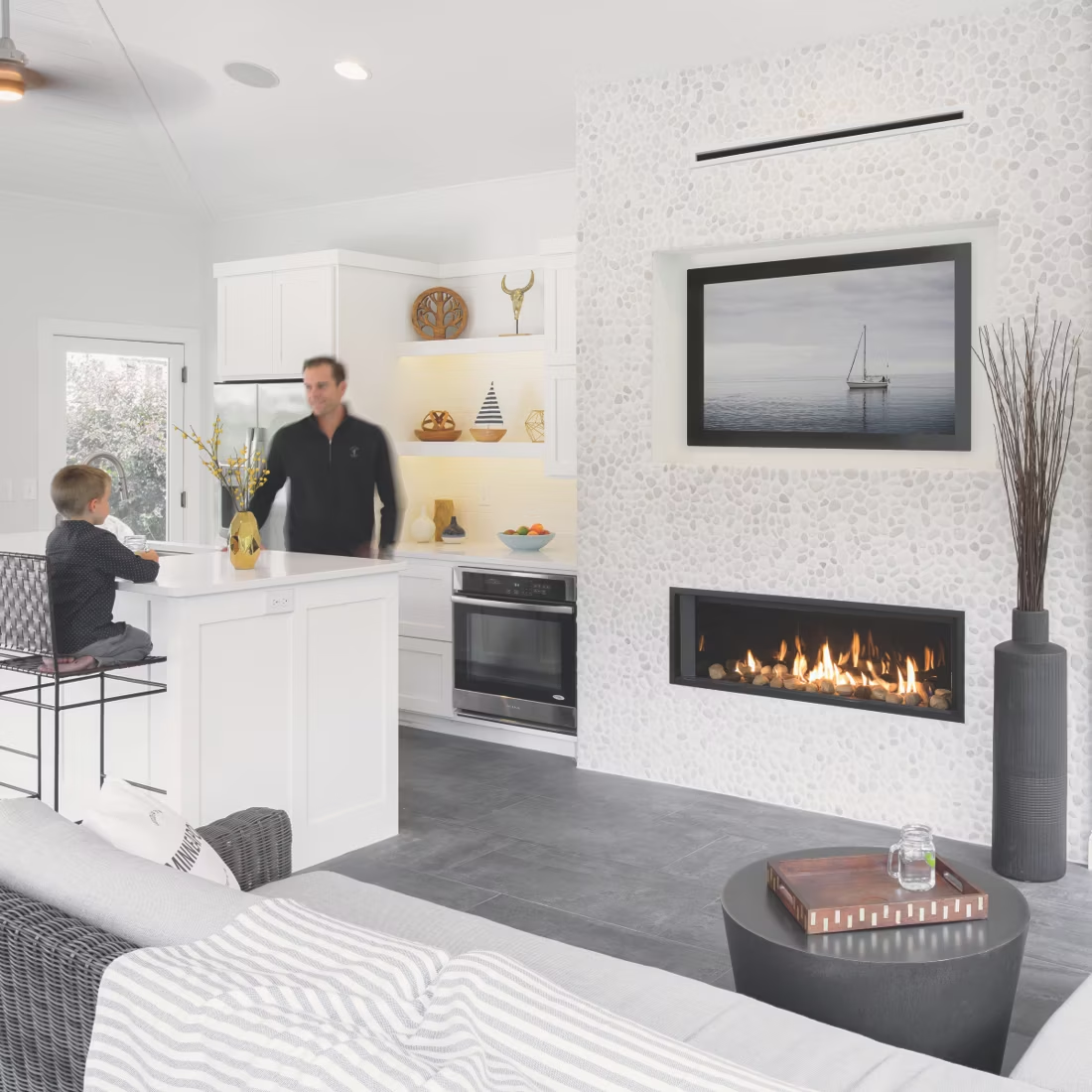
Yes—with an asterisk. Fireplaces are hot and TVs don't like heat. Either put a mantel between them to deflect rising warmth, or choose a fireplace with heat-management technology that creates a cool zone on the wall above—the wall stays around 125 degrees, barely warm, while the room still gets full heat. If you like clean lines and don't want a mantel, heat management is the answer.
What's the difference between radiant and convective fireplace heat?
Most fireplaces are a thin metal box—they heat fine, but you rely on the fan to move the warmth into the room. Radiant models use a thick cast-ceramic firebox, about an inch and a quarter thick, that soaks up the fire's heat and radiates roughly 25–30% more warmth into the room with no fan running. If you watch TV in the same room or want heat in a power outage, radiant is worth asking about.
What is an in-home preview and do I need one?
It's a visit where a hearth professional measures your space, confirms the model you picked actually works in your home, and walks the specs—framing, gas line, venting, finish work—before anything is ordered. Some details you just can't know until you see the house. Never make a down payment without one; it's the single most-skipped step that burns buyers.
How much should I budget for a fireplace?
For an average home—covering the fireplace, the vent pipe, and basic installation—a budget between $3,900 and $5,500 gives you a lot of options across wood, gas, and pellet. By the time you add finish work, gas line, and electrical, the average complete installation lands between $5,000 and $12,000 all-in. In a remodel or new build, a good rule is to put about 2.5% of the total project cost toward the fireplace.
Get your Woodford County gas fireplace project matched with a local dealer.
Tell us about your home—in Versailles, Midway, or out on the farm—and we'll send you a free Project Guide & Parts List: the right gas fireplace or insert, the exact parts including the vent kit, and a trusted local dealer who can install it correctly.
Find Your Fireplace →