
Real fireplace ambiance for Warren County homes—no chimney required.
From downtown Bowling Green bungalows to new-build subdivisions off Cave Mill Road, electric fireplaces give Warren County homeowners instant zone heat and a real flame look without venting, gas lines, or masonry work. Find the right unit and connect with a trusted local dealer.
Every Project Starts From One of These Five Situations
Warren County's mild winters make electric an easy fit.
Warren County sits in climate zone 4A with a moderate heating season and an average winter low near 28°F—a mixed-humid climate that's noticeably gentler than the northern-tier winters where wood or high-output gas is a necessity. Most homes here already carry the heating load with a heat pump or central HVAC system, which is exactly the scenario where an electric fireplace shines: it's not meant to heat the whole house, it's meant to add real ambiance and supplemental warmth to the room you're actually sitting in, whether that's a WKU-area rental, a historic home near downtown Bowling Green, or a new build out toward Plum Springs.
Bowling Green Municipal Utilities (BGMU) and Warren Rural Electric Cooperative Corporation (WRECC) both serve reliable power throughout the county, which is really all an electric fireplace needs—no gas line, no flue, no annual chimney sweep. That makes electric especially popular in older downtown homes where the original masonry chimney is deteriorating or was removed decades ago, in condos and apartments near campus where venting isn't an option at all, and in finished basements and additions where running new gas or solid-fuel venting would be impractical. A plug-in unit needs nothing more than a standard outlet; a built-in unit typically needs a dedicated circuit run by a licensed electrician.
Three steps. No salesperson until you're ready.
Tell us about your project
Your zip code, your situation, and the fuel you're leaning toward—or let the answers point you to one.
See what's actually available
The brands dealers within 100 miles genuinely carry—real options, never a catalog mirage.
Get your dealer & Project Guide
A trusted local dealer, plus the free Project Guide & Parts List that names every component of the job.
Frequently Asked Questions
How much does an electric fireplace installation cost in Warren County?
A plug-in electric insert or freestanding unit runs $300 to $1,200 installed, since it typically just needs an existing outlet—the bulk of the cost is the unit itself. A built-in electric fireplace wired to a dedicated circuit, set into a wall or custom surround, runs closer to $1,500 to $3,500 once you factor in the electrician's time, framing, and any mantel or tile work. Homes in older parts of Bowling Green with dated electrical panels sometimes need panel or circuit upgrades first, which adds to the total. Local dealers will give you a firm number after seeing the space.
How much of a room will an electric fireplace actually heat?
Most electric fireplaces are rated for 400 to 1,000 square feet of supplemental heat, which fits how they're typically used in Warren County—as zone heat for a living room, den, or basement rec room while your heat pump or furnace handles the rest of the house. With a winter low average around 28°F here, that supplemental role covers the vast majority of cold nights without needing anything more aggressive. If you're hoping to heat a larger open floor plan or an entire addition, talk to a local dealer about a larger insert or a second unit rather than oversizing a single fireplace beyond its rated coverage.
Do I need an electrician to install an electric fireplace?
For a simple plug-in unit, no—it plugs into a standard 120-volt outlet like any appliance. For a built-in electric fireplace or one wired directly into a wall, yes, you'll want a licensed electrician to run a dedicated circuit, since most built-in units draw close to the maximum a standard household circuit can handle. The local dealers who sell built-in units in Warren County typically coordinate the electrical work as part of the install, which keeps you from having to manage a separate contractor and ensures the circuit is sized correctly the first time.
What's the difference between an electric fireplace, insert, and stove?
An electric fireplace is usually a built-in unit set into a wall or surround, designed to look like a traditional fireplace opening. An electric insert is sized to slide into an existing masonry firebox—a common choice for older Warren County homes with a fireplace that no longer gets used for wood burning. An electric stove is a freestanding cabinet-style unit that mimics a wood or gas stove and can go virtually anywhere with an outlet. For homes with an existing but unused masonry fireplace downtown, an insert is usually the simplest upgrade; for new construction or a room without a fireplace at all, a built-in or stove is the better fit.
Do I need a permit to install an electric fireplace in Warren County?
A simple plug-in unit generally doesn't require a permit since no new wiring or structural work is involved. A built-in unit that requires a new dedicated circuit typically does need an electrical permit, coordinated through the appropriate local building department—Warren County's for unincorporated areas, or the City of Bowling Green for properties within city limits. Most local dealers who install built-in units handle this paperwork as part of the job, so you're not left tracking it down yourself.
What's the best electric fireplace for a Warren County home?
Given the mild winters here, the priority for most Warren County buyers is realistic flame appearance and even supplemental heat output rather than maximum BTU. Models from Dimplex and Napoleon with LED flame technology and adjustable heat settings are popular choices for living rooms and basement dens, since you can run the flame effect without the heater on during Bowling Green's milder shoulder-season evenings, then add heat on the colder nights when the average low dips into the upper 20s. For an older home's existing masonry firebox, an insert-style unit from the same brands fits cleanly without altering the fireplace's appearance.
How much does it cost to run an electric fireplace day to day?
Most electric fireplaces draw around 1,500 watts on the heat setting, which works out to roughly 15 cents an hour at typical Warren County electric rates through BGMU or WRECC—a few dollars for an evening of use. Running just the flame effect without heat costs only a fraction of that, since the LED lighting draws very little power. That low running cost, combined with zero venting or fuel deliveries, is a big part of why electric has become such a common supplemental-heat choice in newer Warren County construction.
Electric vs. gas fireplace—which is right for my home?
Gas delivers more heat output and a closer-to-real flame, but it requires a gas line or propane tank and, for most installs, venting—a bigger project and a bigger cost. Electric needs only power, so it installs in places gas can't reach at all: a condo near WKU, an interior basement wall, an apartment, or a home where running gas line simply isn't practical. For Warren County's moderate winters, where most homes lean on central HVAC and a fireplace is really about ambiance plus a boost of warmth on the coldest nights, electric often covers the need without the added infrastructure gas requires. Homes wanting a stronger primary heat source in a main living space sometimes still prefer gas.
Electric vs. wood fireplace—which is right for my home?
Warren County has plenty of oak, hickory, maple, and cherry available for wood burning, and wood remains a legitimate choice for homeowners who want real heat output during a power outage or simply prefer tending a fire. But wood means chimney maintenance, ash cleanup, and sourcing or seasoning firewood. Electric skips all of that—no venting, no creosote, no permit hassle for a plug-in unit—at the cost of not producing heat if the power goes out. Given how mild Warren County winters typically run, most homeowners choosing between the two are picking electric for its simplicity and low upkeep rather than needing wood's raw BTU output.
Can I put a TV above my fireplace?
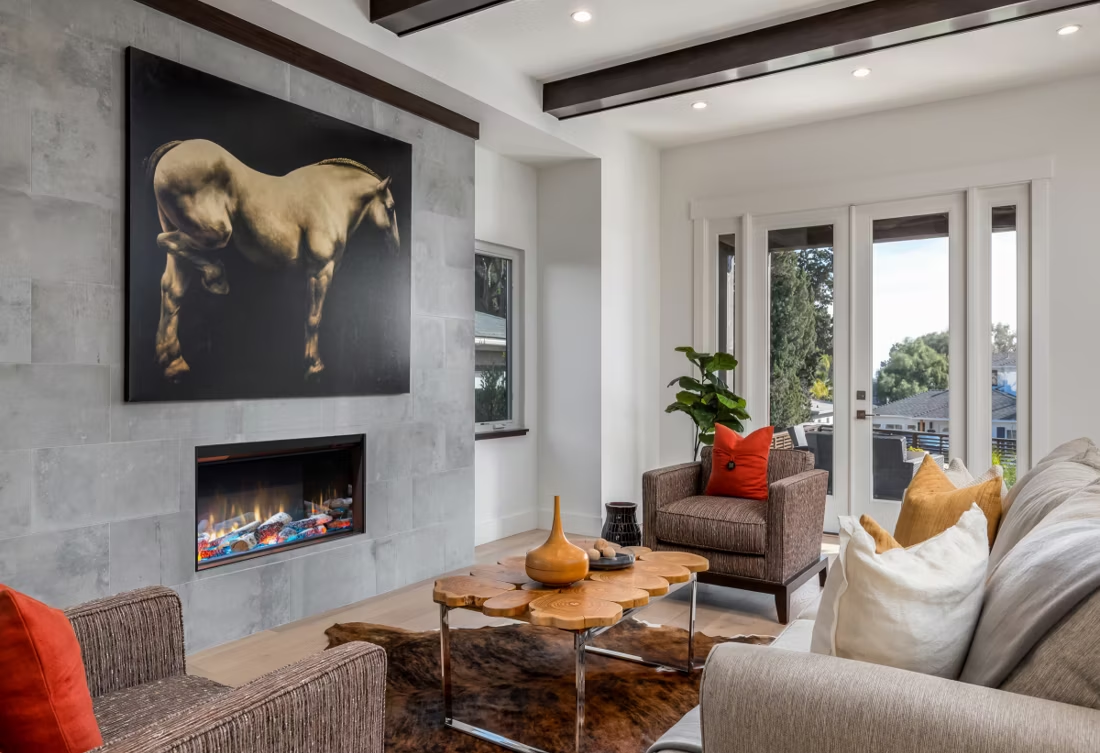
Yes—with an asterisk. Fireplaces are hot and TVs don't like heat. Either put a mantel between them to deflect rising warmth, or choose a fireplace with heat-management technology that creates a cool zone on the wall above—the wall stays around 125 degrees, barely warm, while the room still gets full heat. If you like clean lines and don't want a mantel, heat management is the answer.
Does an electric fireplace need a vent or chimney?
No—that's its superpower. An electric fireplace needs a wall and an outlet, period. No vent pipe, no gas line, no clearances to design around, which is why it works in bedrooms, offices, apartments, and walls where venting a gas or wood unit would be impractical or impossible. Installation is typically the simplest and least expensive of any fireplace type.
Can a fireplace actually lower my heating bill?
Yes—by creating a comfort zone. A furnace heats every square foot of the house just to warm the one room you're in; a gas fireplace on low burns roughly a sixth of the gas a typical furnace does. Set the furnace around 55–60 degrees as a baseline, then heat the rooms your family actually uses. Families who heat this way commonly save $20–$60 a month.
Can I install a fireplace myself?
If you're putting a fire in your house on purpose, it's best to work with an expert. Unless you're genuinely experienced in framing, gas line, vent pipe, and the national code on clearances to combustibles, have a professional do it—and ideally the same company that sells you the fireplace, so warranty, service, and liability all live under one roof.
Stove and Fireplace Dealers in Warren County
Listings include WhyFire partner dealers, dealers we have verified as authorized for the brands we recommend, and established local businesses that carry hearth products. Every listing shows which one it is. The ones marked Preferred run on WhyFire's software, so they can show you real pricing and book your appointment right here. No manufacturer pays for placement. How we verify dealers →
Mr. Fireplace
31W-Bowling Green
Allen County Farmer's Service
Find your electric fireplace in Warren County.
Tell us a bit about your home and we'll put together a free Project Guide & Parts List—the right unit, the circuit and surround specs, and a trusted local Warren County dealer to install it.
Find Your Fireplace →