
Add electric heat in Trimble County—no chimney, no gas line, no fuss.
For the homes and rentals scattered between Bedford, Milton, and Ghent along the Ohio River, an electric fireplace or insert adds real zone heat without a mason, a gas fitter, or a building permit fight. Find the right unit and get matched with a trusted local dealer.
Every Project Starts From One of These Five Situations
Electric fireplaces fit Trimble County's smaller homes and rental properties.
Trimble County is home to fewer than a thousand residents spread across Bedford, the county seat, and the small river communities of Milton, Wises Landing, and Ghent—the last of which also happens to host Kentucky Utilities' Ghent Generating Station, one of the largest power plants in the state. Despite sitting next door to that much generating capacity, most homes here still don't have a natural gas line, and plenty are older farmhouses, single-wides, or seasonal river cottages without a masonry chimney to work with. Climate zone 4A means winters here are mixed-humid and moderate—cold snaps into the teens, occasional ice, but nothing close to what a place like Fargo, North Dakota deals with every winter. That combination of no gas access, older housing stock, and a climate that doesn't demand 24/7 primary heat is exactly where electric fireplaces earn their place.
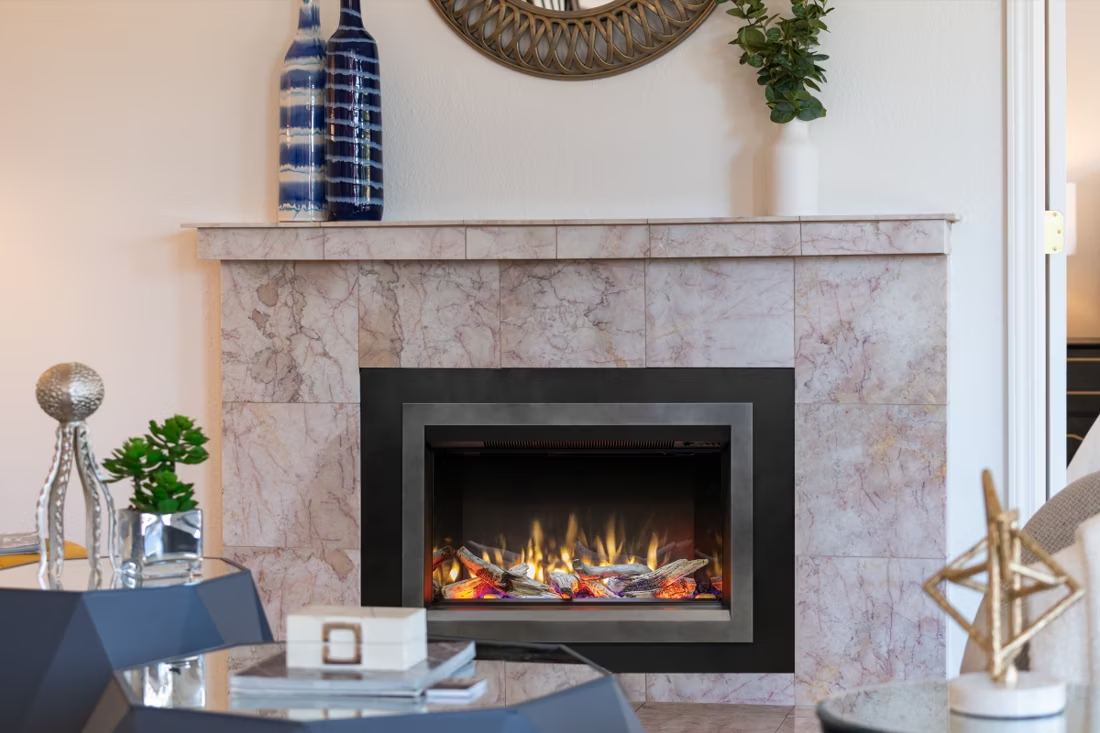
An electric fireplace or insert plugs into a standard 120-volt outlet (smaller units) or runs on a dedicated 240-volt circuit (larger built-ins), which means no venting, no combustion permit, and installation that a Kentucky Utilities-served home can usually complete in an afternoon. For Trimble County's rental units, mobile homes, and river cottages that see occasional use, that simplicity matters more than raw BTU output. Wood remains part of the picture for county residents working the local oak, hickory, maple, and cherry stands, but for a guest room, a converted porch, a landlord adding value to a rental, or a homeowner who just wants supplemental warmth without touching the chimney, electric is a straightforward, honest fit—not a compromise.
Three steps. No salesperson until you're ready.
Tell us about your project
Your zip code, your situation, and the fuel you're leaning toward—or let the answers point you to one.
See what's actually available
The brands dealers within 100 miles genuinely carry—real options, never a catalog mirage.
Get your dealer & Project Guide
A trusted local dealer, plus the free Project Guide & Parts List that names every component of the job.
Frequently Asked Questions
How much does an electric fireplace installation cost in Trimble County?
Plug-in electric fireplace inserts and stoves in Trimble County typically run $400 to $1,200 installed, since most units need nothing more than an existing 120-volt outlet and a hearth-pad or mantle surround. Larger built-in electric fireplaces that require a dedicated 240-volt circuit run higher—usually $800 to $2,000 once an electrician runs new wiring—but that's still well below the cost of a wood or gas installation with venting and permitting involved. Homes in Bedford or along Highway 42 with existing electrical panel capacity tend to land on the lower end; older farmhouses or river cottages near Milton and Wises Landing that need panel upgrades will run higher.
Does my electric fireplace need special wiring?
It depends on the unit. Most freestanding electric stoves and smaller inserts (under 1,500 watts) run fine on a standard 120-volt household outlet—no electrician required, just plug it in. Larger built-in electric fireplaces, especially ones rated for whole-room heating, often call for a dedicated 240-volt circuit, which does require a licensed electrician and, in most cases, a permit through Trimble County's building office. Before buying, check the unit's voltage and amperage requirements against your home's panel—an older Trimble County farmhouse with a 100-amp panel may need an upgrade before a larger unit will work safely.
Do electric fireplaces actually put out real heat?
Yes, within limits. Most electric fireplace inserts and stoves are rated between 4,000 and 5,000 BTUs and can comfortably heat a single room of 300 to 400 square feet—enough to take the chill off a living room, guest bedroom, or converted porch in Trimble County's zone 4A winters. What they won't do is replace central heat for an entire house the way a whole-home furnace or a properly sized wood stove can. Think of electric as zone heat: it warms the room you're in efficiently and on demand, which is exactly why it works well for supplemental heat in a Bedford ranch home or a rental unit near Milton where you're only heating occupied space.
Will my electric fireplace work during a power outage?
No—electric fireplaces require grid power to run the heating element and fan, so they go dark the moment the power does. For Trimble County residents near the Ohio River who occasionally see outages from ice storms or summer thunderstorms, that's worth planning around if you're relying on the fireplace for backup heat. If outage resilience matters to you, a wood stove burning local oak or hickory is the better backup option; if you're adding electric purely for supplemental warmth and ambiance in a home that already has a primary heat source, the outage limitation is a non-issue.
What's the difference between an electric insert and an electric log set?
An electric insert is a self-contained unit designed to slide into an existing fireplace opening, complete with its own heating element, fan, and flame-effect display—it converts an old, unused masonry fireplace into a functioning heat source. An electric log set is simpler: a decorative log arrangement with a flame effect, sometimes with a small heater built in, meant to sit inside a fireplace opening mostly for looks rather than heat output. For Trimble County homes with an existing but unused wood fireplace, an insert is the better choice if you actually want warmth from the space; a log set is the right call if you just want the fireplace to look lit without functioning as a heat source.
Do I need a permit to install an electric fireplace in Trimble County?
Generally no—a plug-in electric fireplace or stove that uses an existing 120-volt outlet doesn't require a building permit in Trimble County since there's no venting or gas work involved. If you're having a 240-volt circuit installed for a larger built-in unit, the electrical work itself needs to meet code, and your electrician will typically pull the permit through the county's building office as part of the job. Either way, it's far less permitting friction than a wood stove installation, which requires code inspection for clearances and chimney venting.
What's the best electric fireplace for a Trimble County home?
For most Trimble County homes, a mid-size electric insert (750-1,500 watts) with adjustable heat and a realistic LED flame effect covers the two things people actually want: supplemental warmth in a single room and a fireplace that looks good even when the heater is off. In older Bedford and Milton homes with existing but unused masonry fireplaces, an insert that slides into that opening is the cleanest option. In newer builds or mobile homes without a fireplace opening, a freestanding electric stove or wall-mounted unit works just as well without any structural changes. A local dealer can walk you through wattage and sizing for your specific room.
Electric vs. wood—which is right for my Trimble County home?
Wood, using local oak, hickory, maple, or cherry, delivers higher heat output, works without electricity during outages, and suits Trimble County residents who already have access to a woodlot or split their own firewood. It also comes with more upfront cost and permitting since venting and clearances are involved. Electric skips all of that—no chimney, no permit hassle for a plug-in unit, and instant on-off convenience—but it won't function without power and won't replace a primary heat source in a larger home. For a Bedford rental property, a river cottage near Wises Landing used seasonally, or a room that just needs supplemental warmth, electric is usually the more practical, lower-cost answer. For a primary residence where storm-related outages are a real concern, wood holds its own.
Electric vs. gas—which makes more sense in Trimble County?
Gas fireplaces need either a natural gas line, which is limited outside Bedford, or a propane tank, which adds ongoing fuel cost and a supplier relationship. Electric skips fuel delivery entirely and just needs an outlet or a dedicated circuit, which is why it's often the simpler, cheaper option for Trimble County homes without existing gas service—particularly in Milton, Wises Landing, and the rural stretches around Ghent. Gas still wins on raw heat output for larger rooms and offers backup-battery ignition options for power-outage resilience, so if you already have a gas line or propane tank in place, it's worth comparing both with a local dealer before deciding.
Can I put a TV above my fireplace?
Yes—with an asterisk. Fireplaces are hot and TVs don't like heat. Either put a mantel between them to deflect rising warmth, or choose a fireplace with heat-management technology that creates a cool zone on the wall above—the wall stays around 125 degrees, barely warm, while the room still gets full heat. If you like clean lines and don't want a mantel, heat management is the answer.
Do electric fireplaces actually produce heat?
Yes—most put out around 4,800–5,000 BTUs from a standard outlet, which comfortably warms a bedroom, office, or den as a comfort-zone heater. What they won't do is carry a whole house the way wood, gas, or pellet can. Think of electric as ambiance-first with honest supplemental heat: flames on with no heat in July, flames plus warmth in January.
Does a fireplace add value to my home?
On average, a fireplace adds back to the home about the same amount you spent installing it. Add the monthly savings from heating the rooms you actually use instead of the whole house—often hundreds of dollars a year—and the value case is strong before you even count what a fire does for how your family uses the room.
Can I install a fireplace myself?
If you're putting a fire in your house on purpose, it's best to work with an expert. Unless you're genuinely experienced in framing, gas line, vent pipe, and the national code on clearances to combustibles, have a professional do it—and ideally the same company that sells you the fireplace, so warranty, service, and liability all live under one roof.
Find your electric fireplace in Trimble County.
Tell us a bit about your home in Bedford, Milton, Wises Landing, or Ghent and we'll match you with the right electric fireplace, insert, or stove—plus a free Project Guide & Parts List and a trusted local dealer to install it.
Find Your Fireplace →