
Clean-Burning Gas Heat for Oakbrook's Mixed-Humid Winters.
Boone County's winters don't demand a woodpile—they demand a fireplace that lights instantly and runs on the gas service already at your meter. Find the right unit and get matched with a trusted local dealer.
Every Project Starts From One of These Five Situations
Reliable heat without the woodpile.
Oakbrook sits at 889 feet in Boone County, in the Cincinnati/CVG suburban corridor, where climate zone 4A winters are real but not extreme—average lows around 23°F and a winter heating season with less than half the heating load of a place like Minneapolis or Buffalo. That moderate profile, combined with dense subdivision layouts and Duke Energy Kentucky's extensive gas infrastructure, is a big part of why wood-burning stoves are genuinely uncommon here; most Oakbrook homes were never built around a chimney or a woodshed the way older rural Kentucky homes were.
Duke Energy Kentucky serves both electric and natural gas throughout most of Boone County, including the 41042 zip code, which means a gas line is often already run to the house or sitting close to the meter. That makes a gas fireplace or insert one of the most practical upgrades available to Oakbrook homeowners: instant heat at the flip of a switch or wall switch, no ash or creosote to manage, and a unit that pairs cleanly with the central HVAC systems already standard in newer Boone County construction.
Three steps. No salesperson until you're ready.
Tell us about your project
Your zip code, your situation, and the fuel you're leaning toward—or let the answers point you to one.
See what's actually available
The brands dealers within 100 miles genuinely carry—real options, never a catalog mirage.
Get your dealer & Project Guide
A trusted local dealer, plus the free Project Guide & Parts List that names every component of the job.
Frequently Asked Questions
How much does a gas fireplace installation cost in Oakbrook?
Most gas fireplace installations in Oakbrook run between $3,800 and $9,500, depending on the unit, the venting path, and whether a new gas line needs to be run from an existing Duke Energy Kentucky meter connection. A direct-vent insert going into a home that already has gas service nearby lands on the lower end. A new built-in fireplace in a remodel or addition—with framing, venting, and a longer gas line run—sits toward the middle to upper end. Local dealers will size the job and quote a firm number after walking the house.
Can I convert my wood-burning fireplace to gas?
If your Oakbrook home has an older masonry fireplace—more common in the established parts of Boone County than in newer subdivisions—yes, and it's a straightforward project. A gas insert typically installs into the existing firebox using the current chimney as a liner path, running $4,000 to $8,500 depending on the insert and whether new gas piping is needed. Since wood heat isn't the norm in this part of Boone County to begin with, most conversions are homeowners looking to finally use a fireplace they've never actually burned.
Do I need natural gas, or is propane an option in Oakbrook?
Most of Oakbrook and the surrounding 41042 area falls within Duke Energy Kentucky's natural gas service territory, so if your home already has a gas furnace, water heater, or range, adding a fireplace usually means tapping into existing service. For homes on the fringes of Boone County outside the utility's gas footprint, propane is the standard fallback, supplied by regional propane companies with either a buried or above-ground tank. Most gas fireplace models can run on either fuel—your installer sets the correct orifice and regulator for whichever you have.
Will a gas fireplace still work if the power goes out?
Most modern gas fireplaces will, which matters in Boone County given how ice storms and downed lines can knock out power for a day or more in a bad winter. Units with intermittent pilot ignition (IPI) carry a battery backup that kicks in automatically when the power drops, so the fireplace still lights on demand—just remember to keep fresh batteries on hand. Valor fireplaces skip the battery question entirely: their pilot assembly generates its own electricity through the thermocouple, so the unit runs with or without grid power. Ask your local dealer which ignition system a given model uses before you buy.
What's the difference between a gas fireplace, insert, and stove?
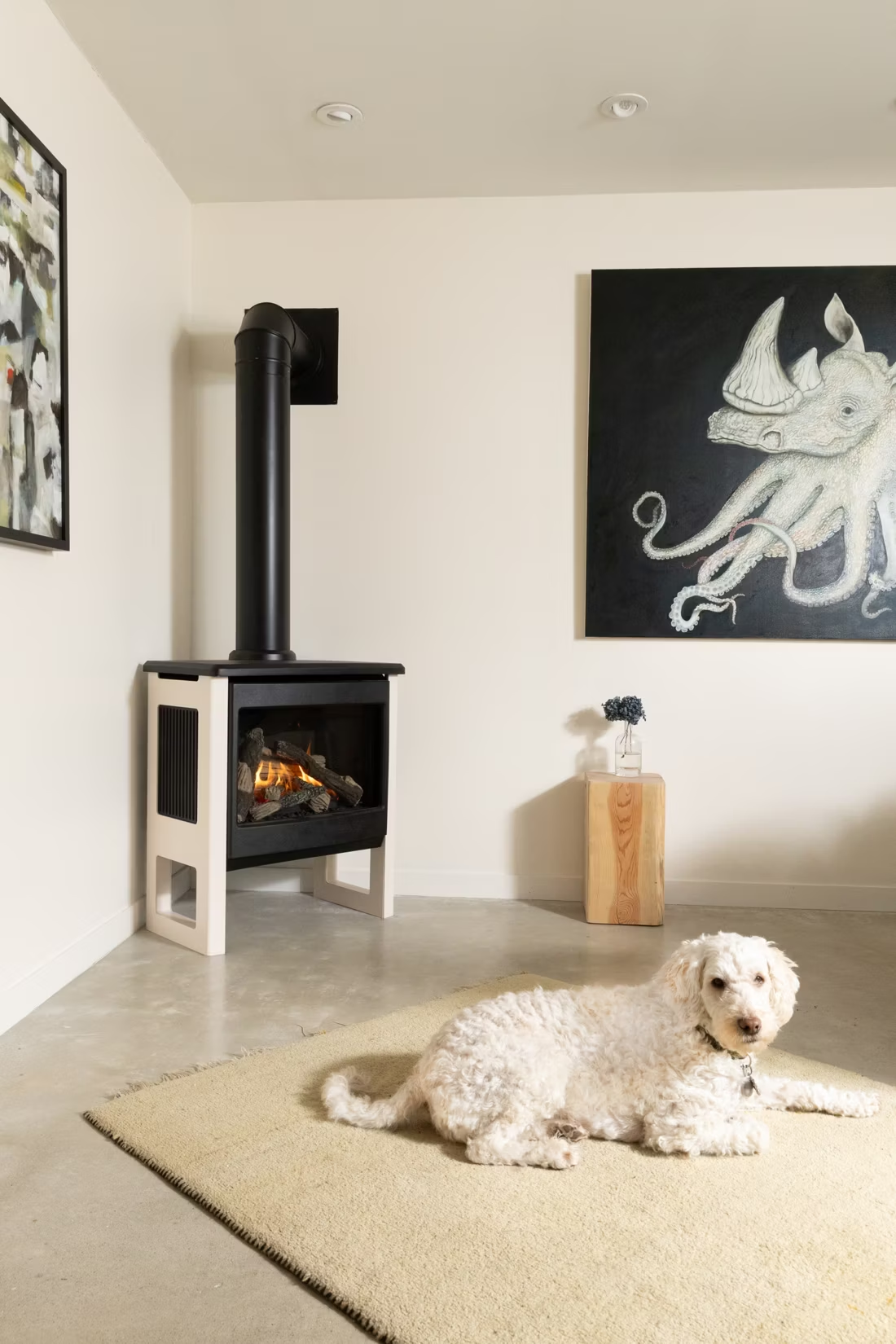
A gas fireplace is a fully built-in unit framed into a wall—the right call for new construction or a remodel in one of Oakbrook's newer subdivisions. A gas insert drops into an existing masonry firebox and uses the current chimney as its vent, which suits the smaller number of older homes in Boone County with real fireplaces already in place. A gas stove is freestanding, sits on the floor, and vents through a wall or roof—a good option when there's no existing fireplace opening but you still want a focal-point look. A local dealer can walk your specific room and tell you which format actually fits.
Do I need a permit to install a gas fireplace in Oakbrook?
Yes—Boone County requires a building permit and gas line permit for new gas fireplace installations, and the gas piping work has to be done by a licensed gas-fitter. Most established hearth dealers in the Boone County/Florence area handle the permitting and inspection scheduling as part of the install, so you're not stuck coordinating the gas contractor, the building inspector, and the installer separately.
Vented vs. vent-free gas fireplaces—which is allowed in Kentucky?
Both are legal in Kentucky. Vented (direct-vent) units draw combustion air from outside and exhaust it back outside through sealed piping—they produce real heat output and are the most common choice in Oakbrook. Vent-free units burn gas directly into the room without external venting; they're permitted here but come with strict room-size and oxygen-depletion-sensor requirements, and they add moisture to the indoor air. Given Boone County's mixed-humid summers, most local dealers steer homeowners toward direct-vent units to avoid adding extra humidity load to the house. Ask about both when you get a quote.
How often does a gas fireplace need to be serviced?
Plan on an annual inspection, ideally in early fall before the heating season starts. A technician checks the burner, pilot assembly, venting, and gas connections, and cleans the glass and interior—a shorter, cheaper visit than wood-stove chimney sweeping, typically $125 to $225 in the Boone County/Cincinnati-metro market. Skipping it is the most common reason a pilot or ignition system starts acting up mid-winter.
Why is gas so much more common than wood in Oakbrook?
It comes down to infrastructure and layout, not preference. Duke Energy Kentucky's gas network reaches most of the 41042 area, subdivision lots tend to be smaller with tighter setbacks, and there's no local wood-cutting culture the way there is farther south—the nearest public cutting permits are through the Daniel Boone National Forest, well over an hour away, at around $20 per cord. Because of that, wood stoves and inserts are genuinely rare here rather than simply unpopular, and gas has become the default choice for homeowners who want real fireplace heat without hauling or storing fuel.
What's the difference between an insert and a zero-clearance fireplace?
An insert is a fireplace that slides into a pre-existing wood-burning fireplace—if you don't have one, there's nothing to insert it into. A zero-clearance fireplace is built into a framed wall, which makes it the answer for remodels and new construction. Simple test: existing masonry fireplace means insert; blank or framed wall means zero-clearance.
What do I measure to size a fireplace insert?
Four numbers tell you what fits: the front width, the front height, the back width, and the overall depth of your existing fireplace opening. Grab a tape measure, jot those down, and snap a photo of the wall—those two things do more to move your project forward than anything else you can do today.
Does a fireplace add value to my home?
On average, a fireplace adds back to the home about the same amount you spent installing it. Add the monthly savings from heating the rooms you actually use instead of the whole house—often hundreds of dollars a year—and the value case is strong before you even count what a fire does for how your family uses the room.
How much should I budget for a fireplace?
For an average home—covering the fireplace, the vent pipe, and basic installation—a budget between $3,900 and $5,500 gives you a lot of options across wood, gas, and pellet. By the time you add finish work, gas line, and electrical, the average complete installation lands between $5,000 and $12,000 all-in. In a remodel or new build, a good rule is to put about 2.5% of the total project cost toward the fireplace.
Nearby Dealers
Hearth shops serving Oakbrook and the surrounding area. Every listing shows whether it is a WhyFire partner, a dealer we have verified as authorized for the brands we recommend, or a local business carrying hearth products. No manufacturer pays for placement. How we verify dealers →
Top Quality Building Products
Chimney Top Masonry
Best Cincinnati Chimney
Bona Decorative Hardware
Charlie's Chimney Sweeps & Masonry
Watson's Of Cincinnati
Reading Rock's Fireside Hearth & Home
Find your gas fireplace in Oakbrook.
Tell us a bit about your home and we'll put together a free Project Guide & Parts List—the exact parts, vent kit included, and a trusted local Oakbrook-area dealer to install it.
Find Your Fireplace →