
Steady heat for Mount Sterling winters, no woodpile required.
With a solid, months-long heating season and winter lows averaging in the low 20s, Montgomery County sees a real, sustained heating season. Gas fireplaces deliver heat at the flip of a switch instead of a match. I'll match you with a trusted local dealer who knows which venting path and fuel source actually fit your home.
Every Project Starts From One of These Five Situations
Instant heat for a 5,046-degree-day winter.
Montgomery County sits in the Bluegrass region of eastern Kentucky, home to about 10,383 people spread between Mount Sterling and smaller communities like Camargo, Jeffersonville, and Levee. In climate zone 4A, winters bring an average low near 22 degrees and a solid, months-long heating season—enough of a heating season that a fireplace can't just be a weekend accent, it has to actually work. Wood heat has deep roots here, with oak, hickory, maple, and cherry all common in the surrounding hardwood forest and available under Daniel Boone National Forest cutting permits, but more homeowners are choosing gas for the main living space so they get consistent, thermostat-controlled heat without splitting or stacking a woodpile every fall.
Natural gas service reaches Mount Sterling and its immediate surroundings through Columbia Gas of Kentucky, so homes already on that line can add a fireplace or insert with a straightforward gas tap. Out toward Camargo, Jeffersonville, and the county's more rural stretches, propane from a local bulk supplier is the standard fuel, either off an existing tank or a new one set specifically for the fireplace. Montgomery County has no air quality non-attainment status and no burn curtailment periods to work around, so the choice between vented and vent-free, or between gas and wood, comes down to convenience, upfront cost, and how the home is already plumbed—not local emissions rules.
Three steps. No salesperson until you're ready.
Tell us about your project
Your zip code, your situation, and the fuel you're leaning toward—or let the answers point you to one.
See what's actually available
The brands dealers within 100 miles genuinely carry—real options, never a catalog mirage.
Get your dealer & Project Guide
A trusted local dealer, plus the free Project Guide & Parts List that names every component of the job.
Frequently Asked Questions
How much does a gas fireplace installation cost in Montgomery County?
A typical gas fireplace or insert installation runs roughly $3,500 to $9,000 in Montgomery County, with the low end covering a direct-vent insert dropped into an existing masonry fireplace that's already on a gas line, common in older Mount Sterling neighborhoods. New construction or a remodel that requires framing, venting through a roof or wall, and a fresh gas run lands toward the higher end. Rural properties around Camargo or Jeffersonville that need a new propane tank set and a longer line to the house typically fall in the middle to upper part of that range. A local installer will quote a firm number once they've seen the space.
Can I convert my existing wood fireplace to gas?
Yes, and it's a common project in Montgomery County's older housing stock, including brick homes near downtown Mount Sterling with original masonry fireplaces. A gas insert seals into the existing firebox and vents through a stainless liner run up the current chimney, so the fireplace keeps its look while gaining real, controllable heat output. Expect the cost to land somewhere in the $4,000 to $8,500 range depending on whether the home is already on Columbia Gas of Kentucky service or needs a propane setup, and whether the existing chimney needs relining before the insert goes in.
Do I need natural gas, or can I run a fireplace on propane?
Either works. Most gas fireplace models can be set up for natural gas or propane with the correct orifice and regulator, so the fuel type is really a question of what reaches your address. Columbia Gas of Kentucky serves Mount Sterling and the surrounding developed area, so a home already on that line can add a fireplace with minimal new infrastructure. Once you're out toward Levee, Jeffersonville, or the more rural parts of the county, there's typically no gas main, and propane from a regional supplier—either an existing tank or a new one they set and fill—is the standard route.
Will my gas fireplace still work if the power goes out?
Most modern gas fireplaces are designed to keep running through an outage. Units with intermittent pilot ignition (IPI) carry a battery backup that kicks in automatically when the power drops, so you can still light and run the fireplace on demand. Some models, like those from Valor, generate their own electricity through the pilot assembly's thermocouple and don't need batteries at all. That matters in Montgomery County, where winter ice storms occasionally knock out power in the more rural parts of the county for a day or more. Ask your local dealer about the ignition system on any unit you're considering.
What's the difference between a gas fireplace, gas insert, and gas stove?
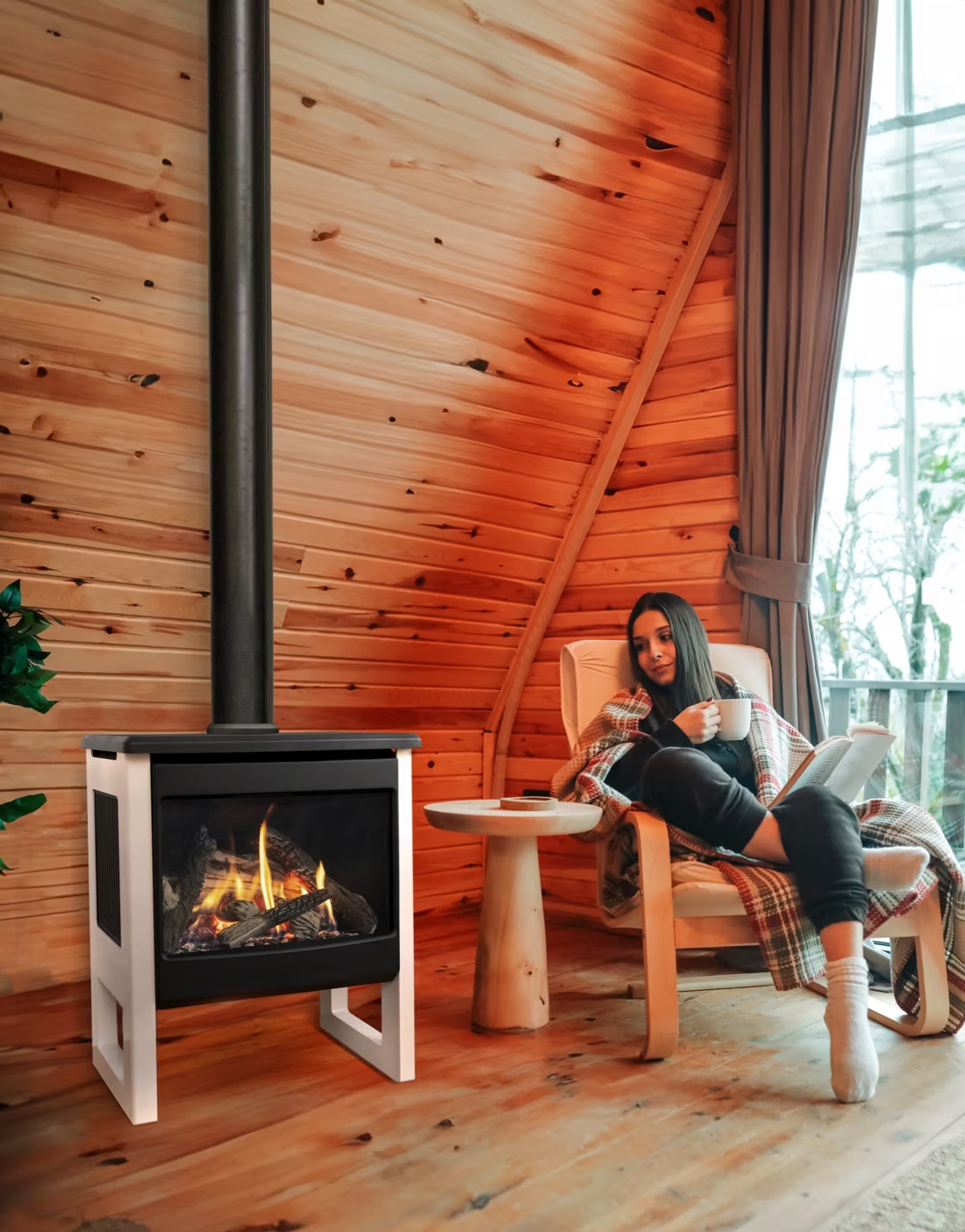
A gas fireplace is a fully built-in unit framed into a wall—the right fit for new construction or a full remodel. A gas insert slides into an existing masonry firebox and uses the current chimney as its vent path, which is the usual route for older Mount Sterling homes upgrading from a wood-burning fireplace. A gas stove is a freestanding, cabinet-style unit that sits on the floor like a wood stove but runs on gas, which works well in a room with no existing chimney or in a manufactured or modular home common in the county's rural areas. A local dealer can look at your space and tell you which configuration actually fits.
Do I need a permit to install a gas fireplace in Montgomery County?
Yes. New gas fireplace installations require a building permit through the county's building inspector's office, along with a gas line permit if new piping is being run to the appliance. The gas line work itself has to be done by a licensed gas-fitter, which is one reason most homeowners go through a full-service hearth dealer rather than a general handyman—a certified dealer coordinates the gas work, the venting, and the inspection sign-off as a single job.
Should I get a vented or vent-free gas fireplace?
Vented, or direct-vent, gas fireplaces pull combustion air from outside and exhaust it back outside through a sealed pipe, keeping combustion byproducts out of the living space entirely. Vent-free units burn directly into the room and are legal in Kentucky, with room-sizing rules and an oxygen depletion sensor required. Since Montgomery County has no air quality restrictions or curtailment concerns, the decision usually comes down to installation flexibility—vent-free can go in a room with no chimney or exterior wall access—versus heat efficiency and long-term indoor air quality, where direct-vent tends to be the choice local dealers recommend for a primary heat source.
How often does a gas fireplace need to be serviced?
Plan on an annual inspection, ideally in early fall before the heating season picks up. A technician checks the burner, pilot assembly, gas connections, and venting, and cleans the glass and interior. It's a quicker visit than a wood chimney sweep, but still worth doing every year, especially for a unit that's running daily through a five-month heating season. A standard annual service call from a local gas appliance technician typically runs $125 to $225.
Gas vs. wood—which makes more sense for a home in Montgomery County?
Wood—cut from the oak, hickory, maple, and cherry common on Daniel Boone National Forest land under a personal-use cutting permit for about $20 per cord—offers low fuel cost and heat that doesn't depend on electricity or a gas line, which matters for rural households further from Mount Sterling. Gas offers instant, thermostat-controlled heat with no ash to manage and no wood to split or store, and it's a natural upgrade for an existing masonry fireplace that doesn't get used because tending a fire is inconvenient on a weeknight. Some households also look at pellet stoves, using regional brands like Lignetics, Hamer Pellet Fuel, or Greenway Renewable Energy, as a middle ground between the two. If daily convenience matters more than fuel cost, gas is usually the better starting point.
Why is my open fireplace making my house colder?
Open fireplaces suck—literally. As the fire burns, it consumes air your furnace already paid to heat and pulls it out through the chimney, so the house is actually colder after the fire goes out than before you lit it. An insert fixes this: it seals the chimney, puts fixed glass across the front, and turns that hole in your house into a real heat source.
Can I put a TV above my fireplace?
Yes—with an asterisk. Fireplaces are hot and TVs don't like heat. Either put a mantel between them to deflect rising warmth, or choose a fireplace with heat-management technology that creates a cool zone on the wall above—the wall stays around 125 degrees, barely warm, while the room still gets full heat. If you like clean lines and don't want a mantel, heat management is the answer.
Can a fireplace actually lower my heating bill?
Yes—by creating a comfort zone. A furnace heats every square foot of the house just to warm the one room you're in; a gas fireplace on low burns roughly a sixth of the gas a typical furnace does. Set the furnace around 55–60 degrees as a baseline, then heat the rooms your family actually uses. Families who heat this way commonly save $20–$60 a month.
Does a fireplace add value to my home?
On average, a fireplace adds back to the home about the same amount you spent installing it. Add the monthly savings from heating the rooms you actually use instead of the whole house—often hundreds of dollars a year—and the value case is strong before you even count what a fire does for how your family uses the room.
Get your free Project Guide & Parts List for a gas fireplace in Montgomery County.
Tell me a bit about your home and I'll match you with a trusted local dealer and send over a free Project Guide & Parts List—the exact equipment, vent kit, and recommended installer for your gas project, no big-box guesswork.
Find Your Fireplace →