
Real fireplace ambiance for Logan County homes—no chimney required.
From farmhouses outside Russellville to newer builds in Auburn and Adairville, electric fireplaces plug into a standard outlet and go anywhere a wood or gas unit can't. Find the right unit and get matched with a trusted local dealer.
Every Project Starts From One of These Five Situations
Zero-clearance heat for a county built on farmhouses and additions.
Logan County sits in south-central Kentucky's climate zone 4A, with winter lows averaging around 26°F and roughly 4,259 heating degree days a year—a noticeably milder heating season than the deep-continental counties farther north, closer to what you'd find around Nashville than what Duluth or Fargo deal with. The county's rolling farmland and hardwood stands of oak, hickory, maple, and cherry have supported plenty of wood-burning tradition, but that same milder climate means a lot of Logan County homes don't need—or want—the commitment of cutting, splitting, and seasoning a woodpile just to get fireplace warmth in the living room.
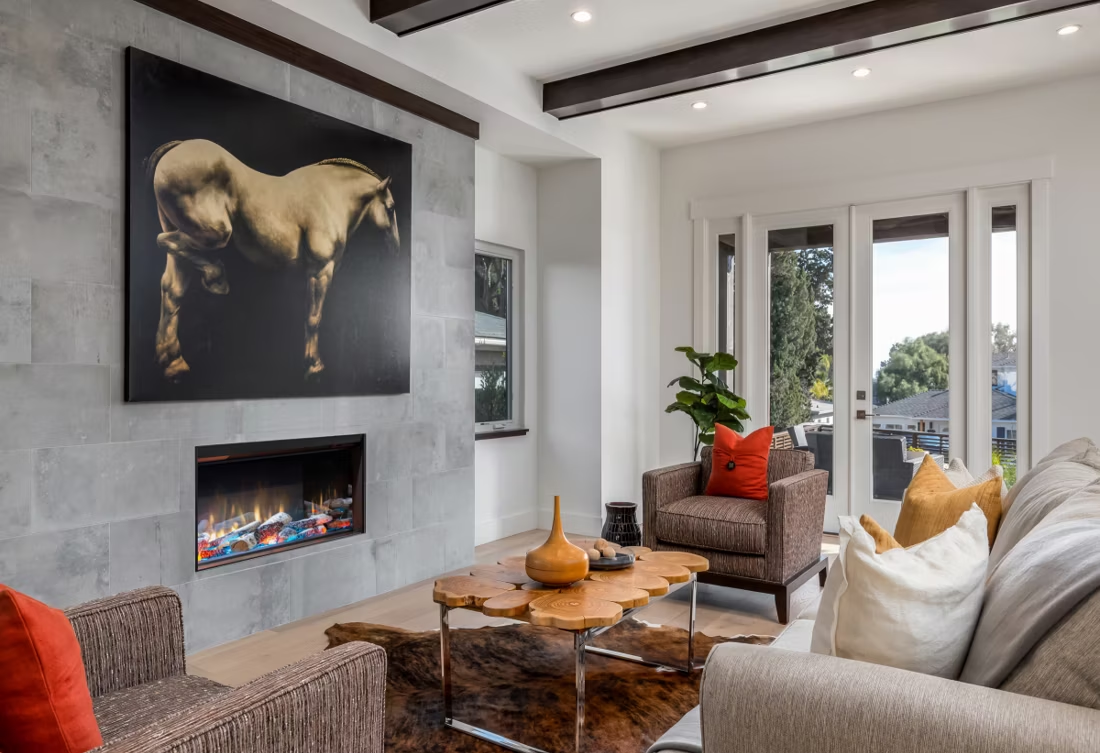
That's where electric fireplaces fit. There's no chimney to build, no gas line to run, and no permit headache for a plug-in insert or wall unit—which matters in a county where a lot of the housing stock is older farmhouses, additions, or manufactured homes without an existing masonry flue. Air quality here isn't a factor either way (Logan County has no burn restrictions or non-attainment issues on record), so the appeal of electric isn't about avoiding smoke—it's about a clean install in a rental in Russellville, a supplemental heat source in a converted garage in Lewisburg, or a fast fireplace upgrade in a new build near Adairville without touching the home's structure.
Three steps. No salesperson until you're ready.
Tell us about your project
Your zip code, your situation, and the fuel you're leaning toward—or let the answers point you to one.
See what's actually available
The brands dealers within 100 miles genuinely carry—real options, never a catalog mirage.
Get your dealer & Project Guide
A trusted local dealer, plus the free Project Guide & Parts List that names every component of the job.
Frequently Asked Questions
How much does an electric fireplace installation cost in Logan County?
A plug-in electric insert or freestanding unit that uses an existing 120V outlet typically runs $400 to $1,200 installed, since there's no venting or gas work involved. Built-in wall units or larger linear fireplaces that need a dedicated circuit run higher—often $1,200 to $2,500—once an electrician is brought in to run new wiring, which is common in older Logan County farmhouses that weren't built with a spare 20-amp circuit near the intended fireplace wall. Converting an existing masonry fireplace to an electric insert is usually on the lower end since the surround is already built.
Will an electric fireplace actually heat my home, or is it just for looks?
Most electric fireplaces are supplemental heaters rated for a single room—typically 400 to 1,500 square feet depending on the model's wattage. Given Logan County's relatively moderate winter lows (averaging around 26°F) and HDD count well below what colder river-valley or upland counties see, a well-placed electric unit can genuinely take the edge off a living room or bonus room on most winter nights without leaning on central heat. It's not designed to replace a furnace or heat pump on a hard freeze, but for a den, sunroom, or converted space that doesn't get much airflow from the main system, it's often enough on its own.
Do I need a permit to install an electric fireplace in Logan County?
A simple plug-in electric insert or freestanding unit generally doesn't require a permit since it uses an existing outlet—it's treated like any other appliance. If you're installing a built-in wall unit that requires a new dedicated circuit, the electrical work itself typically needs to be pulled by a licensed electrician and inspected, which is standard practice regardless of county. For anything involving structural changes to a wall or mantel surround, check with the Logan County building permit office before starting—local installers can usually tell you in a few minutes whether your specific project needs a permit.
What's the difference between an electric fireplace, insert, and stove?
An electric fireplace is typically a built-in unit set into a wall or mantel surround, often paired with a linear or traditional-looking flame display. An electric insert is sized to slide into an existing masonry fireplace opening—a common upgrade for older Logan County homes with a fireplace that's no longer used for wood, since it keeps the look of the original hearth without needing a chimney sweep or firewood. An electric stove is a freestanding cabinet-style unit that mimics a wood stove's shape and can sit almost anywhere near an outlet. All three plug into standard household power; none require venting.
Will my electric fireplace work during a power outage?
No—electric fireplaces require power to run, so they won't provide heat during an outage, unlike a wood stove. That's worth weighing in rural parts of Logan County served by Pennyrile RECC and other regional co-ops, where outage restoration in outlying areas can take longer than it does in Russellville proper. If backup heat during storms matters to you, some households pair an electric fireplace for everyday convenience with a wood stove or vented gas unit elsewhere in the home for the times the power actually goes out.
What's the best type of electric fireplace for a Logan County home?
For homes with an existing but unused masonry fireplace—common in older farmhouses outside Russellville and Auburn—an electric insert is usually the simplest upgrade: it drops into the existing opening, plugs into a nearby outlet or a new dedicated circuit, and eliminates the need to source and season oak or hickory firewood. For new construction or additions without an existing hearth, a built-in wall unit or linear electric fireplace gives you a fireplace feature without any masonry at all. For a quick supplemental-heat solution in a bonus room or garage conversion, a freestanding electric stove is the least invasive option.
Electric vs. propane—which makes more sense outside Russellville?
Natural gas service is limited outside the more built-up parts of Logan County, so rural homeowners choosing a fueled fireplace are typically looking at propane, which means a tank, a supplier relationship, and fuel deliveries. Electric skips all of that—no tank, no delivery schedule, no fuel cost swings. The tradeoff is that electric fireplaces are supplemental heaters, not high-BTU primary heat sources the way a propane unit can be. For a family that wants fireplace ambiance without adding another fuel account to manage, electric is usually the simpler call.
How much does it cost to run an electric fireplace?
Most electric fireplaces draw around 1,500 watts on the heat setting, which works out to roughly 15 to 20 cents an hour at typical Kentucky electric rates—call it $3 to $5 for a full evening of use. Running it flame-only, without the heater engaged, costs only a few cents an hour. For a Logan County household using it a few hours a night through a mild winter with around 4,259 heating degree days, that's a modest add to the electric bill compared to running central heat harder to cover the same room.
Electric vs. wood—which is right for my Logan County home?
Wood offers real heat output, works without power during outages, and fits the county's long tradition of burning oak, hickory, and cherry from local hardwood stands—but it means firewood storage, seasoning, and chimney maintenance. Electric offers instant on-off convenience, zero mess, and an install that doesn't require an existing chimney, but it won't help you during a power outage and works best as supplemental rather than whole-home heat. For a primary residence with an existing wood-burning fireplace and a family that values self-sufficiency, wood often still wins. For a rental, an addition, or a homeowner who just wants fireplace ambiance without the upkeep, electric is usually the better fit.
Do electric fireplaces actually produce heat?
Yes—most put out around 4,800–5,000 BTUs from a standard outlet, which comfortably warms a bedroom, office, or den as a comfort-zone heater. What they won't do is carry a whole house the way wood, gas, or pellet can. Think of electric as ambiance-first with honest supplemental heat: flames on with no heat in July, flames plus warmth in January.
Can I put a TV above my fireplace?
Yes—with an asterisk. Fireplaces are hot and TVs don't like heat. Either put a mantel between them to deflect rising warmth, or choose a fireplace with heat-management technology that creates a cool zone on the wall above—the wall stays around 125 degrees, barely warm, while the room still gets full heat. If you like clean lines and don't want a mantel, heat management is the answer.
Does a fireplace add value to my home?
On average, a fireplace adds back to the home about the same amount you spent installing it. Add the monthly savings from heating the rooms you actually use instead of the whole house—often hundreds of dollars a year—and the value case is strong before you even count what a fire does for how your family uses the room.
What is an in-home preview and do I need one?
It's a visit where a hearth professional measures your space, confirms the model you picked actually works in your home, and walks the specs—framing, gas line, venting, finish work—before anything is ordered. Some details you just can't know until you see the house. Never make a down payment without one; it's the single most-skipped step that burns buyers.
Find your electric fireplace in Logan County.
Tell us a bit about your home and we'll put together a free Project Guide & Parts List for your electric fireplace project—the right unit, the exact parts, and a trusted local Logan County dealer to install it.
Find Your Fireplace →