
Add Real Warmth to Any Room in Laurel County—No Chimney Needed.
From London to the rural edges of the Daniel Boone National Forest, electric fireplaces bring flame-effect ambiance and zone heat to rooms that were never built for wood or gas. Find the right unit and connect with a trusted local dealer.
Every Project Starts From One of These Five Situations
Heat and ambiance where a chimney isn't an option.
Laurel County sits in the Appalachian foothills of southeastern Kentucky, bordered by the Daniel Boone National Forest, with roughly 4,158 heating degree days a year and winter lows that average around 27°F—a real but moderate cold season compared to places like Duluth or Burlington. Wood has deep roots here: oak, hickory, maple, and cherry are all common in local woodlots, and Forest Service cutting permits through the Daniel Boone National Forest run about $20 per cord from May through October. But not every home in Laurel County has a working chimney, and not every homeowner wants one. That's where electric fireplaces come in.
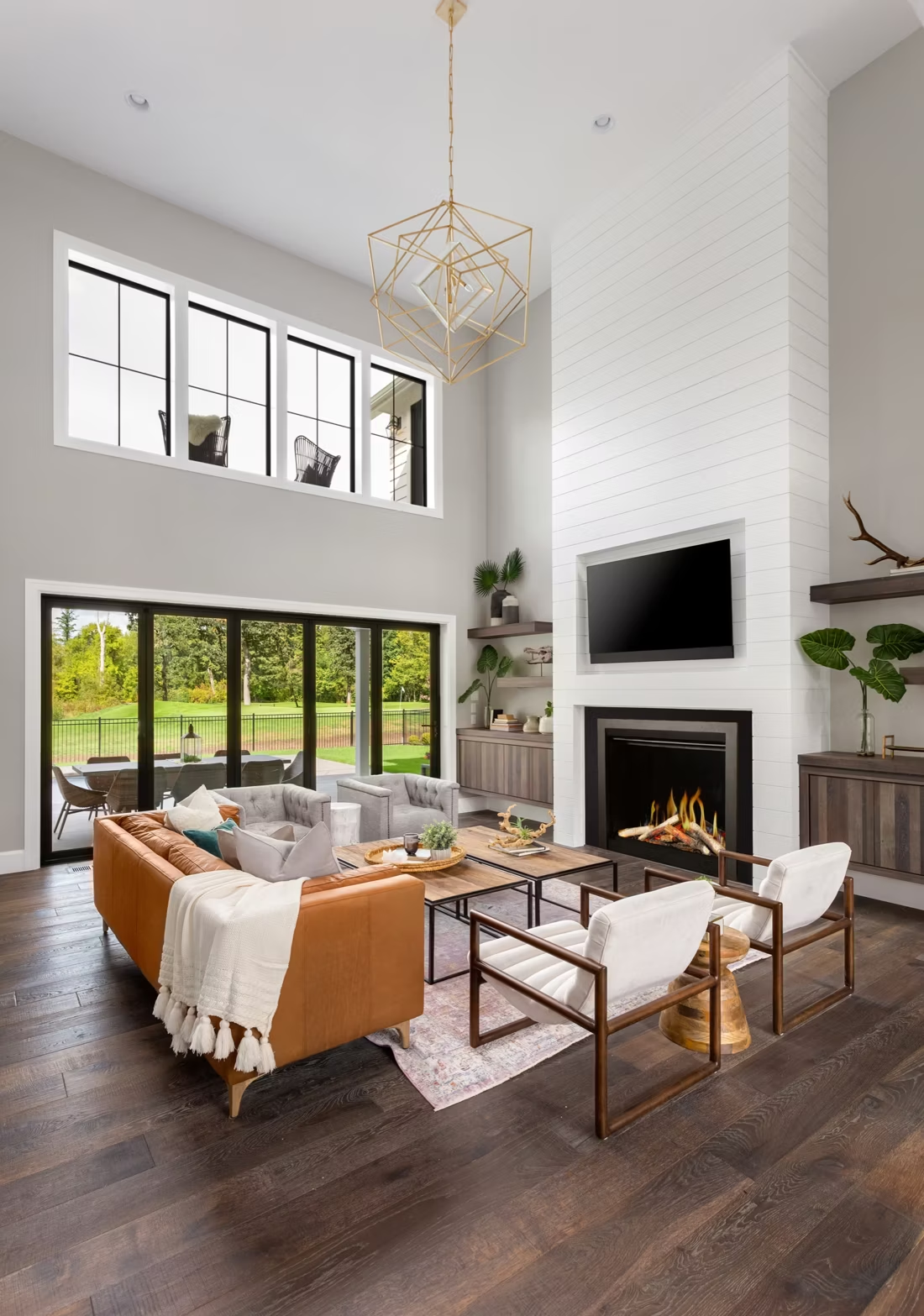
Electric units show up constantly in the additions, finished basements, and manufactured homes that make up a large share of Laurel County's rural housing stock, where running a Class A chimney or a gas line simply isn't practical. Homes served by South Kentucky RECC or Kentucky Utilities can add a built-in electric fireplace with nothing more than a dedicated 120V or 240V circuit run by a licensed electrician—no venting, no gas permit, no masonry. For zone heating a bedroom or living room while the central system idles, or for adding real ambiance to a room with no fireplace at all, electric is often the simplest project on this list.
Three steps. No salesperson until you're ready.
Tell us about your project
Your zip code, your situation, and the fuel you're leaning toward—or let the answers point you to one.
See what's actually available
The brands dealers within 100 miles genuinely carry—real options, never a catalog mirage.
Get your dealer & Project Guide
A trusted local dealer, plus the free Project Guide & Parts List that names every component of the job.
Frequently Asked Questions
How much does an electric fireplace installation cost in Laurel County?
Costs vary widely by type. A plug-in freestanding electric stove or a small insert that fits into an existing 120V outlet can run as little as $300 to $900 installed, since there's no wiring work involved. A built-in wall unit or a larger insert that requires a dedicated circuit typically runs $1,000 to $2,500 once you factor in the electrician's time to run new wiring and, in some cases, open and patch drywall. Converting an old, unused masonry fireplace in an older London-area home to a electric insert usually lands in the middle of that range, since the opening is already there and just needs the right-sized unit and outlet.
Do I need a permit for an electric fireplace in Laurel County?
In most cases, no—a plug-in electric fireplace that uses an existing outlet doesn't trigger a building or electrical permit because there's no venting, gas line, or structural change involved. If your project requires a licensed electrician to run a new dedicated circuit for a built-in unit, that electrical work itself typically needs a permit through the Laurel County building inspection process, which your electrician or installer can pull for you. Either way, there's no equivalent to the chimney or gas-line inspections that wood and gas installs require here.
Does an electric fireplace make sense for Laurel County's winters?
Laurel County's climate is moderate compared to the northern cold-climate counties—winter lows average around 27°F and the county logs about 4,158 heating degree days a season. That's cold enough to want real supplemental heat in a bedroom or living room, but not so extreme that a home should rely on electric resistance heat as its primary source. Most local homeowners use electric fireplaces the way they're designed to be used: zone heating a single room while the central heat pump or propane furnace handles the rest of the house, which can meaningfully cut the bill on the coldest nights without replacing the whole system.
Can I put an electric insert into my home's old wood fireplace?
Yes, and it's a common project in older homes around London and the rest of Laurel County that have a masonry fireplace no one has burned wood in for years. An electric insert slides into the existing firebox opening, plugs into a nearby outlet (or a new dedicated circuit for larger units), and gives you flame-effect ambiance and heat without cleaning a chimney, hauling wood, or dealing with creosote. It's usually the fastest and least invasive way to bring a dead fireplace back to life.
Will an electric fireplace lower my heating bill?
It can, if you use it for zone heating rather than as background ambiance. Running an electric fireplace in the room you actually occupy—while setting the central thermostat a few degrees lower—is where the savings show up on a South Kentucky RECC or Kentucky Utilities bill. Used purely for the flame effect with the heater switched off, an electric fireplace draws very little power and won't move your bill much either direction.
Are electric fireplaces a good fit for manufactured and mobile homes in Laurel County?
Yes—this is one of the most common reasons electric comes up in Laurel County, which has a significant share of manufactured and mobile homes throughout its rural areas. Wood stoves and masonry chimneys generally aren't an option in these homes, and gas line and venting work can be complicated or restricted. An electric fireplace or wall-mounted unit sidesteps all of that: no combustion, no venting, and installation that a local dealer can usually complete in an afternoon.
What happens to my electric fireplace during a power outage?
It won't run—electric fireplaces depend entirely on grid power, unlike a wood stove burning local oak or hickory, which keeps working regardless of the electric service. For Laurel County homes in more remote parts of the county where outages can run longer after ice storms, it's worth keeping that trade-off in mind. Many rural homeowners here pair an electric fireplace for everyday convenience and ambiance with a wood stove or fireplace as backup heat for winter storms.
What size electric fireplace do I need?
Most electric fireplace heaters are rated between 4,600 and 9,000 BTU and are designed to comfortably heat a single room of 400 to 1,000 square feet, not a whole house. For a typical Laurel County living room or bedroom addition, a mid-range unit is usually sufficient as supplemental heat. If you're trying to heat an open-concept space or a larger great room, talk to a local dealer about a higher-output built-in model or a slightly larger insert—oversizing an electric unit doesn't cause the same problems as an oversized wood stove, but undersizing it means it won't keep up on the coldest nights of the season.
Electric vs. wood—which makes more sense for my Laurel County home?
Wood remains the traditional choice in Laurel County, with abundant oak, hickory, maple, and cherry available and Daniel Boone National Forest cutting permits running about $20 per cord in season—plus it keeps working when the power goes out. Electric wins on convenience and flexibility: no venting, no ash, no permit hassle in most cases, and it works in homes and additions where a chimney was never built, including much of the county's manufactured housing stock. Many homeowners here end up with both—wood or a wood insert for real winter heat and storm backup, electric for a bedroom, den, or rental unit where simplicity matters more than BTU output.
Can I put a TV above my fireplace?
Yes—with an asterisk. Fireplaces are hot and TVs don't like heat. Either put a mantel between them to deflect rising warmth, or choose a fireplace with heat-management technology that creates a cool zone on the wall above—the wall stays around 125 degrees, barely warm, while the room still gets full heat. If you like clean lines and don't want a mantel, heat management is the answer.
How much does an electric fireplace cost to run?
With the heater on, a typical unit draws about 1,500 watts—at average electric rates that's roughly 20 cents an hour. Run the flame effect alone and it costs pennies; the flames are LED-driven and use about as much power as a light bulb. There's no pilot light, no fuel delivery, and essentially no maintenance.
Can I install a fireplace myself?
If you're putting a fire in your house on purpose, it's best to work with an expert. Unless you're genuinely experienced in framing, gas line, vent pipe, and the national code on clearances to combustibles, have a professional do it—and ideally the same company that sells you the fireplace, so warranty, service, and liability all live under one roof.
How much should I budget for a fireplace?
For an average home—covering the fireplace, the vent pipe, and basic installation—a budget between $3,900 and $5,500 gives you a lot of options across wood, gas, and pellet. By the time you add finish work, gas line, and electrical, the average complete installation lands between $5,000 and $12,000 all-in. In a remodel or new build, a good rule is to put about 2.5% of the total project cost toward the fireplace.
Stove and Fireplace Dealers in Laurel County
Find your electric fireplace in Laurel County.
Tell us a bit about your home and we'll match you with the right electric fireplace or insert, plus a free Project Guide & Parts List and a trusted local dealer to install it.
Find Your Fireplace →