
Instant Warmth, No Firewood Needed.
Clean, on-demand heat for Lakeside Park's close-set streets and established homes. Find the right gas fireplace or insert, and get matched with a trusted local dealer.
Every Project Starts From One of These Five Situations
Convenience wins on tight suburban lots.
Lakeside Park is a small, tightly platted city of under 3,000 people tucked into Kenton County's stretch of the Cincinnati metro, with winter lows averaging 23°F and a winter heating season that's real but moderate—noticeably milder than benchmark cold cities like Madison, WI or Minneapolis, MN, but still cold enough that six months of the year call for supplemental heat.
Duke Energy Kentucky provides both electric and natural gas service to most of the city, which makes gas the default choice for homeowners here rather than an afterthought. Wood-burning is genuinely rare in Lakeside Park—narrow, closely spaced lots leave little room for stacked firewood or safe clearances, and the nearest public land for cutting your own wood, Daniel Boone National Forest, sits more than an hour south. A direct-vent gas fireplace or insert sidesteps all of that: real heat output, no wood storage, and a flip-of-a-switch start on a cold Ohio Valley evening.
Three steps. No salesperson until you're ready.
Tell us about your project
Your zip code, your situation, and the fuel you're leaning toward—or let the answers point you to one.
See what's actually available
The brands dealers within 100 miles genuinely carry—real options, never a catalog mirage.
Get your dealer & Project Guide
A trusted local dealer, plus the free Project Guide & Parts List that names every component of the job.
Frequently Asked Questions
How much does a gas fireplace installation cost in Lakeside Park?
Most gas fireplace projects in Lakeside Park run somewhere between $4,000 and $9,500. A direct-vent gas insert dropped into an existing masonry fireplace with a nearby gas line tends to land on the lower end. A new built-in direct-vent fireplace for a remodel or finished basement—with framing, venting, and a gas line extension from the meter—pushes toward the higher end. Because Duke Energy Kentucky's gas mains already run through most of the city, line extensions are usually shorter and cheaper here than in more rural parts of Kenton County. A local dealer will confirm exact numbers after seeing your home.
Can I convert my existing wood fireplace to gas?
Yes, and it's a common request in Lakeside Park's older sections, where many homes were originally built with a masonry, wood-burning firebox. A gas insert fits into that existing opening and vents through a stainless steel liner run up the same chimney, so the fireplace keeps its original look while gaining real, controllable heat output. Since actual wood-burning is uncommon here given lot sizes and the distance to public forest land, converting an unused masonry fireplace to gas is usually the more practical upgrade than restoring it for wood.
Do I need natural gas, or should I plan on propane?
Almost every home in Lakeside Park has access to natural gas through Duke Energy Kentucky, which is the same utility that handles electric service here. If your home already has a gas water heater, range, or furnace, adding a fireplace is typically a straightforward tap into the existing line. Propane is really only a consideration for a handful of outlying properties in Kenton County beyond the reach of the gas mains—inside Lakeside Park itself, natural gas is the standard and simplest route.
Will my gas fireplace still work if the power goes out?
Most modern gas fireplaces will, which matters here given the ice storms that occasionally roll through the Ohio Valley. Units with IPI (intermittent pilot ignition) run on AA battery backup that kicks in automatically when power drops, so the fireplace still lights on demand. Valor's lineup goes a step further—their pilot assembly generates its own electricity through the thermocouple, so there are no batteries to remember at all. If keeping heat during an outage is a priority for your Lakeside Park home, ask your local dealer about the ignition system before you buy.
What's the difference between a gas fireplace, gas insert, and gas stove?
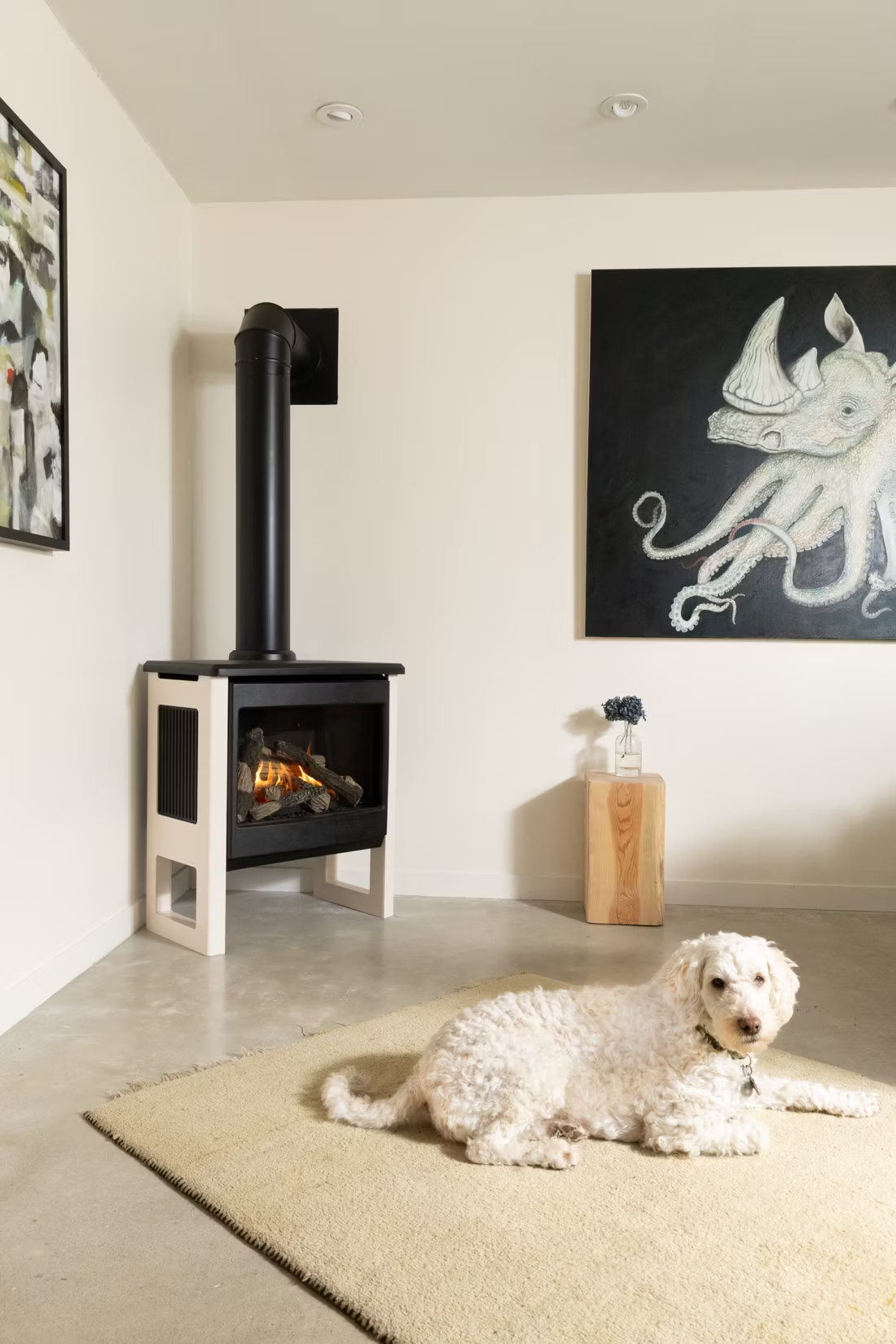
A gas fireplace is a fully built-in unit framed into a wall—common in new construction or a full remodel. A gas insert is sized to slide into an existing masonry firebox, sealing it up and using the existing chimney as a vent chase. A gas stove is a freestanding cabinet unit that sits on the floor like a wood stove but runs on gas. Given how many Lakeside Park homes already have a masonry fireplace from their original construction, an insert is usually the most direct upgrade path; homes without one, or finished basements, often go with a built-in unit instead.
Do I need a permit to install a gas fireplace in Lakeside Park?
Yes. Gas fireplace installations require both a building permit and a gas line permit, handled through Kenton County's permitting process for the city. The gas line connection has to be done by a licensed gas-fitter, which is one reason to work with an established hearth dealer rather than a general handyman—they coordinate the gas work, venting, and inspection sign-off as one job instead of leaving you to juggle separate trades.
Should I get a vented or vent-free gas fireplace?
Vented, direct-vent units pull combustion air from outside and exhaust it back outside through sealed venting—they're the safer, more universally recommended choice and deliver real, sustained heat. Vent-free units burn directly into the room and are legal in Kentucky with proper room-sizing and an oxygen depletion sensor, but they release some combustion byproducts indoors. That matters more in newer, tightly sealed construction, which describes a fair number of Lakeside Park's more recently built or updated homes. For most homeowners here, direct-vent is the simpler, lower-worry choice, but ask your local dealer to walk through both if you're weighing it.
How often does a gas fireplace need to be serviced?
Plan on an annual inspection, similar to a furnace tune-up. A technician checks the burner, pilot or ignition system, venting, and gas connections, and cleans the glass and interior—typically a $125 to $200 visit. It's a much smaller job than chimney sweeping for a wood-burning unit, but skipping it is still the most common cause of pilot and ignition problems reported by local service techs.
Gas vs. electric fireplace—which makes more sense for my home?
Given how uncommon wood-burning is in Lakeside Park, the real comparison for most homeowners here is gas versus electric. A gas fireplace or insert produces genuine, sustained heat output—enough to noticeably warm a room on a 23°F January evening—and runs on Duke Energy Kentucky's natural gas service, which is available through most of the city. An electric fireplace needs no venting or gas line at all, installs for a fraction of the cost (often $400 to $1,500), and runs off standard household current at Duke Energy Kentucky's residential rate of about 13.4 cents per kWh—but it's better suited to ambiance and light supplemental warmth than to actually heating a room through a cold snap. If you want real heat, go gas; if you want a low-cost, no-venting focal point for a basement or condo unit, electric is worth a look.
Can I put a TV above my fireplace?
Yes—with an asterisk. Fireplaces are hot and TVs don't like heat. Either put a mantel between them to deflect rising warmth, or choose a fireplace with heat-management technology that creates a cool zone on the wall above—the wall stays around 125 degrees, barely warm, while the room still gets full heat. If you like clean lines and don't want a mantel, heat management is the answer.
Is my gas fireplace wasting gas?
If it was installed more than 15 years ago, probably. Older gas fireplaces keep a standing pilot light burning all the time, and that little flame can cost a couple hundred dollars a year. Newer models use pilot-on-demand ignition—the pilot lights only when you use the fireplace and goes out when you turn it off.
Does a fireplace add value to my home?
On average, a fireplace adds back to the home about the same amount you spent installing it. Add the monthly savings from heating the rooms you actually use instead of the whole house—often hundreds of dollars a year—and the value case is strong before you even count what a fire does for how your family uses the room.
Can I install a fireplace myself?
If you're putting a fire in your house on purpose, it's best to work with an expert. Unless you're genuinely experienced in framing, gas line, vent pipe, and the national code on clearances to combustibles, have a professional do it—and ideally the same company that sells you the fireplace, so warranty, service, and liability all live under one roof.
Nearby Dealers
Hearth shops serving Lakeside Park and the surrounding area. Every listing shows whether it is a WhyFire partner, a dealer we have verified as authorized for the brands we recommend, or a local business carrying hearth products. No manufacturer pays for placement. How we verify dealers →
Chimney Top Masonry
Best Cincinnati Chimney
Bona Decorative Hardware
Top Quality Building Products
Charlie's Chimney Sweeps & Masonry
Watson's Of Cincinnati
Chimney Care Fireplace & Stove
Reading Rock's Fireside Hearth & Home
Brick Tec Inc.
Find your gas fireplace in Lakeside Park.
Tell us about your home and project, and we'll match you with a trusted local Lakeside Park dealer and send over a free Project Guide & Parts List—including the exact vent kit and parts your installer will need.
Find Your Fireplace →