
The easiest fireplace upgrade in Knox County.
No chimney, no gas line, no permit hassle—just plug-in warmth for homes from Barbourville to Flat Lick to Girdler. Find the right electric unit and connect with a trusted local dealer.
Every Project Starts From One of These Five Situations
Heat without the chimney, the wood, or the wait.
Knox County sits in the Cumberland Mountain foothills of southeastern Kentucky, a rural stretch of holler and ridge home to just under 4,800 residents spread across Barbourville and small communities like Flat Lick and Girdler. Winters here average lows around 25°F with roughly 4,400 heating degree days a year—cold enough to need real supplemental heat, but a far cry from the deep-freeze winters of places like Duluth or Fargo. Zone 4A's mixed-humid climate means most Knox County homes lean on a primary system—a heat pump, propane furnace, or wood stove burning local oak, hickory, or cherry—with something else added for shoulder-season comfort or a specific room that never quite warms up.
That's where electric fireplaces earn their place. A large share of housing in rural Knox County is manufactured or modular, where cutting a chimney chase or running a gas line isn't practical or affordable. An electric insert or wall unit plugs into a standard outlet (or a dedicated circuit for larger models), needs no venting, and adds real supplemental warmth to a bonus room, bedroom, or mobile home living area the same day it's installed. It's also the safest option for households with young kids or renters who can't modify a chimney—no open flame, no combustion byproducts, and no risk of a cold flue backdrafting into the room.
Three steps. No salesperson until you're ready.
Tell us about your project
Your zip code, your situation, and the fuel you're leaning toward—or let the answers point you to one.
See what's actually available
The brands dealers within 100 miles genuinely carry—real options, never a catalog mirage.
Get your dealer & Project Guide
A trusted local dealer, plus the free Project Guide & Parts List that names every component of the job.
Frequently Asked Questions
How much does an electric fireplace installation cost in Knox County?
Because electric units skip chimneys, gas lines, and masonry work entirely, they're the least expensive fireplace option available in Knox County. A plug-in mantel unit or freestanding electric stove that uses an existing outlet typically runs $200 to $800 including delivery and setup. A built-in wall unit or larger insert that needs a dedicated 20-amp circuit run by a licensed electrician usually lands between $800 and $2,000, depending on wiring distance and whether any wall framing needs to be opened up. Local dealers can give you a firm number after seeing your room and outlet layout.
What size electric fireplace do I need for my home?
Sizing an electric unit is mostly about the room you're heating, not the whole house—these are supplemental heaters, not central systems. A 1,000 to 1,500-watt insert or wall unit comfortably takes the edge off a single bedroom or den in a typical Knox County home. Larger great rooms or open floor plans in newer construction around Barbourville may call for a bigger unit or two zones. For manufactured and modular homes common throughout the county's rural areas, a mid-size wall-mounted or insert model usually pairs well with the home's existing heat pump or propane furnace without overloading the electrical panel—worth checking with an electrician if your home is on an older service.
Where can I find electric fireplace dealers or installers near Knox County?
Hearth retailers serving Barbourville and the surrounding county typically stock a range of electric inserts and wall units, and most work with a local licensed electrician for any dedicated-circuit installs. For homes out toward Flat Lick, Girdler, or other unincorporated parts of the county, expect installers to also cover nearby London and Corbin, so travel isn't usually an issue. Because electric units don't need chimney or gas-line expertise, general electricians can handle the wiring—but a hearth dealer who sells the specific unit will know its clearance and venting-free requirements best.
What's the difference between an electric fireplace, insert, and wall-mounted unit?
A freestanding electric fireplace or stove sits on the floor like a traditional stove and simply plugs in—the most flexible option for renters or manufactured homes since it requires no wall work at all. An electric insert is built to slide into an existing masonry fireplace opening, letting Knox County homeowners with an old, unused wood fireplace convert it to instant electric heat without touching the chimney. A wall-mounted or built-in unit is recessed into the wall like a flat-screen TV, which looks the cleanest in newer construction but usually needs a dedicated circuit and some carpentry. Most homeowners in the county end up choosing between a freestanding unit for simplicity or an insert if they already have a fireplace opening to fill.
Do I need a permit to install an electric fireplace in Knox County?
Most electric fireplace installations in Knox County don't require a building permit since there's no venting, chimney, or gas line involved. A simple plug-in unit that uses an existing wall outlet needs no permit at all. If your unit calls for a dedicated circuit—common on larger 1,500-watt inserts and wall units—Kentucky's electrical code requires a licensed electrician to run the wire, and depending on the scope of work, an electrical permit through the county may apply. Any dealer selling a hardwired unit should be able to tell you upfront whether your specific model needs one.
What's the best electric fireplace for Knox County homes?
Since electric units in Knox County are almost always supplemental rather than a home's primary heat source, the best pick depends on what you're pairing it with. For a manufactured or modular home relying on a propane furnace or heat pump, a 1,500-watt insert with a built-in thermostat gives you real zone heat for the room you use most without running the main system harder than it needs to. For homes where ambiance matters as much as heat—a den or a room with an existing but unused masonry fireplace—an insert with a realistic flame effect and adjustable heat output lets you run the visual without the heater on mild days, which is common given the county's relatively moderate 4A winters.
How much does it cost to run an electric fireplace in Knox County?
Most electric fireplaces draw around 1,500 watts on the heat setting. At typical rural Kentucky electric cooperative rates—Jackson Energy Cooperative and Kentucky Utilities both serve parts of the county in the $0.11 to $0.13 per kWh range—running one on high heat costs roughly 17 to 20 cents an hour, or about $1.50 to $2 for an evening's use. That's noticeably cheaper than running a whole-house heat pump harder to cover the same room, which is part of why electric units are popular for zone heating a single space rather than heating an entire home.
Electric vs. wood—which is right for my Knox County home?
Wood stoves burning local oak, hickory, or cherry provide real heat output, work without power, and have deep roots in this part of southeastern Kentucky, where winter ice storms can knock out electricity for days at a time—a real consideration given the county's rural service lines. Electric fireplaces can't help during an outage since they need power to run, but they cost far less to install, need zero maintenance or fuel storage, and turn on and off instantly for quick comfort in a single room. Many Knox County households end up with both: wood or propane as the reliable backbone, electric for easy supplemental warmth in a bedroom or den on an ordinary night.
Electric vs. pellet stove—which makes more sense here?
Pellet stoves burning bagged fuel from regional suppliers like Lignetics, Hamer Pellet Fuel, or Greenway Renewable Energy produce more heat output than an electric unit and can serve as a home's primary source, but they still need electricity to run the auger and blower—so they're not a power-outage backup any more than an electric fireplace is. If you're set on primary heat with real BTU output, pellet is the stronger choice. If you want simple, low-maintenance supplemental warmth for one room with no fuel bags to store or ash to empty, electric is the easier path. Some Knox County homes run pellet for the main living area and add an electric unit in a bedroom or bonus room for convenience.
Can I put a TV above my fireplace?
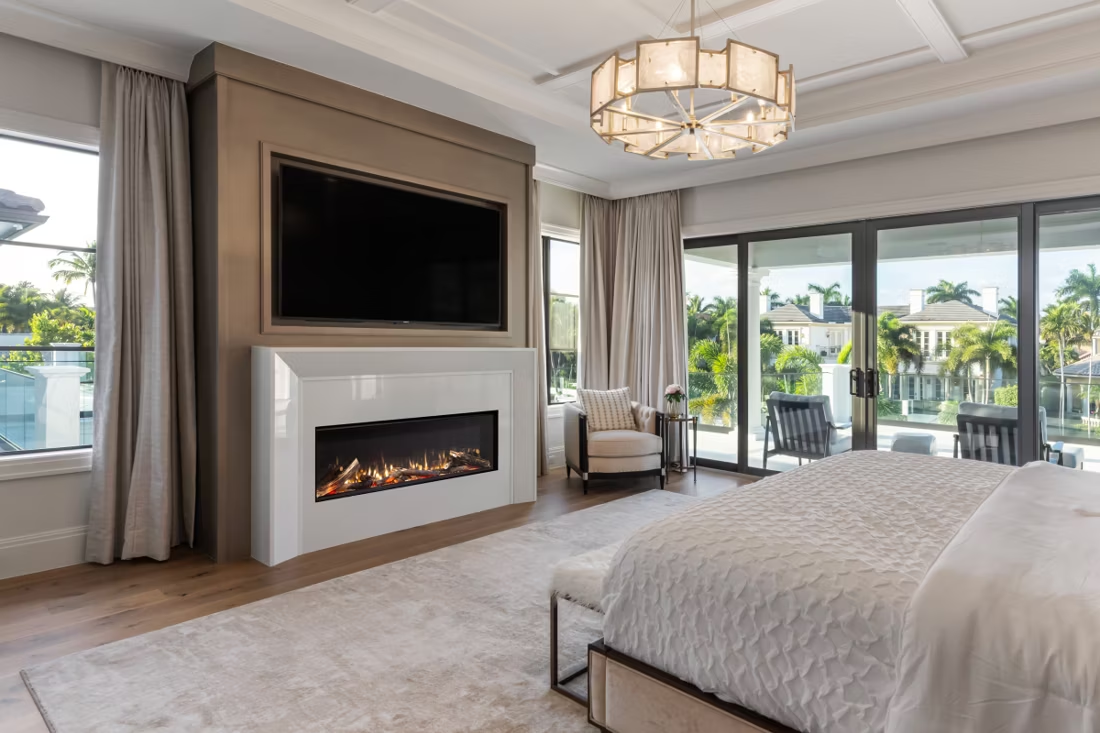
Yes—with an asterisk. Fireplaces are hot and TVs don't like heat. Either put a mantel between them to deflect rising warmth, or choose a fireplace with heat-management technology that creates a cool zone on the wall above—the wall stays around 125 degrees, barely warm, while the room still gets full heat. If you like clean lines and don't want a mantel, heat management is the answer.
Does an electric fireplace need a vent or chimney?
No—that's its superpower. An electric fireplace needs a wall and an outlet, period. No vent pipe, no gas line, no clearances to design around, which is why it works in bedrooms, offices, apartments, and walls where venting a gas or wood unit would be impractical or impossible. Installation is typically the simplest and least expensive of any fireplace type.
How much should I budget for a fireplace?
For an average home—covering the fireplace, the vent pipe, and basic installation—a budget between $3,900 and $5,500 gives you a lot of options across wood, gas, and pellet. By the time you add finish work, gas line, and electrical, the average complete installation lands between $5,000 and $12,000 all-in. In a remodel or new build, a good rule is to put about 2.5% of the total project cost toward the fireplace.
Should the dealer who sells my fireplace also install it?
Ideally, yes. A fireplace project involves vent pipe, gas line, electrical, and often tile or stone. Hire three or four separate trades and you own the liability and the game of telephone between them. One company selling and installing means one accountable party, start to finish—ask about factory training, on-time completion records, and what happens if an inspection fails.
Find your electric fireplace in Knox County.
Tell us a bit about your home and we'll put together a free Project Guide & Parts List—the right electric unit, the exact parts, and a trusted local dealer to install it.
Find Your Fireplace →