
Find the right electric fireplace for your Hart County home.
Zone heat and ambiance without a chimney, a gas line, or a woodpile—for homes from Munfordville to Horse Cave to Cave City. Find the right unit and connect with a trusted local dealer.
Every Project Starts From One of These Five Situations
Simple heat for a mild-winter county.
Hart County sits in climate zone 4A with a moderate heating season and winter lows that average around 29°F—comparable to a place like Richmond or Louisville, and much milder than places like Duluth or Fargo, where whole-home wood or gas heat is nearly mandatory. Here, a lot of homes are already carrying the load with a central heat pump or furnace, which means an electric fireplace fits a different job: warming up a den or bonus room on the chillier nights, adding a focal point to a living room, or dressing up a rental or basement space without touching the structure.
There's no chimney to build, no gas line to run, and in most cases no building permit required—electric units plug into a standard outlet or a dedicated 120V/240V circuit depending on size, and many Hart County homeowners install them into existing mantels, built-ins, or TV walls. That plug-and-play simplicity is the whole appeal: a licensed electrician handles any circuit work if needed, and a local dealer can walk you through sizing and placement so the unit actually reads as a real heat source rather than a glorified nightlight.
Three steps. No salesperson until you're ready.
Tell us about your project
Your zip code, your situation, and the fuel you're leaning toward—or let the answers point you to one.
See what's actually available
The brands dealers within 100 miles genuinely carry—real options, never a catalog mirage.
Get your dealer & Project Guide
A trusted local dealer, plus the free Project Guide & Parts List that names every component of the job.
Frequently Asked Questions
How much does an electric fireplace installation cost in Hart County?
Most electric fireplace projects in Hart County run $400 to $1,200 installed, depending on whether it's a plug-in insert that drops into an existing mantel opening or a built-in unit that needs a dedicated circuit run by an electrician. Simple insert swaps into an existing fireplace opening or a freestanding unit on a media console sit at the low end. Wall-mounted or built-in units requiring new wiring, a recessed box, or custom surround carpentry land toward the higher end. Because there's no venting or gas work involved, electric is consistently the least expensive fireplace category to install in the county.
Do I need a permit to install an electric fireplace in Hart County?
In most cases, no. A plug-in electric fireplace or insert that uses an existing outlet doesn't typically require a permit through the county. If you're adding a new dedicated circuit—common for larger built-in units—that electrical work should be done by a licensed electrician and may require an inspection depending on the scope. There's no chimney, gas line, or emissions consideration to navigate, which is part of why electric is often the fastest fireplace project to get installed in Hart County from decision to finished install.
Will an electric fireplace actually heat my room, or is it just for looks?
A properly sized electric fireplace will genuinely heat a room—most models put out around 5,000 BTU (roughly 1,500 watts), enough for a bedroom, den, or bonus room in the 200-400 square foot range, which covers a lot of the supplemental heating needs in Hart County's milder 4A climate. It won't replace a furnace or heat pump on a 20-degree night, but as zone heat for a room you're actually sitting in, it can let you turn the thermostat down elsewhere in the house. The flame effect runs independently of the heater, so you can run the visual without the heat during the shoulder seasons.
What's the difference between an electric insert, a wall-mount, and a freestanding electric stove?
An electric insert is built to drop into an existing fireplace opening—a common choice for Hart County homes with an old masonry fireplace that's rarely used for wood anymore. A wall-mount unit hangs flush on the wall like a large TV and works well in newer construction or a remodel where you're building a feature wall. A freestanding electric stove looks like a small cast-iron wood stove but plugs in, and works well in a room with no existing fireplace or chimney chase. All three heat similarly; the choice mostly comes down to what opening or wall you're working with.
How does electric heat compare to wood heat for Hart County's climate?
With hickory, oak, maple, and cherry all common firewood species in the area, wood heat has real local roots and can carry a home through a Hart County winter on its own, including during a power outage. Electric can't do that—it needs power to run, full stop, so it's not a backup-heat option when the grid goes down. What it does offer is convenience: no cutting, splitting, stacking, ash cleanup, or chimney maintenance, and instant on-off heat with a remote or wall switch. For most Hart County homes, electric ends up as a secondary or ambiance-focused choice rather than a primary heat source, with wood or the home's existing furnace covering the harder cold.
Can I put an electric fireplace on any wall in my house?
Nearly any interior wall works, since there's no venting requirement and no combustible clearance issue the way there is with wood or gas units—most electric fireplaces are rated for direct contact with a mantel or surround. The main consideration is electrical: does the location have an outlet nearby, or does it need a new circuit run behind the wall? A local dealer or electrician can also help you figure out whether a wall-mount will interfere with existing studs, insulation, or wiring in an older Hart County home, which is common in the county's mix of older farmhouses and newer builds.
Do electric fireplaces cost a lot to run?
A typical electric fireplace running on the 1,500-watt heater setting costs somewhere around 15 to 25 cents per hour to operate, depending on your electric rate—a few dollars for a full evening of use. Most units let you run the flame visual without the heater engaged, which uses a small fraction of that. For Hart County homeowners supplementing a heat pump or furnace, running the electric fireplace in one room while the thermostat is turned down elsewhere in the house can offset some of the added cost, though the net savings depend on your home's layout and insulation.
Are pellet stoves a better option than electric for Hart County?
It depends on the goal. Pellet stoves burning brands like Lignetics or Hamer Pellet Fuel put out real, substantial heat and can serve as a legitimate secondary or even primary heat source, but they require a pellet hopper to be loaded regularly, venting to be installed, and electricity to run the auger and blower—so they're not power-outage-proof either. Electric skips the venting and pellet handling entirely but delivers less total heat and no backup capability. For a homeowner who wants meaningful heat output and doesn't mind the maintenance, pellet is worth a look; for someone who just wants supplemental warmth and simplicity, electric is usually the better fit.
What size electric fireplace do I need for my Hart County home?
For a single room or bonus space up to about 400 square feet, a standard 1,500-watt unit is usually sufficient in Hart County's moderate climate. Larger open-concept living areas or rooms with high ceilings may need a bigger insert or a supplemental unit in a second location rather than relying on one fireplace to cover the whole space. Because Hart County's winter lows average around 29°F rather than the deep sub-zero cold of harsher climates, electric units here are generally asked to do less heavy lifting than in colder parts of the country—sizing is more about comfort and room coverage than survival heat.
Can I put a TV above my fireplace?
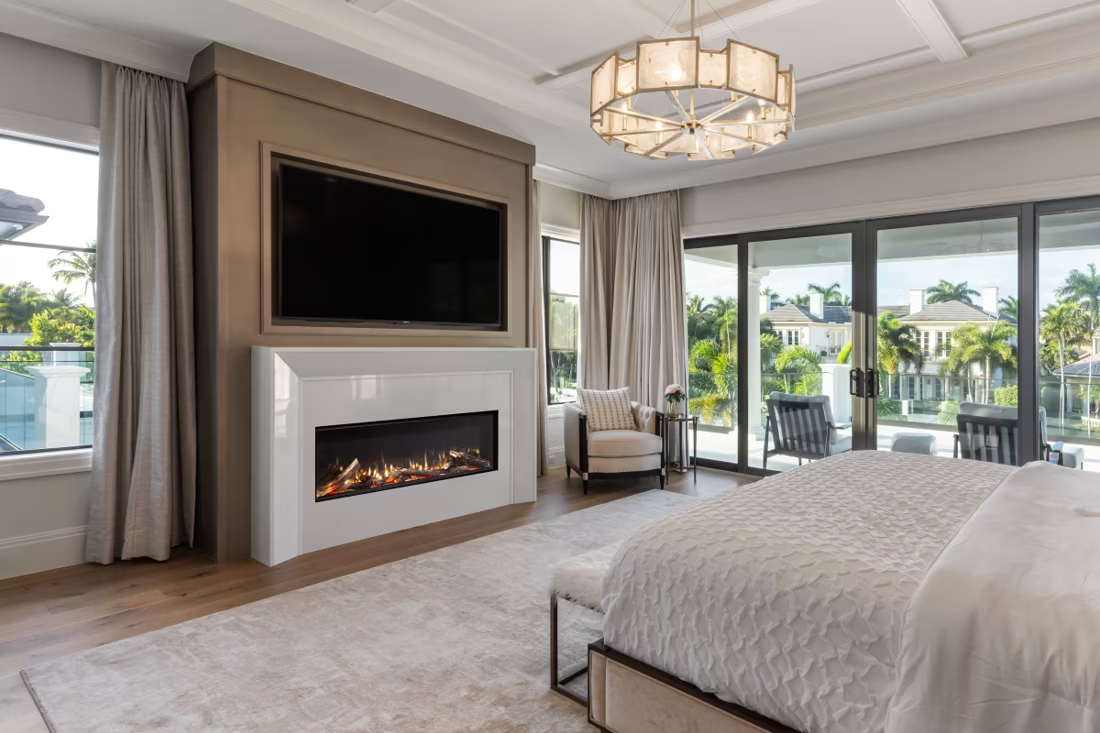
Yes—with an asterisk. Fireplaces are hot and TVs don't like heat. Either put a mantel between them to deflect rising warmth, or choose a fireplace with heat-management technology that creates a cool zone on the wall above—the wall stays around 125 degrees, barely warm, while the room still gets full heat. If you like clean lines and don't want a mantel, heat management is the answer.
Does an electric fireplace need a vent or chimney?
No—that's its superpower. An electric fireplace needs a wall and an outlet, period. No vent pipe, no gas line, no clearances to design around, which is why it works in bedrooms, offices, apartments, and walls where venting a gas or wood unit would be impractical or impossible. Installation is typically the simplest and least expensive of any fireplace type.
Does a fireplace add value to my home?
On average, a fireplace adds back to the home about the same amount you spent installing it. Add the monthly savings from heating the rooms you actually use instead of the whole house—often hundreds of dollars a year—and the value case is strong before you even count what a fire does for how your family uses the room.
What is an in-home preview and do I need one?
It's a visit where a hearth professional measures your space, confirms the model you picked actually works in your home, and walks the specs—framing, gas line, venting, finish work—before anything is ordered. Some details you just can't know until you see the house. Never make a down payment without one; it's the single most-skipped step that burns buyers.
Find your electric fireplace in Hart County.
Tell us a bit about your home and we'll match you with the right electric fireplace, insert, or stove—plus a free Project Guide & Parts List and a trusted local Hart County dealer to install it.
Find Your Fireplace →